The Science of Old: Discovering Medical and Scientific Folios

When you investigate the world of ancient medical and scientific folios, you're uncovering a wealth of historical knowledge. Ancient civilizations like the Egyptians and Greeks documented their understanding of natural remedies and theories, influencing the course of scientific inquiry. These early manuscripts captured herbal concoctions, groundbreaking surgical techniques, and holistic practices that laid the groundwork for modern medicine. Through careful preservation, these texts offer a window into the evolution of medical ethics and anatomical comprehension. This examination reveals how ancient scholars' pioneering approaches continue to impact today's scientific practices and revelations. There's much more waiting to inspire your curiosity.
Unveiling Ancient Knowledge
Throughout history, much has been uncovered about ancient civilizations and their impressive reservoirs of knowledge. You've probably noticed how they've left a lasting impact on modern medicine, particularly through their ancient remedies and herbal treatments. These societies keenly observed their environments, identifying plants and natural substances that could heal numerous ailments. When you investigate ancient cultures, you'll find that they often relied on the natural world to treat everything from minor cuts to more serious conditions.
Take the Egyptians, for example. They utilized a selection of herbs, like garlic and aloe, which you might still use today for their healing properties. Meanwhile, the Greeks and Romans documented the benefits of many plants, creating a foundation for scientific inquiry. You've likely heard of Hippocrates and Galen, who championed these natural treatments.
In China and India, herbal treatments played a significant role in traditional medicine systems. Ayurveda and Traditional Chinese Medicine are rich with examples of using plants to restore balance and health. As you investigate deeper into these ancient practices, you can't help but appreciate how these remedies have shaped the evolution of medicine, offering insights that continue to benefit us today.
Early Medical Manuscripts
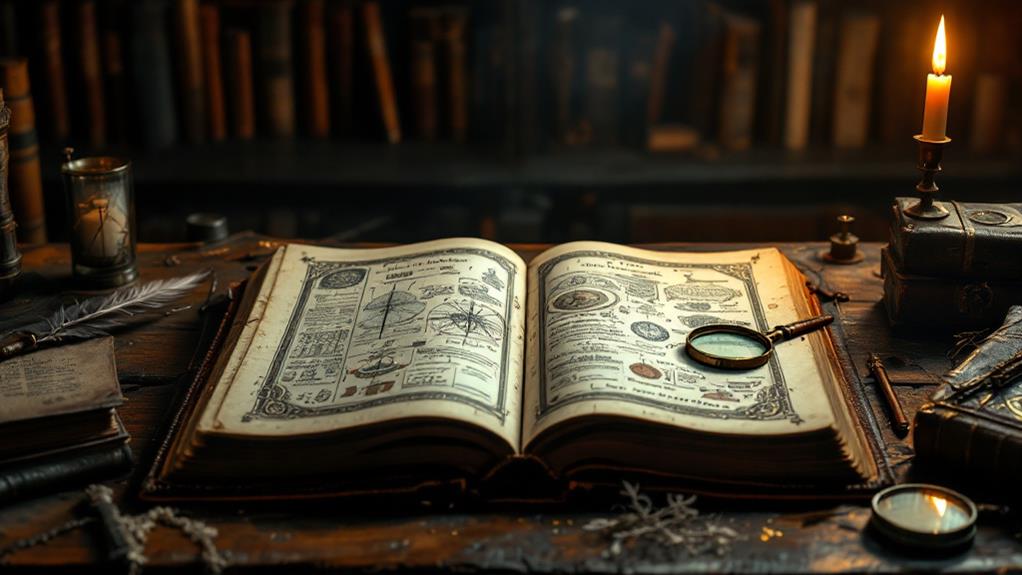
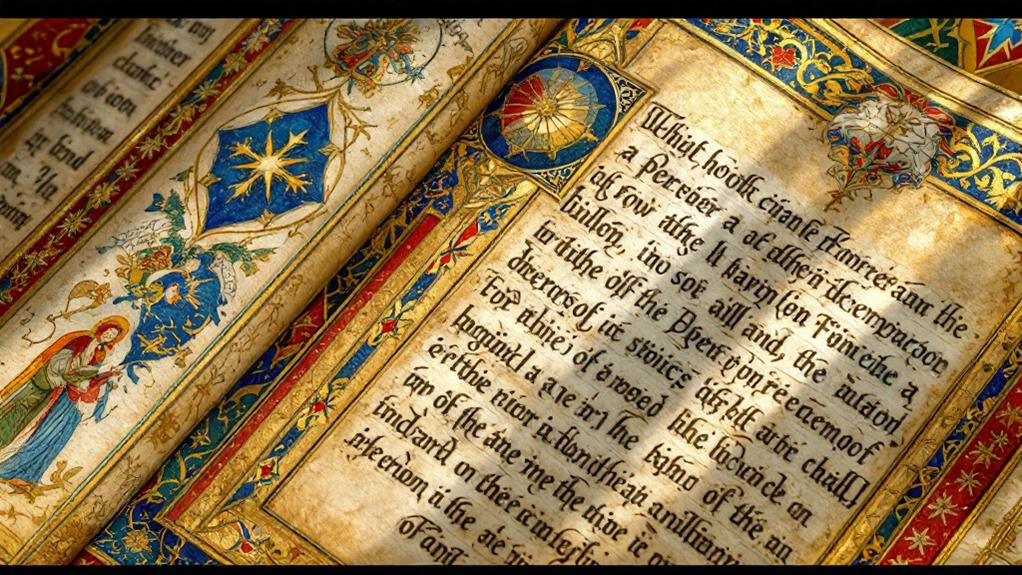
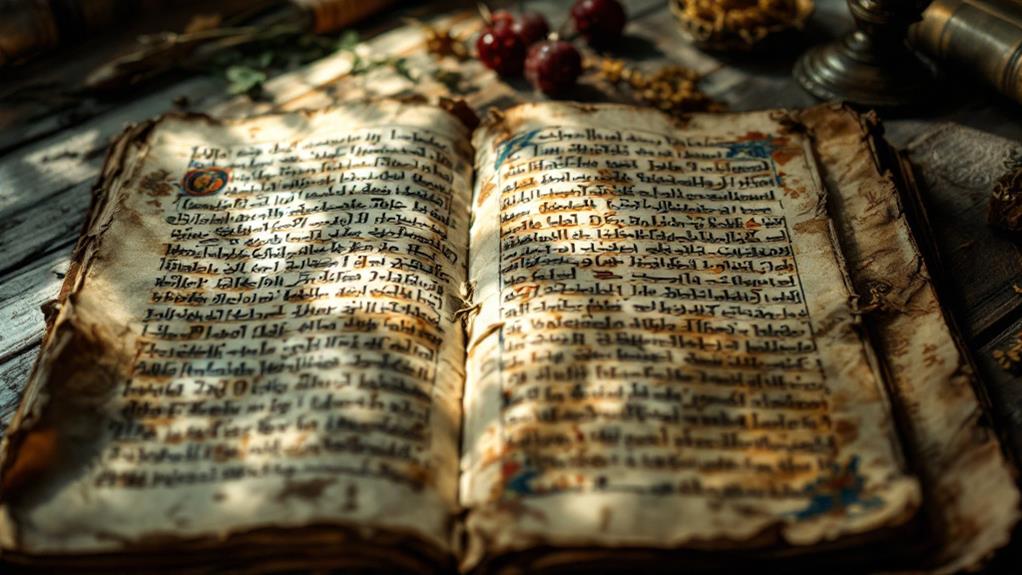
As you investigate the world of early medical manuscripts, you'll uncover a wealth of ancient knowledge that laid the groundwork for modern medical science. These manuscripts are valuable resources of medieval remedies, capturing the medical practices and theories of their time. You'll find descriptions of herbal concoctions, surgical techniques, and even mystical elements once believed to heal ailments. The blend of empirical observation and spiritual elements reflects the shifting period of medical understanding.
In preserving these manuscripts, you're helping protect invaluable insights into the evolution of medicine. Manuscript preservation is vital, as many of these documents are fragile and susceptible to damage from light, humidity, and handling. Some are written on parchment or vellum, materials that require specific conditions to prevent deterioration. By maintaining these conditions, you guarantee future generations can access these historical texts.
Through these manuscripts, you gain a glimpse into the minds of medieval healers and scholars. Their efforts to document and share knowledge laid the foundation for scientific inquiry and medical advancements. As you investigate deeper, you'll appreciate the enduring impact of these early texts on the practice and understanding of medicine today.
Foundations of Scientific Inquiry

While exploring the foundations of scientific inquiry, you'll uncover the vital shift from mystical explanations to evidence-based understanding. This alteration didn't happen overnight, but it marked a significant evolution in human thought. Empirical methods became the backbone of this new approach, allowing scientists to observe, measure, and test their ideas against reality. Instead of relying on superstition or untested beliefs, they began to collect data and draw inferences based on observable evidence.
As you probe deeper, you'll find that hypothetical frameworks were fundamental in this change. These frameworks provided a structured way to formulate questions and predict outcomes. By constructing hypotheses, early scientists could test their ideas systematically, refining them through experimentation and observation. This method not only advanced scientific knowledge but also established a foundation for future revelations.
You'll see that this shift laid the groundwork for modern science, emphasizing the importance of skepticism and verification. It taught us to question, to seek proof, and to value the reproducibility of results. By understanding these foundations, you're better equipped to appreciate the rigor and discipline that underpin today's scientific endeavors. Accept this voyage into the essence of inquiry and exploration.
Pioneering Theories and Practices
Building on the empirical foundations of scientific inquiry, you'll encounter the bold theories and practices that propelled science forward. During this transformative period, inventive minds began to weave together diverse elements of knowledge, pushing the boundaries of what was known. You'd find that holistic healing became a cornerstone, integrating body, mind, and spirit in patient care. Physicians started using herbal remedies, tapping into the natural world's potential to promote health.
Anatomical drawings played a vital role in advancing medical understanding. These detailed illustrations provided unprecedented insights into the human body, allowing for more accurate diagnostic techniques. With these advancements, medical ethics emerged as a guiding principle, ensuring that patient care was conducted with respect and integrity.
Key pioneering elements included:
- Holistic healing: Emphasizing a thorough approach to health.
- Herbal remedies: Utilizing plants for medicinal purposes.
- Anatomical drawings: Enhancing knowledge of human anatomy.
- Medical ethics: Establishing moral guidelines for practitioners.
These practices laid the groundwork for future medical achievements, demonstrating the power of integrating diverse methods. They were instrumental in transforming the medical field from mere observation to a more informed, ethical, and effective practice.
Legacy of Ancient Scholars

Ancient scholars left an indelible mark on the tapestry of scientific advancement, shaping the way we comprehend the world today. When you investigate ancient texts, you uncover the roots of knowledge that have guided humanity for centuries. These scholars didn't just observe and record; they questioned, theorized, and sought to understand the natural phenomena surrounding them. Their scholarly contributions laid the groundwork for numerous fields, from mathematics to medicine.
Influence on Modern Science
The profound legacy left by ancient scholars continues to shape modern science in remarkable ways. You might be surprised at how much of today's scientific endeavors are rooted in the historical context of ancient knowledge. Scholars from centuries past not only laid the groundwork for diverse disciplines but also established methods and principles that remain relevant. Through effective knowledge transfer, you've inherited a wealth of insights that still drive innovation and understanding today.
Consider these influences:
- Mathematics: Ancient mathematicians devised theorems and principles that you still apply, like the Pythagorean theorem, which is fundamental in geometry.
- Astronomy: Early astronomers mapped the stars, forming the basis of celestial navigation, a field that's essential in space exploration.
- Medicine: Ancient medical texts provide insights into disease diagnosis and treatment, influencing modern medical practices and research.
- Philosophy: Philosophical inquiries by ancient scholars have shaped scientific methods, encouraging critical thinking and ethical considerations in research.
Related posts