The Role of Religious Texts in Ancient Folios: Bibles, Qur’ans, and Sutras
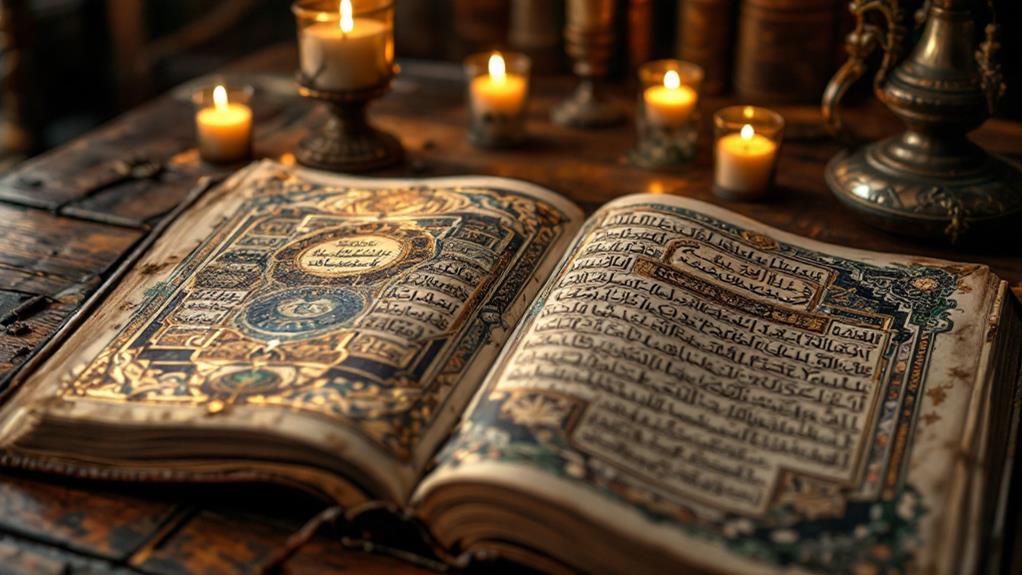
Religious texts like Bibles, Qur'ans, and Sutras preserved in ancient folios are more than just spiritual guides. They capture cultural beliefs and historical insights, with scribes carefully hand-copying them to preserve their core teachings. You'll find beautiful artwork within these texts where gold leaf and vivid pigments highlight significant passages, offering a glimpse into the artistic practices of the time. They've influenced languages, moral frameworks, and artistic expressions across different societies. As you examine these ancient texts, their role in shaping the cultural and spiritual landscapes of the past and present becomes even more intriguing.
Historical Significance of Religious Texts
Religious texts have an undeniable impact on the tapestry of human history. These sacred writings are more than just spiritual guides; they're historical artifacts that reflect the beliefs and values of the cultures that produced them. When you investigate the historical significance of these texts, you'll find that textual transmission plays a vital role. This process guaranteed that religious teachings were preserved and shared across generations, often under challenging circumstances. Scribes dedicated their lives to copying these manuscripts by hand, aiming for precision to maintain manuscript authenticity.
You might not realize it, but the efforts to guarantee textual transmission have shaped our understanding of history. These texts provide insights into ancient societies, revealing how people viewed the world and their place within it. As you examine these manuscripts, you'll appreciate the challenges faced in preserving their authenticity. Over time, different versions and interpretations emerged, but the core messages remained intact, guiding millions.
In studying these texts, you're participating in a tradition of inquiry that spans centuries. You're not just learning about religious doctrines; you're uncovering the historical threads that connect us to our ancestors and their enduring quest for meaning.
Artistic Techniques in Manuscript Creation
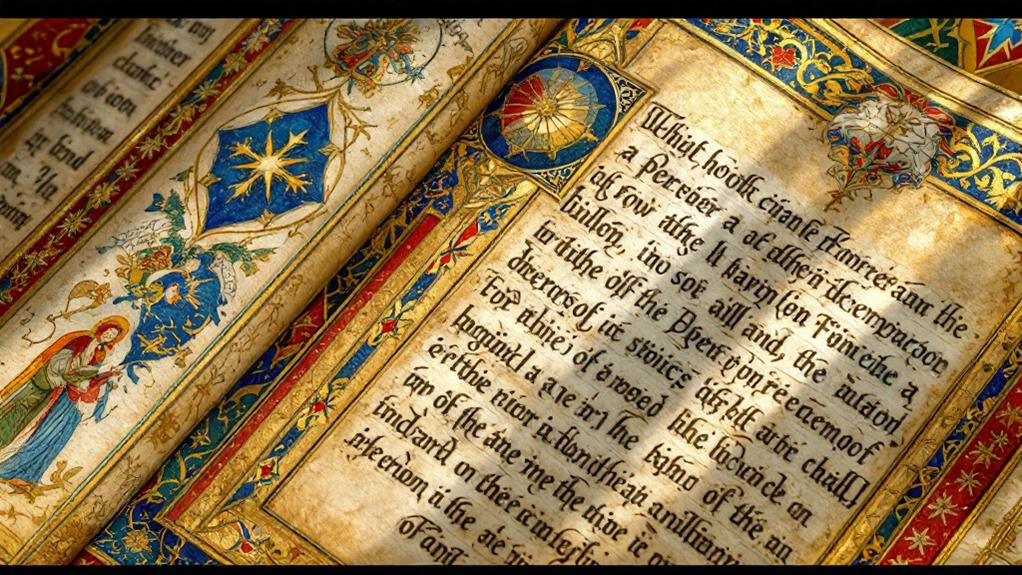
While the historical significance of religious texts provides a lens into ancient societies, the artistic techniques used in manuscript creation offer a visual feast that complements the written word. You'll find that one of the most striking elements of these manuscripts is their illumination techniques. Illuminators painstakingly added gold leaf and lively pigments to bring the pages to life, guaranteeing each folio wasn't just read but also admired. These techniques weren't merely decorative; they highlighted significant passages, guiding readers through the text with visual cues.
In addition to illumination, binding methods played an essential role in the manuscript's longevity and usability. You'll notice that early scribes and artisans employed diverse binding techniques, ranging from simple stitched gatherings to elaborate leather bindings. These methods made certain the manuscripts could withstand frequent handling and the test of time. The choice of binding often reflected the manuscript's significance and intended use, sometimes incorporating intricate designs or precious materials.
Preservation and Conservation Methods
Preserving ancient manuscripts requires a delicate balance of traditional skills and modern technology. You need to take into account diverse factors to guarantee these priceless texts endure for future generations. Here's how you can approach this task:
- Restoration Techniques: Mastering restoration methods is essential. You'll need to repair damage caused by time, environment, or human error. Techniques like mending tears with Japanese paper, deacidification, and rebinding can help rejuvenate fragile pages while respecting their original artistry.
- Controlled Environment: Verify that the storage environment maintains ideal temperature and humidity levels. Excessive moisture or dryness can lead to deterioration. Use climate control systems to mitigate these risks, protecting manuscripts from mold or brittleness.
- Digitization Efforts: Adopt modern technology by digitizing manuscripts. This not only preserves the content but also makes it accessible to a broader audience. High-resolution scanning captures intricate details, reducing the need for physical handling and consequently extending the lifespan of the originals.
Cultural Impact Across Regions
Across diverse regions, ancient religious texts have profoundly immersed cultural landscapes, influencing language, art, and societal norms. You see this impact vividly as Bibles, Qur'ans, and Sutras traveled, often through cross-cultural exchange and missionary activities. These texts didn't just stay within their originating cultures; they crossed borders, shaping societies along the way.
When missionaries carried these texts, they facilitated not only spiritual teachings but also language development. For instance, the spread of Christianity led to the translation of the Bible into numerous languages, introducing new vocabulary and shaping linguistic structures. Likewise, Islamic scholars traveling with the Qur'an influenced regions far beyond the Arabian Peninsula, impacting languages and writing systems.
Moreover, these texts inspired art and architecture. You can observe how biblical stories influenced European art, while Islamic calligraphy and architectural designs were inspired by Qur'anic verses. In Asia, the spread of Buddhism and its Sutras left an indelible mark on cultural expressions, from intricate statues to temple designs.
Societal norms were also reshaped. Ethical teachings within these texts informed laws and moral codes, guiding community behavior and governance. Through these exchanges, ancient religious texts became cornerstones in the cultural evolution of diverse regions.
Religious Texts as Educational Tools
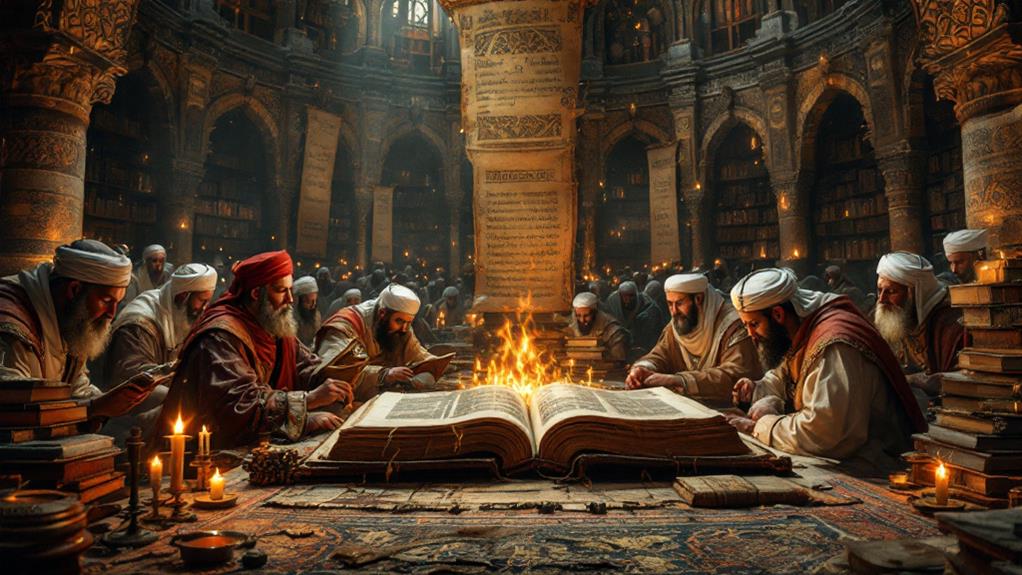
Religious texts have long served as essential educational tools, offering structured teachings and moral guidance. They play an important role in fostering religious literacy, helping you understand complex theological concepts and cultural contexts. By engaging with these texts, you can gain insights into the ethical teachings that have shaped societies for centuries. Here's how they function as educational tools:
- Moral Framework: Religious texts provide a foundation for distinguishing right from wrong. They offer narratives and parables that illustrate ethical teachings, helping you navigate moral dilemmas in daily life.
- Cultural Awareness: By studying these texts, you develop a deeper understanding of the cultural and historical backgrounds of different faiths. This knowledge improves religious literacy and promotes tolerance and empathy among diverse communities.
- Critical Thinking: Engaging with religious texts encourages you to think critically. Analyzing and interpreting complex passages can improve your reasoning skills and foster a nuanced comprehension of philosophical ideas.
In essence, religious texts aren't just about spiritual beliefs; they're educational resources that enrich your intellectual and moral development. They invite you to investigate profound questions about existence, morality, and community, contributing greatly to your personal growth.
Symbolism and Iconography in Folios
In investigating ancient folios, you'll find that symbolism and iconography play a crucial role in conveying deeper meanings beyond the written word. These artistic elements transform religious texts into rich tapestries of symbolic interpretations, allowing readers to probe into the spiritual and philosophical layers of the material. Iconography serves as a bridge between the divine and the earthly, offering visual metaphors that encourage contemplation and reflection.
When you examine an illuminated manuscript, for example, you might notice the use of light and color as symbolic representations of divine presence or spiritual enlightenment. Gold leaf often signifies holiness or divine light, while certain colors like blue and red could represent heaven and sacrifice, respectively. These visual metaphors are carefully crafted to complement the text and deepen your understanding of the religious teachings.
Additionally, the intricate designs and motifs you encounter are more than just decorative. They often hold profound symbolic meanings, guiding you to interpret the text in specific ways. By engaging with these symbols, you're invited to investigate the narratives on a more intuitive level, enriching your experience and connection with the sacred texts. Consequently, symbolism and iconography in folios offer a multi-dimensional approach to understanding ancient religious works.
Evolution of Script and Calligraphy
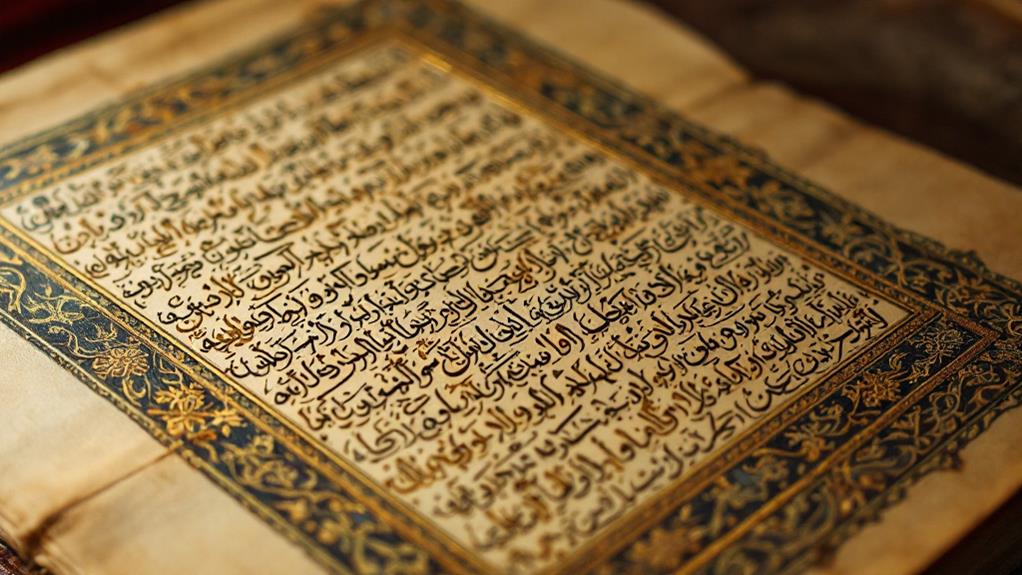
Tracing the evolution of script and calligraphy in ancient folios reveals a fascinating odyssey of artistic and linguistic development. You'll find that script development wasn't just about the written word; it was a voyage of aesthetic refinement and cultural expression. As you examine this evolution, you'll notice how each religious text adopted its own calligraphy styles, often reflecting the society's values and artistic sensibilities.
- Early Beginnings: In the initial stages, scripts were often simple and functional, designed primarily for readability. However, as societies evolved, so did their writing. Scripts began to incorporate more elaborate designs, serving not only as communication tools but also as art forms.
- Diversity of Styles: Across different cultures, calligraphy styles emerged that were distinct yet connected by their devotion to beauty and precision. For instance, Islamic calligraphy developed intricate geometric patterns, while Christian manuscripts often featured elaborate illuminations alongside text.
- Technological Advances: The development of ink and writing tools played a significant role in script evolution. These advancements allowed scribes to experiment with new styles and techniques, leading to more sophisticated and ornate scripts.
Understanding these elements elevates your appreciation for the complex artistry within ancient religious texts.
Influence on Modern Religious Practices
Through the lens of history, you can see how the artistry of ancient religious texts continues to shape modern religious practices. These texts, adorned with intricate designs and profound teachings, influence the way rituals are conducted today. When you attend community gatherings, you're participating in traditions that echo the practices outlined in these sacred manuscripts. Regardless of it's the reading of the Bible in a church, the recitation of the Qur'an in a mosque, or chanting the Sutras in a temple, these texts guide the structure and flow of modern ceremonies.
Ritual practices often draw directly from these ancient texts, ensuring that the spiritual essence passed down through generations remains intact. When you engage in these rituals, you're connecting to a historical lineage that values continuity and reverence. Community gatherings become spaces where these texts are not just read or recited, but lived through shared experiences. They foster a sense of unity and purpose, as individuals come together to celebrate and reflect on their beliefs.
In essence, these ancient texts continue to serve as a foundation for modern religious life, influencing how people gather, worship, and maintain their faith across diverse cultures and traditions.
Related posts