The Role of Gold Leaf in Manuscript Illumination: Techniques and Origins
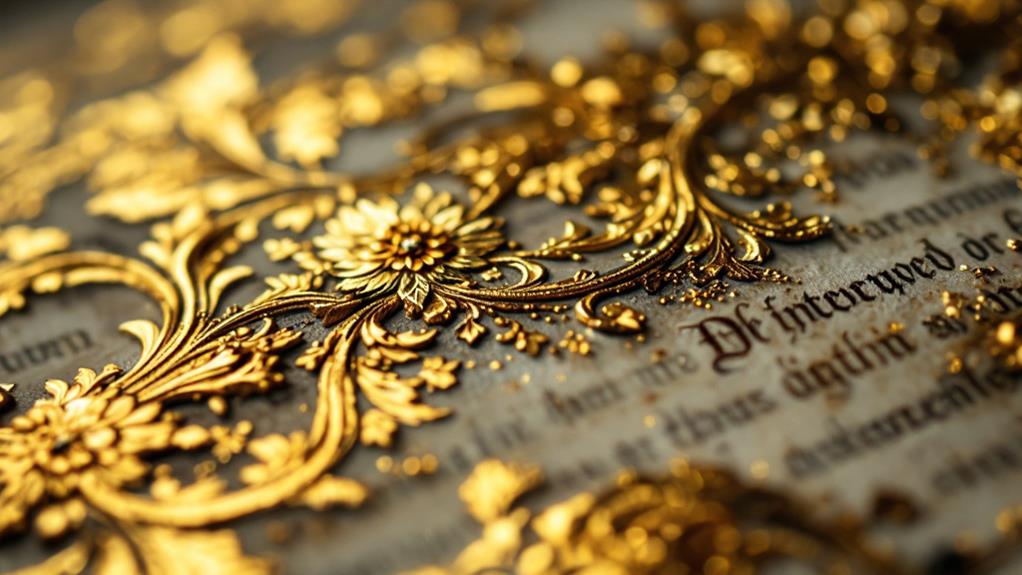
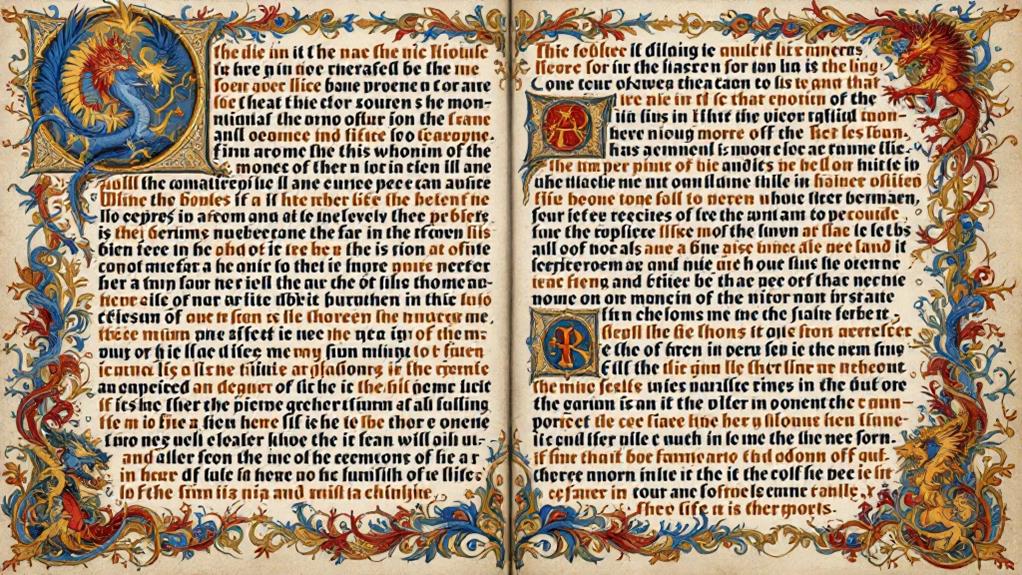
You're fascinated by the shimmering allure of gold leaf in manuscript illumination, where ancient and intricate techniques transform texts into lively art. Gold leaf, used since ancient Egypt, adds divine and immortal qualities to manuscripts. Skilled artisans developed methods like gilding and burnishing, using tools like the gilding brush and knife, to apply these thin sheets carefully. By highlighting sacred figures and events, gold leaf improves symbolic narratives and showcases cultural heritage. From Byzantine to Renaissance styles, each period adopted unique approaches in illuminated manuscripts. As you learn more, uncover the legacy and modern adaptations of this historic art form.
Historical Beginnings of Gold Leaf
Gold leaf has a rich and fascinating history that dates back thousands of years. You'll find that its use spans many cultures, each attributing unique significance to this gleaming material. In ancient Egypt, gold leaf adorned tombs and temples, symbolizing immortality and divine power. Its cultural significance was profound, reflecting the beliefs and values of societies that cherished it. You can see similar appreciation in other ancient civilizations like the Greeks and Romans, who used gold leaf to embellish sculptures and architecture, showcasing wealth and status.
Understanding the economic impact of gold leaf requires you to reflect on its role as a symbol of prosperity. Throughout history, the demand for gold leaf fueled trade and influenced economies. Goldsmiths and artisans became crucial in societies, creating jobs and stimulating local economies through their craft. This economic ripple effect extended to trade routes, where gold leaf was exchanged for goods and services, spreading its cultural significance even further. By recognizing gold leaf's historical beginnings, you appreciate how it wasn't just a decorative material but also a driver of economic growth and a marker of cultural identity across civilizations.
Ancient Techniques and Traditions
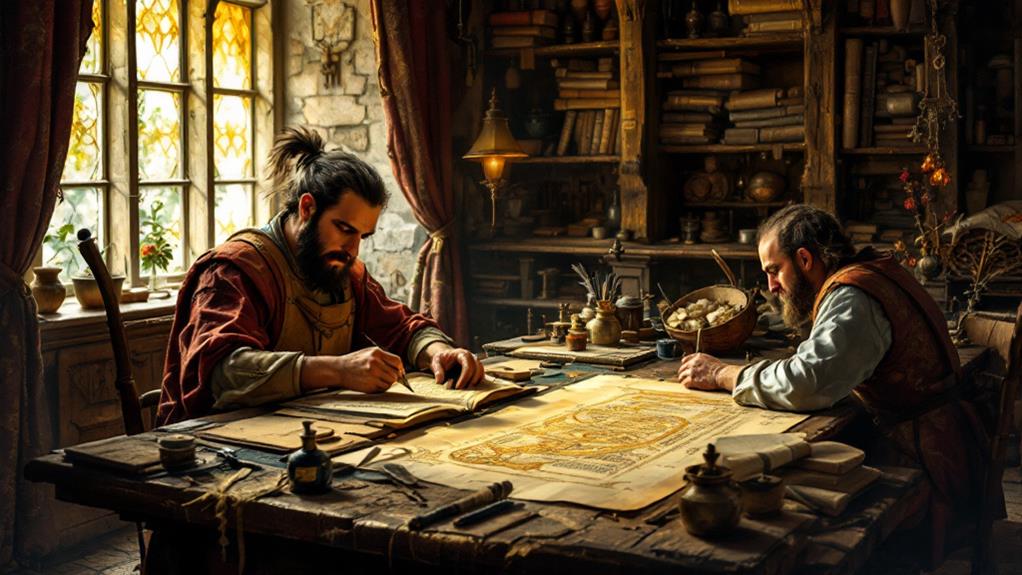
To truly grasp the allure of gold leaf, it is crucial to understand the ancient techniques and traditions used in its creation and application. These timeless practices are not just about aesthetics; they're deeply entwined with cultural significance and artistic expression. Imagine stepping back in time, witnessing the careful artistry that brought manuscripts to life. Here's a glimpse into these ancient methods:
- Gilding: This involves applying thin gold sheets onto surfaces, using a special adhesive called "size". It demands precision and patience, as the delicate gold can easily tear.
- Burnishing: After gilding, the gold leaf is polished with a smooth tool, often made of agate or hematite, to achieve a lustrous shine. This step improves the manuscript's visual appeal and durability.
- Punchwork: Artists used small tools to emboss intricate patterns onto the gold leaf. This technique added texture and depth, making each piece unique.
These traditions were more than mere techniques; they were expressions of devotion and creativity. By mastering these skills, artisans preserved the cultural significance of their works, ensuring they were cherished for generations. You, too, can appreciate the dedication and artistry that defined these timeless practices.
Gold Leaf Production Methods

Crafting gold leaf is an intricate process that requires skill and precision. It all begins with gold sourcing, a critical step to guarantee the purity and quality of the final product. You need to find reliable sources, often in regions known for their rich deposits. Once you've secured high-quality gold, the real work begins. The gold is melted and cast into small bars, which are then rolled into thin sheets.
The sheets are still too thick for gilding techniques, so they undergo further refinement. You'll repeatedly hammer the sheets, sometimes by hand, until they're as thin as possible. This isn't just a matter of brute force; it requires a careful balance of pressure and control to avoid tearing the delicate material.
As you continue, the sheets are cut into smaller squares and placed between layers of special paper. This helps prevent sticking as you hammer them even thinner. The final result is a gold leaf so fine it can easily float on air. These gossamer sheets are then ready for use in manuscript illumination, where they bring a radiant luster to the page, showcasing the craftsmanship and expertise involved in their creation.
Tools and Materials Used
Once you've mastered the art of producing gold leaf, the next step is choosing the right tools and materials for applying it in manuscript illumination. The selection of tool types and material sources can greatly impact the quality of your work. You'll need to gather a few crucial items to guarantee precision and control.
- Gilding Knife: This tool helps you cut the delicate gold leaf sheets without tearing them. Choose one with a finely honed edge for best results.
- Gilder's Cushion: Made from soft leather or cushiony materials, this platform provides a stable surface for you to lay down and cut the gold leaf.
- Gilding Brush: Often made from squirrel hair, these soft brushes help you lift and place the gold leaf onto the adhesive surface without damaging it.
When sourcing materials, quality is key. Verify your gold leaf is sourced from reputable suppliers to assure its purity and consistency. Moreover, choose high-grade adhesive materials, like gesso or bole, to create a solid foundation for the gold leaf application. By selecting the right tools and materials, you set the stage for a successful and stunning manuscript illumination.
Application Processes Explained
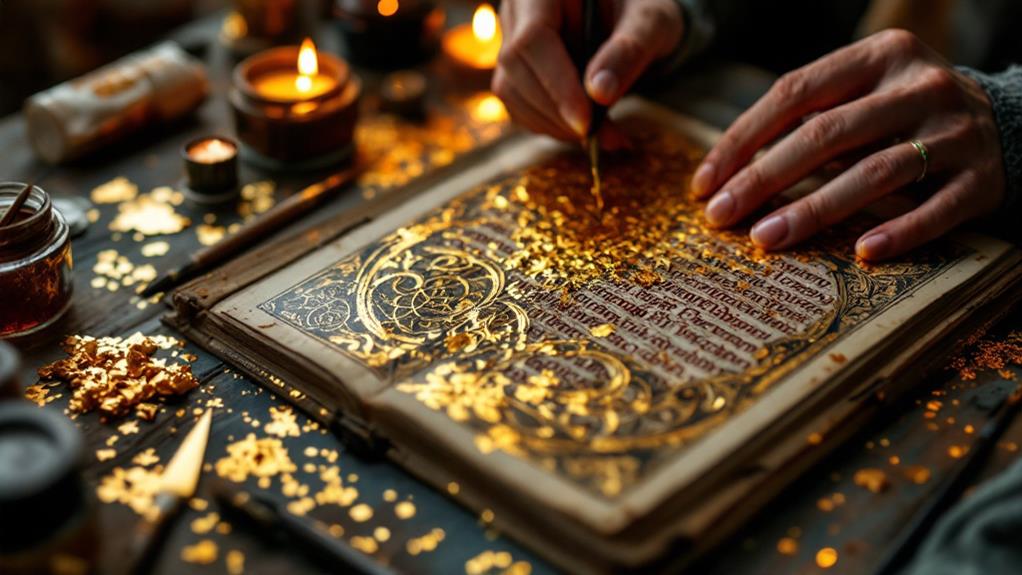
Applying gold leaf to manuscripts is a detailed process that transforms your work into a luminous masterpiece. To achieve this dazzling effect, you need to understand the fundamental gilding techniques and application methods. Initially, prepare your surface with a gesso or bole layer, which acts as a base for the gold leaf. This step guarantees that the gold adheres properly and shines brightly.
Next, you'll apply an adhesive, often called "size", to the prepared surface. Timing is critical here. The size must be tacky, not too wet or dry, to guarantee the gold leaf sticks perfectly. Use a special gilding brush to carefully lay the thin sheets of gold onto the adhesive. It requires a steady hand and precision to avoid tearing the delicate leaf.
Once the gold is in place, gently burnish it with a soft tool, like an agate stone, to improve its sheen and smoothness. This step is significant for creating that iconic, reflective finish. Ultimately, remove any excess gold with a soft brush, revealing the intricate design beneath. Mastering these application methods lets you raise any manuscript into an extraordinary piece of art.
Gold Leaf in Religious Contexts
Understanding the careful application processes of gold leaf sets the stage for investigating its profound significance in religious contexts. Gold leaf isn't just about aesthetic appeal; it's deeply rooted in spiritual significance and artistic expression within sacred manuscripts. When you probe into religious texts, you'll uncover how the shimmering presence of gold leaf serves as a form of divine illumination, enhancing the textual message and raising the reader's experience.
Consider these key roles of gold leaf in religious contexts:
- Spiritual Significance: Gold leaf symbolizes purity, divinity, and eternity. Its use in religious texts reflects these ideals, offering a tangible connection to the divine.
- Artistic Expression: By incorporating gold leaf, artists transform manuscripts into magnificent works of art. This not only beautifies the text but also conveys cultural heritage and faith representations through visual storytelling.
- Sacred Manuscripts: Gold leaf raises these texts to a higher status. It's not merely decorative; it signifies the importance of the words and ideas contained within, emphasizing their sacred nature.
Iconography and Symbolism
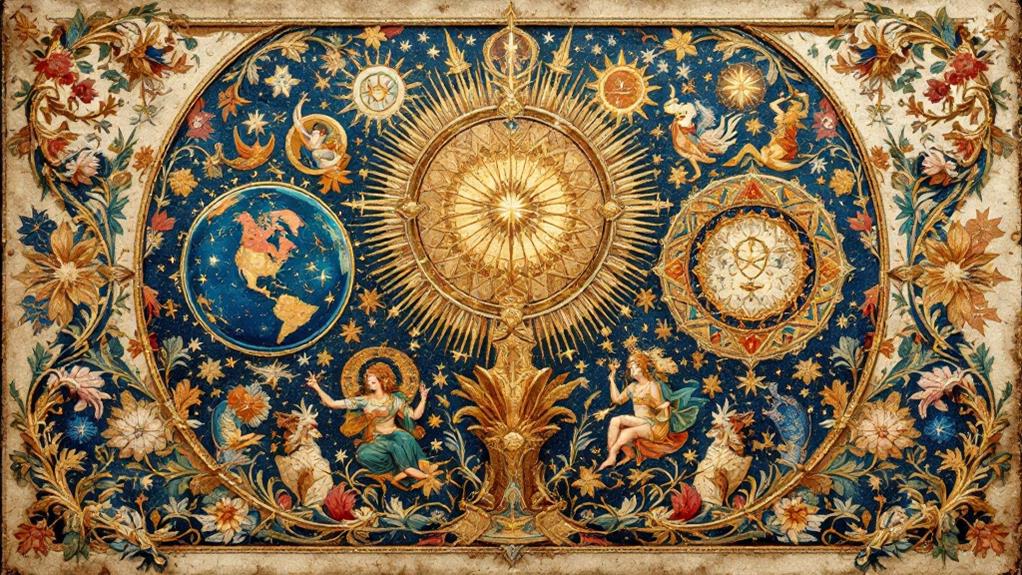
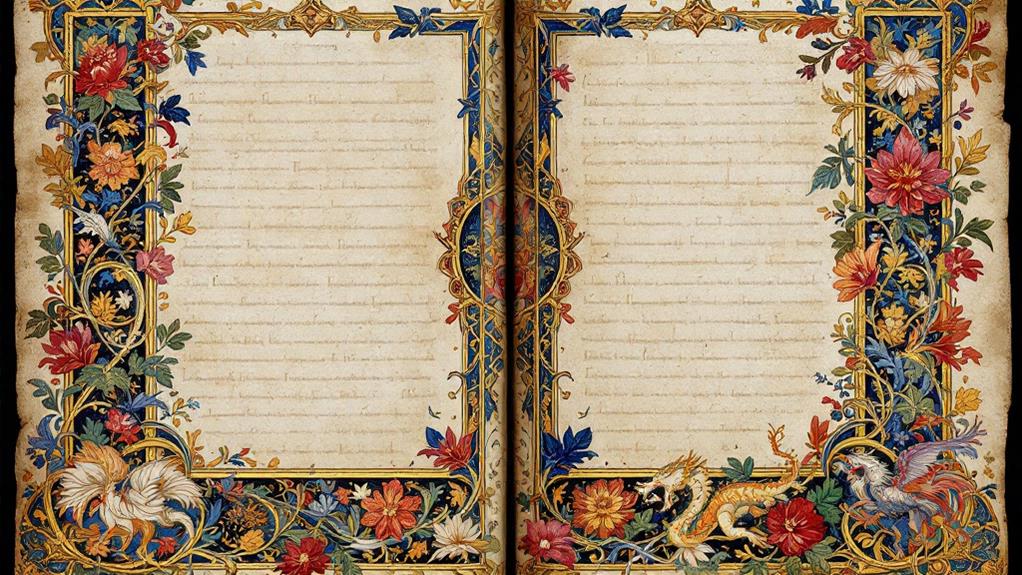
While exploring the intricate world of manuscript illumination, you'll find that iconography and symbolism are closely intertwined with the use of gold leaf. Artists have long employed gold to highlight the iconographic significance within manuscripts, drawing attention to divine figures or sacred events. Gold leaf isn't just a decorative element; it's a powerful tool to convey symbolic meanings. It often signifies divinity, purity, or eternal light, making it a crucial component in religious texts. When you see gold leaf in an illuminated manuscript, it's often marking something of profound importance, guiding your understanding of the text's deeper meanings.
In addition to religious contexts, gold leaf helps emphasize the hierarchy and status of figures within the manuscript. You might notice that kings, saints, or angels are frequently adorned with golden halos or backgrounds, underscoring their heightened status. This use of gold leaf enhances the visual narrative, allowing you to grasp the manuscript's layered meanings instantly. It's not just about the aesthetic; it's about directing your focus and interpreting the story's nuances. Understanding these iconographic elements enriches your appreciation of the artistry and intention behind each illuminated page.
Regional Variations and Styles
Throughout the history of manuscript illumination, regional variations and styles have played a significant role in shaping the art form. You can see how diverse cultural influences left their mark on manuscripts, making each piece unique. Consider these three key regional influences:
- Byzantine Influences: Rich gold leaf and intricate iconography characterized Byzantine manuscripts. Religious themes were prominent, reflecting the cultural significance of Christianity.
- Islamic Aesthetics: Islamic manuscripts are known for their geometric patterns and calligraphy. Gold leaf was used to highlight these artistic expressions, showcasing the importance of symmetry and design.
- Celtic Patterns: The Book of Kells is a prime example of Celtic patterns in manuscript illumination. Spirals and knotwork, interwoven with gold leaf, brought life to these unique artistic expressions.
In Gothic traditions, you notice a shift towards more naturalistic styles, with detailed flora and fauna. Gold leaf highlighted these elements, adding depth and contrast. Renaissance innovations introduced perspective and shading, with gold leaf enhancing these stylistic contrasts.
Regional techniques were crucial in these manuscript variations, reflecting the artistic and cultural significance of each style. By understanding these diverse influences, you appreciate how they shaped the rich tapestry of illuminated manuscripts throughout history.
Preservation and Restoration Challenges

Preserving and restoring illuminated manuscripts present unique challenges that require specialized knowledge and techniques. If you're tasked with this responsibility, you need to understand the delicate balance between conservation techniques and restoration ethics. Each manuscript is a historical artifact, so maintaining its authenticity while ensuring its longevity is essential.
First, you'll want to assess the condition of the gold leaf. Over time, it can become brittle or detach due to environmental factors. You should use conservation techniques like stabilizing humidity and temperature to prevent further deterioration. Regarding cleaning, always opt for the least invasive methods to avoid damaging the delicate gold surfaces.
Restoration ethics play a significant role in your approach. You'll need to decide how much intervention is appropriate, as excessive restoration can lead to a loss of historical integrity. Aim to retain as much of the original material as possible, ensuring any enhancements or repairs are reversible.
Legacy in Modern Manuscripts
In the present world, the legacy of gold leaf in manuscript illumination continues to influence modern artists and calligraphers. Even today, this ancient technique finds a place in contemporary applications, offering a touch of historical elegance and opulence to today's creative works. Artists are exploring creative ways to incorporate gold leaf, breathing new life into their projects and pushing the boundaries of traditional art forms.
Consider these three modern applications:
- Contemporary Calligraphy: More than just writing, calligraphers now use gold leaf to add shimmer and sophistication to wedding invitations, personal letters, and art pieces.
- Book Arts: Artists involved in bookbinding and creation often integrate gold leaf to improve covers and pages, making their works stand out as pieces of art.
- Mixed Media Art: By blending gold leaf with other materials, artists create unique textures and visual effects, showcasing artistic advancements that captivate viewers.
Related posts