The Role of Digitization in Preserving Historical Folios for Future Generations

You're at the forefront of a historic transformation as digitization steps in to preserve precious folios for future generations. This process captures intricate details while drastically reducing the damage risk from handling fragile originals. Digitization also blasts through geographical barriers, granting global access and interactive experiences with historical documents. AI and AR technologies are set to take this preservation to new heights, increasing accessibility and ensuring authenticity. But it doesn't stop there. The impact on collaboration, accessibility, and cutting-edge innovations will continue to unfold, promising exciting developments in how we engage with our shared past.
Importance of Historical Folios
Historical folios hold immense significance because they offer a tangible connection to the past. By examining these documents, you gain insight into the cultural significance of previous periods. They serve as a window into the lives, beliefs, and practices of those who came before us. These folios encompass everything from ancient scripts and maps to personal letters and official records, each playing a vital role in shaping our understanding of history. When you handle a historical folio, you're not just touching paper; you're connecting with the stories and events that have shaped societies.
Moreover, the educational value of historical folios is undeniable. They provide primary source material that improves learning experiences, allowing you to engage directly with the past. Instead of relying solely on secondary interpretations, you can analyze these documents to form your own understanding of historical events. This firsthand interaction enriches your knowledge and promotes critical thinking skills. In classrooms, museums, or personal study, these folios become fundamental tools for fostering a deeper appreciation of history. By preserving these documents, you guarantee that future generations can continue to learn from and be inspired by the past.
Challenges of Physical Preservation
Preserving historical folios presents several challenges that can't be overlooked. You're dealing with delicate materials that are vulnerable to environmental factors such as humidity, light, and temperature fluctuations. These conditions can cause irreversible damage like fading, warping, or even mold growth.
- Environmental Factors: Maintaining the perfect environment is costly and requires constant monitoring. You'd need specialized equipment to control climate conditions, which isn't always feasible for smaller institutions with limited resources.
- Funding Limitations: Budget constraints are a significant hurdle. Without adequate funding, acquiring the necessary tools and materials for conservation becomes nearly impossible. Financial limitations can also restrict hiring skilled personnel trained in specialized conservation techniques.
- Conservation Techniques: Even with advanced methods, conservation is labor-intensive and time-consuming. Techniques like deacidification or repair need precision and expertise. Plus, these techniques must evolve with technology advancements to remain effective.
You must weigh these challenges carefully when planning the preservation of historical folios. Each solution demands a balance between maintaining integrity and managing resources efficiently. While technology advancements offer some promise, they also come with their own set of challenges that need careful consideration.
Benefits of Digitization
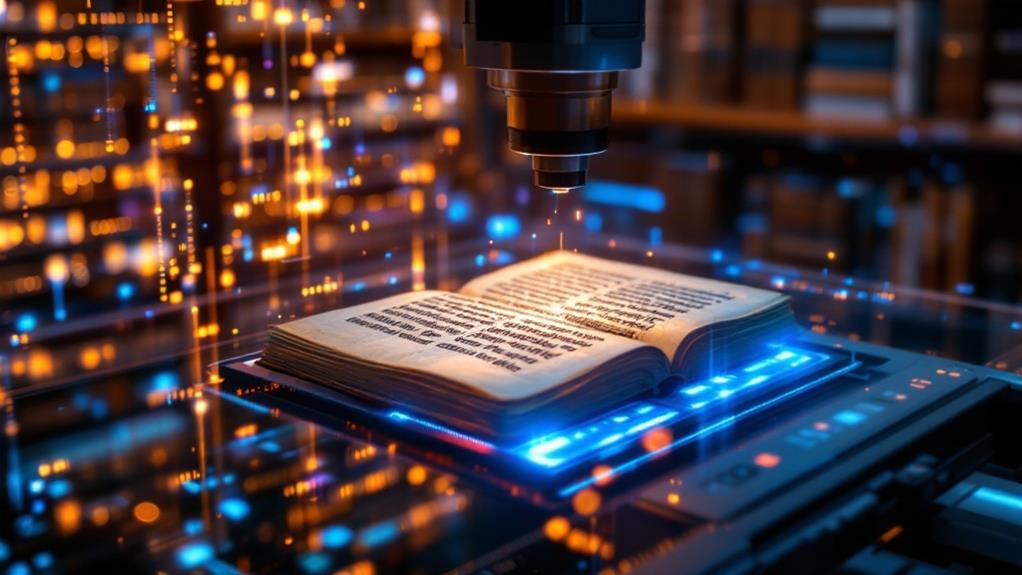
While physical preservation of historical folios presents numerous challenges, digitization offers a promising path forward. By embracing digital archiving, you can guarantee that these invaluable pieces of cultural heritage remain intact for future generations. Digitization minimizes the risks associated with handling fragile documents, as you no longer need to touch or expose them to potentially damaging environmental factors. Instead, you can capture high-quality digital images, allowing the originals to remain safely stored and preserved.
Furthermore, digitization enables you to create multiple backups, safeguarding against loss due to disasters or deterioration. Unlike physical copies, digital files can be effortlessly duplicated and stored in different locations, guaranteeing that even if one set is compromised, the information isn't lost forever. This redundancy provides peace of mind and stability in preserving our shared past.
Additionally, by digitizing historical folios, you contribute to a broader effort to document and share global cultural heritage. It allows you to participate in an interconnected network of digital archives, where scholars and enthusiasts worldwide can share knowledge and insights. This collaborative approach fosters a deeper understanding and appreciation of our collective history, guaranteeing that the rich tapestry of human experience is preserved and celebrated.
Enhancing Accessibility and Reach
Expanding the accessibility and reach of historical folios, digitization breaks down geographical and physical barriers. You no longer need to travel to distant archives or handle delicate, centuries-old materials to investigate the past. By digitizing these artifacts, institutions can offer a wealth of information to anyone with an internet connection. This democratization of knowledge fosters a deeper understanding and appreciation of our shared history.
Here's how digitization improves accessibility and reach:
- Increased User Engagement: By creating interactive platforms, you can delve deeper into historical contexts and narratives. Engaging with digital content makes the learning experience more engaging and enjoyable.
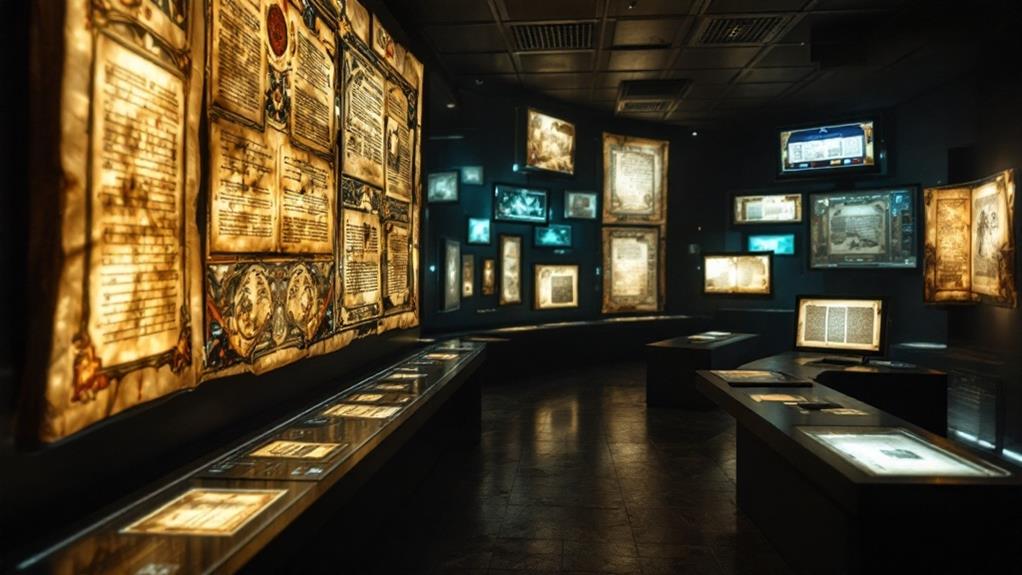
- Virtual Exhibitions: These allow you to investigate curated collections from the comfort of your home. Virtual tours and exhibitions offer a unique, dynamic way to engage with historical materials, making them accessible to a global audience.
- Collaborative Opportunities: Digitization opens doors for collaborative projects across the globe. Researchers, students, and history enthusiasts can connect and share insights, broadening the scope of historical research and understanding.
Techniques for Digital Conversion
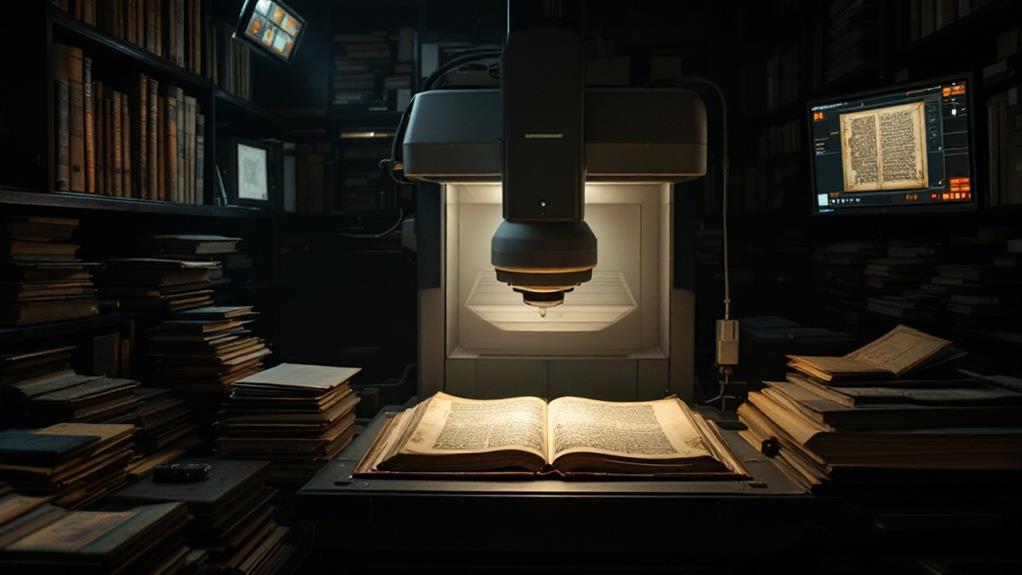
Digitization's vital role in preserving historical folios relies heavily on advanced techniques for digital conversion. To guarantee you capture the intricate details of these delicate documents, you should employ state-of-the-art scanning technologies. High-resolution scanners are fundamental for reproducing the rich textures and colors of folios, allowing you to create digital versions that are as close to the originals as possible. These technologies can include flatbed scanners for single pages, or more advanced book scanners that handle bound materials without damaging them.
You must adhere to rigorous archival standards during the conversion process. These standards guide you in selecting the right resolution, color depth, and file formats, making certain the digital copies remain faithful to the original works. JPEG2000 and TIFF are often recommended for their balance between quality and file size, making them suitable for long-term storage.
Additionally, it's vital to implement metadata conventions, which help you organize and retrieve digital files efficiently. By doing so, you make certain that future generations can access and study these historical gems with ease. By mastering these techniques, you play a significant role in safeguarding cultural heritage for years to come.
Addressing Digital Preservation Issues
Successfully converting historical folios into digital formats is just the beginning; safeguarding their preservation over time presents its own set of challenges. You need to tackle issues like digital obsolescence and data integrity head-on. As technology evolves, digital formats might become unreadable, making it essential to adopt robust long-term storage solutions. Here's how you can address these challenges:
- Adopt Metadata Standards: Consistent metadata standards guarantee that digital files remain accessible and understandable. They help in organizing data efficiently, making retrieval easier for future use.
- Engage Users for Feedback: User engagement is key to understanding how people interact with digital folios. Feedback can guide improvements in accessibility and functionality, ensuring these digital resources meet the needs of diverse audiences.
- Consider Preservation Ethics and Copyright: Ethical considerations are significant when preserving digital content. Respect copyright laws and make sure that the digitization process doesn't infringe on intellectual property rights, while maintaining transparency and accountability.
Balancing these factors guarantees that digital collections are not only preserved but remain relevant and accessible. By staying proactive against digital obsolescence and safeguarding data integrity, you're contributing to the sustainable preservation of historical folios for future generations.
Collaboration Among Institutions
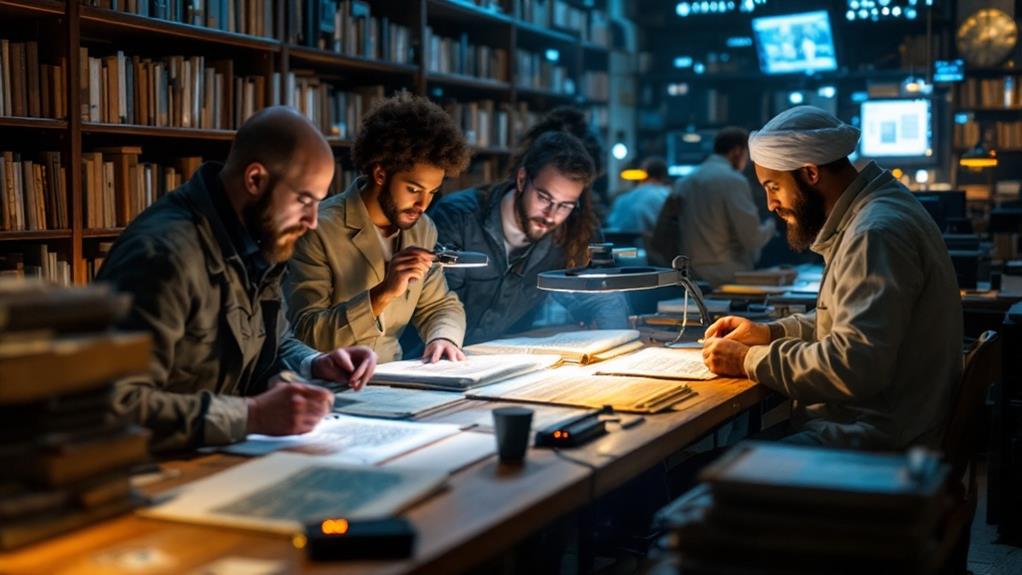
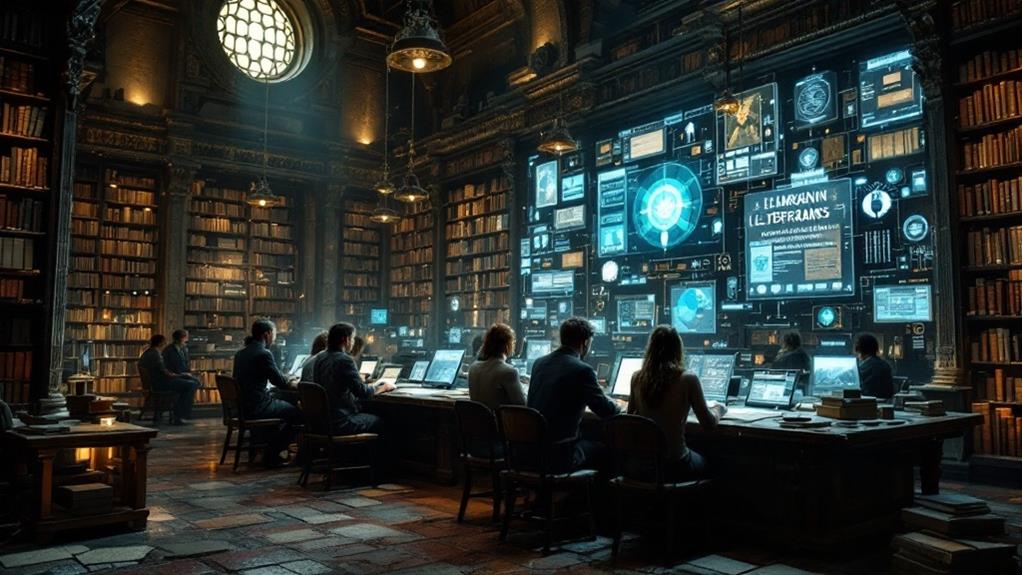
In the present interconnected world, collaboration among institutions is vital for the effective preservation of historical folios. You can't underestimate the power of inter-institutional partnerships regarding guaranteeing these valuable documents remain accessible for future generations. By working together, libraries, museums, and archives can pool their expertise and resources to tackle the challenges of digitization and preservation.
When institutions share resources, they can achieve much more than they could individually. You might find that one institution has state-of-the-art scanning equipment, while another has deep expertise in digital archiving. By combining these strengths, both can digitize and preserve historical folios more efficiently and effectively. Additionally, shared resources allow institutions to cut costs and reduce redundancies, making the digitization process more sustainable.
Inter-institutional partnerships aren't just about technology and resources; they're also about sharing knowledge and best practices. By collaborating, you can learn from others' experiences and avoid common pitfalls. This exchange of ideas fosters innovation and creativity in developing new strategies for preserving historical materials. Remember, by working together, institutions can guarantee that these cultural gems are protected and available for future generations to investigate and appreciate.
Future Trends in Digitization
As we look ahead, emerging technologies promise to revolutionize the digitization of historical folios. You're in for a future where these advancements will make preserving and accessing historical documents more efficient and captivating. Here are some trends to watch:
- Artificial Intelligence (AI) Improvements: AI will play a key role in automating transcription and translation, making it easier to reveal the secrets of ancient texts. It will also improve image recognition, allowing you to identify and classify folios with precision.
- Augmented Reality (AR) Experiences: Imagine interacting with historical documents in a 3D space. AR will let you investigate folios in a way that's engaging and captivating. You can expect future strategies to incorporate AR, providing a more dynamic way to learn and appreciate history.
- Blockchain for Authentication: Blockchain technology will guarantee the authenticity and provenance of digitized folios. This will protect against forgery and provide a transparent record of a document's history, making it a critical component of future digitization strategies.
These emerging technologies will transform how you engage with historical folios, safeguarding their preservation and accessibility for future generations. Welcome these innovations, and you'll find yourself at the forefront of historical preservation.
Related posts