The Legacy of Monastic Scribes in Preserving Religious Texts
You might not realize how essential monastic scribes were in preserving religious texts. Their careful efforts kept sacred writings intact through centuries, long before printing press innovations. These scribes didn't just copy texts; they enriched them with stunning manuscript illuminations and emphasized key passages for greater understanding. Trained rigorously to maintain accuracy, they dedicated countless hours to invaluable transcription under challenging conditions. By preserving these texts, they laid the foundation for theological studies, comparative religion, and interfaith dialogues. Even today, their legacy continues through modern digital preservation initiatives. Uncover how their efforts still impact us in unseen ways.
The Role of Monastic Scribes
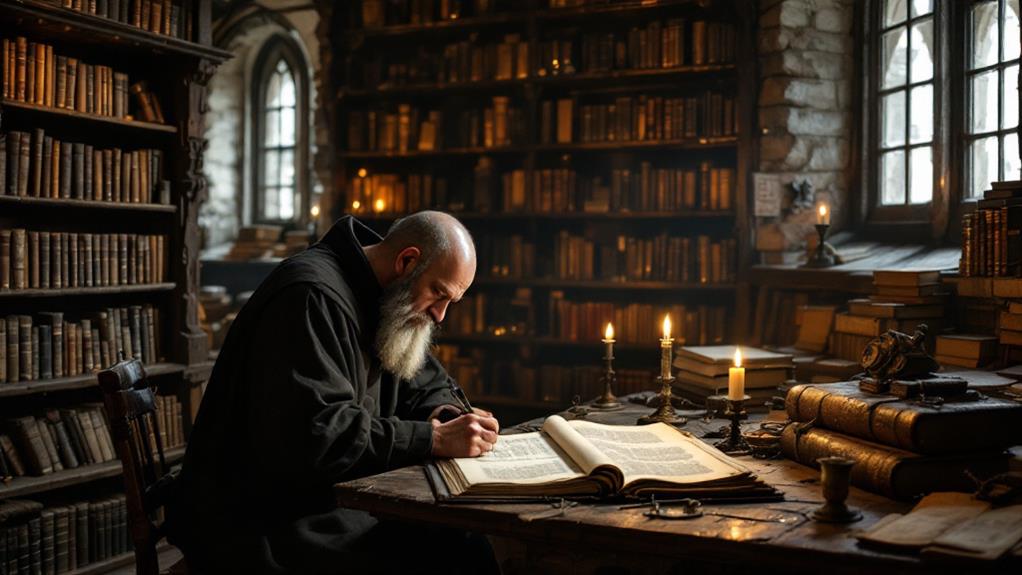
Imagine a world without the printed word, where every book and document had to be painstakingly copied by hand. In this world, monastic scribes played an integral role in preserving knowledge and culture. You'd find these scribes in monasteries, where they underwent rigorous scribe training to master the art of copying texts accurately. This training was vital, as even a single mistake could alter the meaning of a text.
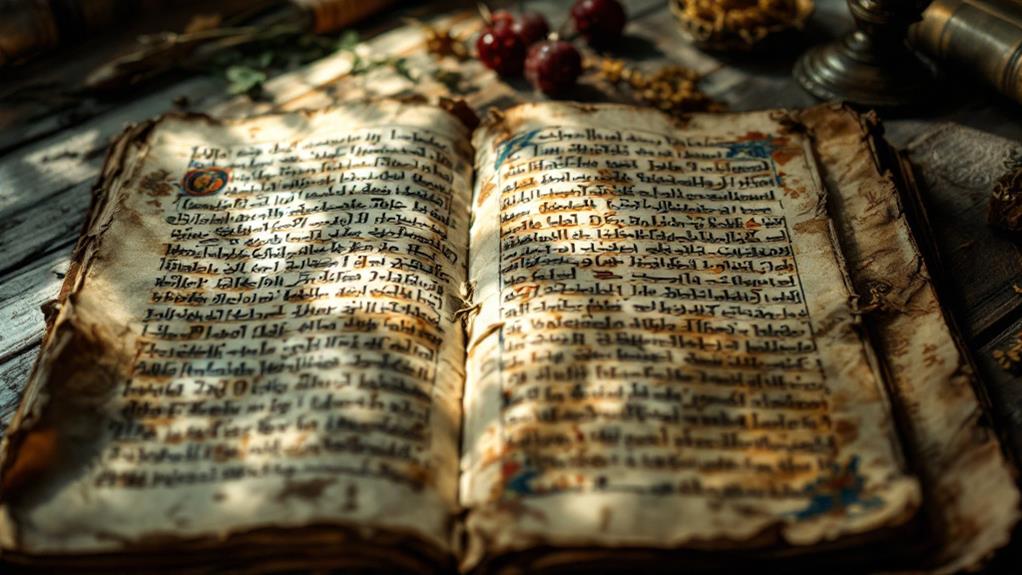
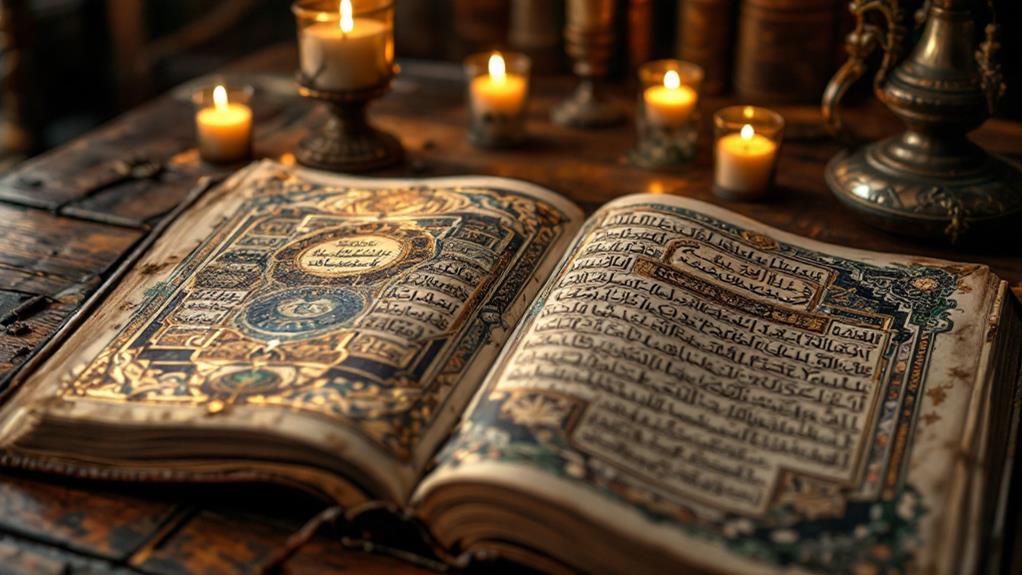
Scribes didn't just copy words; they enhanced texts to works of art through manuscript illumination. You'd see brightly colored illustrations, intricate borders, and decorative initials that transformed simple pages into visually stunning pieces. This embellishment wasn't just for beauty—it helped readers engage with the text and emphasized significant passages.
Early History of Manuscript Copying
Long before the invention of the printing press, the quill was the tool of choice for preserving human thought. If you traveled back to ancient times, you'd find that manuscript copying was an fundamental practice. It wasn't just about preserving texts; it was about guaranteeing the survival of cultural transmission. In the dim glow of candlelight, scribes carefully copied texts, creating significant links between past and future generations.
You'd see ancient writing on papyrus, parchment, and vellum, which were the primary materials used before paper became widespread. These early manuscripts didn't just contain religious texts but also included literature, philosophy, and science. By copying these texts, scribes played a pivotal role in keeping knowledge alive, especially during turbulent periods when much was at risk of being lost.
As you observe, the scribes' work guaranteed that ideas and beliefs were passed down accurately. Their dedication to detail wasn't just about replication; it was about respect for the original work. This painstaking process of copying manuscripts allowed civilizations to share and build upon each other's intellectual achievements, demonstrating the profound impact of ancient writing on cultural transmission across time and space.
Techniques and Tools of Scribes
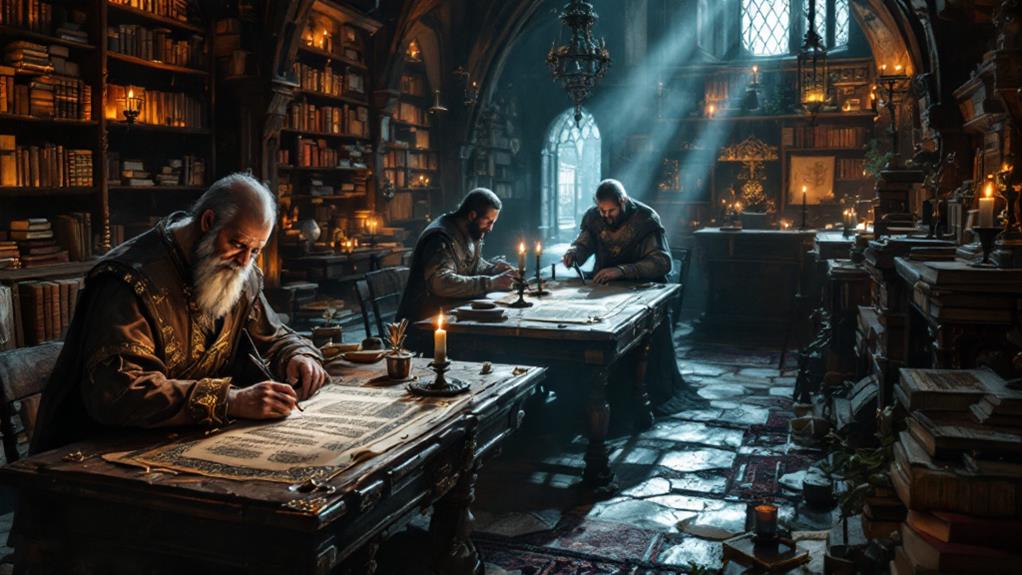
While the early history of manuscript copying highlights the significance of preserving texts, understanding the techniques and tools scribes used sheds light on how they achieved this careful task. As a scribe, you'd start with parchment selection, ensuring you picked the finest sheets. Parchment, made from animal skins, required careful inspection for flaws or inconsistencies. After selecting the right parchment, you'd prepare it by smoothing and stretching, creating a perfect surface for writing.
Next, you'd focus on ink preparation. Scribes didn't just use any ink; they crafted their own. Mixing ingredients like soot, gum, and water, you'd achieve a consistency that adhered well to parchment. Some scribes even added wine or vinegar for better flow and preservation.
Your tools included quills, usually from feathers of birds like geese or swans. You'd sharpen the quill tip to a precise point, allowing for smooth, even strokes. Mastering the art of writing with a quill required patience and skill, ensuring each letter was clear and consistent. By understanding and applying these techniques, you'd contribute considerably to preserving essential religious texts for future generations.
Challenges Faced by Scribes
Scribes faced numerous challenges that tested their dedication and skill. You had to tackle the intimidating task of guaranteeing accuracy while copying texts. Scribal errors were common, and even a small mistake could change the meaning of a passage. Imagine the pressure of being responsible for preserving sacred texts without the aid of modern technology. You also had to deal with the manuscript's durability. Parchment and ink didn't last forever, especially under the conditions of medieval monasteries.
Consider these challenges:
- Time-consuming work: Each manuscript required countless hours of careful copying.
- Poor lighting: You often worked by candlelight, which strained your eyes and increased the risk of errors.
- Limited resources: High-quality materials were scarce, making it difficult to produce durable manuscripts.
- Language barriers: You sometimes faced texts in languages you didn't fully understand, complicating translation and transcription.
- Physical discomfort: Long hours of writing could cause fatigue and cramping, affecting your concentration and precision.
Despite these challenges, your role was essential in preserving religious texts. By overcoming these obstacles, you guaranteed the survival of invaluable spiritual and cultural heritage for future generations.
Notable Monastic Scriptoria
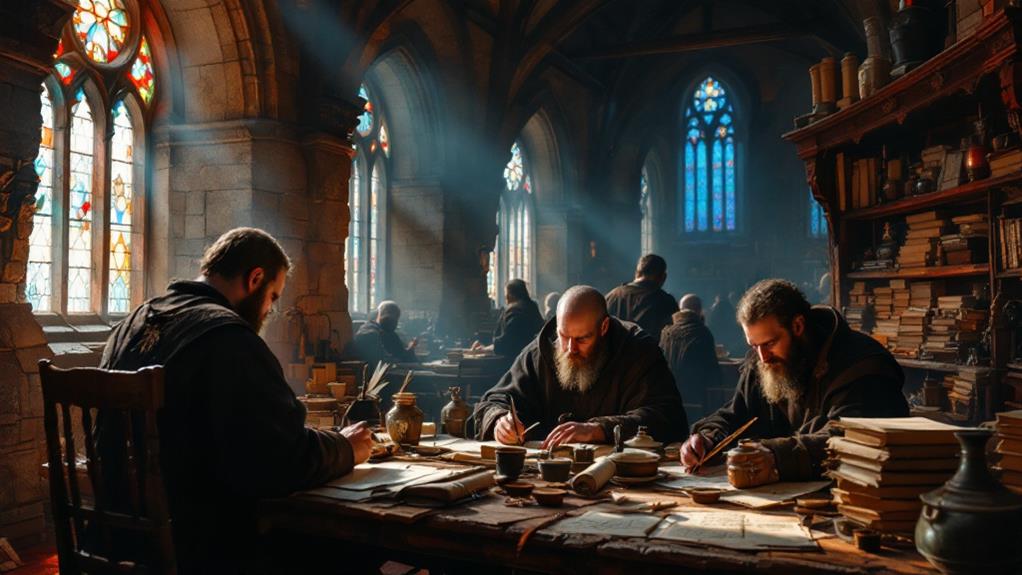
The legacy of monastic scriptoria is marked by their incredible contributions to the preservation and dissemination of knowledge. When you investigate the most famous scriptoria, like those in Ireland and Italy, you'll find that they played crucial roles in copying and safeguarding religious texts. The scriptorium at the Abbey of Bobbio in Italy, for instance, is renowned for its vast collection of biblical manuscripts. Meanwhile, the scriptorium at the Monastery of Iona in Scotland became an essential hub for the transcription of religious texts during the early medieval period.
You can also notice fascinating regional variations in the styles and techniques used by these scriptoria. The Irish scriptoria, like those at Clonmacnoise and Kells, are noted for their distinctive insular script and intricate illuminations, which reflect a unique blend of native and Christian influences. In contrast, the Carolingian scriptoria in present-day France focused on clarity and uniformity, giving rise to the Carolingian minuscule, which influenced modern typography.
Impact on Religious Scholarship
Monastic scriptoria have profoundly shaped religious scholarship over the centuries. When you explore their contributions, you uncover a world where precision and dedication to textual accuracy took center stage. These monastic scribes carefully copied religious texts, guaranteeing that you, centuries later, could access authentic versions of sacred scriptures. This commitment to accuracy laid a strong foundation for religious scholarship, allowing you to engage in meaningful interfaith dialogue. By preserving the integrity of texts, monastic scribes facilitated a better understanding among different faiths, fostering conversations that transcend time and geography.
Consider the impact of these scriptoria on religious scholarship through their contributions:
- Guaranteed that sacred texts were available for future theological analysis.
- Provided the basis for comparative religious studies.
- Supported the development of critical thinking through accurate text preservation.
- Enabled scholars to track textual changes and understand historical contexts.
- Encouraged interfaith dialogue by preserving diverse religious writings.
Preservation Efforts and Innovations
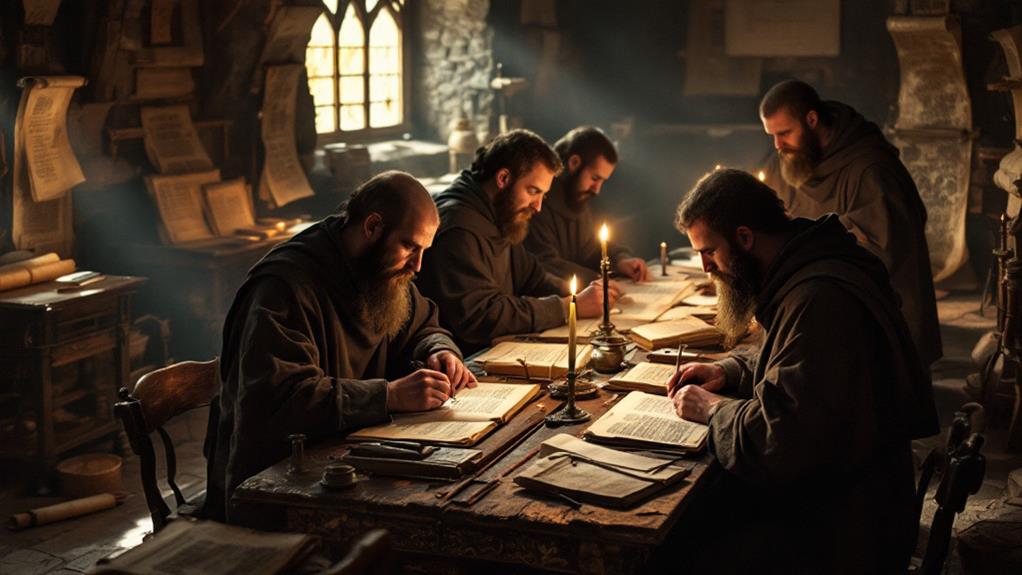
As you contemplate the enduring impact of monastic scribes on religious scholarship, their commitment to preservation and creativity naturally comes to the forefront. These scribes were more than just copyists; they were pioneers in safeguarding sacred texts for future generations. Their careful efforts in transcribing texts guaranteed the survival of invaluable religious works. Fast forward to today, and you'll see that their legacy inspires modern preservation efforts.
Digital preservation is a prime example of how their inventive spirit lives on. By converting fragile manuscripts into digital formats, we guarantee these texts remain accessible and intact, immune to the ravages of time. This preservation method mirrors the scribes' mission of protecting sacred knowledge, now using technology as a shield.
Community outreach also plays a significant role in modern preservation. By involving local communities, you cultivate a collective sense of responsibility for these texts. Educational programs and workshops not only raise awareness but also empower communities to take part in safeguarding their heritage. In this way, the monastic tradition of collaboration and dedication to religious texts continues, bridging the past with the present and preserving these gems for future generations.
Modern Influence and Relevance
In the current fast-paced world, monastic scribes' influence remains both profound and relevant. Their careful work laid the groundwork for what we now recognize as digital preservation. You might not realize it, but the practices developed by these scribes echo in modern efforts to safeguard significant texts. Their dedication to accuracy and preservation has been adapted to fit our digital era, ensuring these texts remain accessible to future generations.
Consider how their legacy manifests today:
- Digital Archives: Institutions worldwide digitize religious and historical texts, echoing scribes' efforts to maintain accurate records.
- Textual Analysis Tools: Modern software mimics scribes' analytical skills, enhancing understanding of ancient texts.
- Cultural Heritage Projects: Global initiatives focus on preserving texts in their original languages, much like scribes did.
- Educational Platforms: Online courses teach transcription skills, a nod to the scribes' dedication to learning and sharing knowledge.
- Public Access: Digitization democratizes access, allowing anyone with internet to investigate ancient works, a modern continuation of scribes' mission.
Related posts