The Influence of Religious Iconography on Manuscript Art
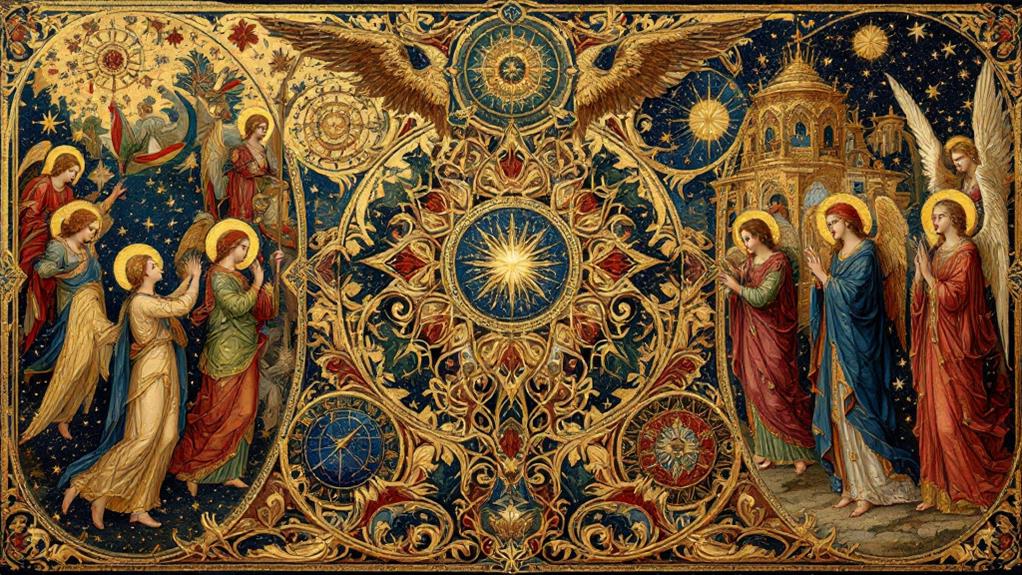
You'll find that religious iconography greatly impacts manuscript art by incorporating symbols, narratives, and cultural values. This imagery connects faith with artistic expression across numerous religious traditions such as Christianity, Islam, and Buddhism. Christian manuscripts use symbolism like the lamb and colors to reinforce theological concepts, while Islamic calligraphy transforms the written word into an artful devotion. Buddhist manuscripts use lively colors to illustrate spiritual teachings. The exchange of ideas along trade routes, like the Silk Road, brought varied artistic techniques and styles together, enriching these art forms. Uncovering more will reveal the depth of this cross-cultural dialogue.
Origins of Religious Imagery
Religious imagery began as a powerful means to convey spiritual beliefs and cultural values, serving as a universal language across civilizations. By examining these images, you can uncover the ancient beliefs that shaped societies. Imagine peering into a world where art wasn't merely decorative but an vital tool for communicating complex ideas and spiritual truths. Ancient cultures, regardless of being in Egypt, Mesopotamia, or India, used iconography to express their understanding of the divine and the cosmos.
When you investigate religious imagery, it's important to reflect on the cultural context in which it was created. These images weren't just artistic expressions; they were deeply rooted in the societal norms and spiritual practices of the time. Think about how Egyptian hieroglyphs depicted gods and pharaohs with symbolic significance, or how Hindu temples were adorned with intricate carvings that told stories of deities and their exploits.
As you probe deeper, you'll notice that these images often served a dual purpose: to educate and to inspire. They were visual scriptures that transcended language barriers, allowing people from different regions to connect with shared spiritual themes, reinforcing communal beliefs and values.
Symbolism in Christian Manuscripts
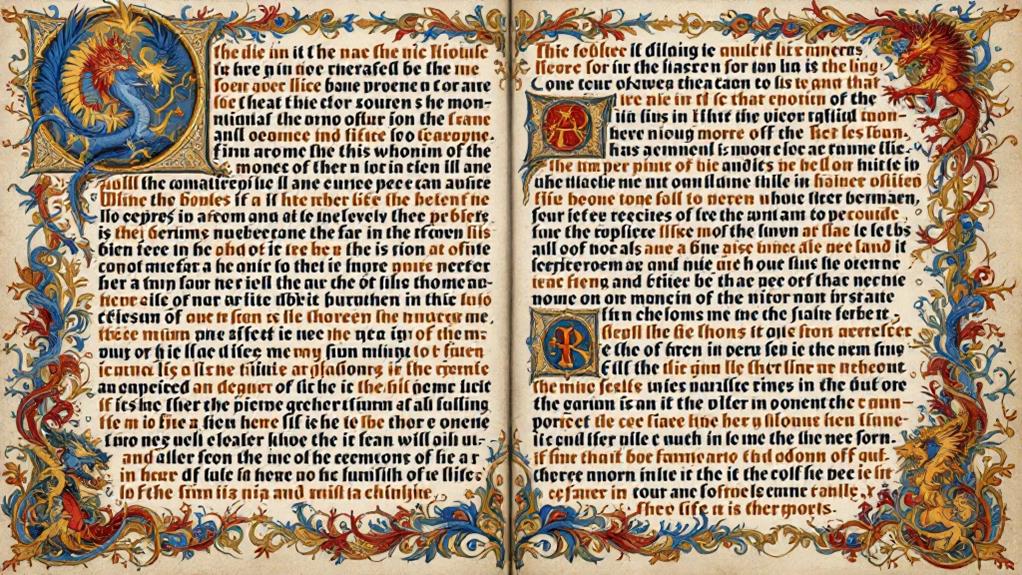
In Christian manuscripts, symbolism plays a crucial role in conveying theological concepts and spiritual narratives. When you investigate these texts, you'll notice how Christian symbolism is intricately woven into manuscript illumination. Artists didn't just embellish for beauty; their work was a visual sermon, teaching and reinforcing faith. Colors, for instance, are more than decorative. Gold symbolizes divine light, while blue often represents heaven or the Virgin Mary.
Illustrations of biblical scenes come alive with symbolic meaning. The lamb, often depicted, stands for Christ's sacrifice. When you see an anchor, it's not just a nautical element but a symbol of hope in Christian faith. The vine, frequently illustrated, represents Christ as the true vine, connecting believers to God.
Manuscript illumination also uses architectural symbolism. Look at the arches and columns—they're not just structural but signify the church as a steadfast refuge. Every detail in these manuscripts serves a purpose, guiding you to deeper understanding. By recognizing these symbols, you gain insight into the spiritual truths embedded within the art. Christian manuscripts invite you to see beyond the surface and investigate the rich tapestry of faith expressed through symbolic imagery.
Islamic Calligraphy and Design
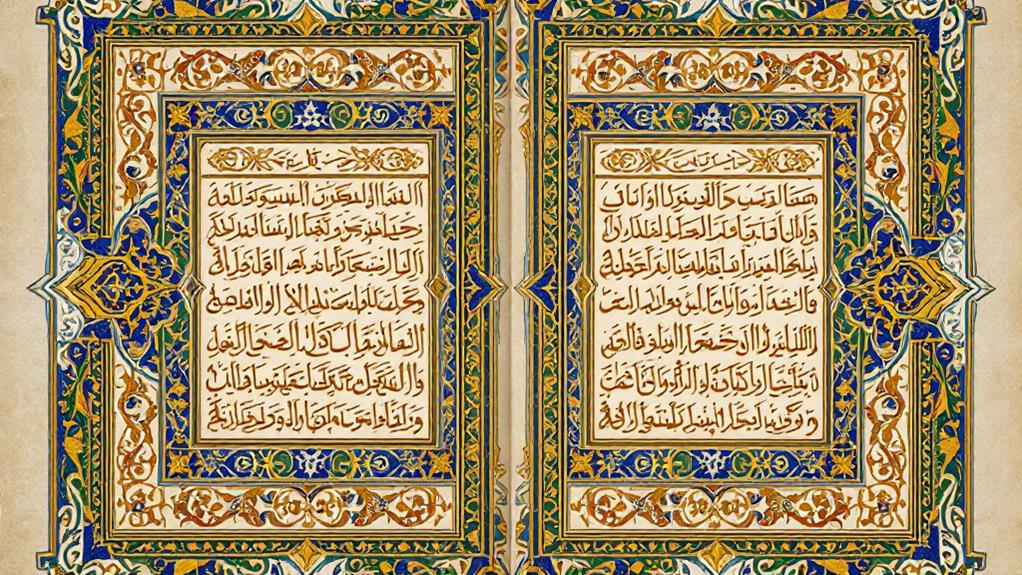
Step into the domain of Islamic calligraphy and design, where art and faith intertwine in a mesmerizing dance of form and function. In this sphere, the written word transforms into a visual masterpiece, transcending mere communication. You'll uncover how calligraphic techniques serve as a bridge between human creativity and divine inspiration. Each stroke is deliberate, filled with meaning that uplifts the text into a sacred symbol.
Islamic calligraphy often features geometric patterns that reflect the infinite nature of creation. These patterns aren't just decorative; they're a profound expression of the universe's order and harmony. As you investigate these intricate designs, you'll notice how mathematical precision meets artistic beauty, creating a unique aesthetic that's both timeless and divine.
To fully appreciate this art form, consider:
- The diversity of scripts: From Kufic to Naskh, each script offers a different style and purpose.
- The role of symmetry: Geometric patterns often rely on symmetry to convey balance and unity.
- The use of color: Vivid hues amplify the visual impact of calligraphy and patterns.
- The spiritual connection: Calligraphy is not just art; it's a form of meditation and devotion.
Buddhist Manuscript Art
While Islamic calligraphy fascinates with its geometric elegance, Buddhist manuscript art enchants through its intricate depictions of spiritual narratives and symbols. You'll find that these manuscripts often embody Buddhist symbolism, richly illustrating the teachings of the Buddha and the path to enlightenment. The use of lively colors and detailed images aims to convey a deep sense of spirituality and devotion in each piece.
As you investigate these manuscripts, pay attention to the manuscript techniques employed by artisans. Scribes and artists painstakingly crafted sacred texts on palm leaves or paper, using fine brushes and natural pigments. This careful process highlights the reverence placed on preserving Buddhist teachings, ensuring their transmission through generations.
Artistic traditions in Buddhist manuscript art vary greatly across regions, reflecting local influences and interpretations. In Tibet, for example, you'll notice thangkas—vivid fabric paintings—accompanying texts, creating a fascinating visual narrative. Meanwhile, in Southeast Asia, manuscripts might showcase intricate gold leaf designs that highlight the sacred nature of the texts within.
Cross-Cultural Artistic Exchange
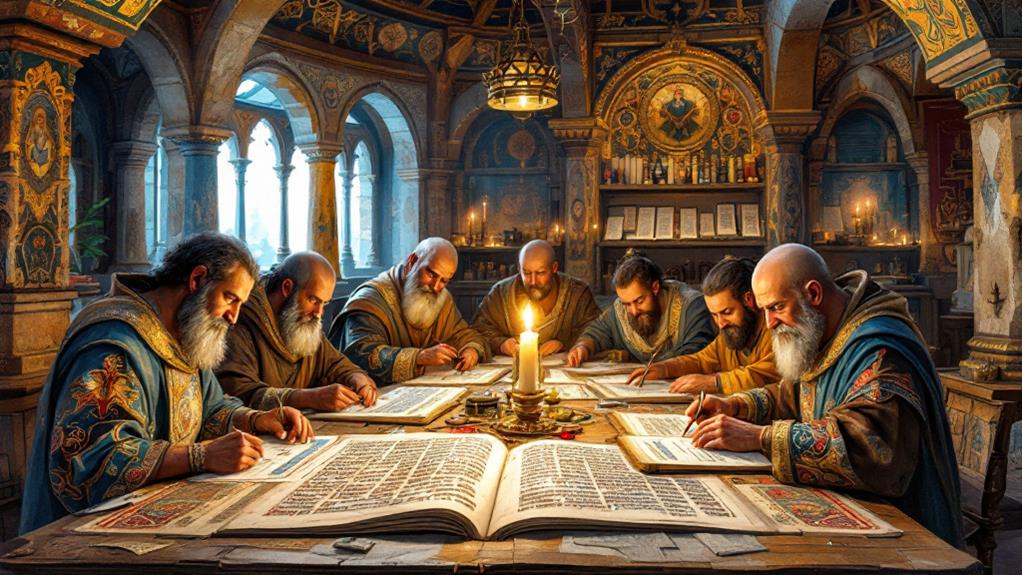
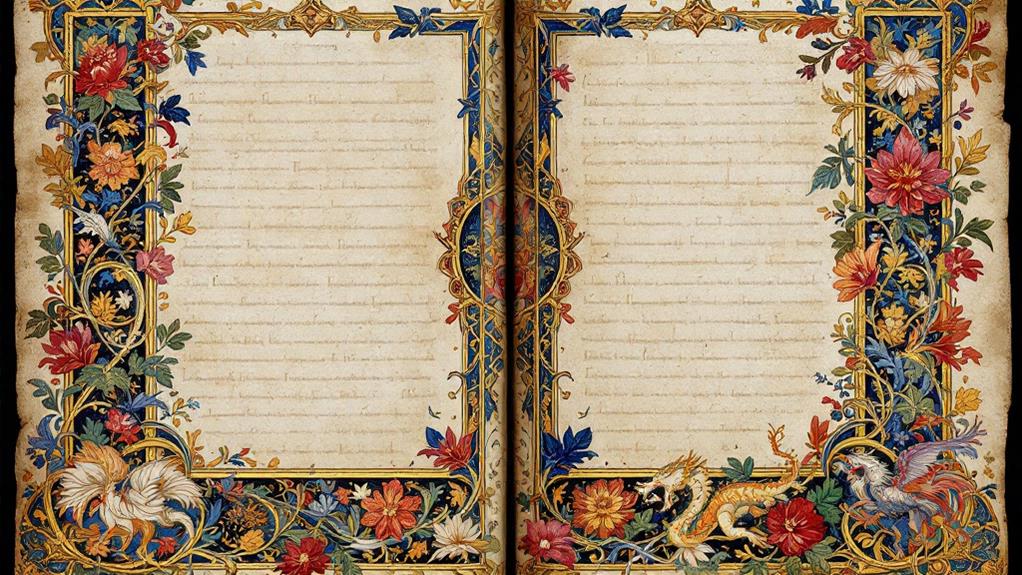
The lively tapestry of religious manuscript art is a tribute to the rich cross-cultural exchanges that have shaped its evolution. As you investigate this domain, you'll notice how different cultures have borrowed and adapted artistic styles to create unique works. Cultural fusion is evident in the way artists have seamlessly blended elements from diverse traditions. This artistic adaptation not only enriched manuscripts but also fostered a deeper understanding between varied communities.
Imagine a medieval European manuscript featuring Middle Eastern motifs or an Indian text adorned with Chinese artistic influences. These are examples of how cross-cultural interactions have left their mark on manuscripts. The exchange wasn't just a one-way street; it was a dynamic dialogue that transcended borders and languages.
Consider these fascinating instances of exchange:
- Islamic geometric patterns in Christian manuscripts, showcasing a blend of spiritual and aesthetic values.
- Buddhist iconography influencing Hindu texts, illustrating religious coexistence.
- Silk Road trade routes facilitating the exchange of artistic techniques and materials.
- Persian miniatures inspiring European artists, leading to new styles and techniques.
Related posts