Restoration Challenges in Preserving Historic Folios: What Experts Face
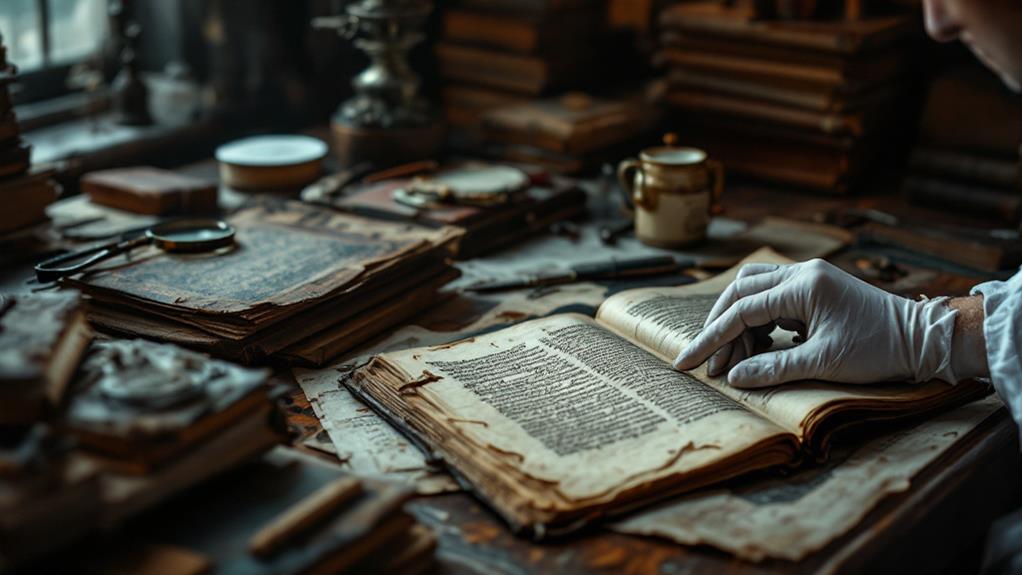
When preserving historic folios, you're tackling the challenge of balancing their authenticity with longevity. Folios deteriorate due to fragile materials and ink fading, necessitating careful handling and condition assessment. Climate control is critical, as fluctuating humidity can wreak havoc, causing warping or mold. You must guarantee restoration techniques honor the original construction and authenticity, avoiding over-restoration that risks historical value. Modern technology, like digital archiving, aids in preserving content without altering the physical artifact. Ethical considerations demand you respect cultural significance, involving historians and stakeholders. For a deeper understanding of these nuanced challenges, there's more to uncover.
Understanding Material Fragility
When dealing with historic folios, understanding material fragility becomes fundamental. You can't overlook the delicate nature of these documents. They often suffer from material degradation due to the passage of time and the original materials used. As you examine these folios, it's imperative to recognize that the paper, ink, and bindings were crafted in a world very different from ours. Their historical significance makes them irreplaceable, so handling them with care is not just advisable—it's mandatory.
You'll notice that the paper's composition varies greatly depending on its era. Older folios might be made from rag paper, which is more durable than the wood pulp paper commonly used today. However, even these can succumb to the effects of acidification and brittleness over time. Inks can fade, and bindings can weaken, making it essential to assess each component's condition carefully.
Environmental Impact on Preservation
Environmental factors play a vital role in the preservation of historic folios. You need to understand how climate change and humidity control affect these delicate valuables. As temperatures rise and weather patterns become unpredictable, maintaining a stable environment for folios becomes a significant challenge. Climate change can lead to increased instances of extreme weather, which can threaten the conditions required for folio preservation.
Humidity control is of utmost importance. You must monitor and regulate humidity levels carefully, as fluctuations can cause paper to expand or contract, leading to warping or mold growth. High humidity can accelerate deterioration, while low humidity can make the paper brittle. Using specialized equipment like dehumidifiers and humidifiers helps maintain the ideal environment, but it requires constant attention.
Additionally, you should be aware of how energy consumption for climate control impacts the environment. Striking a balance between preserving these works and reducing carbon footprints is vital. Implementing sustainable practices, such as using energy-efficient systems, can help mitigate environmental effects. As you face these challenges, keep in mind that understanding and controlling environmental factors are key to ensuring the survival of historic folios for future generations.
Balancing Authenticity and Restoration

In the domain of historic folio preservation, finding the right balance between authenticity and restoration is crucial. When you're faced with authenticity dilemmas, the challenge lies in making decisions that honor the original work while guaranteeing its longevity. You might wonder, should you prioritize the folio's historic integrity or its physical condition? This is where restoration techniques come into play, helping you navigate these tricky waters.
You've got to take into account the folio's historical context and what makes it unique. You can't just slap on some modern materials and call it a day. Instead, you need to employ restoration techniques that respect the folio's original construction. For example, using adhesives and papers that match the time period can help maintain authenticity while guaranteeing durability.
As you work, keep in mind that over-restoration can lead to the loss of original features, which diminishes the folio's historical value. It's a delicate dance, and you need to continuously assess if each action improves or detracts from the folio's authenticity. By carefully weighing these factors, you secure that the folio remains a true representation of its time, while also standing the test of time.
Integrating Modern Techniques
While maintaining authenticity is essential, blending it with modern techniques can greatly improve the preservation of historic folios. As a restoration enthusiast, you're faced with the challenge of keeping a folio's original charm while ensuring it withstands the test of time. Fortunately, modern advancements provide some exciting options.
- Digital Archiving: This technique allows you to create high-resolution digital copies of folios. By doing so, you not only preserve the content in its most pristine form but also make it accessible to a wider audience. Digital archiving offers a way to study and appreciate these valuables without further handling the delicate originals.
- Innovative Materials: Using cutting-edge materials in restoration can greatly improve a folio's longevity. These materials are designed to mimic the properties of the original ones while providing superior durability and protection against environmental factors like humidity and light.
- Advanced Imaging Techniques: Employing techniques such as multispectral imaging helps you uncover hidden text or details without causing damage. This non-invasive method allows for deeper analysis and understanding, offering insights into the folio's history and context.
Ethical Considerations in Conservation
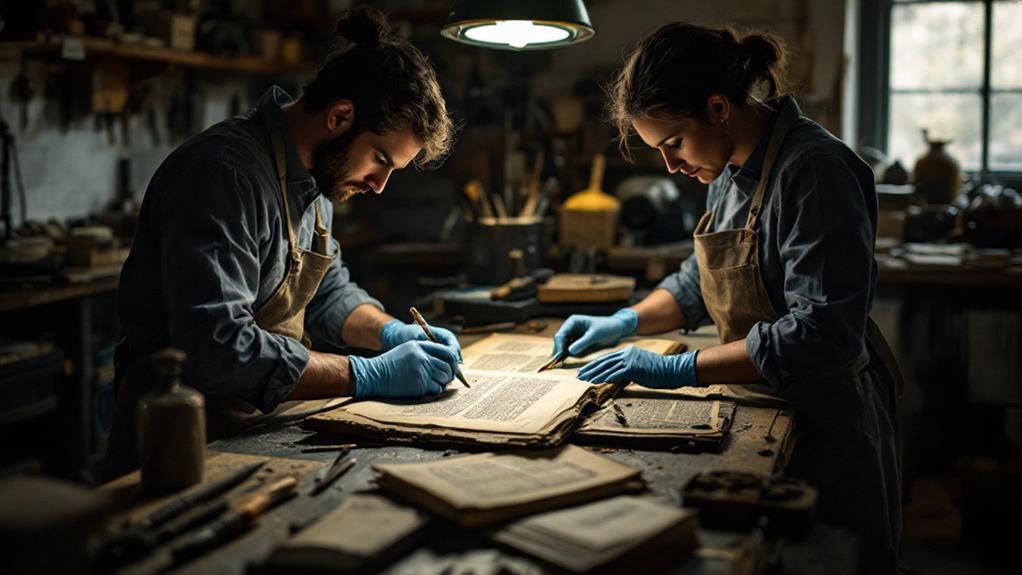
Preserving historic folios isn't just about technique; it's also about the ethical responsibility that comes with handling cultural heritage. As a conservator, you must recognize the cultural significance these artifacts hold. They're not just old papers; they're pieces of history that reflect the values, beliefs, and traditions of the past. You face the challenge of balancing the need to preserve the folio's physical condition with maintaining its historical authenticity.
You must engage with stakeholders, including historians, community members, and cultural organizations, to guarantee that conservation efforts honor the artifact's original context. Stakeholder engagement is vital because it provides diverse perspectives on what aspects of the folio are most essential to preserve. This collaboration helps you make informed decisions that respect the cultural heritage of the communities connected to the folio.
In your role, ethical considerations demand transparency in the methods you use and the changes made to the folio. You should document every step, making sure that future generations understand the conservation process and can build upon your work. By prioritizing cultural significance and stakeholder engagement, you're safeguarding not just the folio, but its story and meaning.
Related posts