Religious Folios: a Look Into Ancient Bibles, Qur’Ans, and Sutras
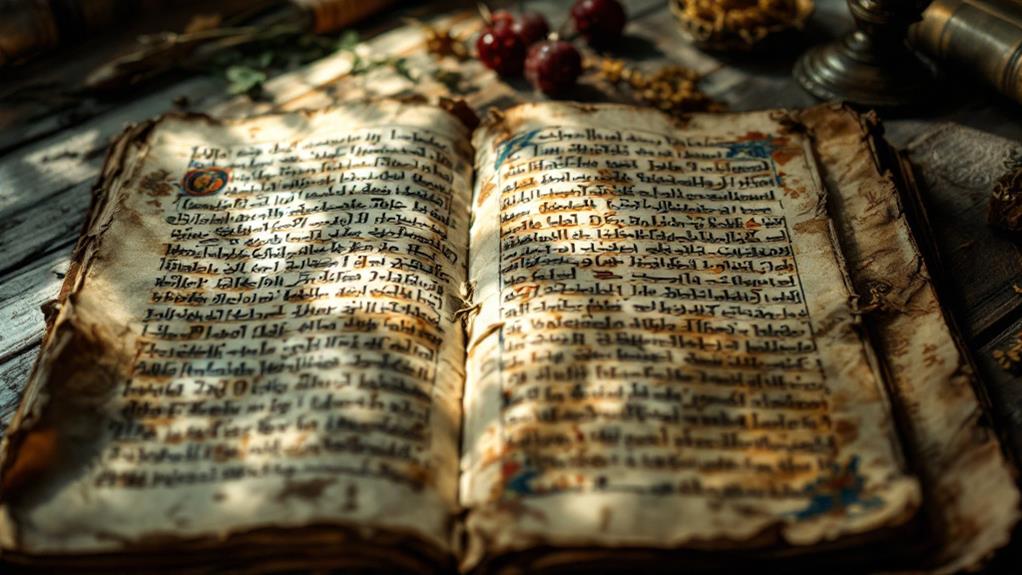
When you investigate ancient religious folios like Bibles, Qur'ans, and Sutras, you're stepping into a lively history of spirituality and artistry. These texts weren't just written; they were carefully crafted, using materials like vellum and iron gall ink, ensuring they stood the test of time. Each manuscript reflects its cultural roots, with illuminated pages and exquisite calligraphy that turn sacred words into works of art. The narratives and teachings within them have shaped rituals and beliefs for centuries. By understanding their creation and preservation, you gain insight into how these texts continue to influence faith and practice today.
Historical Roots of Religious Texts
Religious texts, some of which date back thousands of years, have profoundly shaped human civilizations. As you investigate the historical roots of these ancient texts, you'll find that understanding their origin involves examining the intricate processes of textual transmission and the cultural contexts in which they were produced. Textual transmission refers to how these sacred writings were copied and shared across generations. This process was essential in preserving the messages within, ensuring they reached diverse communities despite the challenges of time and geography.
When you consider cultural context, you appreciate how the environment and societal norms of the time influenced these texts. Each religious text, regardless of it being the Bible, Qur'an, or Sutras, reflects the unique beliefs and practices of its originating culture. For instance, the oral traditions, languages, and writing materials available at the time notably impacted how these texts were recorded and interpreted.
The Art of Manuscript Illumination
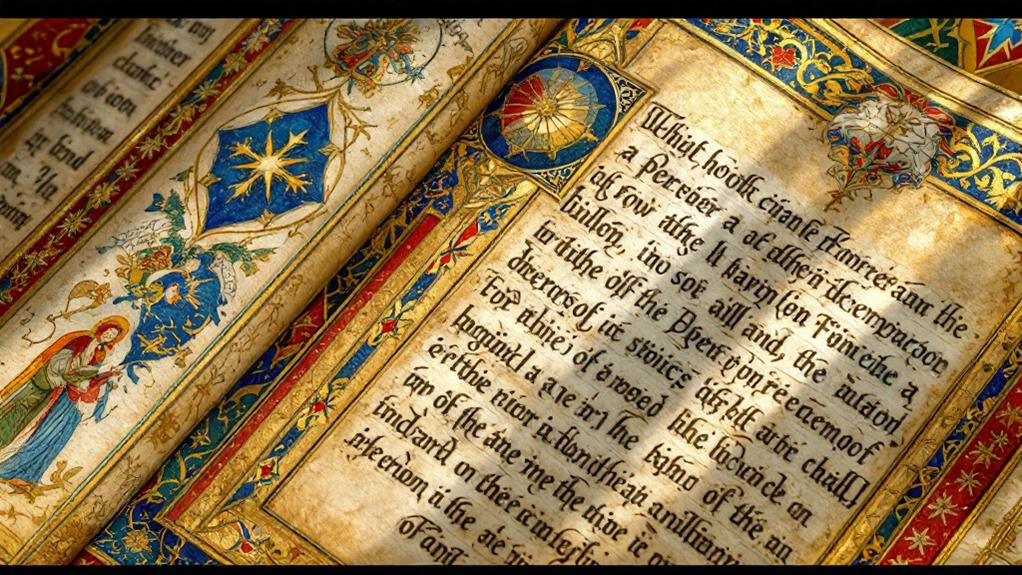
Throughout history, the art of manuscript illumination has captivated those who seek to understand the intricate beauty of religious texts. You'll find that illuminated manuscripts are not just decorative; they're a window into the past, revealing the cultural significance of the societies that created them. These manuscripts, often painstakingly decorated with gold leaf, lively colors, and intricate designs, were more than just books—they were gems that conveyed spiritual and intellectual wealth.
As you examine these works, notice how the illuminations serve as both artistic expression and a means of storytelling. They offer insights into the beliefs and values of the time, reflecting the intertwining of faith and art. Each stroke and hue was carefully chosen to improve the sacred words, making the text not only a spiritual guide but also a visual feast.
Ancient Bibles: Variations and Legacy
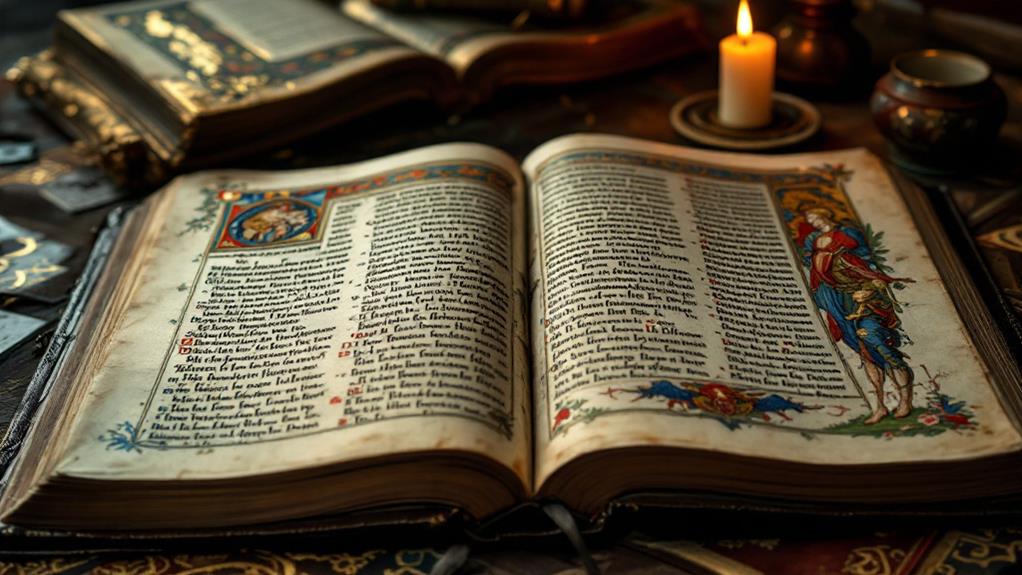
Ancient Bibles, with their diverse variations, offer a fascinating immersion into the evolution of religious texts and their lasting impact on modern scripture. As you investigate these ancient texts, you'll notice how textual variations emerged over time due to cultural influences and regional adaptations. These differences often reflect the historical context in which the Bibles were transcribed, revealing unique insights into early Christian communities.
Translation challenges have played a significant role in shaping these variations. Translators faced difficulties in accurately conveying original meanings across languages, leading to theological implications that have sparked debates and differing interpretations. You might find it intriguing how each translation decision could alter the perceived message of a passage.
Manuscript authenticity is another critical aspect you must consider. Scholars invest considerable effort in verifying the legitimacy of ancient manuscripts, ensuring the preservation of accurate texts for future generations. This task involves careful preservation efforts to protect these invaluable documents from the ravages of time.
Ultimately, the legacy of ancient Bibles rests in their ability to adapt and endure. Their variations and adaptations not only highlight the dynamic nature of religious belief but also continue to influence contemporary faith practices and theological thought.
Qur'anic Manuscripts: Tradition and Preservation
Exploring the variations in ancient Bibles, one can't help but turn attention to the rich tradition and careful preservation of Qur'anic manuscripts. These manuscripts provide an insight into the Qur'anic evolution, showcasing the careful efforts to maintain their authenticity. As you investigate the world of these ancient texts, you'll find that the Qur'an has remained remarkably consistent since its inception. This consistency underscores the manuscript importance, highlighting the dedication to preserving its original message.
When examining Qur'anic manuscripts, you'll notice they're more than just religious texts; they're historical artifacts that reflect the culture and artistry of their time. The process of copying the Qur'an was a sacred task, entrusted only to highly skilled scribes. Their work guaranteed that each manuscript was an exact replication, free from alterations, thereby preserving the Qur'an's integrity over centuries.
You'll also appreciate the diversity in the manuscripts' artistry. From the Kufic script to the later Naskh style, each manuscript is a reflection of its period's artistic expression. These features not only improve the aesthetic value but also emphasize the manuscript importance, making them invaluable to both religious and historical scholars.
Sutras: The Buddhist Canon Explored

Delving into the world of Buddhist texts, you'll encounter the Sutras, which form the core of the Buddhist canon. These texts are crucial in understanding Buddhist philosophy and the teachings of Buddha. As you investigate the Sutras, you'll notice their historical significance, as they have been passed down through generations via careful scripture transmission. This process has guaranteed that the teachings remain intact, although textual variations exist due to translations and interpretations.
The Sutras play a critical role in meditation practices, offering guidance on how to cultivate mindfulness and achieve enlightenment. They're not just spiritual guides but also carry a cultural impact, influencing art, literature, and the daily lives of Buddhist communities. Through religious rituals, the Sutras are recited and revered, fostering community engagement and reinforcing shared beliefs.
As you plunge deeper, you'll appreciate the diverse range of Sutras, each with unique teachings and insights. This diversity reflects the expansive reach of Buddhism across different cultures and times. By studying these texts, you're not just learning about ancient teachings; you're connecting with a living tradition that continues to inspire and guide millions today.
Materials and Techniques in Folio Creation
Crafting folios for ancient texts involves a unique blend of materials and techniques that have evolved over centuries. As you explore this fascinating process, you'll uncover that the choice of materials played an essential role in the preservation and beauty of these sacred documents. Parchment types varied greatly, with scribes often choosing the finest-quality calfskin, known as vellum, for its smooth surface and durability. Other parchments, like goatskin and sheepskin, provided alternatives, each offering unique textures and qualities that influenced the final look of the folio.
As for ink compositions, scribes didn't just use any ink. They carefully selected and mixed ingredients to create brilliant and lasting colors. Iron gall ink, made from oak galls and iron salts, was a popular choice due to its rich, dark hue and permanence. For further decoration, they sometimes included pigments like lapis lazuli for blue or gold leaf for luxurious embellishments.
To apply these materials, scribes used quills or brushes, ensuring every stroke was precise and meaningful. Understanding the materials and techniques of folio creation gives you a deeper appreciation for the devotion and skill embedded in these ancient religious texts.
Calligraphy as a Sacred Art
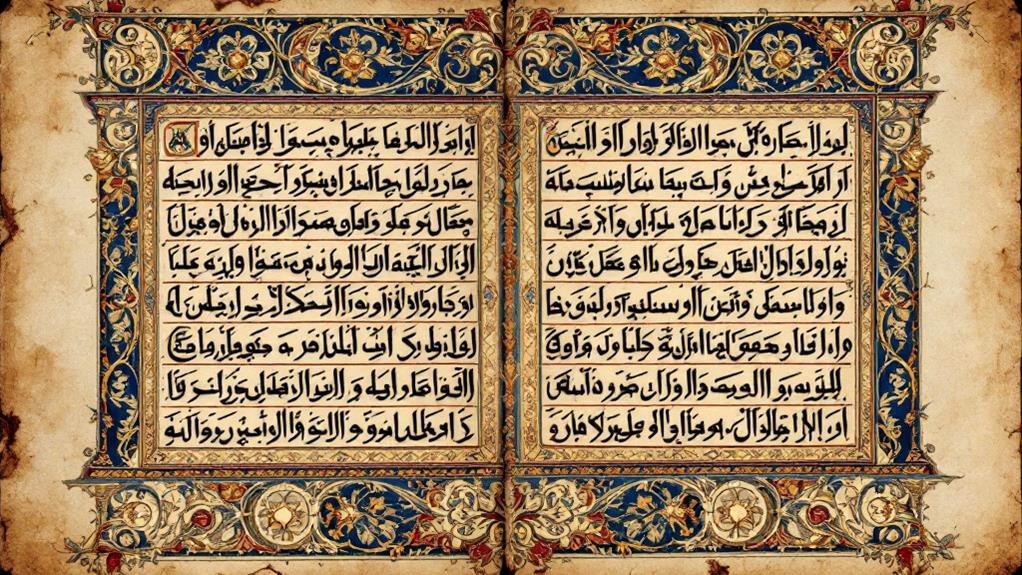
Calligraphy, often regarded as a sacred art, is more than just ornamental writing; it's a spiritual practice that connects the scribe to the divine. When you engage in calligraphy, you participate in a form of spiritual expression that transcends mere words. Each stroke and flourish holds cultural significance, echoing the rich manuscript traditions of ancient religious texts. The artistic techniques employed are not just about aesthetics; they're deeply embedded in historical context, reflecting the values and beliefs of the time.
In religious contexts, calligraphy serves as a vessel for religious symbolism. The Qur'an, Bible, and Sutras, for example, often showcase calligraphic styles that emphasize the sacred nature of the text. These styles are carefully crafted, sometimes incorporating sacred geometry, to improve the spiritual resonance of the written word. You'll find that each tradition has its own unique approach, yet all share the common goal of elevating the text to a higher plane of understanding.
Iconography and Symbolism in Texts
When you explore ancient religious texts, you'll notice that iconography and symbolism play crucial roles in conveying deeper meanings. These elements aren't just decorative; they're profound forms of communication that transcend language barriers. By using symbolic representation, these texts depict complex ideas and spiritual concepts, allowing believers to connect deeply with their faith. You'll find that visual storytelling, a key component in these texts, helps simplify intricate doctrines and narratives, making them accessible to diverse audiences.
Imagine flipping through a centuries-old Bible, Qur'an, or Sutra. You'll see how symbols like the cross, crescent moon, or lotus blossom aren't merely ornamental. They're packed with significance, representing themes like sacrifice, guidance, or enlightenment. These symbols guide you through the spiritual path prescribed by the text, enriching your understanding of its teachings.
Moreover, the interplay of imagery and words in these religious folios serves as a mnemonic device, helping you remember and internalize the lessons. As you explore these texts, you'll appreciate how iconography and symbolism create a universal language, transcending cultural and linguistic boundaries, and fostering a shared spiritual experience.
Influence on Modern Religious Practices
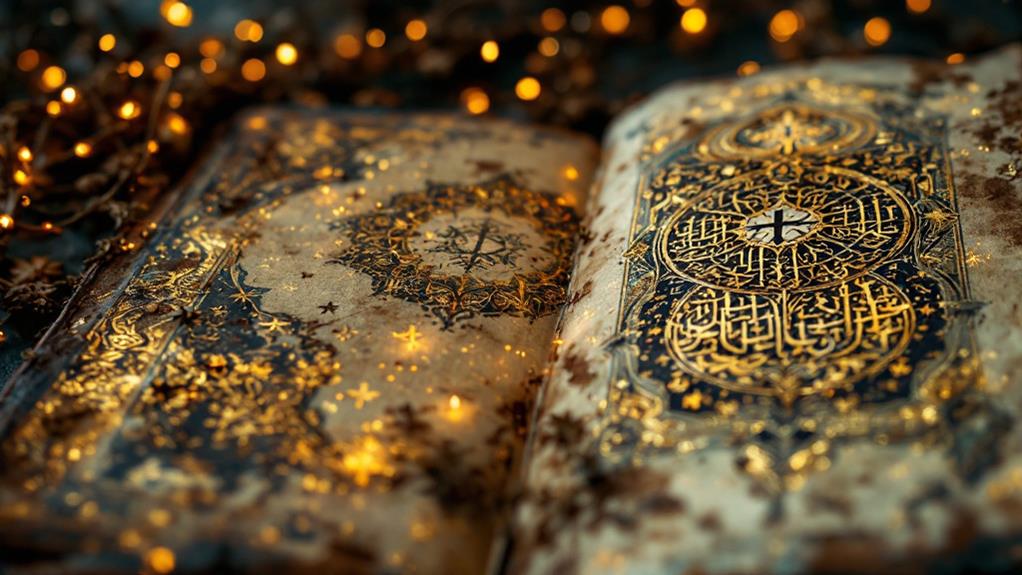
The rich tapestry of ancient religious texts continues to shape modern religious practices in profound ways. When you investigate these sacred writings, you uncover the roots of many rituals that are still performed today. Ancient texts guide the way you celebrate religious ceremonies and provide a framework for understanding spiritual journeys. Ritual practices like prayer, meditation, and communal gatherings have evolved from the foundational teachings of these sacred scripts. They offer timeless wisdom, instructing you on how to connect with the divine.
Today, people often turn to contemporary interpretations of these ancient writings to apply long-standing insights to modern life. Regardless of whether it's a new translation of a Sutra, a modern commentary on the Bible, or a fresh perspective on the Qur'an, these interpretations allow you to find relevance and inspiration for today's world. They encourage you to investigate your spirituality in ways that resonate personally, without losing the essence of the original teachings. By engaging with these texts, you participate in a living tradition, bridging the gap between past and present, and ensuring the continuity of meaningful religious practices across generations.
Preserving and Digitizing Sacred Manuscripts
As you investigate the impact of ancient religious texts on today's practices, the significance of preserving these sacred manuscripts becomes apparent. These documents aren't just relics; they're living connections to spiritual traditions and cultural heritage. Focusing on manuscript conservation guarantees that the physical integrity of these texts is maintained for future generations. However, the process doesn't stop there. To truly safeguard this knowledge, embracing digital preservation is essential.
Digitizing these sacred texts allows you to create high-quality digital copies that can be accessed and studied worldwide without risking damage to the originals. This process not only aids in protecting the manuscripts from physical deterioration but also opens up new avenues for research and education. By converting these texts into digital formats, you help bridge the gap between past and present, making them more accessible to scholars and the general public.
Incorporating digital preservation into your conservation efforts can also mitigate the risks posed by natural disasters or human error. By confirming these ancient texts are both physically preserved and digitally archived, you play a significant role in keeping these artifacts alive for future exploration and understanding.
Related posts