Manuscript Illumination: How Artists Combined Art and Spirituality
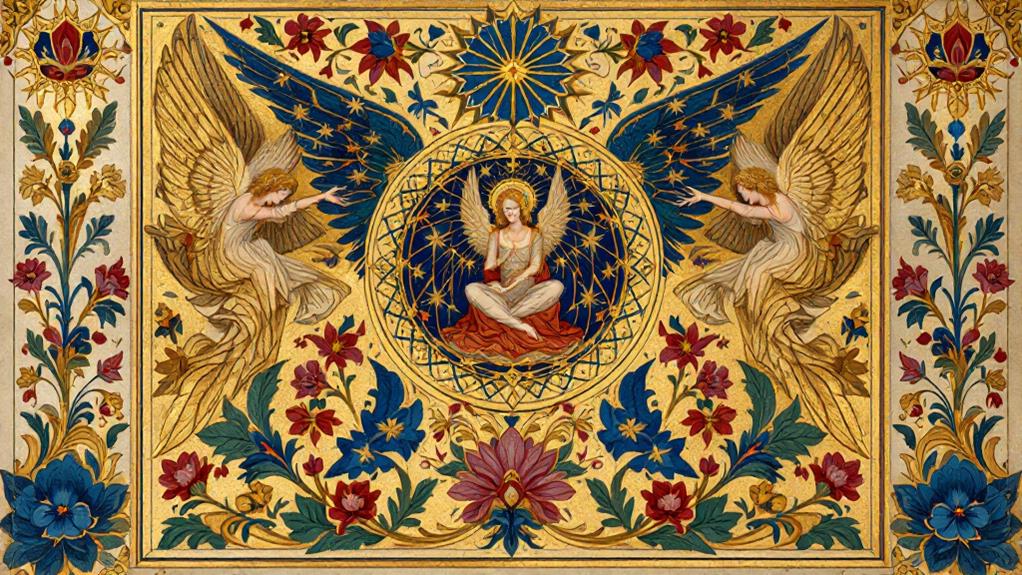
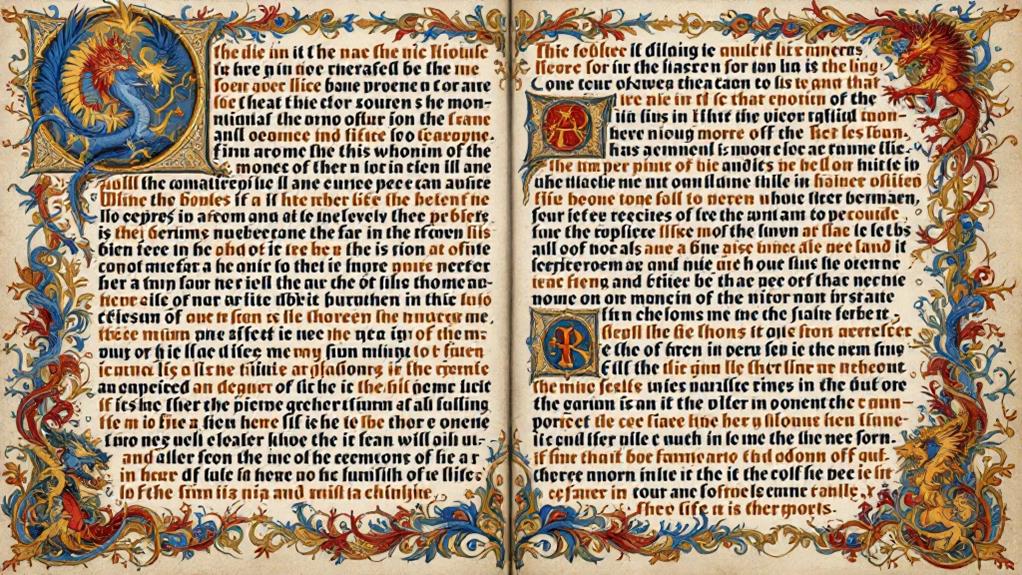
In manuscript illumination, artists interwove art and spirituality to bring sacred texts to life. You see intricate designs crafted with natural pigments and gold leaf, transforming pages into luminous reflections of divine narratives. The symbolism in colors and iconography, like gold for divinity or lambs for innocence, enriches religious teachings with visual storytelling. Scriptoriums were hubs where scribes and artists collaborated, ensuring the spiritual essence was carefully preserved. These creations not only convey religious messages but also reveal insights into medieval society's spiritual and cultural values. There's much more to uncover about this enchanting blend of art and faith.
Origins of Manuscript Illumination
Manuscript illumination got its start in the early medieval period, transforming plain texts into lively works of art. You'd find that it emerged as a direct response to the period's need to make sacred texts more engaging and meaningful. As you investigate its historical context, you'll see how illumination became a powerful tool to convey spiritual and cultural significance. The brilliant colors and intricate designs weren't just decorative; they served to enhance the spiritual experience of reading these texts.
During this time, cultural shifts were happening across Europe. Christianity was spreading, and with it came the desire to preserve and share religious teachings. Manuscripts weren't just books; they were vessels of divine knowledge and cultural identity. By incorporating elements like gold leaf and vivid pigments, illuminators guaranteed that these texts would captivate and inspire the faithful.
As you delve deeper, you'll notice the cultural significance of illuminated manuscripts in different regions. They reflected local styles and traditions, making each manuscript unique. This artistry wasn't merely about aesthetics; it was a way to communicate values, beliefs, and the essence of a community, bridging the sacred and the artistic.
The Role of Scriptoriums
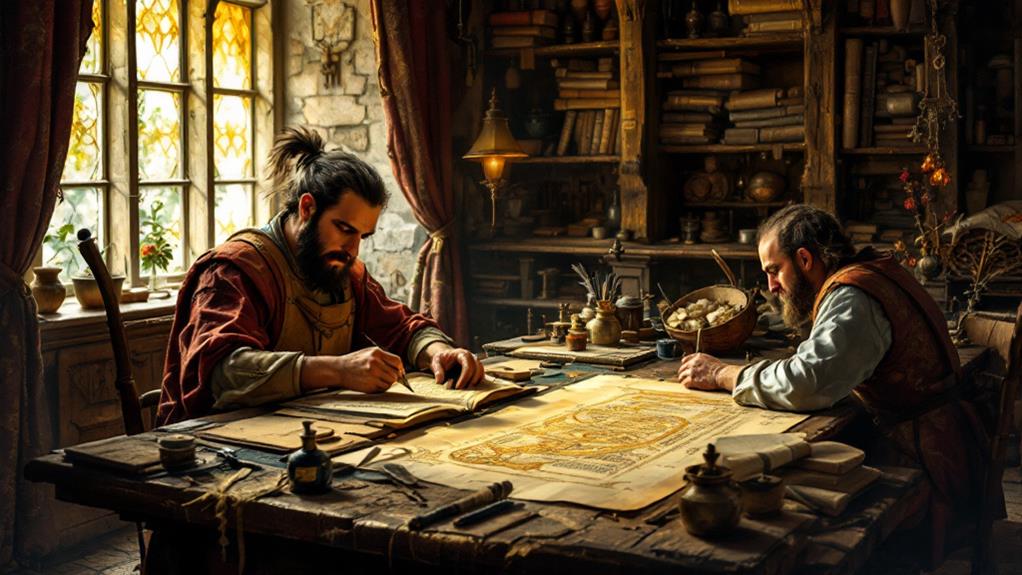
Within the walls of medieval monasteries and abbeys, scriptoriums buzzed with activity, playing a crucial role in the creation and preservation of illuminated manuscripts. These dedicated spaces served as the heart of literary and artistic production, where skilled scribes and artists worked tirelessly. Understanding the scriptorium functions provides insight into their historical significance.
- Copying Texts: Scribes carefully copied religious and philosophical texts, ensuring the words of the past reached future generations. This painstaking process required precision and devotion, as every manuscript was a hand-crafted gem.
- Illuminating Manuscripts: In scriptoriums, artists adorned manuscripts with intricate designs and lively colors, merging art with devotion. This practice not only improved the visual appeal but also reinforced the spiritual messages contained within the text.
- Preservation and Education: Scriptoriums were centers of learning and knowledge preservation. They safeguarded the intellectual heritage of the time, providing a foundation for education and scholarship.
Techniques and Materials
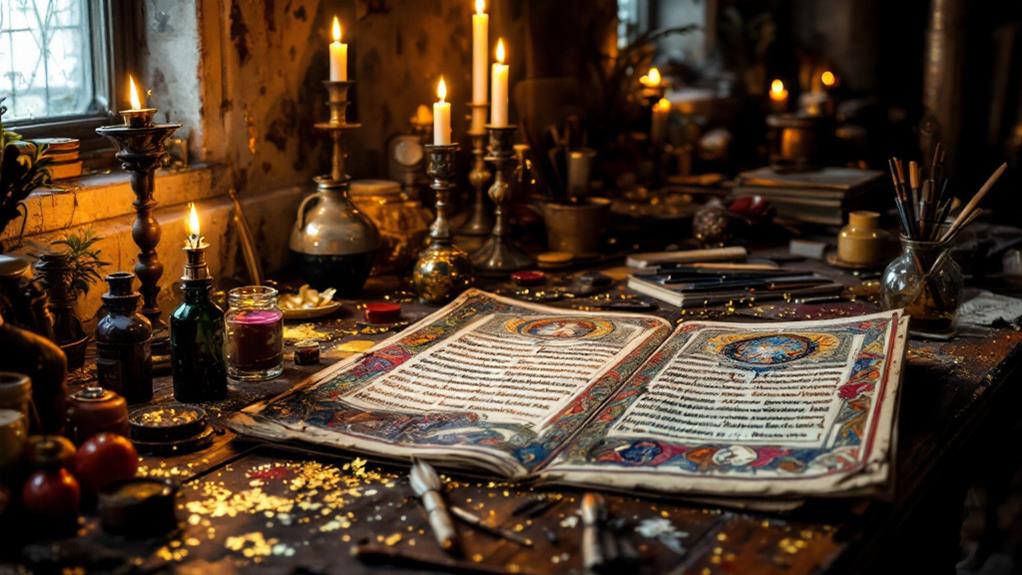
To truly appreciate the artistry of illuminated manuscripts, you need to investigate the techniques and materials that made them possible. Artists of the medieval period employed a variety of sophisticated methods to bring these manuscripts to life. Understanding color theory was vital, as artists carefully selected pigments to create vibrant, harmonious compositions. They often used natural materials like minerals, plants, and even insects to extract lively colors. Gold leaf, a hallmark of illumination, was painstakingly applied to improve the artwork's divine allure.
Mastering brush techniques was just as significant. Artists used fine-tipped brushes made from animal hair to apply delicate lines and intricate details. These brushes allowed them to achieve a level of precision that was fundamental for the small-scale work required in manuscripts. The artists' ability to control the flow of paint and create smooth gradients added depth and realism to their work.
The choice of parchment as a primary material also played a notable role. Made from animal skins, parchment provided a durable and smooth surface that held pigments well. By immersing yourself in these techniques and materials, you gain a deeper understanding of the skill and dedication behind each illuminated manuscript.
Symbolism in Manuscript Art
Illuminated manuscripts are rich in symbolism, weaving layers of meaning into their ornate designs. As you investigate these manuscripts, you'll notice how artists used diverse types of symbolism to convey deeper messages.
- Color Symbolism: Colors weren't just decorative; each hue had a meaning. Gold often symbolized divinity, while purple was reserved for royalty. The use of blue might suggest purity or heavenly grace.
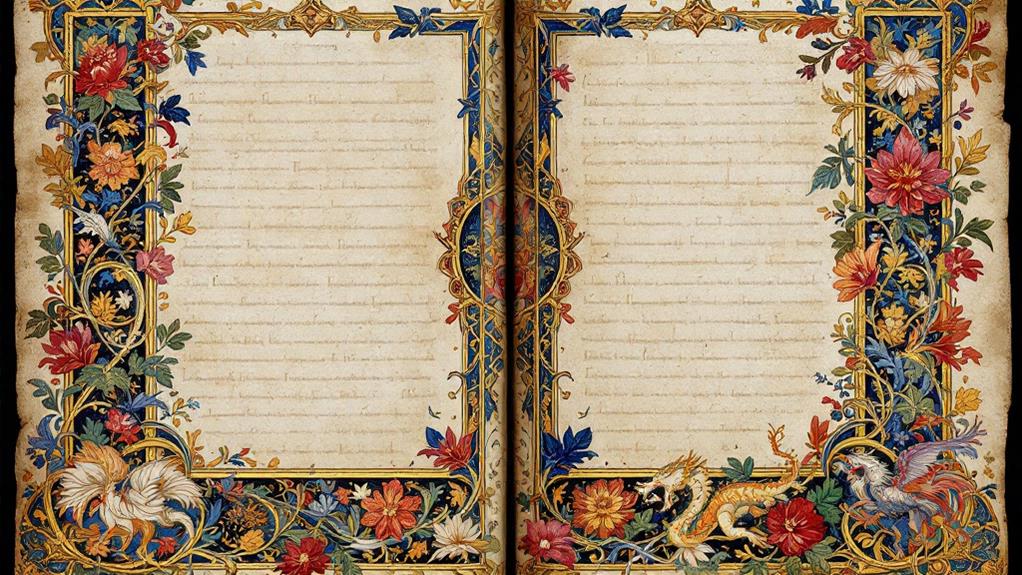
- Animal and Floral Symbolism: Animals and plants carried specific meanings, too. Lambs could represent innocence or Christ, while lions indicated strength. Floral symbolism was similarly potent; lilies might signify purity, while roses could denote love or martyrdom.
- Celestial and Number Symbolism: Stars, suns, and moons weren't just celestial decorations; they often symbolized enlightenment or divine presence. Number symbolism played a vital role as well. The number three, for instance, frequently represented the Holy Trinity, while seven could signify completion or perfection.
Cultural symbolism infused these works with broader social meanings, tying them to the values and beliefs of their time. As you investigate the symbolism of illuminated manuscripts, you uncover a rich tapestry of meanings that transcend mere decoration, offering insights into the medieval mind and spirit.
Influence of Religion

Rooted in the profound spirituality of the Middle Period, illuminated manuscripts were profoundly shaped by religious influences. As you investigate these intricate works, you'll notice how religious themes dominate the pages. The artists didn't just create art; they crafted a visual narrative steeped in the spiritual beliefs of their time. Each page served as a canvas for depicting stories from the Bible, lives of saints, and divine visions, providing a spiritual guide for those who viewed them.
You'll find that spiritual symbolism played a significant role in these manuscripts. Every element, from color choices to specific imagery, was carefully selected to convey deeper religious meanings. For example, the use of blue often symbolized the Virgin Mary, while lambs represented Christ's sacrifice. These symbols weren't just decorative; they invited viewers to reflect on their spiritual path and strengthen their faith.
The Use of Gold Leaf
When you investigate the world of illuminated manuscripts, one aspect that immediately captures your attention is the use of gold leaf. This shimmering material, diligently applied by artists, plays a vital role in improving the visual and spiritual appeal of these works. Gold leaf applications were not just decorative; they held profound historical significance. They symbolized divine light and the sacred, elevating the manuscripts to a higher spiritual plane.
Consider these three compelling aspects:
- Aesthetic Improvement: Gold leaf adds a luminous quality to the pages, making illustrations and texts visually striking. The light reflection creates a mesmerizing effect, drawing the viewer's eye.
- Symbolic Value: The use of gold leaf signifies wealth and power, often reserved for the most significant religious texts. It underscores the manuscript's spiritual significance and the patron's devotion.
- Technical Skill: Applying gold leaf required precision and artistry, showcasing the illuminator's expertise. The technique involved careful preparation and layering, a reflection of the dedication and skill of medieval artists.
Understanding these elements helps you appreciate why gold leaf remains an iconic and revered component in the art of manuscript illumination.
Iconography and Imagery
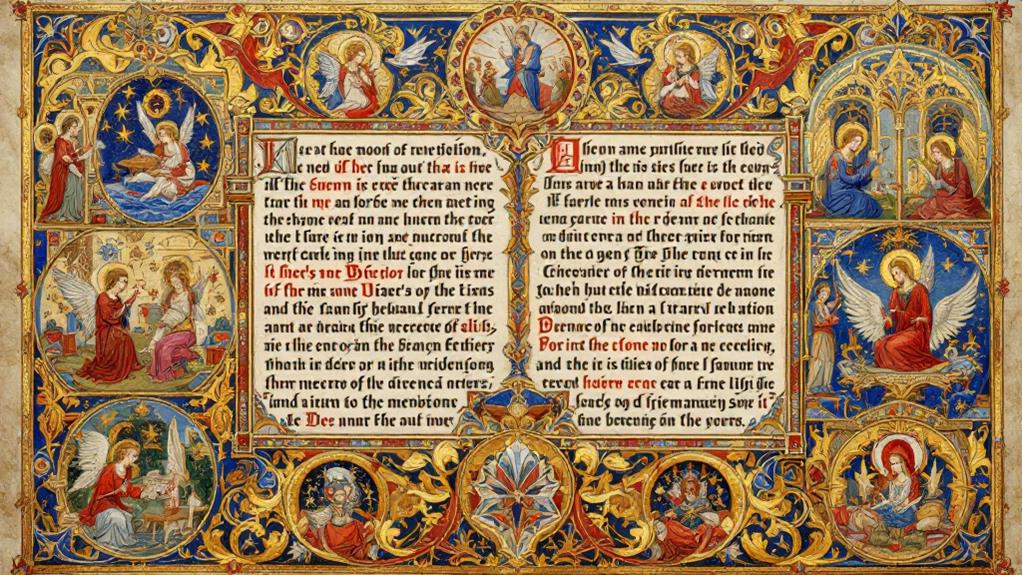
In the domain of manuscript illumination, iconography and imagery serve as the visual language that communicates profound spiritual and cultural narratives. As you investigate these manuscripts, you'll notice how artists used iconic symbols to convey complex ideas and beliefs. Each symbol, regardless of whether it's a lamb, a cross, or a chalice, carries a deeper meaning, often rooted in religious texts or cultural traditions. These symbols aren't just decorative; they're crucial for understanding the message the manuscript aims to deliver.
When you examine the visual narratives present in illuminated manuscripts, you see how carefully artists crafted each scene. They didn't merely illustrate stories—they brought them to life. Through lively colors and detailed imagery, these narratives guided the reader's understanding and contemplation of spiritual themes. You'll often find scenes depicting biblical events, saints, or moral lessons, each carefully designed to evoke reflection and devotion.
Prominent Illuminated Manuscripts
Among the riches of manuscript illumination, a few works stand out as iconic representations of this intricate art form. These famous manuscripts not only exhibit artistic brilliance but also offer significant cultural insights. Let's investigate three renowned examples that encapsulate the fusion of art and spirituality.
- The Book of Kells: Often hailed as the pinnacle of Celtic art, this masterpiece showcases intricate designs and lively colors. Its pages are adorned with detailed illustrations of the four Gospels, reflecting its immense cultural significance in medieval Christianity.
- The Trèès Riches Heures du Duc de Berry: This illuminated manuscript is celebrated for its lavish depiction of the calendar months, capturing the essence of 15th-century life. Its detailed miniatures and rich color palette demonstrate the artistry of the Limbourg brothers, making it a cultural gem of the French Gothic period.
- The Lindisfarne Gospels: Produced in the early 8th century, this manuscript is a proof of the skill of Anglo-Saxon artisans. Its ornate initial letters and intricate interlace patterns highlight its religious and artistic importance, cementing its status as a historical artifact.
These manuscripts exemplify how illumination serves as a bridge between art and cultural heritage, enriching our understanding of the past.
Artists Behind the Masterpieces
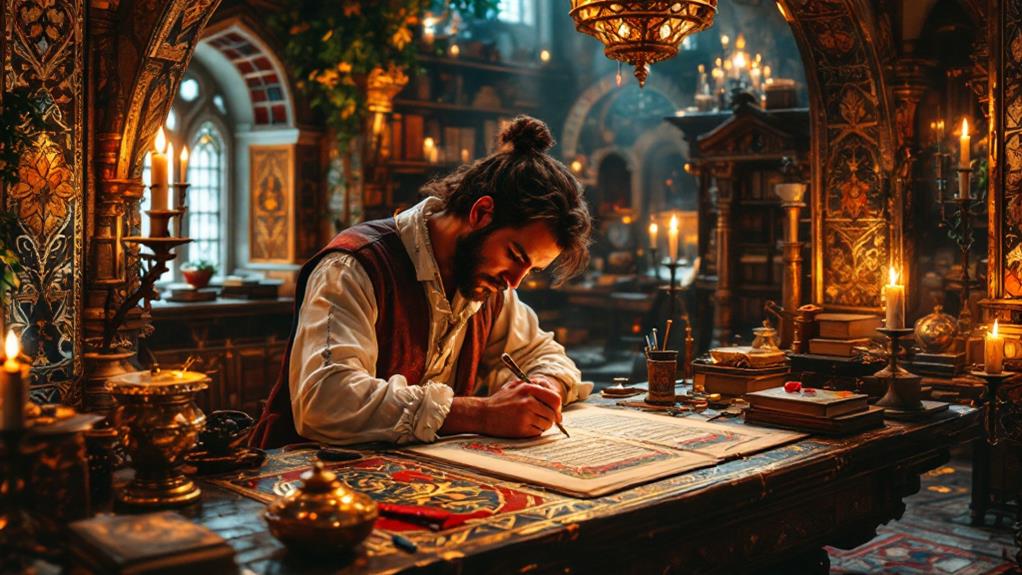
The artists behind these illuminated manuscripts were not just skilled artisans; they were visionary creators who blended spirituality with artistic innovation. You can imagine them hunched over their workbenches, with the glow of candlelight flickering over their manuscripts. They were known as famous illuminators, and their work required patience, precision, and a deep understanding of both art and theology. Each stroke of their brushes carried a purpose, transforming sacred texts into lively visual masterpieces.
In your investigation of these artists, you'll find a variety of artistic styles that reflect their unique visions and the cultural contexts in which they worked. Some famous illuminators, like the Limbourg Brothers, are celebrated for their intricate details and lively use of color in works like the "Très Riches Heures." Others, such as Jean Pucelle, are noted for their delicate and refined line work, particularly in the "Hours of Jeanne d'Évreux."
As you explore the world of illuminated manuscripts, you'll uncover how these artists pushed the boundaries of traditional art, merging text and image in a way that enhanced both. Their legacy endures through the beauty and spiritual depth of their creations.
Legacy of Illuminated Manuscripts
As you appreciate the artistry of these illuminators, it's clear that their work did more than captivate the medieval viewer; it forged a legacy that endures now. Illuminated manuscripts have left a profound mark on numerous aspects of our world:
- Cultural Significance: They embody the spiritual and intellectual endeavors of their time, providing insights into medieval life.
- Historical Impact: These works influenced Western art's trajectory and inspired artistic evolution over centuries.
- Educational Value: Manuscripts serve as a window into the past, offering lessons on religious practices, societal norms, and artistic techniques.
However, preserving these gems presents challenges. The delicate materials require careful attention, and digitization efforts are vital to ensuring their survival. Modern adaptations of illuminated manuscripts are evident in the current graphic design and typography, showcasing their lasting influence.
A comparative analysis of regional styles reveals distinct artistic expressions across Europe, each reflecting the unique cultural contexts of their origins. Despite time's passage, these manuscripts continue to captivate and educate, underscoring their enduring value. As you explore this world, you're not just engaging with art; you're interacting with a rich tapestry of history and culture that has transcended the eras.
Related posts