Manuscript Art Techniques That Have Lasted Through the Centuries
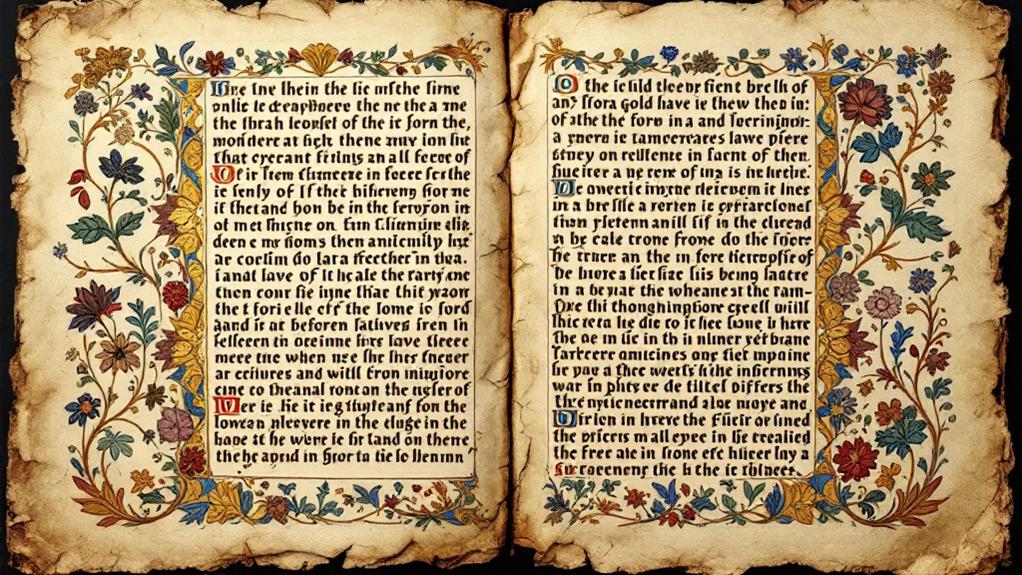
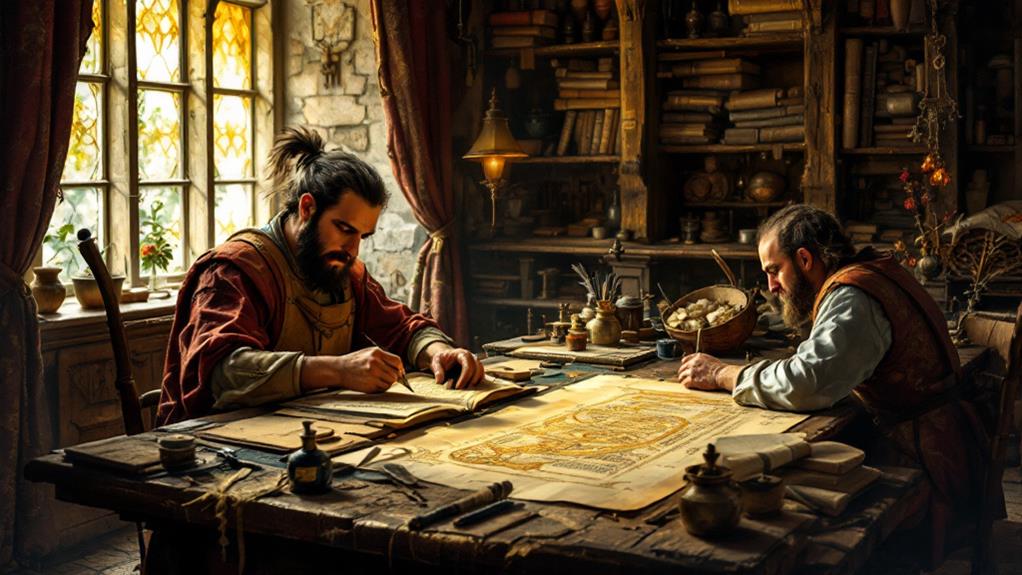
In the world of manuscript art, several techniques have stood the test of time. You'll find gold leaf application enchanting as it brings divine light and prestige to works. Lively pigments are skillfully prepared and applied with symbolic hues such as divine blues and passionate reds. Intricate border designs often reflect the cultural values of the period, while detailed miniatures capture rich stories from history and myth. Calligraphic flourishes add an elegant touch to the text, blending form and function. Preservation methods are vital for keeping these masterpieces intact over centuries. There's much more to uncover about these timeless techniques.
Gold Leaf Application
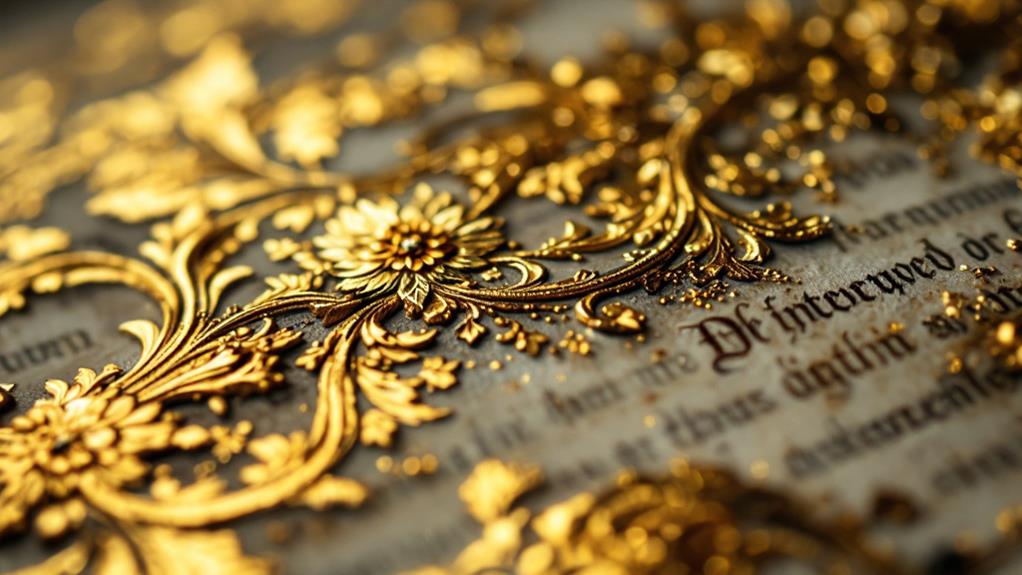
Regarding improving the splendor of a manuscript, nothing quite rivals the brilliance of gold leaf application. You probably know this technique has a rich history, dating back to ancient times when scribes sought to illuminate texts with shimmering accents. Gold leaf history reveals its use in religious manuscripts, where it symbolized divine light and prestige. By applying this delicate material, artisans transformed ordinary pages into extraordinary works of art.
To initiate your venture into gold leaf application, you'll need specific tools. Crucial gold leaf tools include a gilder's cushion, knife, and brush. The cushion provides a stable surface for cutting gold leaf sheets. With the gilder's knife, you can precisely slice the thin gold into manageable pieces. Ultimately, the gilder's brush, often made from squirrel hair, helps lift and place the gold without tearing it. Mastering these tools requires patience and skill, but the payoff is a breathtaking improvement to your manuscript.
This careful process isn't just about aesthetics. It connects you to a time-honored tradition, allowing you to experience the same awe that captivated medieval artisans. Once you lay that initial sheet, you're not just decorating a page; you're continuing a legacy.
Vivid Pigment Use
While gold leaf adds a celestial glow to manuscripts, the use of lively pigments brings them to life with color and brilliance. You'll uncover that each hue holds meaning beyond its visual appeal. Color symbolism played an essential role in manuscript art, with specific colors conveying messages and emotions. For instance, blue often symbolized divinity and wisdom, while red could represent passion or martyrdom. By understanding these symbols, you can appreciate the deeper layers of storytelling within the artwork.
Pigment sourcing was an art in itself, requiring the acquisition of materials from diverse, sometimes far-flung, locations. You'll find that some pigments were derived from precious stones, like lapis lazuli, which yielded a brilliant blue. Others came from more common sources, like plants or minerals, but still required careful preparation. Artists would grind these materials into fine powders, then mix them with binders to create paint. This process was thorough, ensuring the colors remained bold and lasted through the eras.
When you examine these manuscripts, notice how the radiant pigments enrich the narrative. They transform simple pages into mesmerizing works of art, using color to tell stories that transcend time.
Intricate Border Designs
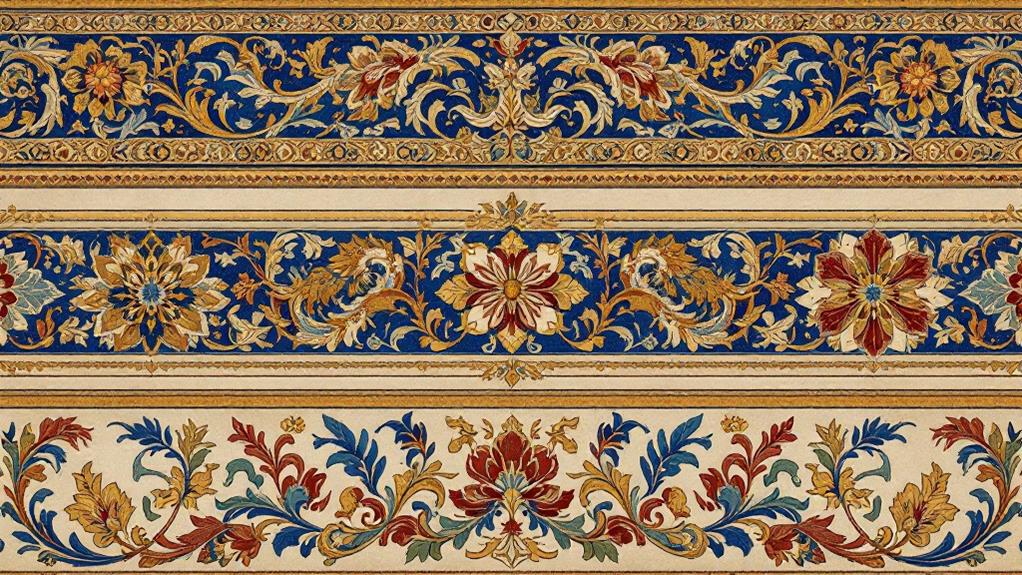
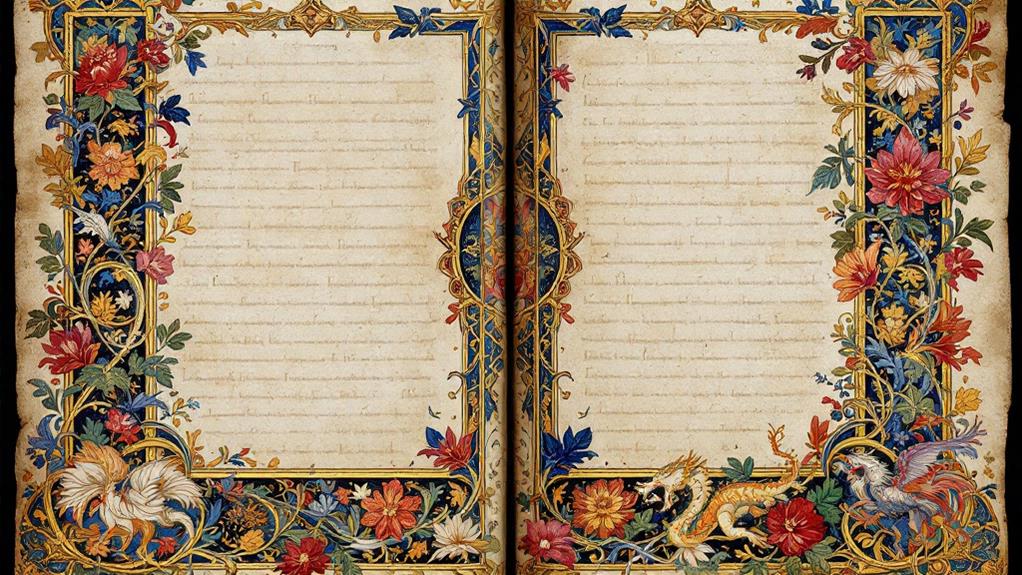
Delving into the world of intricate border designs, you uncover how these ornate frames improve manuscript art to new heights. These borders, rich in detail and creativity, serve as more than just decorative elements. They hold cultural symbolism and historical significance, reflecting the values and beliefs of their times. Each design might incorporate motifs like flora, fauna, or even mythological creatures, each chosen to convey specific meanings or stories. As you investigate these designs, you realize they're not just about beauty; they're a visual language that communicates complex ideas.
You notice how artisans of the past carefully crafted these borders, often spending as much time on them as on the text itself. In medieval Europe, for example, intricate borders were an indication of the patron's wealth and status, often incorporating gold leaf for added splendor. In contrast, Islamic manuscripts might display geometric patterns that symbolize unity and infinity, aligning with religious themes. By understanding the historical context, you appreciate how these borders transcend mere decoration. They connect you to the past, offering insights into the artistic and cultural tapestry of different periods. Fundamentally, they are timeless, bridging the gap between art and history.
Detailed Miniature Illustrations
As you explore the domain of manuscript art, the intricate beauty of borders naturally leads your attention to the enchanting world of detailed miniature illustrations. These small-scale images, often found within the confines of manuscripts, hold a historical significance that can't be overlooked. They served not only as decorative elements but as vital storytelling devices, encapsulating entire narratives in a confined space. You'll find that these illustrations reflect the cultural influences of their time, providing insights into the societal values, beliefs, and practices of different periods.
When you examine these miniatures, notice how artists carefully captured everyday life, religious themes, and mythological tales, all rendered with astounding precision. The lively colors and delicate brushwork reveal an artist's skill and dedication. Each illustration is a demonstration of the period's technological advancements and the materials available, such as natural pigments and fine brushes.
As you investigate further, you'll understand the role these miniatures played in preserving cultural heritage. They connect us to our past, offering a visual record of history that text alone can't convey. By appreciating these illustrations, you participate in a timeless dialogue between past and present, recognizing the enduring power of art.
Calligraphic Flourishes
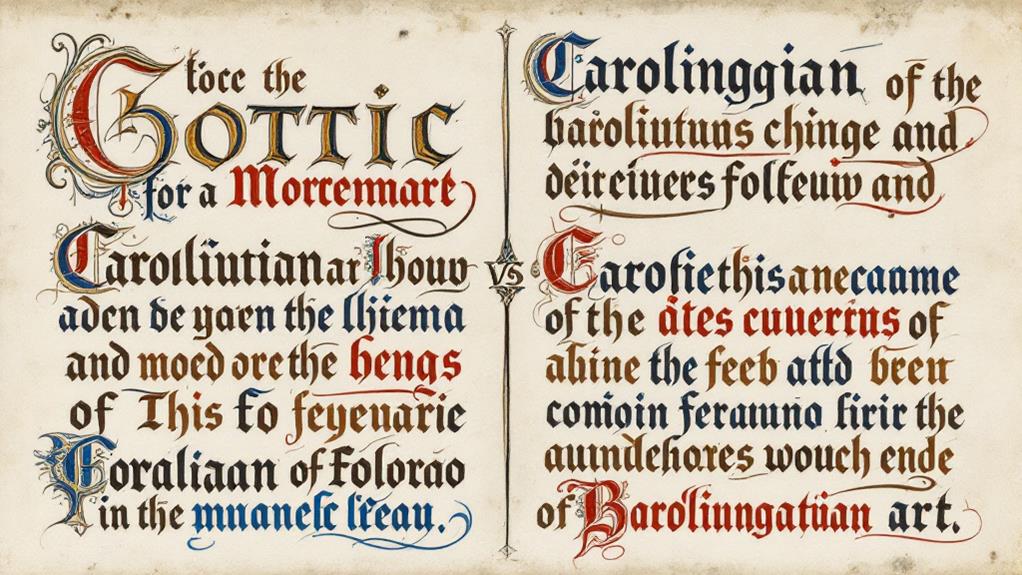
In the domain of manuscript art, calligraphic flourishes emerge as enchanting elements that amplify the written word to an art form. You can trace their historical significance back to medieval times when scribes added these artistic twists to manuscripts, elevating them beyond mere communication. Flourishes served not only as decorative joy but also as symbols of sophistication and skill. They communicated the significance of the text and the status of its owner.
Consider these fascinating aspects of calligraphic flourishes:
- Historical Significance: Originally, flourishes distinguished notable manuscripts, highlighting the text's value and the scribe's craftsmanship.
- Symbolism: They often carried symbolic meanings, with certain designs representing specific ideas or themes.
- Aesthetic Appeal: Flourishes added visual interest, transforming plain text into exquisite artwork.
- Modern Adaptations: Today, artists and designers incorporate these techniques into digital media, logos, and typography, blending tradition with innovation.
In modern adaptations, you'll see how calligraphic flourishes continue to captivate, finding new life in contemporary design. They embody the timeless allure of manuscript art, bridging the gap between historical elegance and today's creative expressions. Welcome these flourishes to enrich your own creative endeavors with a touch of historical artistry.
Preservation Techniques
Preserving manuscript art requires a careful blend of traditional techniques and modern technology. To guarantee that these precious works remain intact for future generations, you need to focus on both ink preservation and parchment treatment. Start by controlling environmental factors such as humidity and temperature. High humidity can cause ink to bleed, while excessive dryness might make parchment brittle.
For ink preservation, you should avoid exposing manuscripts to direct sunlight, which can cause fading over time. Use UV-filtering glass in frames or display cases if showcasing them. Regularly inspect the ink to detect any early signs of deterioration, allowing for timely intervention.
Parchment treatment involves more than just keeping it dry. You need to store manuscripts flat to prevent warping and use acid-free materials for any storage or framing. This prevents chemical reactions that could damage the parchment. If a parchment becomes too brittle, consider consulting a conservator for specialized treatment options.
Related posts