Inside the Codex Gigas: Uncovering the Mysterious “Devil’s Bible
When you investigate the Codex Gigas, you'll encounter a massive medieval manuscript, famously dubbed the "Devil's Bible" for its striking devil illustration. Created in the 13th century, legend claims a monk completed it in one night with the devil's help. This tome contains a mix of religious texts, medical knowledge, and secular works, offering a window into medieval life. Its size, crafted from 160 animal skins, is truly extraordinary. The manuscript's expedition from Czech origins to its current home in Stockholm adds to its allure. Unravel its mysteries and see what more this legendary text holds.
Origins and Creation
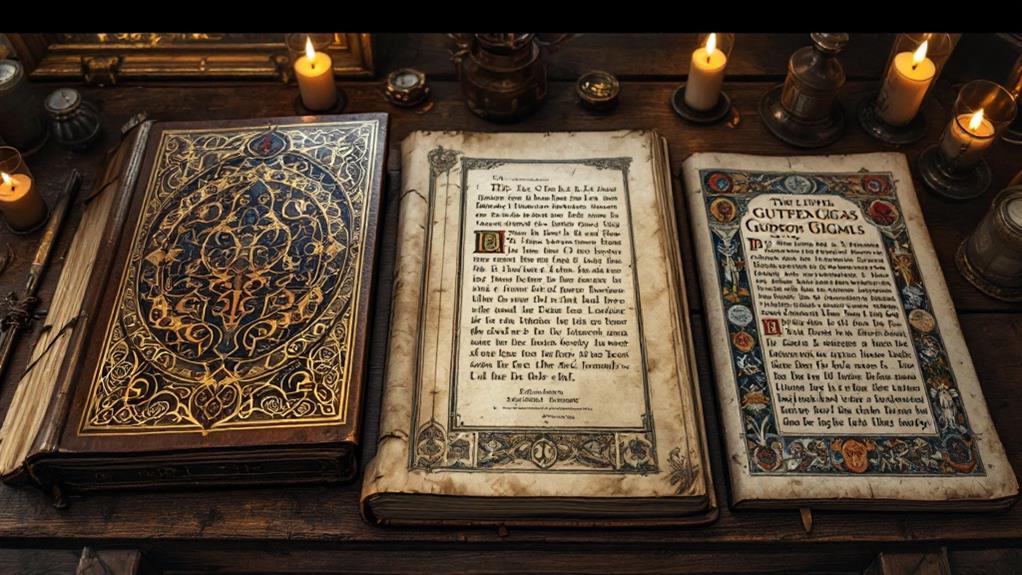
Though shrouded in mystery, the origins of the Codex Gigas, often called the Devil's Bible, captivate the imagination with tales of medieval intrigue. As you investigate its past, you'll uncover whispers of monastic origins that trace back to the early 13th century. The manuscript is believed to have been created in the Benedictine monastery of Podlažice, located in what is now the Czech Republic. Imagine the quiet cloisters where monks dedicated their lives to prayer and manuscript production, a setting ripe for the birth of such an enigmatic text.
The legendary creation story of the Codex Gigas adds a dramatic flair to its history. Legend has it that a monk, facing severe punishment, pledged to create a book to glorify the monastery in just one night. Realizing the impossibility of this task, he allegedly made a pact with the devil, who completed the manuscript in exchange for the monk's soul. The book's nickname, the Devil's Bible, comes from this tale and the prominent illustration of the devil within its pages. As you investigate the origins of the Codex Gigas, you'll encounter a fascinating blend of history and myth.
The Manuscript's Structure
At initial glance, the Codex Gigas impresses with its sheer size, earning it the title of the largest medieval manuscript in existence. As you investigate its pages, you'll uncover that the manuscript layout is as fascinating as its dimensions. The Codex Gigas, often called the "Devil's Bible," is composed of 310 parchment leaves, known as folios. Each folio measures an astonishing 36 inches in height and 20 inches in width, making it a truly monumental work.
In terms of folio organization, the manuscript is divided into several distinct sections, each serving a unique purpose. You'll find that it begins with the Old and New Scriptures, followed by other religious texts like works by Josephus and Isidore of Seville. But it doesn't stop there—the manuscript also includes a variety of secular works. Among these are medical texts, a calendar, and even spells, showcasing a remarkable blend of knowledge from different domains.
As you investigate further, you'll notice the careful script and detailed illustrations, which add another layer of intrigue to this already mysterious manuscript. The Codex Gigas isn't just a book; it's a vast compendium of medieval scholarship and lore.
The Legend of the Devil
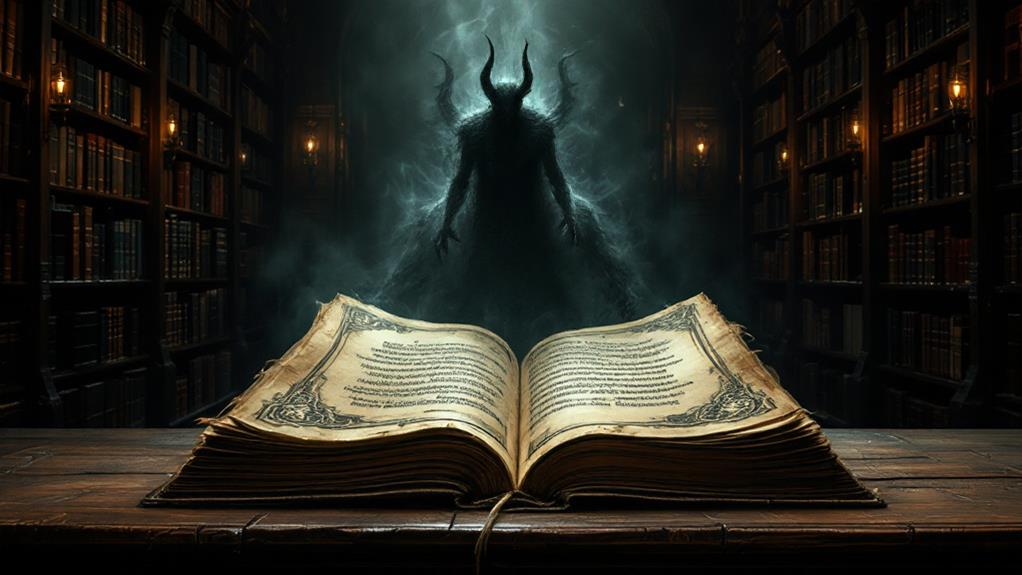
While the Codex Gigas stands as a monumental compilation of medieval knowledge, its most intriguing element is the mysterious legend that surrounds it. You might find yourself captivated by the tale of a desperate monk who made a pact with the devil. According to folklore origins, this monk faced severe punishment and sought to avoid it by promising to create a book containing all human knowledge in one night. Realizing his impossible task, he turned to the devil for help. In exchange for his soul, the devil completed the manuscript, infusing it with his own sinister presence.
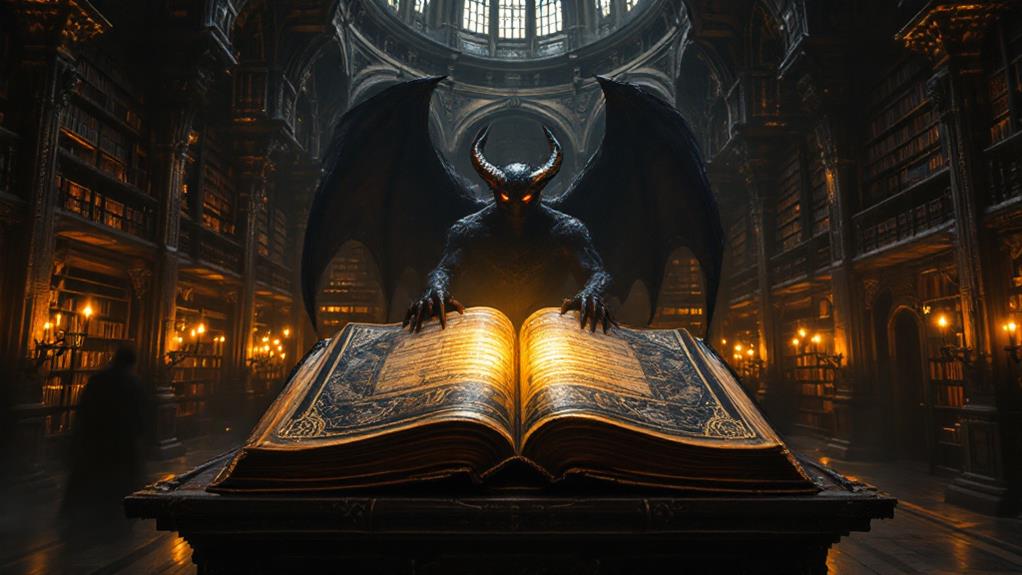
Devil imagery plays a significant role in this legend. It's said that the monk included a full-page illustration of the devil as a token of gratitude or perhaps as proof of the pact. This eerie depiction has fueled the myth, making the Codex Gigas infamous as the "Devil's Bible." The devil's inclusion in such a prominent position within the manuscript is thought to symbolize the monk's bargain and the darkness that comes with such a deal. As you explore deeper into the Codex Gigas, you'll see how the legend continues to captivate imaginations to this day.
Iconic Illustrations
Illustrations in the Codex Gigas are not just visually striking; they're a gateway into the medieval mind. As you investigate this massive tome, you're immediately captivated by its iconic imagery. The most famous illustration is certainly the full-page depiction of the devil, which has earned the book its nickname, the "Devil's Bible." This unsettling image serves as a powerful example of artistic symbolism, representing sin, temptation, and the eternal struggle between good and evil. It's a reflection of the period's fascination with the supernatural and the moral lessons deeply embedded in religious texts.
Beyond the devil, the Codex Gigas contains other fascinating illustrations, including intricate depictions of cityscapes, mythical creatures, and celestial bodies. Each image conveys more than just artistic flair; it captures the beliefs and fears of a world grappling with the unknown. You'll notice how the artistic symbolism serves to reinforce the text, creating a cohesive narrative that transcends mere words. These illustrations aren't just decorative; they're integral to understanding the medieval psyche. By studying these images, you gain insight into the cultural and religious landscape of the time, offering you a unique perspective on history.
Textual Contents

The Codex Gigas, often called the "Devil's Bible," is more than its haunting illustrations—it's textual contents are a wealth of medieval knowledge and religious thought. As you explore its pages, you'll uncover a fascinating blend of content themes that span religious, historical, and medical knowledge. This massive manuscript includes the complete Latin Bible, but that's just the beginning. It also contains two works by Flavius Josephus, the "Antiquities of the Jews" and "The Jewish War," offering you a glimpse into ancient history.
Engaging in a textual analysis of the Codex, you'll find the "Etymologiae" by Isidore of Seville, a crucial medieval encyclopedia. This reflects the medieval mindset of gathering all known knowledge in one place. There are also medical texts like "Ars Medicinae," providing insights into the period's medical practices. The inclusion of a chronicle of Bohemia highlights regional history, enriching your understanding of the manuscript's origin.
Theories and Speculations
Mystery shrouds the creation of the Codex Gigas, inviting numerous theories and speculations about its origin and purpose. You might wonder about the hidden meanings woven into its pages, sparking debates among scholars. Some suggest supernatural influences, believing the book was written in a single night by a monk in a pact with the devil. Such folklore connections only add to its allure. Others propose that the Codex contains secret codes, intentionally embedded to conceal profound truths or to serve as a cryptic message for future generations.
Its cultural significance can't be ignored, as it reflects the religious and societal intricacies of its time. Artistic interpretations of the famous devil illustration have led many to see it as a symbol of humanity's struggle between good and evil. The mystical symbolism throughout the text invites readers to investigate deeper into its enigmatic content. Engaging in scholarly debates, theorists examine if these elements were deliberate or coincidental. As you investigate the Codex Gigas, you're left to decide if it's merely a historical artifact or something much more enigmatic, perhaps even a key to understanding hidden aspects of human history and belief.
Historical Journey

As you ponder the enigmatic origins and theories surrounding the Codex Gigas, you're drawn to explore its historical voyage, which provides a tangible context to its mysterious allure. Unlike many medieval manuscripts, the Codex Gigas isn't just notable for its size but also for the path it has taken through the centuries. Born in the early 13th century within the walls of a Bohemian monastery, its creation is wrapped in legend. Some claim a monk wrote it in a single night with the devil's help, while others suggest it was a lifetime's work.
The manuscript's historical significance is profound. As you investigate deeper, you learn that it moved from the quiet halls of Podlažice to become a trophy of war. In 1648, at the end of the Thirty Years' War, Swedish forces seized it from Prague. Since then, it has remained in Sweden, housed in the National Library in Stockholm. This voyage marks the Codex not just as a religious text but as a symbol of cultural and historical shifts. Each page whispers tales of past hands that touched it, kingdoms that coveted it, and periods that preserved it.
Preservation and Condition
When you investigate the preservation and condition of the Codex Gigas, you uncover a tribute to medieval craftsmanship. This massive manuscript, weighing over 165 pounds, has withstood the test of time thanks to the durable materials used in its creation. Crafted from vellum made from 160 animal skins, the Codex's pages have retained their integrity and flexibility, a reflection of the careful preparation of these manuscript materials. The leather binding, although worn, still holds the hefty tome together, showcasing the enduring strength of medieval bookbinding.
You might wonder how such a colossal manuscript has remained relatively intact over the centuries. Effective conservation techniques have played an essential role in preserving its condition. In its early days, the Codex was likely stored in controlled environments that minimized exposure to damaging elements like moisture and light. Modern conservation efforts have focused on stabilizing its condition, ensuring the vellum remains supple and the ink doesn't fade.
Modern-Day Impact
The Codex Gigas's remarkable preservation allows it to continue enchanting modern audiences and influencing contemporary culture. As you investigate its vast contents, you'll uncover how its legends and mysteries fuel artistic inspiration and scholarly debates. This medieval manuscript, often called the "Devil's Bible," captivates historians and artists alike. Its eerie illustrations and enigmatic origins spark creativity across diverse mediums, from literature to film, providing a fascinating lens through which people examine themes of faith, ambition, and the supernatural.
Thanks to digital accessibility, the Codex Gigas's reach extends far beyond libraries and museums. You can browse its pages online, delving into its intricacies with just a few clicks. This accessibility guarantees that the manuscript's cultural influence persists in the current digital era, making it a popular subject for academic study and public fascination. Regardless of whether you're a student, a history buff, or simply curious, the digitized version invites you to interact with this medieval marvel in unprecedented ways. By bridging the gap between past and present, digital platforms allow the Codex Gigas to remain a relevant and intriguing part of our shared cultural heritage, continuing to inspire and educate people worldwide.
Related posts