Illuminated Borders and Margins: The Hidden Messages in Manuscript Artwork
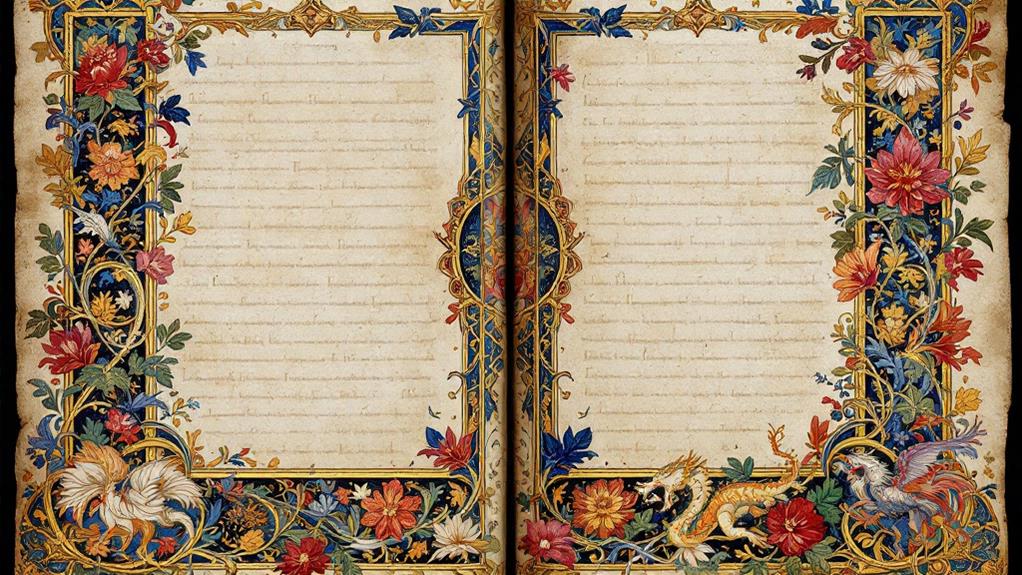
You'll find illuminated borders and margins in manuscripts rich with hidden messages that unravel medieval societies' cultural, religious, and political tales. Each lively floral motif conveys specific symbolism—like love through red roses—and reflects both regional and historical context. Animal imagery, from courageous lions to cunning foxes, illustrates virtues and vices, while intricate religious scenes underscore sacred narratives. Margins often contain biting social commentary, humorously critiquing authority and class. These artworks, influenced by patrons' preferences, blend artistic traditions and serve as windows into the past. There's much more to investigate, revealing the true depth of these breathtaking manuscripts.
The Evolution of Illuminated Manuscripts
The evolution of illuminated manuscripts is a captivating tale of artistic innovation and cultural exchange. You can trace these developments back to the early medieval period, where monks in European monasteries carefully crafted these books. In this historical context, illuminated manuscripts were not just texts but cultural artifacts that reflected the values, beliefs, and artistic trends of their time. As you explore their history, you'll find that these works were influenced by diverse cultures, including Byzantine, Islamic, and Celtic art.
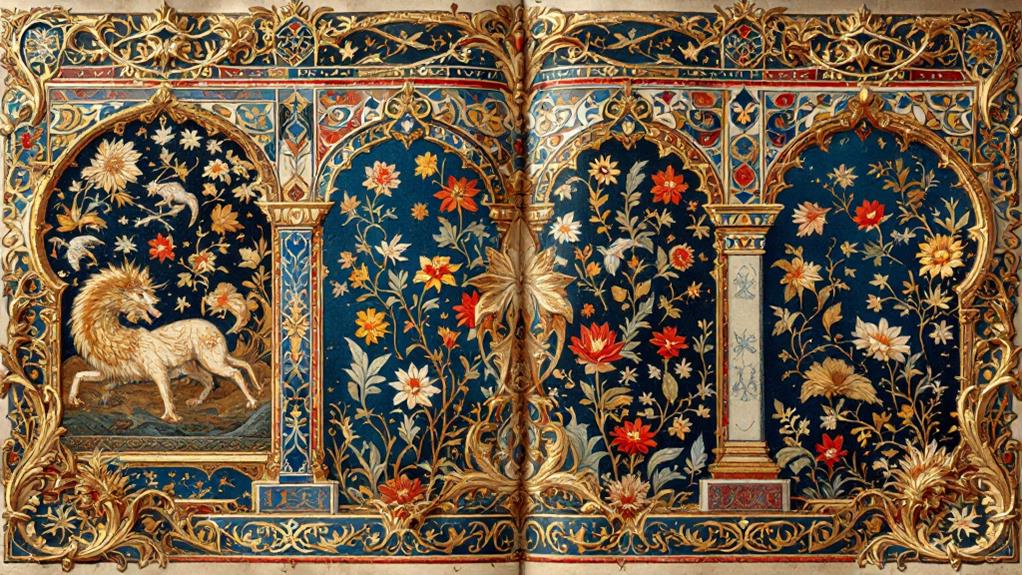
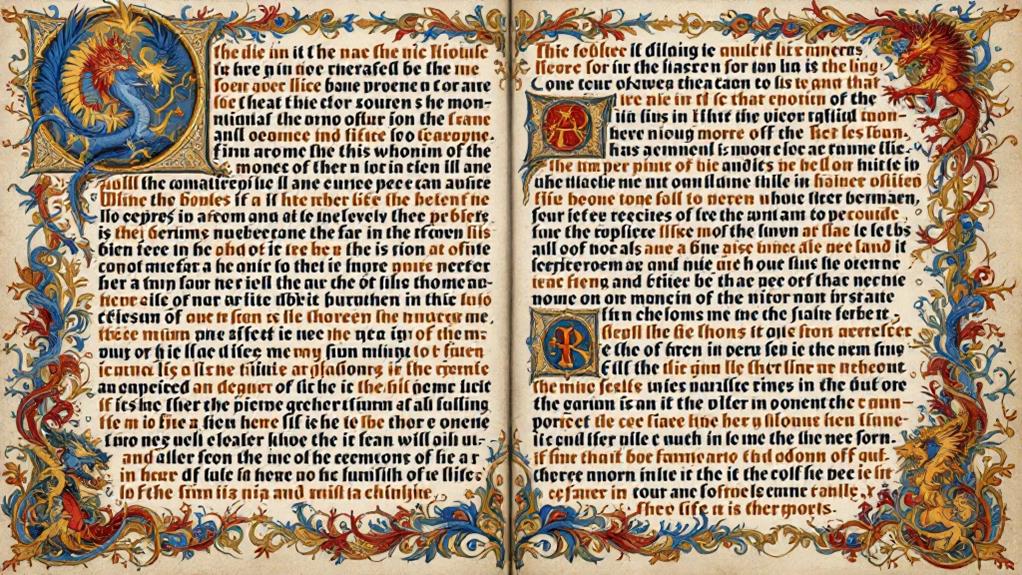
When you inspect these manuscripts, you'll notice how artists incorporated intricate borders and margins, often filled with lively colors and gold leaf. These embellishments weren't merely decorative; they demonstrated the manuscript's importance and the patron's wealth. Cultural influences played a significant role in shaping these designs. For example, as trade routes expanded, artists began to incorporate motifs and techniques from distant lands, creating a unique blend of styles.
Symbolism in Floral Motifs
Amid the lively artistry of illuminated manuscripts, floral motifs stand out with their rich symbolism and intricate beauty. You'll notice that each flower depicted isn't just for decoration; they're carefully chosen for their botanical meanings and color symbolism. For instance, a red rose often symbolizes love and passion, while the lily might represent purity and innocence. These choices add layers of meaning to the manuscripts, making them more than just beautiful works of art.
Floral motifs also carry seasonal significance. Spring flowers like daisies and violets might symbolize rebirth and renewal, whereas autumnal blooms could represent change or decline. The seasonality reflects the natural cycles and themes within the manuscript's narrative.
Regional variations in floral symbolism are also significant. A lotus might appear in Eastern-inspired works, symbolizing enlightenment and purity, showing how cultural interpretations influence the choice of flora. Historical context plays a vital role too. Certain flowers may have been more prevalent in specific regions during different time periods, affecting their inclusion and meaning.
Animals and Their Meanings
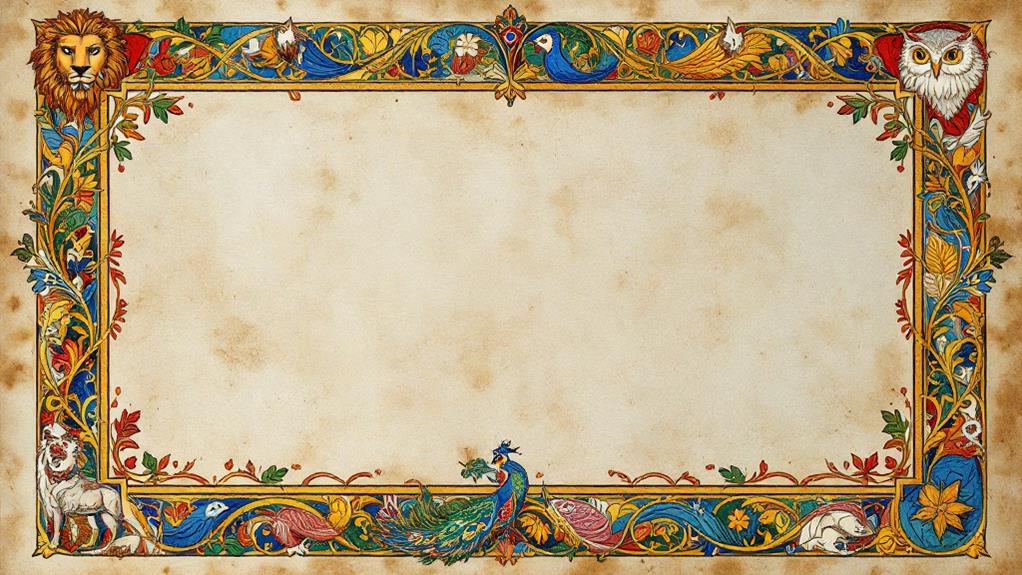
Step into the lively world of illuminated manuscripts and notice how animals leap off the pages, each one brimming with symbolic meaning. As you investigate these vivid illustrations, you'll uncover a tapestry of animal symbolism that bridges the natural world and human imagination. These creatures, both real and mythical, serve as cultural representations of virtues, vices, and everything in between.
- Mythical Creatures: Dragons, griffins, and unicorns aren't just fantasy; they hold profound bestiary significance. These beings often symbolize strength, purity, or chaos, depending on the context and culture.
- Animal Symbolism: Lions, frequently depicted in manuscripts, symbolize courage and nobility. They're often used to highlight the bravery of saints or heroes within the text.
- Fauna Folklore: Foxes, with their cunning nature, appear as tricksters, representing intelligence and deceit. Such depictions reflect how fauna folklore influenced medieval thought.
- Natural World: Birds, especially doves, convey peace and hope. Their presence in manuscripts often signals a message of serenity or divine intervention.
Religious Themes and Iconography
As you explore the vivid world of illuminated manuscripts, notice how animals and their symbolism merge seamlessly with religious themes and iconography. These manuscripts often depict sacred narratives, where each illustration serves as more than mere decoration. You'll find that the divine presence is often illustrated through intricate artistic expression, drawing upon rich manuscript theology. Look closely, and you'll see how spiritual symbolism is woven into every detail, from the haloed saints to the celestial angels, all carefully crafted to convey deeper meanings.
When you engage in iconographic analysis, you'll learn that each element has a purpose. Devotional imagery isn't just about beauty; it's a visual sermon that reinforces faith. The artists drew heavily from scriptural references, ensuring that every stroke of the brush reflected the profound spiritual truths of their time. The use of vivid colors and precious metals like gold leaf wasn't just for aesthetics but to signify the sacredness and importance of the scenes depicted.
As you investigate further, think about how these manuscripts served not only as religious texts but as powerful tools of communication, embodying the spiritual and theological essence of their time.
Social Commentary in Margins
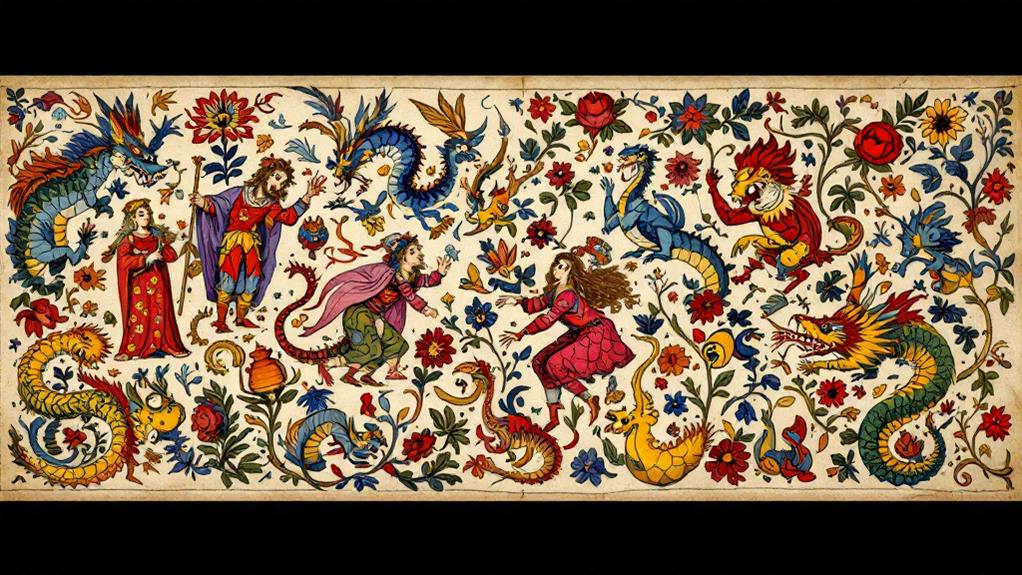
While exploring illuminated manuscripts, you'll uncover that the margins often contain more than decorative flourishes; they serve as a canvas for social commentary. These margins, filled with satirical illustrations and marginalia messages, provide a unique glimpse into medieval society's thoughts and critiques. Artists cleverly embedded messages within the artwork, often poking fun at societal norms or authority figures.
Consider these common themes found in the margins:
- Political Satire: You'll find illustrations mocking rulers or political systems, offering a humorous yet insightful critique of those in power. These satirical illustrations were a subtle way to express dissent.
- Social Hierarchies: Marginalia messages often highlight the absurdities of social class distinctions. Illustrators depicted the folly of rigid societal structures by showing peasants outsmarting nobility.
- Clerical Critique: The church's authority wasn't immune to critique. You'll notice humorous depictions of clergy members involved in absurd or hypocritical actions, reflecting societal skepticism.
- Daily Life Humor: Everyday activities were illustrated with a comedic twist, highlighting the universal human experience and bridging the gap between medieval and modern life.
Techniques of Medieval Scribes
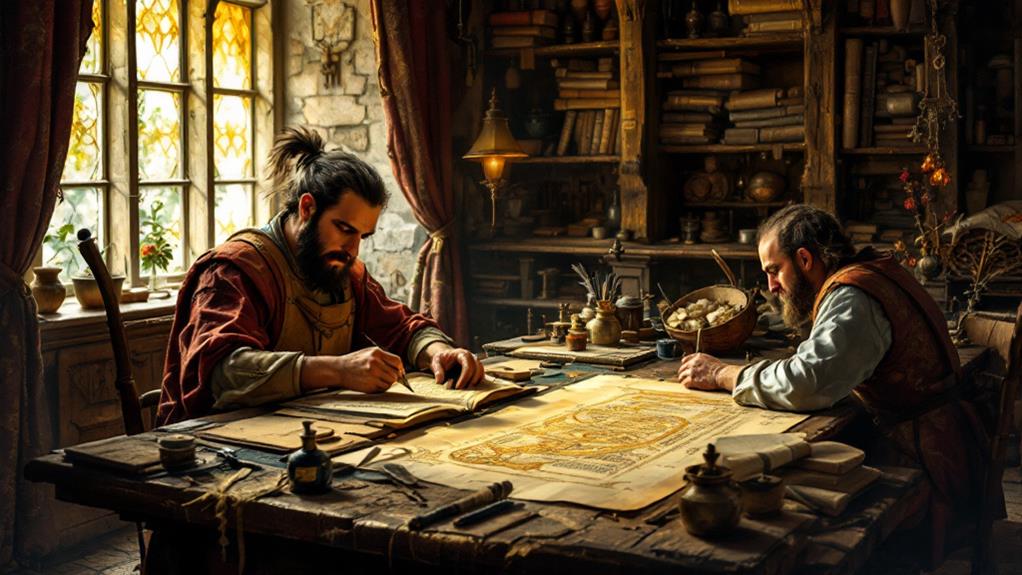
Mastering the art of medieval scribes involved a blend of skill, patience, and creativity. You'd start with parchment preparation, carefully treating animal hides to create a smooth, durable writing surface. The next step would be choosing the right ink recipes, often a guarded secret, to guarantee lively and lasting text. Your scribe tools, like quills and knives, would be scrupulously maintained for precision and smooth writing.
When creating manuscripts, you'd focus on layout design, guaranteeing each page was balanced and visually appealing. Text alignment wasn't just about readability; it also played a critical role in the aesthetic harmony of the manuscript. Color symbolism was another significant aspect, with specific hues conveying particular meanings or enhancing the text's spiritual or thematic significance.
Artistic collaboration often came into play, especially when adding illuminated borders and intricate margins. Working with illustrators and other artisans, you'd confirm that textual and visual elements complemented each other seamlessly. Ultimately, you'd consider manuscript preservation, using techniques to protect these precious works from the ravages of time. Each step required foresight and precision, guaranteeing that the manuscripts you created would endure as masterpieces for generations to admire.
The Role of Patronage
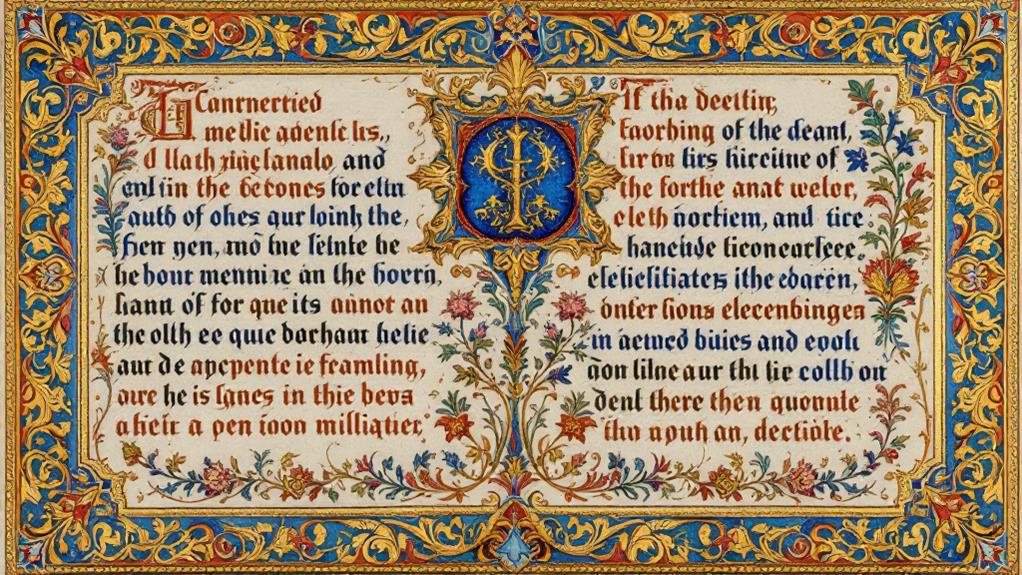
Understanding the artistry of medieval manuscripts goes beyond the techniques of the scribes; it's intertwined with the role of patronage. As a patron, you wield significant influence over the creative process. Your preferences, status, and wealth dictate the themes, colors, and even the materials used. This patron influence can shape the manuscript's message, making it a reflection of your personal or political agenda.
When commissioning a manuscript, you'd engage in artistic collaboration with scribes and artists. This partnership guarantees your vision is accurately represented. Here's how you play a pivotal part:
- Theme Selection: You decide the subject matter, irrespective of it being religious texts, historical accounts, or literary works. Your choices reflect your values and interests.
- Aesthetic Decisions: From the color palette to the style of illumination, your taste guides the visual elements. Your decisions can make the manuscript a unique work of art.
- Funding and Resources: Your financial support provides high-quality materials and skilled artisans, elevating the manuscript's craftsmanship.
- Symbolic Representations: You might request specific symbols or motifs to convey personal messages or assert authority, embedding hidden narratives in the artwork.
Your role as a patron is fundamental in shaping both the manuscript's artistic and cultural significance.
Legacy of Manuscript Artistry
Influenced by centuries of patronage and artistic collaboration, the legacy of manuscript artistry endures as a demonstration of human creativity and cultural expression. When you investigate these masterpieces, you're not just seeing beautiful images; you're witnessing the blend of cultural influences that shaped societies across time. The lively colors and intricate designs reflect the melding of different traditions, from religious themes to local folklore, each telling a unique story.
Preservation methods play a vital role in keeping this legacy alive. As you examine the world of manuscripts, you'll find that careful attention is taken to protect these fragile art pieces. Techniques like conservation framing and climate-controlled storage guarantee that the colors remain bright and the pages stay intact. Digital archiving is another modern tool that lets you access and appreciate these works without risking damage to the originals.
Related posts