How Historical Folios Preserved Sacred Religious Texts
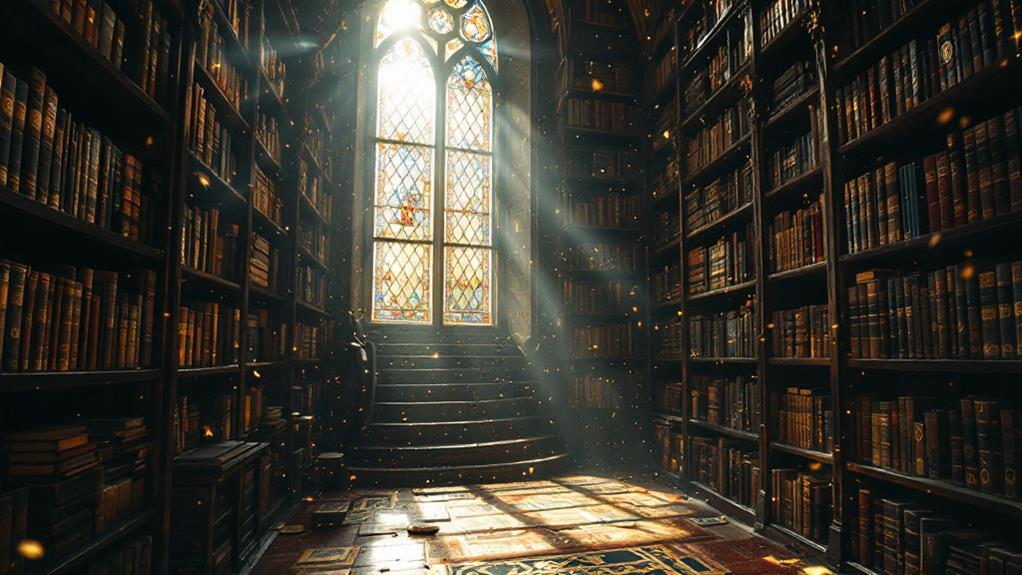
You'll find that historical folios preserved sacred religious texts by blending art and durability. Artisans used illumination, decorating pages with vivid pigments and gold leaf to highlight key passages. Scribes crafted these texts with accuracy, turning animal skins into robust parchments and using fade-resistant inks. Binding techniques and storage in dry, ventilated areas also played a vital role. Cultural influences added depth, with colors and symbols reflecting religious beliefs. Think about how these careful efforts guaranteed that such texts survived through the centuries. There's a fascinating world of history and craftsmanship that awaits your exploration.
The Art of Illumination
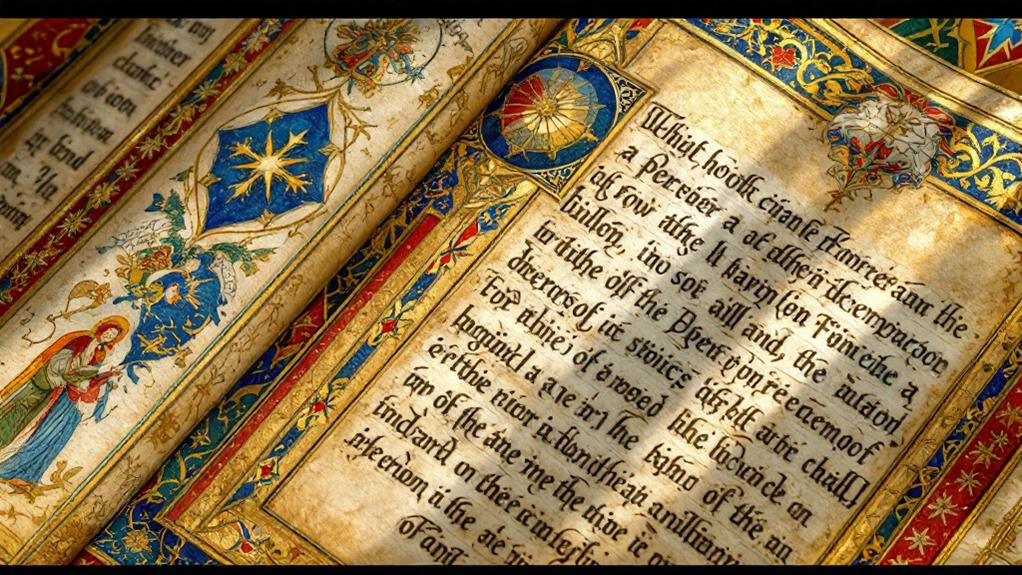
Illuminating a manuscript isn't just about adding color; it's an intricate art form that brings ancient texts to life. When you investigate the world of medieval manuscripts, you'll find that illumination serves a deeper purpose than mere decoration. It's a detailed process where artistic symbolism plays a vital role, transforming pages into lively narratives. Each illustration and decorative element tells its own story, often reflecting religious themes or historical events.
As you examine these manuscripts, you'll notice how illuminators used lively pigments and gold leaf to highlight significant passages, guiding the reader's eye and enhancing comprehension. This practice wasn't just about beautification; it was a way to convey complex ideas and emotions that words alone couldn't express. The use of artistic symbolism in these texts communicates messages through images, like the depiction of saints or mythical creatures, each carrying specific meanings.
Durable Materials Used
To create manuscripts that could withstand the test of time, medieval scribes employed several durable materials. When you think about parchment production, envision a thorough process that transforms animal skins into a writing surface that's both resilient and long-lasting. You'd find that parchment, made primarily from calf, sheep, or goat skin, underwent a series of treatments like soaking, stretching, and scraping. This guaranteed that the final product was smooth and durable enough to preserve sacred texts for centuries. Unlike paper, which could easily deteriorate, parchment provided a sturdy foundation for the religious manuscripts you cherish today.
In addition to the parchment, ink durability played a significant role in manuscript longevity. Imagine scribes carefully mixing iron salts and tannic acids derived from oak galls to create a rich, black ink. This ink not only adhered well to parchment but also resisted fading over time. Its composition guaranteed the texts remained legible, preserving the words' sacred significance. As you study these ancient folios, appreciate the foresight and skill involved in choosing materials that would endure. By prioritizing durability, medieval scribes safeguarded religious texts for generations, allowing you to connect with this rich history today.
Scribes and Their Craft
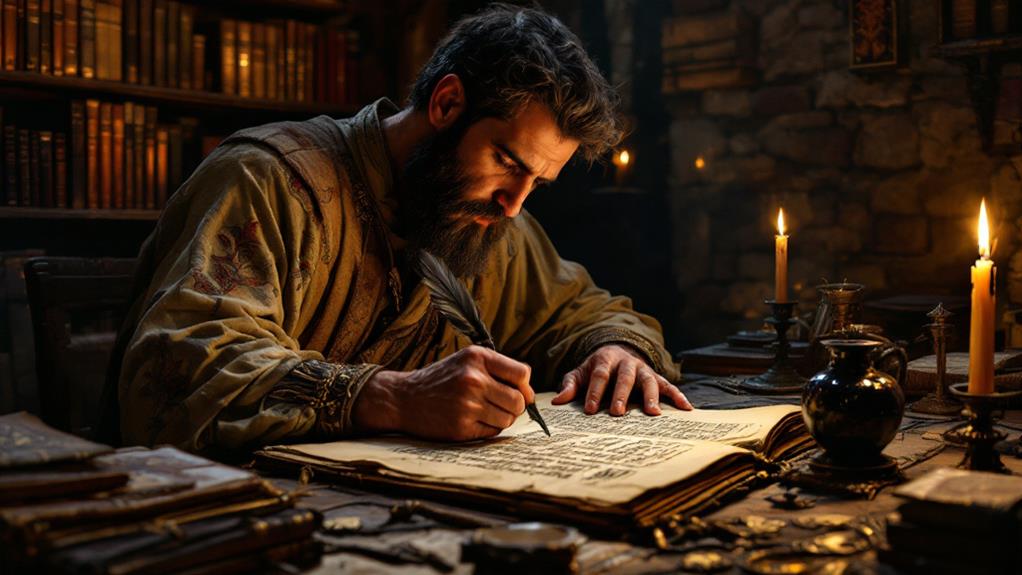
While exploring the world of medieval manuscripts, you'll uncover that the skill and dedication of scribes were fundamental to the creation of sacred texts. These scribes were more than just copyists; they were artisans who played a vital role in manuscript production. Their responsibilities extended beyond mere transcription. Scribes guaranteed the accuracy of the text, which was paramount when dealing with religious manuscripts. Any error could lead to misinterpretation, so they exercised extreme care in their work.
In addition to copying, scribes often embellished pages with intricate designs, adding beauty and reverence to the text. They had to master numerous scripts and styles, adapting to different regional demands and the specific requirements of their patrons. Their craft required not only a deep understanding of the content but also an artistic touch, balancing functionality with aesthetics.
Scribes worked tirelessly, often in dimly lit scriptoriums, dedicating countless hours to their craft. Their painstaking efforts guaranteed that sacred texts were preserved for future generations. Each manuscript they produced was a reflection of their commitment and skill. By understanding the roles and responsibilities of these scribes, you can truly appreciate the enduring legacy of their work.
Techniques for Longevity
As you admire the artistry and dedication of medieval scribes, it's vital to recognize the techniques they employed to guarantee the longevity of their work. These scribes were not just writers but also preservationists, using cutting-edge methods to make certain that sacred texts survived the test of time. One significant technique was the use of robust binding methods. By sewing folios together with durable threads and encasing them in strong, often leather-bound covers, they provided a solid protective layer against external damage.
Moreover, moisture control was a major concern. Scribes understood that excess moisture could lead to mold and decay. They often stored these texts in dry, well-ventilated areas, sometimes using wooden chests or cabinets to shield them from dampness. Furthermore, they might have used specific materials that naturally resisted humidity, further safeguarding their precious manuscripts.
These careful strategies guaranteed that the texts remained intact and readable for future generations. As you explore these historical folios, appreciate the thorough care and foresight that medieval scribes invested in their preservation. Their commitment to these techniques is why we can still study these invaluable works today.
Cultural Influences on Folios
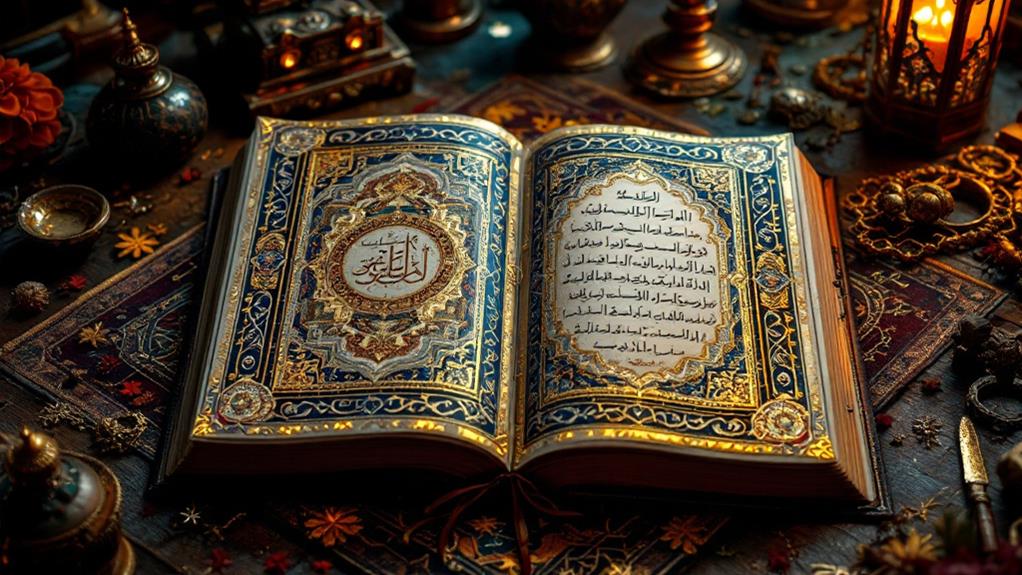
Beyond the technical prowess of medieval scribes, one must consider the profound cultural influences that shaped the creation of historical folios. These texts didn't exist in a vacuum; they were deeply embedded in the cultural fabric of their time. You'll find that cultural symbolism was a key element, as every stroke and hue often carried a deeper meaning. For instance, the choice of colors and motifs might reflect religious beliefs or societal values. This isn't just decoration; it's a visual language communicating profound ideas and narratives.
Moreover, regional styles played a considerable role in distinguishing folios from different areas. As you study these texts, you'll notice how the art of bookmaking varied considerably from one region to another. In one area, you might see intricate geometric patterns, while another might favor floral designs or lively illustrations of local fauna. These regional styles didn't just add aesthetic appeal; they served as cultural identifiers, allowing you to trace the origins and influences of a folio.
Understanding these cultural influences helps you appreciate how historical folios weren't just religious texts; they were dynamic expressions of the societies that produced them.
Famous Historical Examples
Exploring historical folios reveals not only the cultural influences of their time but also showcases some famous examples that stand as demonstrations to these influences. When you examine the Dead Sea Scrolls, you find ancient manuscripts that offer deep insights into early Jewish practices and beliefs. Unearthed in the mid-20th century, these religious artifacts date back to around the 3rd century BCE and illustrate the diversity of thought within ancient Judaism.
Another remarkable example is the Codex Sinaiticus. This ancient manuscript, crafted in the 4th century, contains one of the earliest complete versions of the Christian Bible. It illustrates the shift from oral traditions to recorded scripture, capturing the Christian faith's expansion and consolidation. As you investigate these folios, you see how they preserved sacred texts through turbulent times.
Then there's the Book of Kells, an illuminated manuscript from the 9th century. This masterpiece of Hiberno-Saxon art combines Christian iconography with intricate Celtic designs. It's a vivid representation of the fusion of artistic and religious elements during the medieval period. These ancient manuscripts and religious artifacts reflect the rich tapestry of cultural and spiritual evolution across centuries.
Modern Preservation Efforts
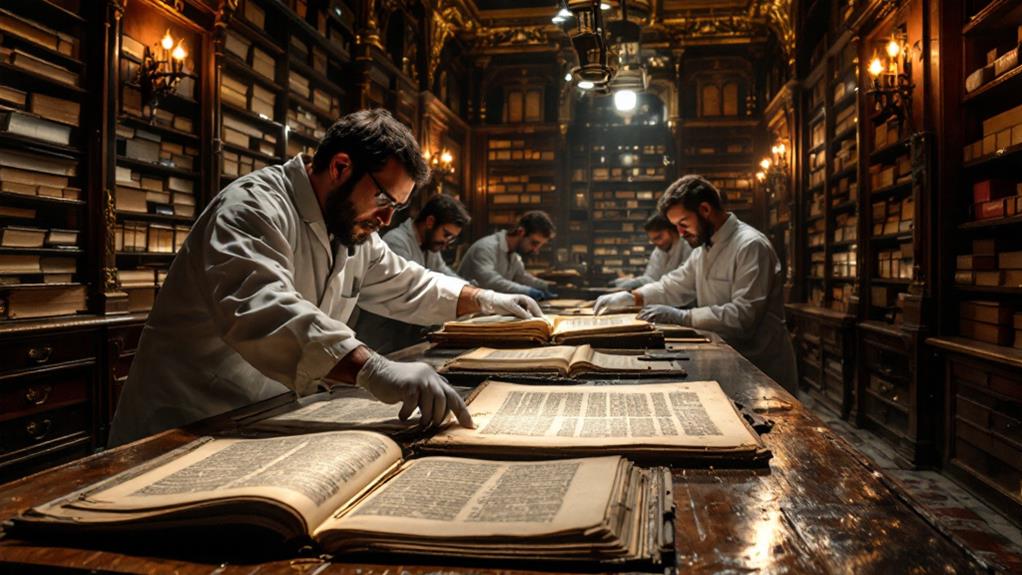
Today, you might wonder how these ancient manuscripts and texts are preserved for future generations. In the modern age, digital archiving plays a significant role. This method allows you to convert fragile, centuries-old documents into digital formats, guaranteeing their survival even if the original materials degrade. High-resolution scanning captures every intricate detail, making it accessible to scholars and enthusiasts worldwide. You can now investigate these relics from your own home, thanks to online repositories and digital libraries.
But it's not just about technology. Community initiatives are similarly essential in the preservation process. Local communities often take the lead in safeguarding their cultural heritage. In many cases, they organize workshops and training sessions to teach proper conservation techniques. By involving you and others in these efforts, communities secure a broader understanding and appreciation for these texts.
Together, digital archiving and community initiatives form a robust strategy to preserve sacred religious texts. They allow you to engage with history while guaranteeing that these invaluable resources remain available for future generations. By supporting and participating in these efforts, you play a part in keeping the legacy of these historical folios alive.
Related posts