How Folios Preserved Ancient Languages and Scripts Through Time
Folios have preserved ancient languages and scripts by acting as time capsules, protecting these valuable stories and symbols from fading into oblivion. Scribes poured their artistry into carefully crafted manuscripts, capturing linguistic variations and cultural insights. These folios span civilizations, from Egyptian hieratic texts to Maya glyphs, serving as bridges that connect diverse cultural narratives. Techniques like animal skin parchment and natural inks guaranteed durability, while monastic communities safeguarded these gems for future generations. Even through wars and environmental challenges, folios endure, with modern technology and scholarship breathing new life into these timeless relics. Investigate how they continue to shape history.
Ancient Beginnings of Folios
The allure of ancient folios lies in their mysterious origins and the rich tapestry of history they reveal. When you explore these ancient manuscripts, you uncover stories that have shaped cultures and civilizations. Each folio is a window into the past, offering a glimpse of the thoughts, beliefs, and traditions of those who came before us. They hold cultural significance as they capture the essence of human experience and creativity across time.
As you handle these delicate pages, you're touching a piece of history that has survived countless challenges. Ancient manuscripts often contain the earliest records of significant events, philosophical ideas, and artistic expressions. They were thoroughly crafted by scribes who dedicated their lives to preserving knowledge. The artistry involved in creating these folios—from the careful selection of materials to the intricate calligraphy and illustrations—reflects the value placed on knowledge and cultural heritage.
Role in Language Preservation
Many ancient folios play a vital role in preserving languages that might otherwise fade into obscurity. When you examine these folios, you'll uncover a wealth of linguistic history, capturing how languages have evolved over centuries. They serve as tangible links to our past, carefully recording the intricacies of language evolution and offering a window into the words, phrases, and expressions of bygone periods.
Folios often showcase script variations that highlight the fluid nature of language. As you investigate these texts, you'll notice how scripts adapted to cultural influences, regional dialects, and even shifts in political power. These variations not only reflect the adaptability of language but also provide critical insights into the socio-cultural context of the time. By preserving these diversities, folios allow you to appreciate the rich tapestry of human communication.
Moreover, folios offer you a way to study extinct or endangered languages. When you engage with these ancient manuscripts, you're not just preserving words; you're safeguarding entire cultures and identities. In doing so, you contribute to a broader understanding of human history, ensuring that the voices of the past continue to resonate today.
Folios Across Civilizations
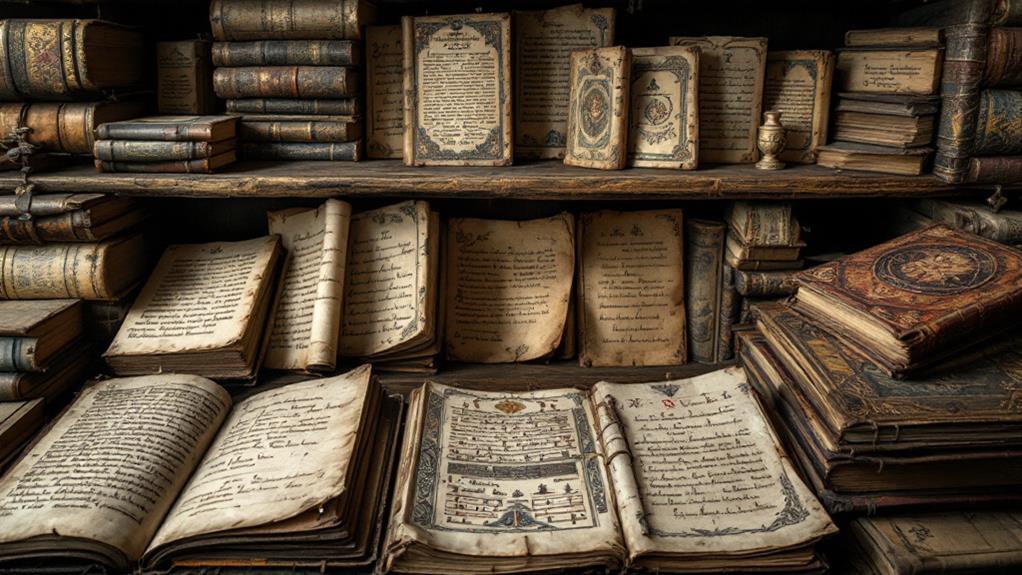
Throughout history, folios have emerged as vital cultural artifacts across diverse civilizations. They've served not just as repositories of knowledge, but as mediums for cultural exchange and script evolution. As you investigate the expedition of folios, you'll notice how they've facilitated the sharing of ideas and languages, acting as bridges between different peoples.
Imagine ancient traders traveling along the Silk Road, carrying folios that contained scripts from distant lands. These folios didn't just transmit religious or scientific knowledge; they also brought about a fusion of languages and scripts. Through this exchange, new scripts evolved, blending elements from different cultures. Folios played a crucial role in this process, preserving linguistic diversity and fostering innovation.
If you look at the Egyptian civilization, folios recorded in hieratic scripts tell stories of daily life and administration. In contrast, the Maya civilization used folios to document astronomical events and rituals in their intricate glyphs. Each folio is a reflection of a civilization's achievements and their interactions with others. By examining folios across civilizations, you gain insight into how they've shaped linguistic and cultural landscapes, ensuring that ancient scripts endure through time.
Materials and Techniques Used
As you investigate the expedition of folios in different civilizations, understanding the materials and techniques used in their creation offers fascinating insights. Parchment preparation was a detailed process where animal skins were cleaned, stretched, and scraped to create a durable writing surface. Ink formulation varied across regions, combining natural elements like soot, iron salts, and plant extracts to produce lasting impressions. These historical materials were essential in creating lively texts that stood the test of time.
Scribing methods involved skilled artisans who employed precise tools and techniques to etch words onto folios. Manuscript illumination added artistic flair, with intricate designs enhancing the text's cultural significance and reflecting regional variations in style. Binding techniques evolved over time, from simple stitching to more sophisticated methods that protected and preserved the contents within.
Preservation practices guaranteed these texts endured, often involving careful storage and handling that respected the fragility of the materials. Technological advancements, such as the development of improved inks and binding methods, further contributed to the longevity of these manuscripts. By exploring these aspects, you appreciate how ancient societies carefully crafted folios that preserved their languages and scripts for future generations.
Challenges of Time and Elements

Facing the relentless passage of time and the harsh elements, ancient folios encountered significant preservation challenges. You might wonder how these cherished documents withstood weathering effects and material degradation. Environmental influences like humidity, temperature fluctuations, and light exposure wreaked havoc on materials like parchment and papyrus. These factors accelerated the decay, making manuscript protection a formidable task.
Understanding the cultural significance of these texts adds urgency to their preservation. Each folio holds valuable historical documentation that connects you to the past, offering insights into ancient societies and languages. The loss of such manuscripts would mean losing irreplaceable links to history.
Technological advancements have helped combat these conservation challenges. Today, you can utilize modern techniques like digital imaging and climate-controlled storage to preserve these ancient gems. However, despite these improvements, the task remains challenging. Conservationists face a delicate balancing act, guaranteeing the stability of these manuscripts while maintaining their accessibility for study and appreciation.
You play an essential role in supporting these efforts. By raising awareness about the importance of manuscript protection, you contribute to preserving these invaluable resources for future generations. Together, you can help ensure that the voices of the past continue to resonate through time.
Monastic Contributions to Safekeeping
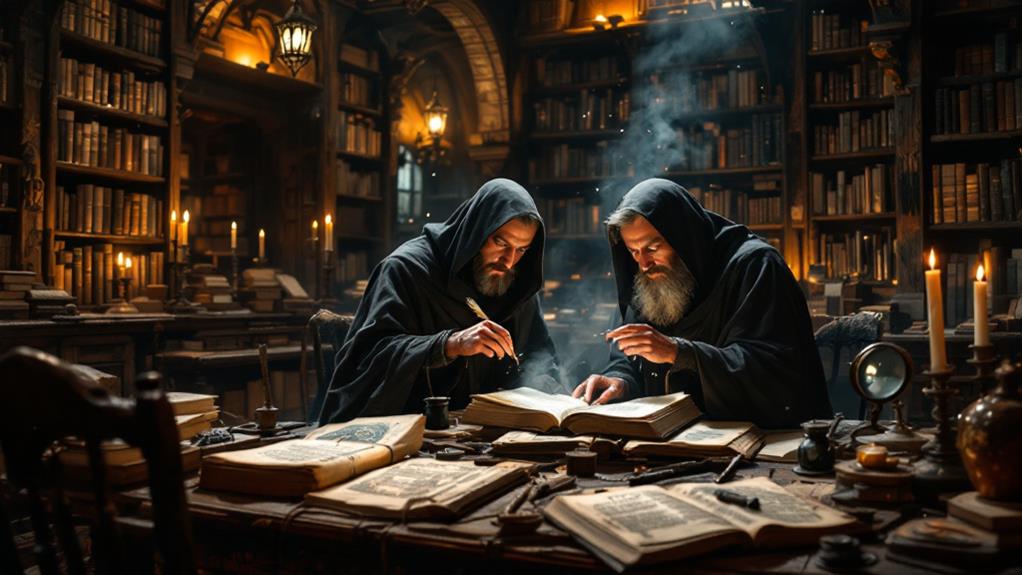
While technological advancements play a significant role in preserving ancient manuscripts, the roots of safeguarding these precious texts trace back to monastic communities. You might be surprised to learn just how crucial these communities were. Within the walls of monastic libraries, monks dedicated their lives to the careful task of script transcription. They painstakingly copied texts by hand, guaranteeing that the knowledge of ancient languages and scripts was preserved for future generations.
Imagine the quiet hum of a scriptorium, with monks bent over their desks, quills in hand. Each stroke was deliberate and careful, capturing not only the words but the essence of cultures long past. These monastic libraries became repositories of wisdom, housing works that might've otherwise been lost to time. By doing so, they offered a sanctuary for these texts, shielding them from the wear and tear of the outside world.
You can think of these monks as the original guardians of language and script. Their dedication to script transcription wasn't just about copying words; it was about preserving the cultural and intellectual heritage embedded within them. Monastic contributions guaranteed that ancient languages and scripts continued to survive and thrive.
Impact of Wars and Conflicts
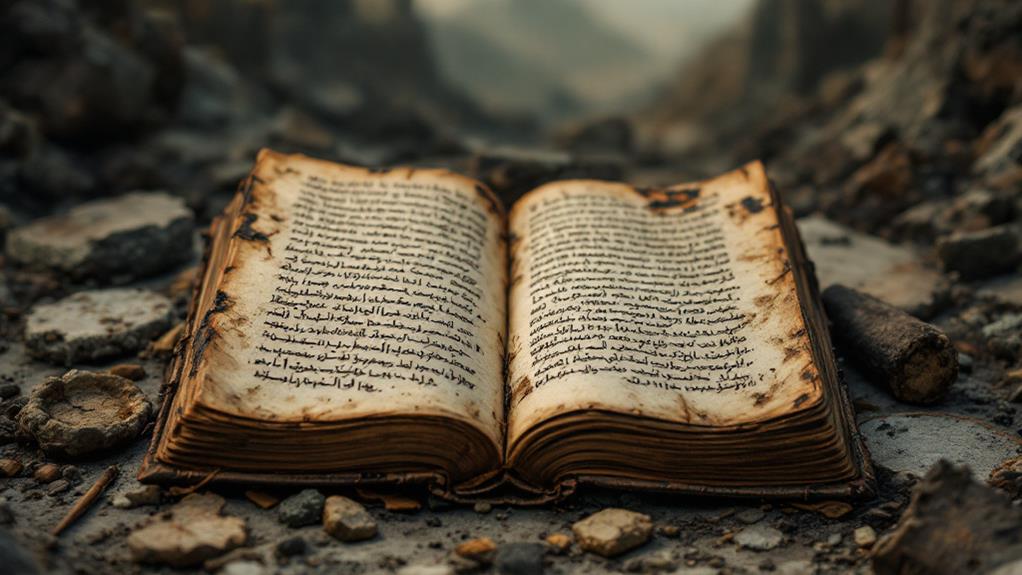
Wars and conflicts have often left a trail of destruction, and ancient manuscripts have not been spared. When you consider the cultural displacement caused by such turmoil, it's evident that linguistic diversity suffers. Languages and scripts, rich in historical context, often face extinction. Without proper archival practices, the narrative continuity of these ancient texts is disrupted, and significant knowledge transmission is lost.
Geopolitical influences play a significant role in the fate of these manuscripts. When territories change hands, preservation methods might be neglected or altered. You might see how certain texts are prioritized over others due to political agendas, leading to the erasure of entire cultures and their languages. In times of conflict, the urgency of safeguarding these texts often competes with immediate survival needs, resulting in further neglect.
To maintain linguistic diversity and preserve historical narratives, it's crucial to recognize the impact of wars on archival practices. You can advocate for policies that protect these cultural gems, ensuring they survive future upheavals. By understanding how conflicts affect preservation methods, you're better equipped to support efforts that uphold narrative continuity and promote the transmission of ancient knowledge.
Rediscovery by Modern Scholars
In recent decades, modern scholars have uncovered countless ancient manuscripts, breathing new life into languages once thought lost. You might wonder how these languages, hidden for centuries, have resurfaced. The answer lies in the passionate scholarly collaboration that has brought experts from diverse fields together. By working in tandem, they've pieced together fragments of history, revealing the secrets of ancient scripts.
Your role in this rediscovery involves understanding how linguistic analysis has transformed our approach to these manuscripts. You'd be amazed at how technology aids scholars in decoding complex scripts. Digital tools allow for detailed examination, revealing subtleties in language that were once indecipherable. You can see how experts, using these tools, identify patterns and structures, reconstructing languages with remarkable accuracy.
Imagine being part of a team that connects dots between disconnected manuscripts across continents. This collaboration creates a web of knowledge, connecting phonetic, syntactic, and semantic elements. Through these efforts, you help preserve and understand linguistic diversity, ensuring that these ancient voices continue to be heard. By engaging in this scholarly pursuit, you contribute to a broader understanding of human history and culture.
Folios in Private Collections
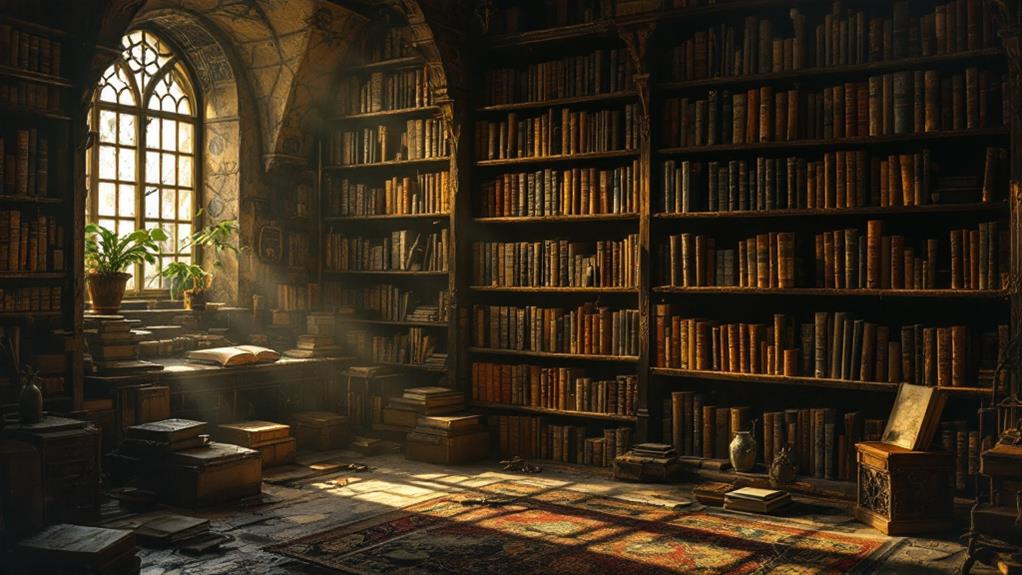
Private collections hold a wealth of folios that have yet to see the light of public scholarship. You might be surprised to learn that these collections, curated by passionate individuals, often contain works of immense historical significance. In the domain of private ownership, folios are cherished not just for the knowledge they hold but also for their folio aesthetics. The allure of ancient scripts and the artistry of their presentation make them prized possessions.
When you explore the world of private collections, you find that each folio tells a unique story of its expedition through time. Owners often feel a personal connection to these artifacts, driven by a deep appreciation for the cultures they represent. However, the private ownership of such folios can be a double-edged sword. While collectors guarantee their preservation, the lack of public access means many scholars can't study these documents, potentially missing out on essential insights into ancient languages.
You play an important role in advocating for the balance between private enjoyment and public benefit. By encouraging collaboration between collectors and scholars, you can help reveal the secrets these folios hold, preserving their legacy for future generations.
Future of Ancient Folios
Imagining the future of ancient folios means considering both preservation and accessibility. With technological advancements, digital preservation becomes vital. You can imagine scanning and digitizing these precious documents, making them available to scholars and enthusiasts worldwide. This not only protects the physical folios from further wear but also opens doors to new educational initiatives. You can support efforts to create online platforms where these texts are accessible for study and research, fostering a global understanding of ancient languages and scripts.
In the educational sphere, you can advocate for initiatives that integrate these digital folios into curriculums. By doing so, students can engage with these texts, appreciating the cultural and historical contexts they represent. You can encourage partnerships between educational institutions and libraries, guaranteeing that digital collections are part of learning resources.
Moreover, you can push for community involvement in the preservation efforts. By raising awareness about the importance of these folios, you're helping to guarantee their survival for future generations. Emphasizing digital preservation and educational initiatives guarantees that ancient folios continue to be valued and studied, bridging the past with the future in meaningful ways.
Related posts