How Ancient Folios Captured the Wisdom of Philosophers and Writers
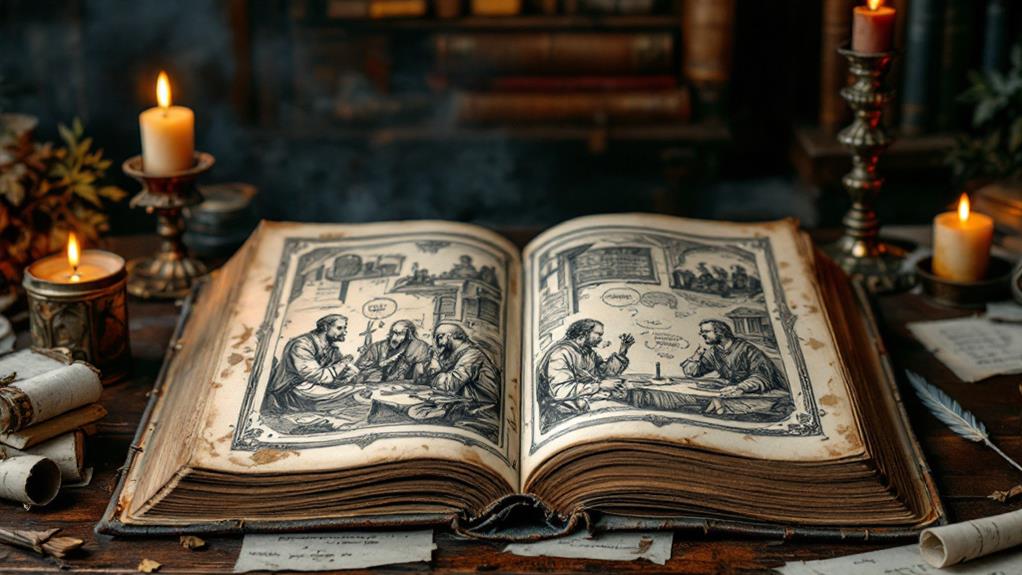
You'd be amazed at how ancient folios captured the wisdom of philosophers and writers, preserving profound insights and literary masterpieces. These manuscripts were carefully crafted using durable materials like vellum and adorned with intricate calligraphy and illustrations. Scribes and illuminators played crucial roles, ensuring the texts were visually appealing and artistically valuable. Folios didn't just record thoughts; they bridged cultures and facilitated the spread of ideas, laying the groundwork for modern philosophy and literature. Through thoughtful preservation techniques, these ancient texts continue to enlighten and influence today's world. Uncover how these cultural jewels remain relevant and impactful.
The Art of Manuscript Creation
In the ancient world, crafting a manuscript was both an art and a careful labor of love. You'd find that manuscript aesthetics were integral to the creation process, reflecting the cultural and artistic values of the time. Scribes painstakingly selected materials, often using vellum or papyrus, and prepared inks from natural substances. This wasn't just about function; it was about creating something visually exquisite. The layout, illustrations, and calligraphy were designed with precision, making each manuscript a unique work of art.
Understanding the historical context is vital when appreciating these ancient manuscripts. You'd see that they were often produced in monasteries or scholarly centers, where knowledge was highly prized. The creation of a manuscript could take months or even years, with the involvement of multiple skilled artisans. This dedication guaranteed that the manuscripts not only conveyed information but also stood as lasting symbols of intellectual pursuit.
As you investigate how these ancient texts were crafted, you'll appreciate how every stroke of the quill was deliberate. Each manuscript represents a harmonious blend of art and scholarship, reflecting the period's deep respect for knowledge and aesthetics.
Philosophical Insights Preserved
Beyond the decorative allure of ancient manuscripts lies their true bounty: the preservation of profound philosophical insights. As you investigate these folios, you're engaging with the minds of history's greatest thinkers. These manuscripts don't just record words; they encapsulate philosophical dialogues that have shaped human thought across generations. You'll find yourself delving into debates that question existence, ethics, and the nature of knowledge, all preserved with careful attention.
The beauty of these ancient texts is their ability to convey timeless truths. By reading them, you're tapping into a reservoir of wisdom that remains relevant despite the passage of centuries. Philosophers like Plato and Aristotle discussed concepts that continue to influence modern thought, and these folios guarantee their voices aren't lost to time.
As you turn each page, you're not just observing history; you're actively engaging with ideas that challenge, provoke, and inspire. These manuscripts invite you to reflect on the complexities of human existence and the pursuit of truth. They remind you that the questions posed in ancient philosophical dialogues are as pertinent today as they were when originally inscribed. In this way, these folios are invaluable bridges to understanding.
Literary Masterpieces in Folios
As you appreciate the philosophical depth of ancient manuscripts, you'll also encounter the sheer brilliance of literary masterpieces preserved within these folios. These texts not only capture the essence of literary heritage but also showcase the exquisite folio aesthetics that make them timeless. Imagine holding a folio that contains the works of Shakespeare, Chaucer, or Dante. Each page is a demonstration of the artistry and dedication of those who sought to preserve literary brilliance for future generations.
When considering the impact of these folios, you'll notice they offer:
- Cultural Insight: Folios provide a window into the values and beliefs of past societies, enriching your understanding of history.
- Language Evolution: They showcase the development of language, revealing how words and expressions have transformed over time.
- Artistic Expression: Through intricate illustrations and ornate designs, folios reflect the creativity and craftsmanship of their creators.
- Educational Value: Serving as primary sources, they allow you to investigate original texts and gain deeper knowledge of classic literary works.
The Role of Scribes and Illuminators
At the heart of ancient folios lies the essential work of scribes and illuminators, whose careful efforts brought these texts to life. As a scribe, you'd undergo rigorous training to master the art of handwriting, guaranteeing every letter was crafted with precision. This training was vital not only for maintaining historical accuracy but also for avoiding transcription errors that could alter the meaning of the text. You'd work with high-quality parchment, chosen for its durability, and use carefully prepared ink composition to secure the manuscript's longevity.
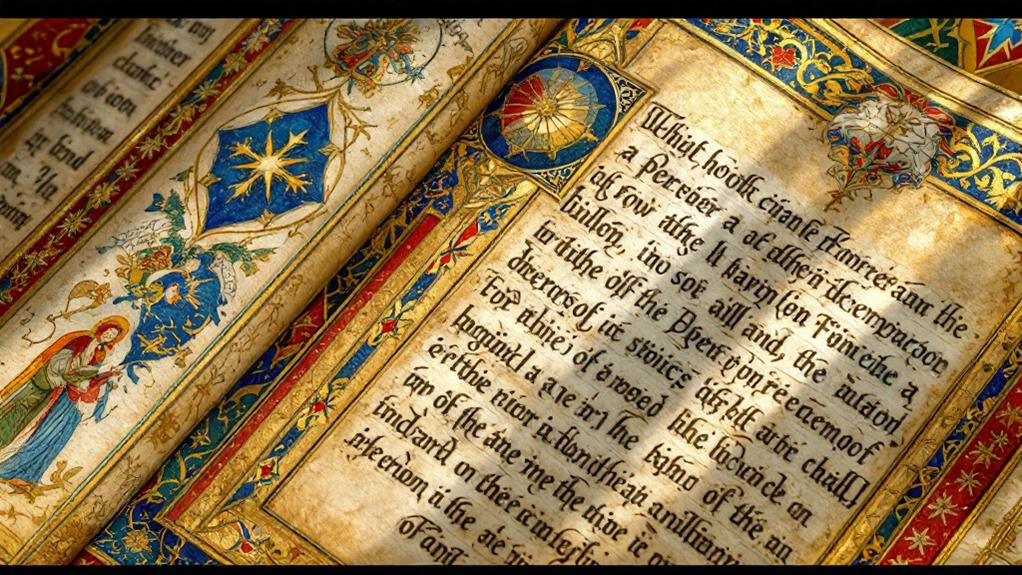
As an illuminator, your role was to improve the manuscript aesthetics with lively colors and intricate designs. You'd use specific illuminator techniques to add decorative borders, initials, and illustrations, each reflecting the cultural significance of the text. These embellishments weren't merely ornamental; they provided visual cues and context, making the text more accessible and memorable.
Together, the work of scribes and illuminators transformed simple manuscripts into extraordinary works of art. Their dedication guaranteed that the wisdom of philosophers and writers was preserved in its most authentic form, creating a legacy that continues to inspire and educate us today.
Folios as Cultural Bridges

Folios act as remarkable cultural bridges, connecting diverse civilizations across time and immersion. They offer a unique window into the cultural exchange between societies, capturing the essence of different historical contexts. When you investigate these ancient documents, you're not just reading text; you're engaging in a dialogue with the past, understanding how distinct cultures influenced each other. Here are four ways folios bridge cultures:
- Translation of Texts: Folios often feature translations of works from one language to another, enabling the spread of ideas and philosophies across borders.
- Preservation of Knowledge: They house the wisdom of ancient civilizations, preserving it for future generations and ensuring that no piece of knowledge is lost.
- Illustrated Narratives: Folios with illustrations offer visual insights into the customs and traditions of the time, allowing you to see how art traveled alongside written words.
- Multilingual Annotations: Marginal notes in different languages within a single folio show how scholars from various regions engaged with the same text, fostering a global intellectual community.
Preservation Techniques Through Ages
Throughout history, diverse techniques have emerged to secure the survival of ancient folios, each method reflecting the technological and cultural advancements of its time. You'll find that scroll conservation started with simple yet effective practices like storing scrolls in clay jars or wooden boxes, protecting them from moisture and pests. Ancient Egyptians understood the importance of scroll conservation, often using papyrus, which was both durable and lightweight, guaranteeing that their records endured.
As you move forward in time, parchment became a preferred medium due to its durability and ability to withstand frequent handling. Medieval scribes often treated parchment with lime and stretched it to create a robust surface for writing. They also employed techniques like sewing folios into protective covers, securing the parchment's durability over centuries.
In the Islamic Golden Era, scholars developed advanced methods, such as using leather bindings and ornate cases, to preserve valuable manuscripts. These techniques didn't just protect the texts physically but also signified their cultural and intellectual importance. By understanding these preservation methods, you appreciate how ancient societies valued their knowledge and took active steps to safeguard its survival for future generations.
The Legacy of Ancient Texts

Ancient texts are the echoes of civilizations past, offering insights into the thoughts, beliefs, and knowledge of the ancients. Their legacy remains profound, shaping modern thought and culture. Understanding their historical significance helps you appreciate their impact. You see the wisdom of philosophers and writers, transmitted through generations, influencing everything from government to ethics. These texts have navigated through time, thanks to diligent textual transmission.
When exploring the legacy of ancient texts, consider their enduring influence:
- Cultural Foundations: They form the bedrock of many cultures, providing stories and teachings that define societal values.
- Intellectual Heritage: Ancient philosophies and scientific ideas laid the groundwork for contemporary knowledge and inquiry.
- Literary Influence: Classic literature inspires countless modern works, echoing themes and styles that have stood the test of time.
- Historical Records: They serve as primary sources, offering initial accounts of historical events and societal norms.
Related posts