Historic Folios and Their Influence on Modern Thought and Culture

Historic folios have considerably influenced modern thought and culture. They began as medieval manuscripts and evolved with Gutenberg's printing revolution, which made them accessible to the masses and democratized knowledge. During the Renaissance and Enlightenment, they propelled inquiry and innovation, challenging traditional paradigms in literature, science, and politics. Folios distinctly blend text and imagery, preserving cultural contexts and encouraging new narratives. Today, digital preservation extends their reach, allowing anyone to investigate historical ideas and art. By linking past wisdom to contemporary insights, folios inspire ongoing innovation and cultural appreciation. Uncover how these artifacts continue to shape our world.
The Origins of Folios
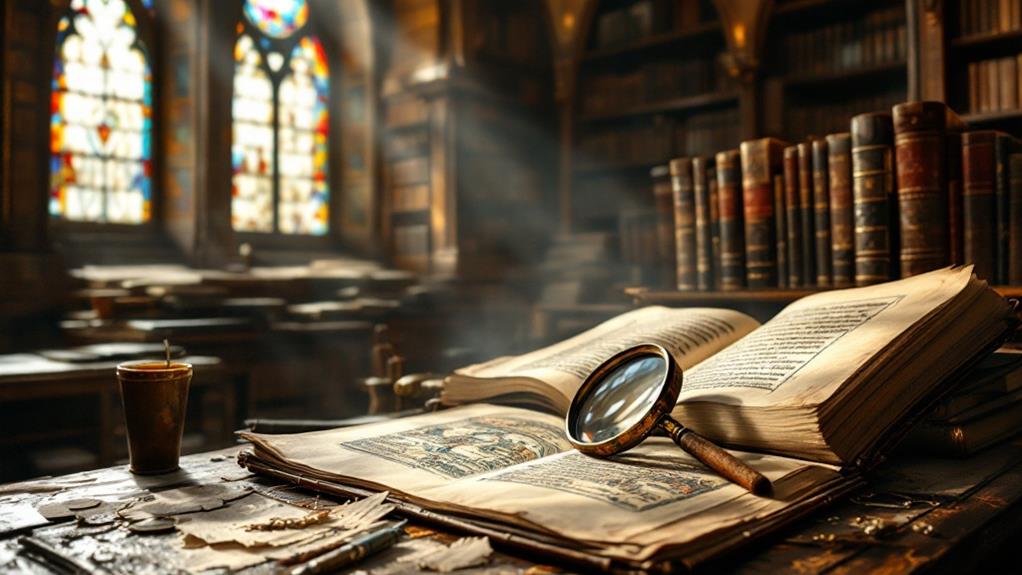
Folios, with their rich history and cultural significance, trace their origins back to the early days of bookmaking. You might imagine a world where medieval manuscripts were laboriously crafted by skilled scribes. These manuscripts, often large and elaborate, were the precursor to the folios you recognize today. The folio format allowed for more text on each page, making it a preferred choice for preserving significant works, from religious texts to scientific treatises.
As you explore the origins of folios, consider how the printing revolution transformed their production and accessibility. Before the invention of the printing press, creating a book was labor-intensive and time-consuming. Each page was carefully copied by hand, and folios were a luxury reserved for the wealthy and influential. However, the printing revolution, spearheaded by Johannes Gutenberg in the 15th century, changed everything. Suddenly, books could be mass-produced, and folios became more widely available.
The shift from hand-copied medieval manuscripts to printed folios marked a substantial turning point in history. You can appreciate how this evolution not only democratized knowledge but also set the stage for the future of bookmaking and the dissemination of information.
Renaissance and Knowledge Expansion
How did the Renaissance ignite a surge in knowledge expansion? You can thank the period's profound acceptance of humanism for that. Humanism centered on the value of individual potential and critical thinking. During the Renaissance, scholars began to question traditional teachings and sought knowledge beyond religious doctrine. This shift had a massive humanism impact, encouraging people to investigate a variety of subjects, including art, science, and philosophy.
With the invention of the printing press by Johannes Gutenberg, knowledge dissemination reached unprecedented levels. Suddenly, books weren't just for the elite. You could find literature in the hands of common people, spreading ideas faster and wider than ever before. This technological advancement allowed for the translation and distribution of classical texts, which fueled further inquiry and innovation across Europe.
As you immerse yourself in this period, you'll notice how the Renaissance laid the groundwork for modern education and intellectual freedom. The time's focus on individual inquiry and empirical evidence paved the way for future advances. By breaking away from medieval scholasticism, the Renaissance encouraged you to think independently, question norms, and seek knowledge beyond established boundaries. This period fundamentally changed how we perceive and interact with the world.
Enlightenment and Scientific Progress

The Enlightenment's legacy lies in its profound acceptance of reason and scientific inquiry, setting the stage for remarkable scientific progress. During this time, you'd notice a significant shift in how people approached knowledge. Enlightenment philosophy emphasized rationality and evidence over tradition and superstition. This intellectual movement encouraged you to question established norms and seek out empirical truths, laying the groundwork for the scientific revolution.
As you explore deeper into this period, you'll see how thinkers like Newton, Locke, and Voltaire challenged existing paradigms. Their works, often disseminated through influential folios, sparked curiosity and debate. These folios became instrumental in spreading revolutionary ideas, fundamentally shifting how society perceived the world. You're encouraged to critically evaluate these ideas, leading to breakthroughs in physics, chemistry, and biology.
Folios in Literature and Art
Imagine a world where ideas are given form not just through words, but also through fascinating visuals that inspire and provoke thought. This is the domain of folios in literature and art, where folio aesthetics play a vital role in the literary evolution of society. As you investigate these folios, you'll notice how artistic techniques blend seamlessly with narrative, transforming stories into dynamic visual storytelling experiences. These artistic endeavors aren't just about beauty; they're about preserving manuscripts that hold the essence of historical contexts.
You'll find that folios serve as a bridge between the past and present, offering insights into how culture and knowledge have evolved. Manuscript preservation guarantees that the wisdom and creativity encapsulated in these pages endure through time. Each folio is a reflection of a unique period, capturing the zeitgeist in both text and image. As you probe deeper, you'll appreciate how these works influence modern literature and art, nurturing creativity and intellectual growth.
Folios invite you to see beyond mere words, urging you to engage with the layers of meaning embedded in their artful composition. They remind you that literature and art, when intertwined, transcend boundaries and time.
Political Ideologies and Folios

Folios often serve as a canvas for political ideologies, capturing the spirit of their times through both text and imagery. As you investigate these historic documents, you'll notice how they reflect the political discourse of their period. They're not just relics; they're alive with ideological evolution, shaping and being shaped by the ideas swirling around them. Folios provide a platform for governance theories and philosophical foundations, influencing civic engagement.
You'll see how revolutionary texts were crafted to inspire social movements, urging people to question and sometimes overthrow established norms. These folios employed propaganda techniques to sway public opinion, demonstrating the power of the written word in political arenas. By examining them, you gain insight into how leaders and thinkers used language and imagery to advance their causes.
These documents are more than just historical records; they're blueprints of change, capturing crucial moments when societies shifted their paths. As you investigate these folios, you engage with the past, understanding the interplay between text and action in shaping political landscapes. They invite you to reflect on how these ideas continue to resonate in contemporary political discourse.
Folios and Cultural Heritage
Exploring folios in the domain of political ideologies reveals their dynamic role in shaping societies, but their significance doesn't stop there. As you immerse yourself in the world of cultural heritage, you'll find that folios are vital in maintaining cultural continuity. They serve as vessels carrying the wisdom, beliefs, and stories of past generations to the present day. Each folio tells an intricate tale of the society from which it emerged, preserving the essence of its cultural identity.
By focusing on folio preservation, you guarantee that these artifacts withstand the test of time. Protecting these documents isn't just about maintaining the physical paper or ink; it's about safeguarding the narratives and knowledge they contain. In this way, you contribute to a broader understanding of our shared human history.
When you interact with these historic texts, you're not just reading old stories; you're participating in a dialogue with the past. This dialogue fosters a deeper appreciation of diverse cultures and their contributions to the collective human experience. By valuing and preserving folios, you help maintain a bridge between the past and the future, enriching both your own understanding and the cultural tapestry of the world.
Modern Reflections on Historic Folios

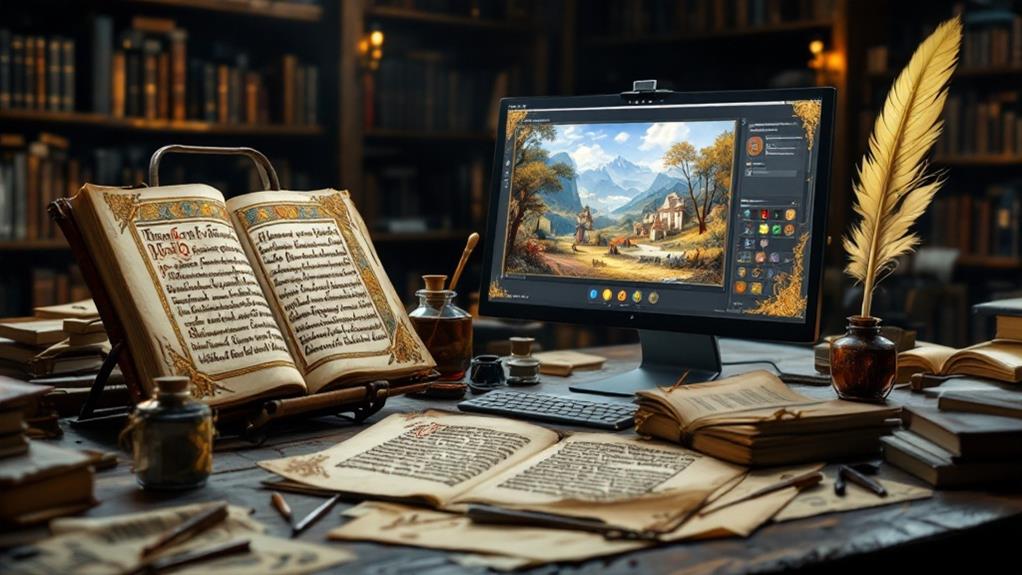
In the current electronic period, you might wonder about the relevance of historic folios, yet their impact remains profound. These centuries-old documents continue to shape modern thought and culture, illustrating the timeless nature of human creativity and intellect. Digital preservation has played a significant role in ensuring that these folios are accessible to a global audience. You can now investigate and study these artifacts with a few clicks, experiencing the wisdom and artistry of the past without leaving your home.
The digital era has democratized folio accessibility, breaking down barriers that once limited their reach to scholars and collectors. You have the opportunity to probe into Shakespeare's Initial Folio or Leonardo da Vinci's notebooks with unprecedented ease. This accessibility enriches our understanding of history, allowing you to draw connections between past and present, sparking new ideas and insights.
In reflecting on historic folios, you see how digital preservation has transformed their influence. They inspire innovation, creativity, and critical thinking, illustrating that while the medium may change, the message remains essential. By engaging with these works, you become part of a continuum, bridging the gap between ancient wisdom and contemporary thought.
Related posts