
Folios in Classrooms: Teaching History and Culture Through Ancient Texts

Using folios in classrooms offers you a dynamic way to teach history and culture through ancient texts. Engaging physically with replicas helps students appreciate historical contexts and encourages a deeper understanding of cultural narratives. It caters to diverse learning styles, making history come alive for visual and kinesthetic learners. By analyzing authentic texts, students sharpen critical thinking and interpretive skills. Digital resources improve accessibility, while interactive activities like role-play and storytelling increase engagement. Challenges like text complexity can be addressed with tools like glossaries. Uncover how folios can transform classroom discussions and foster an interest in historical exploration.
Benefits of Using Folios
Exploring the benefits of using folios in teaching history and culture reveals several compelling advantages. To begin with, folio formats offer a tangible connection to the past, allowing students to physically interact with replicas of ancient texts. This interaction fosters a deeper understanding and appreciation of historical and cultural contexts. When you incorporate folios into your lessons, you create an engaging experience that can't be achieved through digital screens alone.
Moreover, folios encourage student engagement by making the learning process more dynamic. Imagine your students flipping through pages filled with rich illustrations and handwritten scripts, sparking curiosity and discussions. This hands-on approach invites students to become active participants in their learning experience, rather than passive recipients of information.
Additionally, using folio formats in your teaching can cater to different learning styles. Visual learners benefit from the detailed imagery, while kinesthetic learners appreciate the tactile experience of handling the materials. You'll notice that students are more likely to ask questions, seek answers, and develop a genuine interest in the subject matter. By integrating folios into your curriculum, you're not just teaching history and culture; you're bringing it to life.
Historical Context Exploration
How do ancient texts transport us to the heart of their historical contexts? By engaging with these texts, you can uncover layers of the past, revealing the societal norms, political climates, and everyday life of the period. The historical significance of these documents provides a tangible connection to ages long gone, allowing you to see the world through the eyes of those who lived it. Each word and phrase in these texts acts as a portal to the past, offering insights into the priorities and challenges of the time.
When you examine the authenticity of these texts, you gain a deeper understanding of their origins and purposes. Authentic texts offer a direct line to primary sources, enhancing your ability to appreciate the true essence of historical narratives. This exploration helps you discern which events or ideas were crucial at the time, thereby shaping your understanding of how history unfolded.
Enhancing Cultural Understanding

Ancient texts serve as invaluable tools for enhancing cultural understanding, offering a glimpse into the beliefs, traditions, and values of civilizations past. When you immerse yourself in these texts, you're not just reading words on a page; you're entering a world where cultural narratives unfold. These stories encapsulate the essence of societies, providing context for their rituals and social structures. Engaging with them allows you to see through the eyes of those who lived in vastly different times, fostering historical empathy.
By exploring these ancient narratives, you gain insights into how people addressed universal themes like love, conflict, and morality. This understanding helps bridge the gap between past and present, showing how cultural practices evolved and adapted over time. You can appreciate the intricacies of different societies, recognizing the shared human experience across epochs.
In classroom settings, discussing ancient texts encourages you to think about how cultural narratives have shaped modern perspectives. You begin to appreciate the diversity of human expression and the factors that influenced historical events and societal norms. This enriched perspective fosters a deeper appreciation of cultural diversity, promoting an inclusive view of history that celebrates the richness of human civilization.
Developing Critical Thinking
Through the study of ancient texts, you sharpen your critical thinking skills by analyzing complex narratives and deciphering nuanced meanings. These texts aren't just old stories; they're rich with layers of historical context, cultural significance, and philosophical insights. As you investigate textual analysis, you begin to unravel these layers, questioning the motives of characters, the intentions of authors, and the societal norms that shaped these narratives. This process hones your ability to assess information critically and draw informed deductions.
Your interpretive skills are key to understanding these ancient works. By interpreting the symbols, metaphors, and language used, you learn to appreciate the depth of these texts. You see how different interpretations can lead to diverse understandings and discussions. This challenges you to reflect on multiple perspectives, fostering an open-minded approach to problem-solving.
Engaging with ancient texts forces you to confront ambiguity and complexity, which are vital aspects of critical thinking. You learn not to accept information at face value but to question and investigate deeper meanings. This practice not only improves your academic skills but also prepares you for real-world situations where critical thinking is invaluable.
Engaging Classroom Activities

Diving into engaging classroom activities can transform the study of ancient texts from a solitary endeavor into a dynamic, interactive experience. By incorporating interactive storytelling and creative presentations, you can inspire students to connect deeply with historical narratives and cultural contexts. Imagine the excitement when students take turns narrating tales from ancient civilizations, breathing life into characters and events. This approach not only enriches their understanding but also fosters a sense of ownership and personal connection to the material.
Consider these activities to ignite passion and curiosity:
- Recreate an Ancient Debate: Let students embody historical figures, arguing crucial issues of their time.
- Cultural Role-Play: Encourage students to dress in period attire and enact scenes from ancient texts, enhancing empathy and understanding.
- Digital Storyboards: Use technology to create visual storyboards that depict ancient stories, merging old tales with new media.
- Time-Travel Journals: Have students write diary entries as if they lived in the age they're studying, capturing emotions and daily life.
- Collaborative Story Circles: Facilitate group storytelling sessions where students build on each other's narratives, fostering teamwork and creativity.
These activities engage students and make the study of ancient texts a memorable expedition.
Selecting Appropriate Folios
As you investigate interactive classroom activities, choosing the right folios becomes an essential step in bringing ancient texts to life. To guarantee your students engage meaningfully, focus on folio selection criteria that align with your educational goals. Begin by considering the historical and cultural significance of each folio. Does it provide insight into a particular period or civilization? Make certain the text offers rich content that can spark curiosity and discussion among students.
Age appropriateness is another key factor. Evaluate the complexity of the language and themes in the folio. Are they suitable for your students' age and comprehension levels? Avoid texts with outdated or inappropriate content that might hinder engagement or understanding. Instead, select folios that challenge students without overwhelming them, encouraging critical thinking and deeper analysis.
Furthermore, consider the visual and material aspects of the folios. Are they visually engaging and in a format that's manageable for classroom use? Think about the accessibility of the texts, guaranteeing all students can interact with them effectively. By carefully selecting folios, you create a learning environment where history and culture come alive, fostering an enriching educational experience.
Integrating Digital Resources
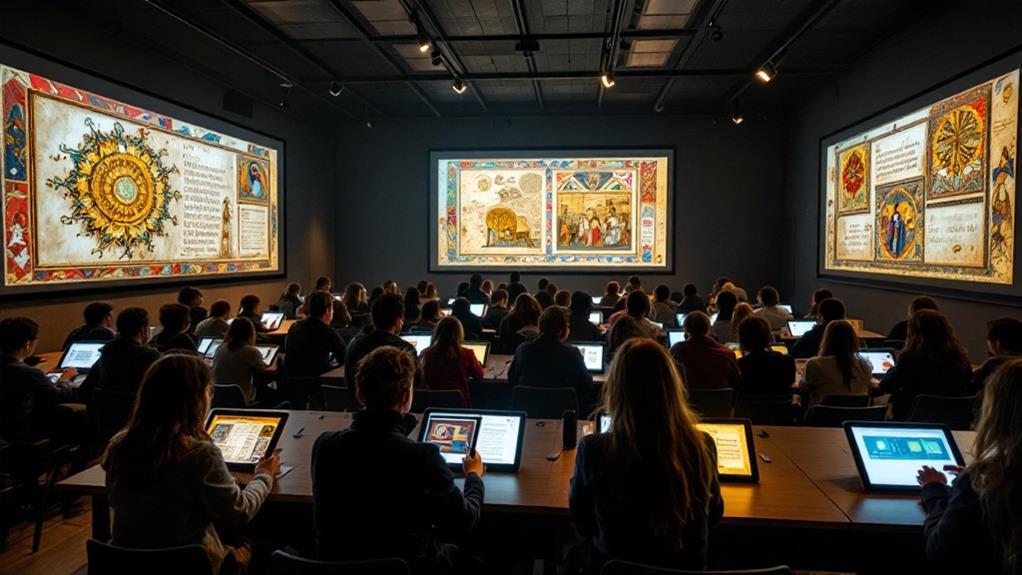
Embracing technology in the classroom improves the learning experience by integrating digital resources with ancient texts. By tapping into digital archives, you can access an incredible wealth of historical documents that were once locked away in distant libraries. Interactive platforms allow students to engage with these texts in new and exciting ways, deepening their understanding and appreciation of history and culture. You can create a dynamic classroom environment where students not only read about the past but interact with it directly.
Imagine the possibilities:
- Uncover rare manuscripts and folios from the comfort of your classroom.
- Engage students with multimedia annotations that bring ancient texts to life.
- Inspire curiosity and wonder with virtual tours of historical sites.
- Connect with historians and experts through online seminars and Q&A sessions.
- Empower students to conduct their own research using digital tools.
These digital resources don't just make ancient texts more accessible; they transform them into living documents. You can spark a student's passion for history by presenting it in a way that resonates with their digital-native mindset. By integrating digital archives and interactive platforms, you open a window to the past that invites exploration and unearthing.
Challenges and Solutions
Steering the integration of digital resources into history education presents several challenges, but solutions are within reach. One major hurdle is the interpretive challenges that arise from using ancient texts. These texts often require careful analysis and context, which can be difficult to convey digitally. You need to guarantee students grasp the nuances and historical significance without losing them in a sea of information. To tackle this, you can use interactive tools that emphasize context, such as timelines and glossaries, enabling students to connect the dots more effectively.
Another obstacle is accessibility issues. Not every student has equal access to digital tools or high-speed internet, which can create disparities in learning experiences. You can address this by providing resources in multiple formats, like downloadable PDFs or offline-accessible apps, making sure all students can participate. Furthermore, partnering with schools to improve tech infrastructure can make a significant difference.
You might also encounter resistance from those unfamiliar with digital methods. Offering training sessions for both educators and students can ease the shift and foster a more tech-savvy learning environment. By tackling these challenges head-on, you can make ancient texts more engaging and accessible for everyone.
Teacher and Student Perspectives

From the viewpoints of both teachers and students, integrating ancient texts into modern history education offers unique insights and challenges. As a teacher, you might find that using folios can breathe life into historical lessons, transforming them from dry fact memorization into vivid explorations of culture and time. Teacher experiences often highlight the thrill of watching students connect with voices from the past. However, you may also face the hurdle of making these texts accessible and relevant to a digital-age generation.
For students, engagement can greatly increase when they interact with ancient texts. Instead of passively receiving information, you actively interpret and question, developing critical thinking skills. You might find yourself captivated by the raw human stories that transcend time, fostering a deeper appreciation for history.
Consider how this approach affects both educators and learners:
- Awe: The thrill of uncovering ancient wisdom.
- Connection: Bridging past and present, making history personal.
- Curiosity: A spark ignited, leading to further exploration.
- Empowerment: Gaining confidence in interpreting complex materials.
- Frustration: traversing difficult language and concepts.
Ultimately, the integration of folios offers profound educational opportunities, reshaping how history is taught and understood.
Future of Folios in Education
Looking ahead, the future of folios in education promises to revolutionize how we engage with history. Imagine a classroom where digital folios transform static texts into interactive learning experiences. You and your classmates investigate historical narratives not just by reading but by interacting with multimedia elements that bring ancient stories to life. These digital folios can seamlessly integrate cross-disciplinary approaches, linking history with art, literature, and even science, fostering a richer understanding.
Student engagement skyrockets when you're part of collaborative projects that require you to immerse yourself in these folios. You and your peers might work together to create presentations, honing your research and presentation skills. This hands-on involvement guarantees that you not only learn facts but also understand the context and significance of historical events.
Assessment methods will evolve too, focusing less on rote memorization and more on your ability to analyze and synthesize information from these diverse resources. Teachers will look at how you use digital folios to construct arguments and draw connections. This approach not only makes history more accessible but also prepares you for a world where critical thinking and adaptability are key.
Related posts