Conservation Techniques for Ancient Folios: Best Practices Revealed
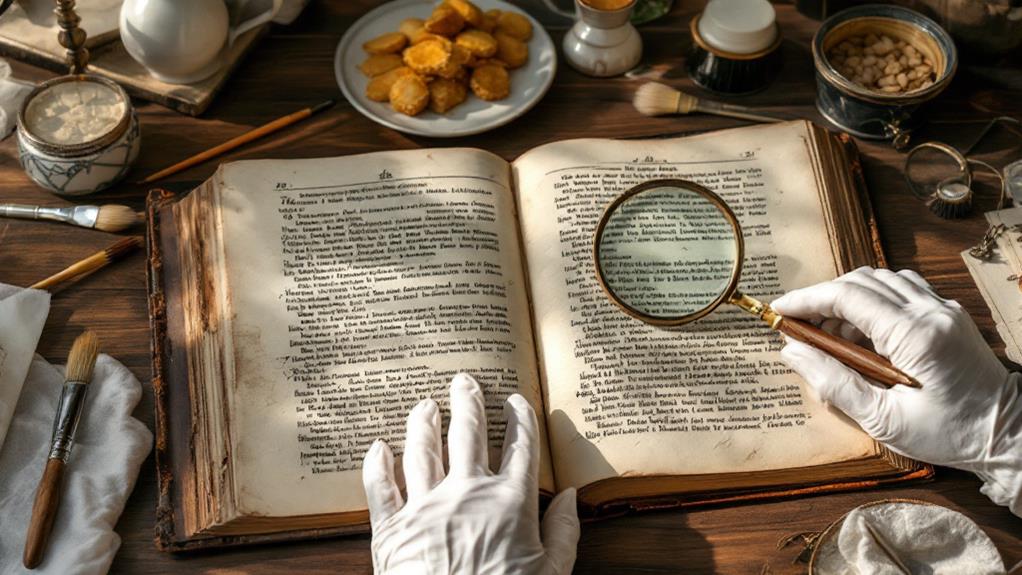
To conserve ancient folios effectively, control humidity between 30% and 50% and keep temperatures stable around 65°F to 70°F. Always wash and dry your hands before handling, or use cotton gloves to minimize contact. Support each page fully when turning and store folios in archival boxes away from light. Clean gently with soft brushes and repair using Japanese tissue paper and conservation-grade adhesive. Digitize folios with high-resolution scans and organize files securely. Monitor conditions with sensors and document all observations. These steps guarantee your folios endure, while more detailed practices can further improve preservation efforts.
Understanding Ancient Folios
In the context of understanding ancient folios, there's a certain magic in unraveling their mysteries. When you immerse yourself in these historical artifacts, you're not just flipping through old pages; you're connecting with the past. The historical significance of each folio is immense, as it can reveal insights into the culture, beliefs, and daily life of civilizations long gone. It's crucial to appreciate how these documents have influenced modern thought and knowledge.
To truly grasp the value of these ancient texts, you need to reflect on their material composition. Many folios were crafted from materials like parchment, vellum, and papyrus. These materials were chosen carefully, not just for their availability, but also for their durability and ability to retain ink or pigments over centuries. Each material tells its own story about the period and region from which it originated.
Environmental Control Methods
To preserve ancient folios effectively, you must implement careful environmental control methods. Start by confirming humidity regulation; it's vital to maintain a relative humidity level between 30% and 50%. This prevents mold growth and paper deterioration. Temperature stability is similarly important, so aim to keep the temperature between 65°F and 70°F. Fluctuations can cause expansion and contraction, which damage the folios.
Air filtration plays a considerable role in protecting these delicate documents. Use high-quality air filters to remove dust and pollutants that may accumulate on the folios and degrade them. It's also fundamental to control light exposure. Too much light, especially UV light, can fade inks and weaken paper fibers. Keep the folios in dimly lit spaces and use UV-filtering glass or films on windows.
Pest management is another vital aspect. Regularly inspect the storage area for insects and rodents, as they can cause irreparable harm. Use non-toxic methods to manage any pest problems. Finally, consider material compatibility. Confirm that any storage materials or display cases are made of archival-quality substances that won't react negatively with the folios. By following these practices, you'll considerably prolong the life of these valuable historical documents.
Handling and Storage Tips
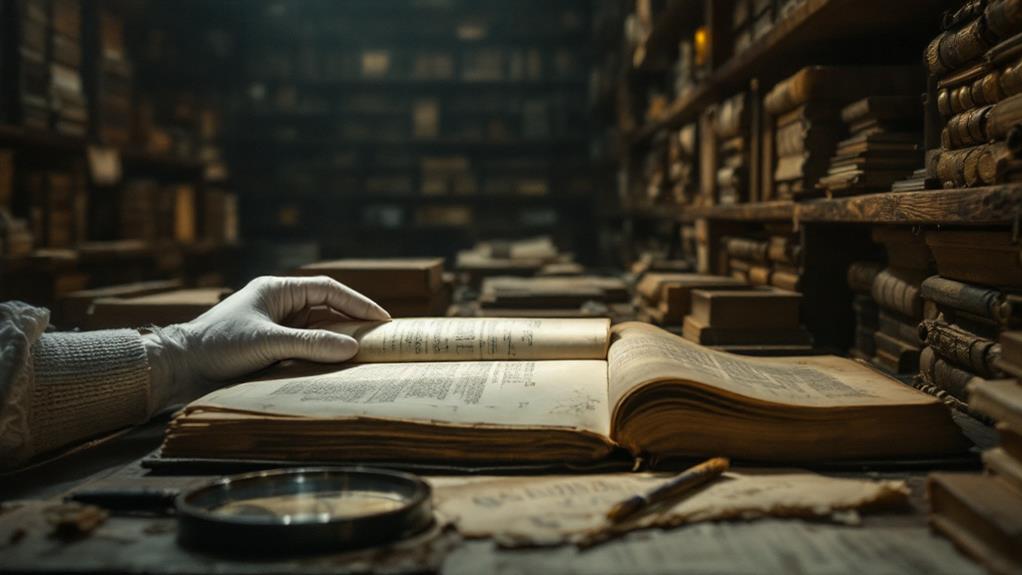
When it comes to handling ancient folios, your attention to detail is paramount. These fragile documents require specific handling precautions to preserve their integrity. Always wash and dry your hands thoroughly before touching any folio, as oils and dirt can damage the delicate paper. Consider wearing gloves, preferably cotton, to minimize direct contact. When turning pages, support them fully to prevent tears or creases. Avoid forcefully flattening the folio; instead, use gentle, even pressure.
For storage solutions, make certain that folios are kept in a stable, climate-controlled environment. Use archival-quality boxes or sleeves to protect them from dust, light, and fluctuations in temperature and humidity. Store flat when possible to prevent warping or bending. If folios must be stored upright, use sturdy supports to prevent slumping. Keep folios away from direct sunlight and artificial light sources that emit UV rays, which can cause fading and deterioration over time.
Cleaning and Repair Techniques
Although ancient folios are delicate, there are effective methods for cleaning and repairing them to guarantee their longevity. Start by evaluating each folio's condition. Gauge the level of dirt or damage before proceeding with any cleaning or repair. In terms of cleaning, gentle techniques are vital. Use a soft brush or vacuum with a low suction setting to remove surface dust. For deeper cleaning, consider chemical cleaning methods. However, it's important to use these carefully, ensuring the chemicals are specifically designed for conservation and won't harm the folio.
Material repair involves addressing tears or losses in the folio. Begin by flattening any creases or folds. For tears, apply thin Japanese tissue paper using a conservation-grade adhesive. This method reinforces the folio without adding bulk. Be cautious with the adhesive amount to avoid staining or stiffening the paper. If a folio has missing sections, recreate the missing parts using similar materials to maintain authenticity. Always test materials and techniques on a small, inconspicuous area initially.
Throughout the cleaning and repair process, patience and precision are key. By following these methods, you can extend the life of ancient folios while preserving their historical value.
Digitization for Preservation
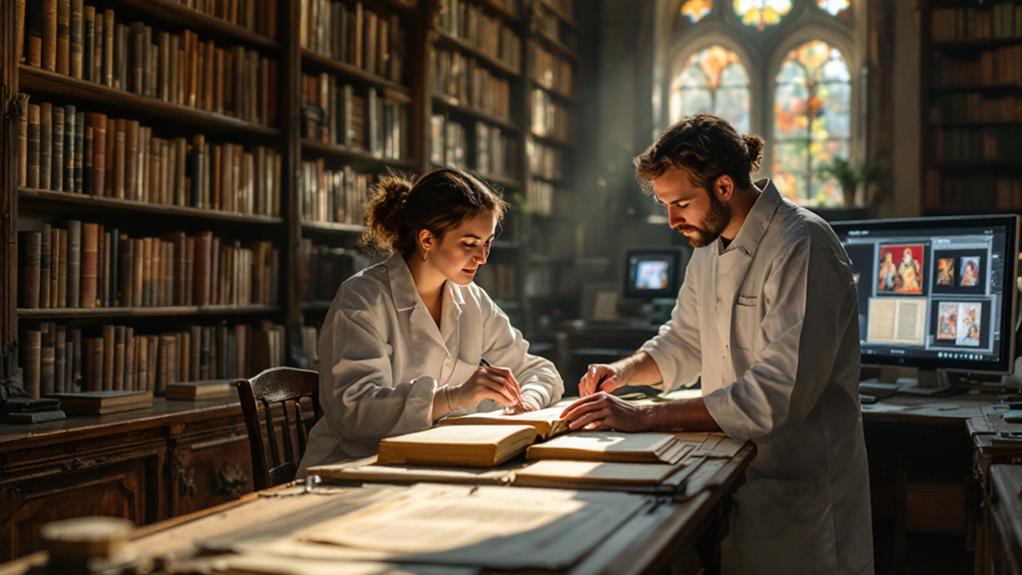
Once you've carefully cleaned and repaired ancient folios, it's vital to contemplate digitization as a means of preservation. By creating digital copies, you protect these valuable documents from further physical degradation. Start by selecting high-resolution scanning equipment to capture every intricate detail. This guarantees that the digital replicas maintain the authenticity of the original folios.
Digital archiving plays a significant role in this process. You'll need to store these digitized versions in secure, reliable formats that will last long-term, such as TIFF or PDF/A. This way, you make certain the documents are accessible for future generations. With digital archiving, you also enable easier sharing of these precious resources with researchers and historians worldwide.
Don't overlook metadata management. As you digitize, record thorough metadata for each folio, including its origin, date, and any notable features. This metadata not only aids in organizing your digital collection but also improves searchability, making it easier for others to find and study specific documents. By implementing these digitization practices, you contribute substantially to the preservation and accessibility of ancient folios, safeguarding their legacy endures in the electronic era.
Continuous Monitoring Practices
Maintaining the integrity of ancient folios requires vigilant continuous monitoring practices. You need to implement preventive measures to safeguard these invaluable artifacts. Start by keeping a close eye on environmental conditions such as temperature, humidity, and light exposure. Use sensors and automated systems to track these variables consistently. This data tracking is essential because even minor fluctuations can lead to deterioration over time.
Create a routine inspection schedule. Regularly examine the folios for any signs of damage, such as discoloration or mold. This hands-on approach allows you to catch potential issues early before they become major problems. Remember, early detection is key to effective preventive measures.
Additionally, when you're monitoring, don't forget the importance of documenting every observation. Detailed records help you identify patterns and make informed decisions for future conservation efforts. Use software tools to maintain a thorough database of your findings. This systematic approach to data tracking not only informs immediate actions but also aids in long-term preservation strategies.
Related posts