A History of Folios in Royal Collections: Stories of Regal Provenance

You're about to set out on an expedition through time as you investigate the rich history of royal folios. These regal collections began as ancient scrolls symbolizing power, knowledge, and prestige. Fast forward to the medieval period, when illuminated manuscripts served as sophisticated status symbols. The Renaissance and Baroque periods brought strategic and dynamic collecting, while Enlightenment folio exchanges fostered cultural alliances. Even amid wartime losses, these collections proved resilient, with modern practices now ensuring their preservation. Each folio tells a story of cultural and intellectual ambition that continues to captivate. There's much more to uncover in these royal artifacts.
Early Origins of Royal Folios
Royal folios have a rich history that dates back to ancient times, serving as both symbols of power and repositories of knowledge. You can imagine how these collections began with ancient scrolls, carefully crafted and preserved under royal patronage. Monarchs, keen to assert their authority and wisdom, often commissioned the creation and curation of these scrolls. They weren't just simple documents; they embodied the essence of power and intellect.
In those times, a ruler's prestige was partly measured by the breadth and depth of their collection. Ancient scrolls contained everything from religious texts and philosophical treatises to records of military conquests and governance. By supporting the creation and maintenance of these collections, kings and queens demonstrated their commitment to knowledge and cultural advancement.
You'd find that royal patronage played a significant role in preserving these texts. Without it, many ancient scrolls might have been lost to time. The royal endorsement not only guaranteed the survival of these works but also raised their status, making them cherished artifacts that spoke to the might and sophistication of the ruling class. These early folios laid the groundwork for future generations of royal collections.
Medieval Manuscripts and Monarchs
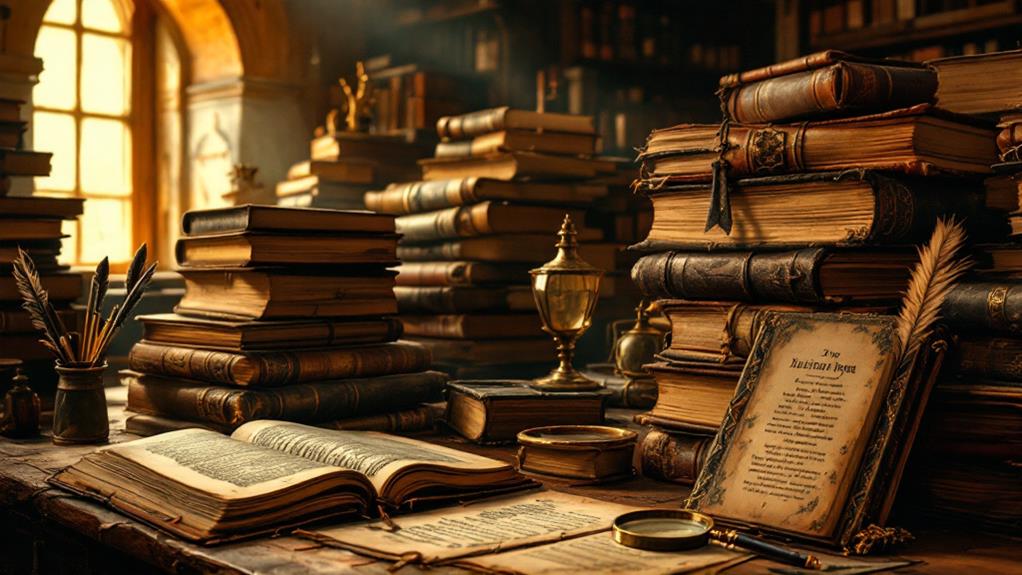
As the ancient epoch gave way to the medieval period, the tradition of royal folios evolved into the creation and preservation of exquisite manuscripts by monarchs across Europe. You find medieval scribes working tirelessly under royal patronage, crafting illuminated texts that not only served as religious and educational tools but also as symbols of power and sophistication. Monarchs commissioned these manuscripts, guaranteeing their royal libraries became centers of cultural heritage and historical preservation.
In this period, manuscript illumination reached new artistic heights. Gold leaf and lively colors transformed the pages into visual masterpieces, making each manuscript a unique gem. These illuminated texts were vital in monarchal education, providing both knowledge and inspiration to the royal family and their courts. They served as didactic tools, imparting wisdom and reflecting the ideals of chivalry and governance.
Royal libraries housed these precious manuscripts, safeguarding them for future generations. Through their careful creation and preservation, these manuscripts became more than just books; they were statements of the monarchs' devotion to culture, education, and history. By valuing these works, medieval monarchs guaranteed their legacies endured, enriching the cultural tapestry of Europe.
Renaissance Collecting Trends
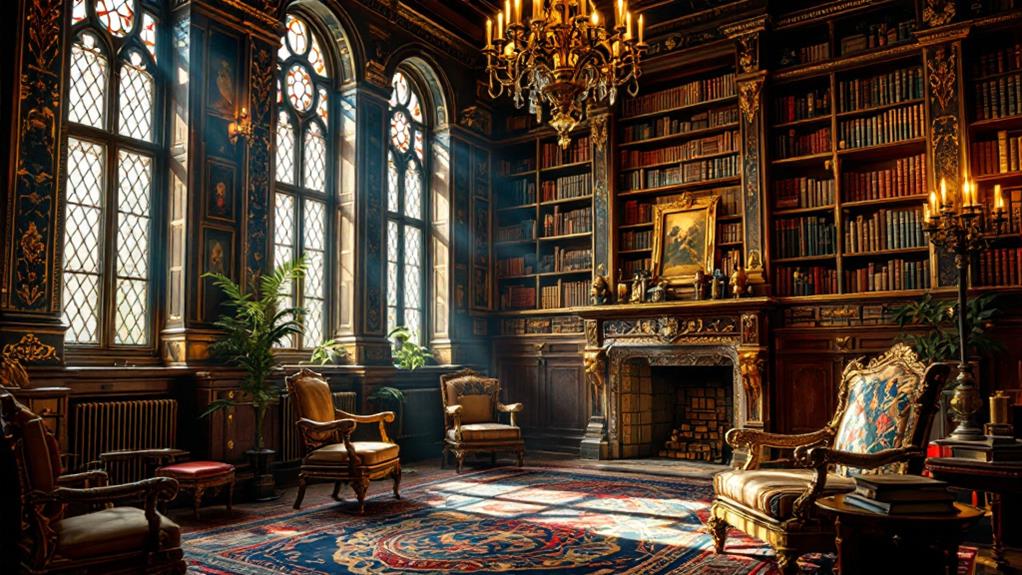
The Renaissance age marked a profound transformation in the way monarchs approached collecting. You'd see a shift in focus toward Renaissance art and the development of sophisticated collecting philosophies. Monarchs, inspired by noble patronage, began curating extensive collections that not only displayed wealth but also showcased their refined aesthetic values. This epoch saw royal libraries becoming centers of learning and innovation, reflecting a deep commitment to manuscript preservation.
You'd notice the rise of bibliophilic societies, where royal figures took keen interest in rare books and manuscripts. These societies facilitated cultural exchange, allowing monarchs to acquire works from across Europe and beyond. This wasn't just about amassing objects; it was about fostering an environment where ideas could flourish and knowledge could be shared.
In your exploration of Renaissance collecting trends, you'd observe how monarchs strategically used their collections to project power and intellect. They aligned their collecting habits with broader cultural movements, ensuring their collections were both timeless and of the moment. As a result, royal collections from this age became not only repositories of art and knowledge but also statements of influence and prestige.
Baroque Era Book Collectors
Following the Renaissance's legacy of intellectual pursuit and artistic patronage, the Baroque period's book collectors welcomed a dynamic approach to expanding royal libraries. They welcomed the period's opulent baroque aesthetics, seeking books that matched the grandeur of their surroundings. You'd find these collectors passionately pursuing works with elaborate bindings, intricate illustrations, and lavish embellishments. Their libraries became extensions of their personal style and status, reflecting the rich textures and dramatic contrasts characteristic of the Baroque.
As a book collector during this time, you would have engaged in lively bibliophile networks. These networks connected royals, scholars, and collectors, all keen to share their latest acquisitions and insights. You'd attend gatherings where folios were not just exchanged but celebrated as cultural gems. Through these interactions, you built relationships that transcended borders, acquiring rare manuscripts and initial editions that enriched your collection.
The thrill of the hunt drove you, as each volume added to your library was a proof of your dedication and taste. In the Baroque period, collecting wasn't just about amassing books; it was about weaving a narrative of power, prestige, and intellectual curiosity through the pages you held dear.
Enlightenment and Folio Exchange
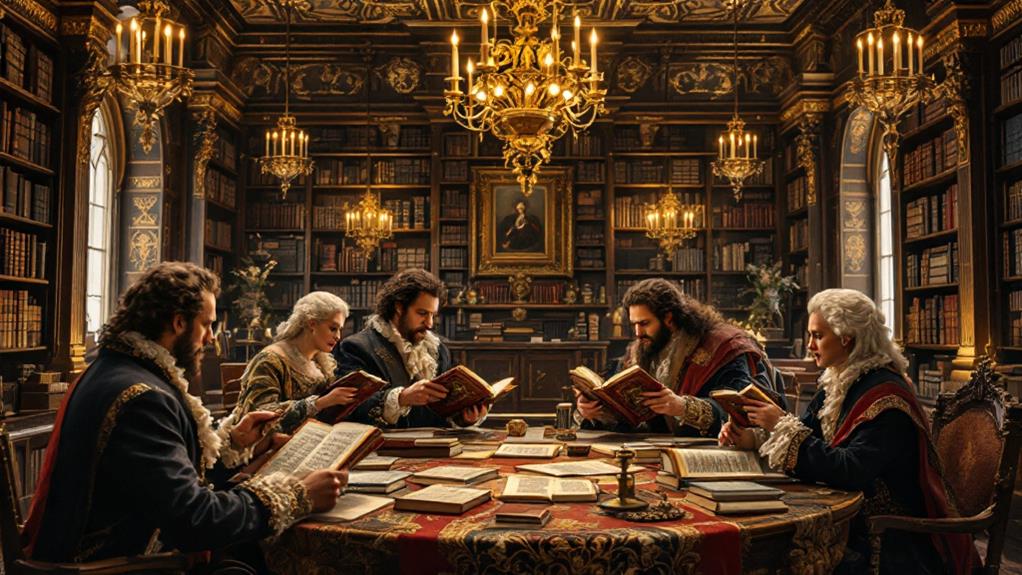
During the Enlightenment, an era brimming with intellectual vigor and philosophical discourse, folio exchange became a lively practice that transcended social and geographical boundaries. You'd find that folios served as instruments of folio diplomacy, playing a crucial role in fostering relationships between monarchs, scholars, and collectors. They weren't merely books; they were symbols of cultural exchange and intellectual prestige.
Imagine receiving a folio that contained the works of a renowned philosopher or an atlas outlining uncharted territories. Such exchanges were more than ceremonial; they were statements of alliance and mutual respect. Through this practice, royal collections expanded, accumulating riches that reflected the vast diversity of human thought.
Consider these key points:
- Strengthening Alliances: Exchanging folios often signified a commitment to peaceful relations and a shared pursuit of knowledge.
- Showcasing Prestige: Possessing rare or unique folios raised a royal collection, showcasing the owner's cultural and intellectual clout.
- Cultural Enrichment: Folio exchange allowed diverse ideas and innovations to cross borders, enriching societies with new perspectives.
You'd see how the Enlightenment's folio exchanges laid the groundwork for a more interconnected intellectual world, one that valued knowledge as a bridge between cultures.
Victorian Era Literary Treasures
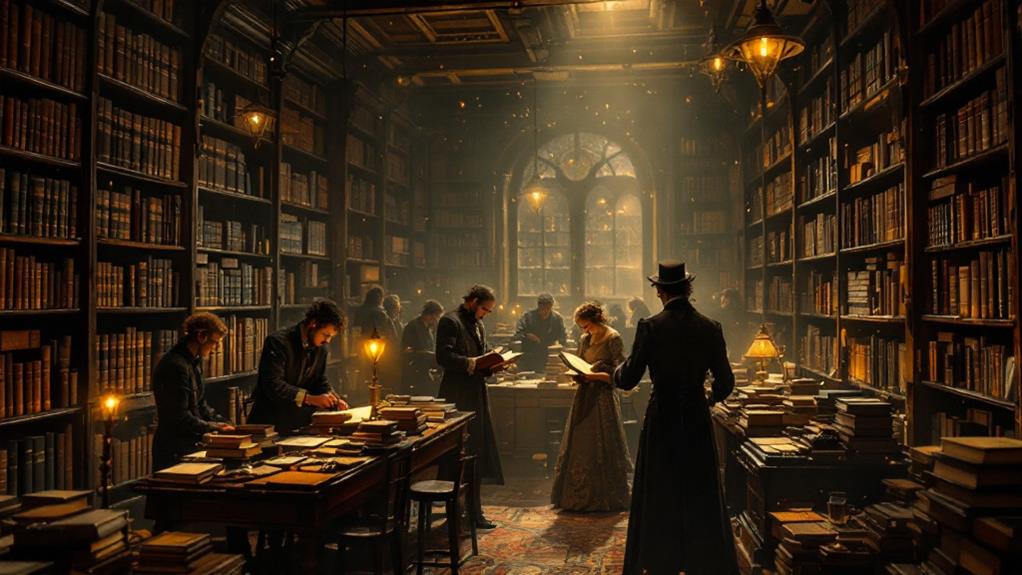
As the 19th century unfurled its tapestry of change, the Victorian period ushered in a new chapter in the story of royal collections. You'd find that Victorian literature flourished under the watchful eyes of royal patrons who championed its growth. These patrons played an essential role in supporting literary movements that shaped the time, guaranteeing that works of fiction, poetry, and essays found their rightful place in the annals of history.
In the domain of folio illustrations, artists experimented with new techniques, blending intricate designs with the written word. Publishing innovations of the time made literature more accessible, bridging the gap between the hallowed halls of royalty and the common populace. These innovations were not just limited to the production process; they extended to the ways in which books were curated within private libraries.
Royal collections became troves of societal influences, reflecting the zeitgeist of the Victorian period. You'll uncover that archival preservation was paramount, as it guaranteed the longevity of these literary artifacts for future generations. Through careful attention, the stories and ideas encapsulated in these folios remain an essential part of our cultural heritage today.
World War Impact on Collections
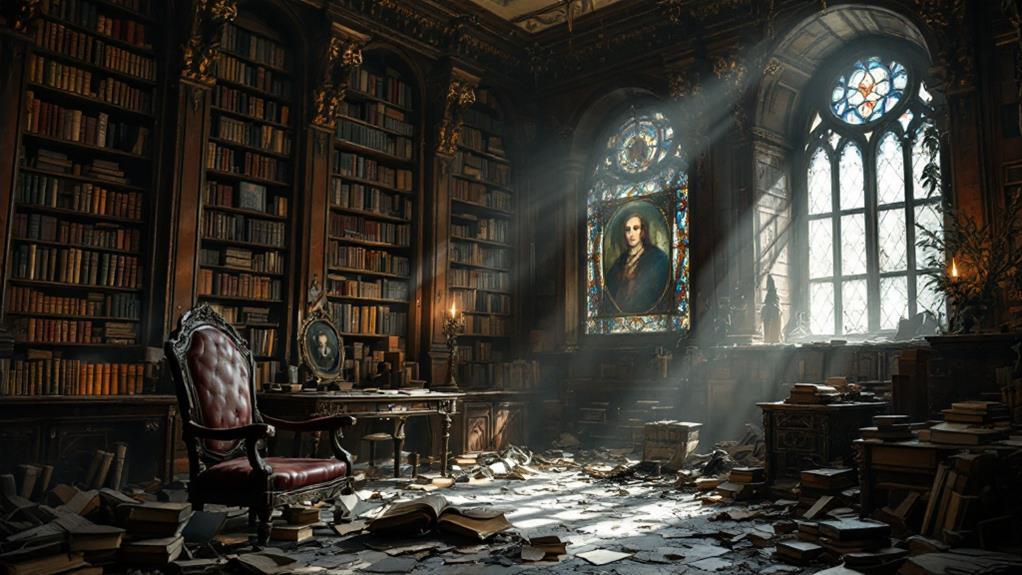
The tumult of the World Wars left indelible marks on royal collections across Europe. As you investigate this period, you'll find that war destruction wasn't just about physical damage; it also threatened cultural preservation and led to significant heritage loss. Royal archives faced immense archival challenges, as countless folios were displaced or damaged.
Here's how the impact unraveled:
- War Destruction: Many royal collections suffered irreparable damage due to bombings. Priceless manuscripts were lost, and others were scattered across borders during the chaos.
- Collection Restitution: Post-war recovery efforts focused on returning stolen or displaced items. This process involved intricate diplomatic exchanges, as countries negotiated to reclaim their cultural valuables.
- National Identity: The loss and recovery of these collections were closely tied to national identity. Restoring these items became a symbol of resilience and continuity for nations rebuilding after the war.
As you investigate further, consider how these challenges shaped the way royal collections are viewed today. The stories of post-war recovery and collection restitution highlight the enduring importance of cultural preservation, even amid adversity. These efforts underscore the resilience of nations determined to reclaim their heritage and identity.
Modern Royal Archival Practices
Royal collections today reflect a fusion of tradition and innovation, driven by modern archival practices. You'll notice that digital archiving has transformed how these collections are managed and accessed. Advanced preservation techniques guarantee that even the most delicate folios withstand the test of time. Accession policies are more stringent than ever, confirming that each new piece added is documented and aligned with the collection's mission. Cataloging standards have also evolved, with sophisticated software making it easier to track and organize items.
Access protocols have adapted to the digital era, allowing scholars and the public to investigate collections virtually. This shift not only broadens access but also reduces physical wear on the items. Educational outreach has become a key focus, with interactive online content enabling broader engagement with these regal gems. Collection management now balances tradition with innovation, assuring that items are both preserved and displayed appropriately.
Security measures have also tightened, integrating technology like RFID and advanced surveillance to protect these priceless artifacts. By embracing these modern practices, royal collections continue to inspire and educate, blending historical richness with contemporary accessibility. Your expedition through these archives is now more enlightening than ever.
Notable Folios in Royal Libraries
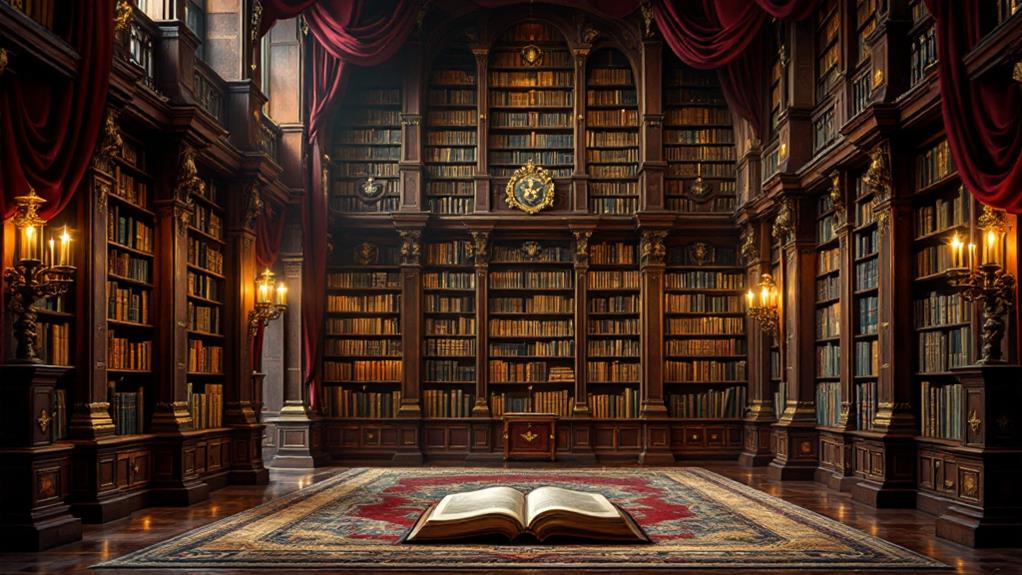
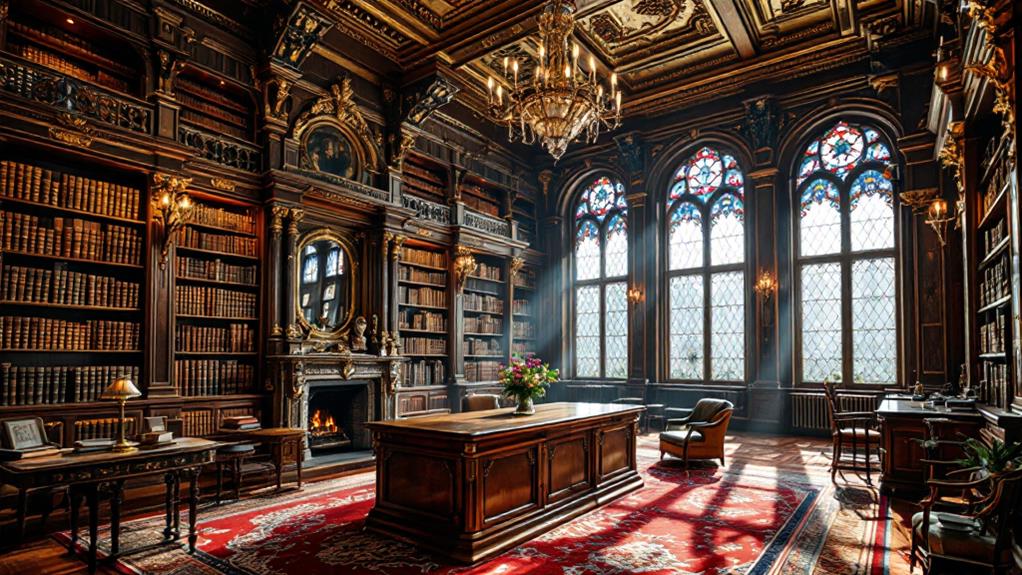
Within the hallowed halls of royal libraries, some folios stand out not just for their antiquity but for their historical and cultural significance. These notable works captivate royal bibliophiles and the occasional scholar alike, offering a glimpse into the past through their exquisite detail and artistry. Among these gems, illuminated manuscripts hold a special place. They not only reflect the artistic trends of their periods but also the royal patronage that helped preserve them.
Consider these three remarkable examples:
- The Book of Kells: This 9th-century masterpiece, celebrated for its intricate illustrations, has been a prized possession in numerous royal collections, showcasing the artistic zenith of medieval Ireland.
- The Hours of Catherine of Cleves: This richly decorated manuscript, once owned by Dutch nobility, reveals the lavish taste and religious devotion of its royal patrons.
- The Shahnameh of Shah Tahmasp: An exquisite Persian epic, it was commissioned by one of the Safavid dynasty's greatest rulers, illustrating the splendor of Persian culture and its appeal to global royal bibliophiles.
Each folio is a proof of the enduring allure of illuminated manuscripts and the crucial role they play in enriching royal libraries.
Future of Regal Folio Heritage
As we look to the future of regal folio heritage, it's clear that preservation and accessibility will take center stage. You might wonder how these ancient texts can be safeguarded for future generations. The answer lies in digital preservation. By digitizing these folios, you guarantee they're protected from physical degradation. This process doesn't just preserve the text; it also makes it accessible to a worldwide audience, allowing scholars and enthusiasts alike to investigate these gems from anywhere.
In this technological era, global collaborations are more vital than ever. You can partner with institutions across the world, sharing expertise, technology, and resources to improve the preservation efforts. By working together, you can tackle challenges like standardizing digital formats and guaranteeing secure storage solutions. These collaborations also open up opportunities for joint research projects, enriching our understanding of these regal collections.
Moreover, by embracing digital tools, you can create interactive experiences that bring these folios to life. Imagine virtual exhibitions and educational programs that engage audiences in new ways. By focusing on digital preservation and global collaborations, you're not just preserving the past—you're paving the way for a lively future for regal folio heritage.
Related posts