A Guide to Religious Texts in Historical Folios: Bibles, Qur’ans, and More
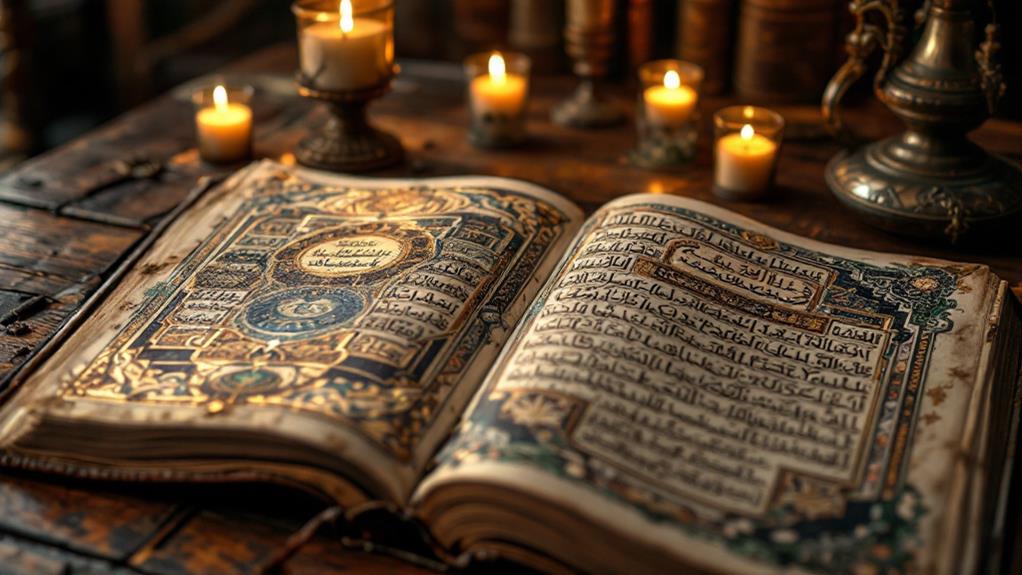
You're initiating an intriguing exploration of historical folios where religious texts like Bibles and Qur'ans come alive. These manuscripts started as oral traditions, transcribed by skilled scribes onto papyrus and parchment, each reflecting their cultural and historical contexts. Beyond their spiritual essence, these texts showcase extraordinary artistry with detailed calligraphy, intricate decorations, and symbolic motifs. Preservation of these masterpieces blends modern science with traditional methods, safeguarding them for future generations. As collectors, understanding provenance and craftsmanship deepens your connection to these historical artifacts, enhancing both knowledge and appreciation. Stay tuned to uncover the rich tapestry they reveal.
Origins of Religious Manuscripts
How did religious manuscripts come into being? You've likely pondered this question while examining the intricate pages of ancient texts. The origins of religious manuscripts are deeply rooted in historical contexts. As early societies developed written language, they sought to preserve their spiritual beliefs and traditions. This need for preservation was the catalyst for the creation of these manuscripts, ensuring that sacred teachings could be passed down through generations.
In ancient times, religious leaders and scribes were the primary creators of these texts. They carefully transcribed oral traditions and revelations onto materials like papyrus, parchment, or vellum. The goal was to create enduring records of divine teachings. Each manuscript's origin can often be traced back to a specific cultural or historical moment, reflecting the societal values and religious practices of that time.
As you explore the manuscript origins, you'll realize that these texts weren't merely religious artifacts; they were also tools for unifying communities and spreading religious doctrines. Understanding how these manuscripts came into being offers a glimpse into the interplay between religion and society throughout history. It's fascinating to see how these ancient efforts continue to influence modern religious practices.
Craftsmanship and Artistry
The artful hands of ancient scribes and artisans brought religious manuscripts to life, transforming them into more than just texts—they became breathtaking works of art. You can imagine the dedication it took to employ calligraphy techniques that guaranteed each stroke was precise and each letter perfectly formed. These scribes turned writing into an art form, where every character had both meaning and beauty. They didn't just write; they painted with ink, creating pages that were as visually stunning as they were spiritually significant.
In these manuscripts, decorative elements played an essential role in elevating the text's aesthetic and symbolic significance. You'd see intricate borders, elaborate chapter headings, and ornate motifs that adorned the margins and sometimes intertwined with the text itself. These embellishments weren't just for show; they often held religious symbolism, guiding the reader through the spiritual expedition the text offered. The artisans used lively colors, gold leaf, and careful detailing to add layers of depth and richness. When you hold such a manuscript, you're not just reading a religious text; you're beholding the culmination of craftsmanship and artistry that transcends time and place.
Illuminated Bibles
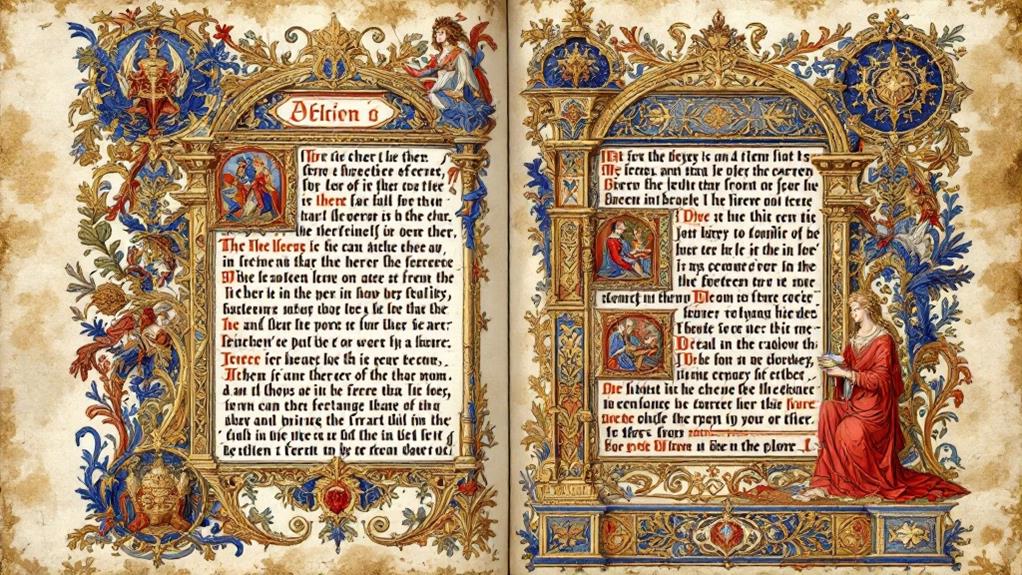
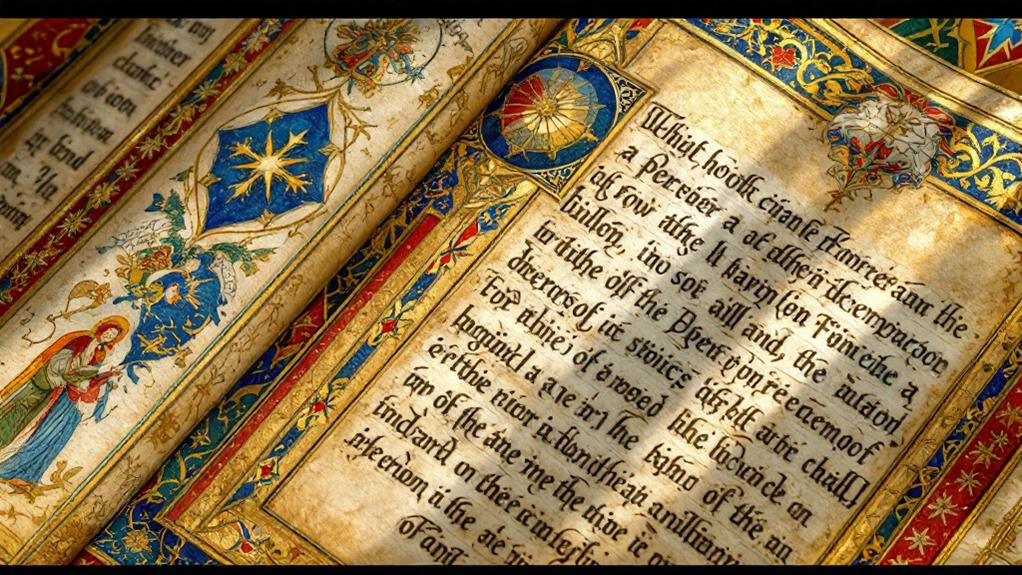
Illuminated Bibles are masterpieces that merge divine scripture with extraordinary artistry. As you explore these magnificent works, you're not just reading sacred texts; you're investigating the rich visual language of medieval illumination. Each page is adorned with intricate decorations, lively colors, and gold leaf accents that transform the Bible into a visual feast. The artistry isn't merely for aesthetic pleasure; it serves to underscore the sacredness of the text and to convey deeper meanings through manuscript symbolism.
When you examine an illuminated Bible, look for the symbolism in the images. Artists used familiar motifs—vines, animals, and geometric patterns—to represent themes like growth, resurrection, and divine order. These symbols weren't randomly chosen; they were thoughtfully integrated to enrich the spiritual narrative. You'll notice that the initial letters of significant passages are often elaborately decorated, drawing your attention to key sections and inviting meditation.
Creating these masterpieces required skilled artisans who were dedicated to their craft. They worked painstakingly, sometimes for years, to produce a single illuminated Bible. By appreciating these works, you engage with a tradition that marries faith and art, offering a window into the medieval mind and spirit.
Ancient Qur'anic Scripts
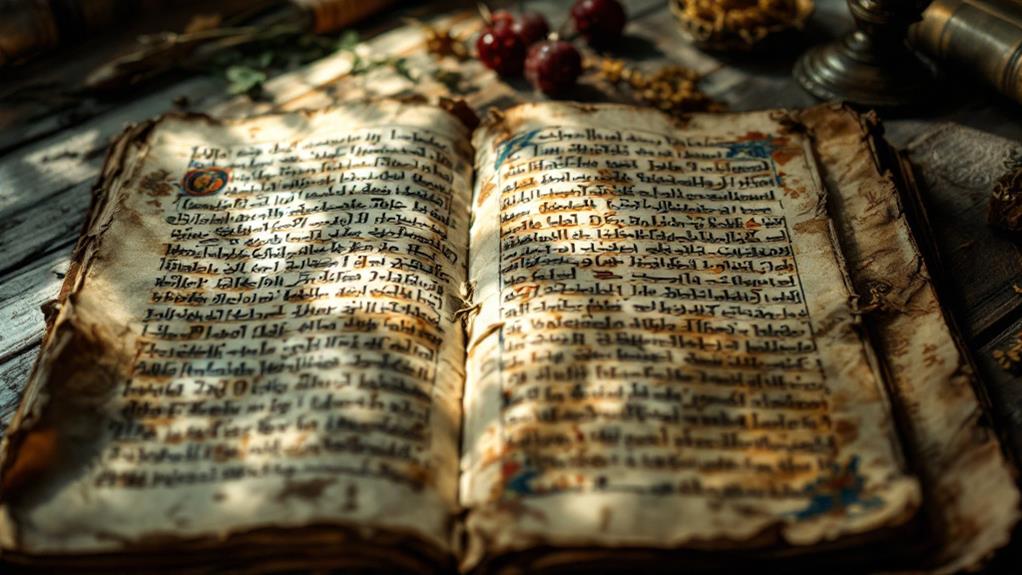
Delving into the world of ancient Qur'anic scripts, you encounter a rich tapestry of calligraphy that reflects both reverence and artistry. Qur'anic calligraphy isn't just a means of writing; it's an expression of devotion. From the Kufic script, often seen in early Qur'anic manuscripts, to the more elaborate Naskh and Thuluth scripts, each style carries its own history and significance. You can feel the careful attention that scribes once took with every stroke, ensuring that the spiritual essence of the Qur'an was visually represented.
As you investigate these ancient texts, you also come across historic translations that provide insight into how the Qur'an was understood across different cultures and periods. While the original Arabic text remains unchanged, translations helped spread its teachings globally. These translations reveal a fascinating interplay between maintaining the integrity of the Qur'anic message and making it accessible to diverse audiences.
Preservation Techniques
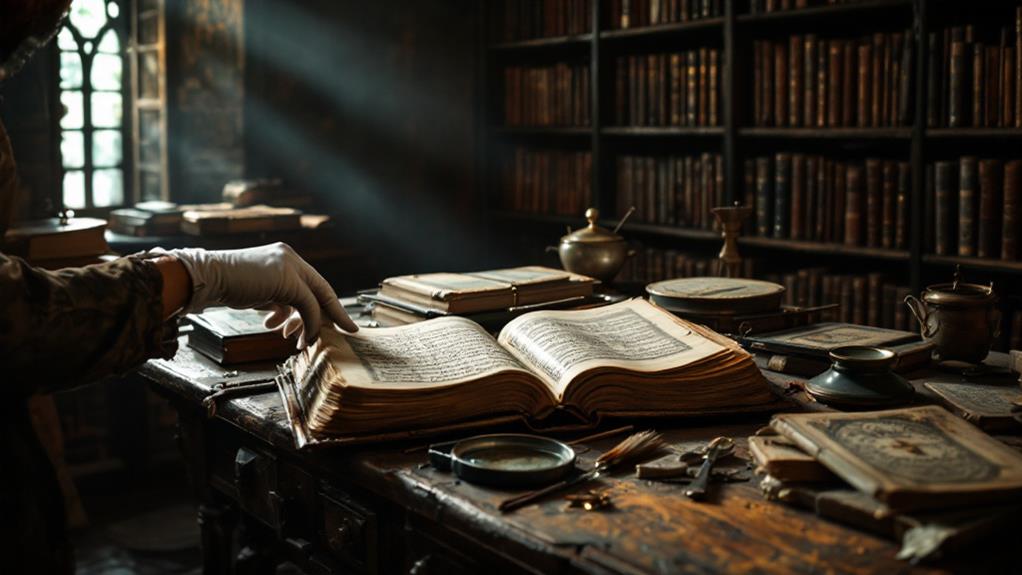
When you investigate the precise art of preserving ancient Qur'anic manuscripts, you uncover a fascinating blend of science and tradition. You'll find that successful preservation requires a solid understanding of both conservation methods and archival storage. Initially, you need to assess the condition of the manuscripts. This involves identifying any signs of deterioration, such as fading ink or fragile paper. Once you've evaluated the state of the manuscript, you can proceed with appropriate conservation methods to stabilize the text.
One vital technique is controlling the environment where these manuscripts are stored. You should maintain a stable temperature and humidity level to prevent further damage. Light exposure is another factor to take into account; minimize it to protect the delicate inks and materials. Archival storage solutions, such as acid-free boxes and folders, provide extra protection against physical and chemical damage.
Moreover, when handling these manuscripts, always wear gloves to avoid transferring oils and dirt. It's imperative to keep these valuable texts safe from pests, so regular inspections and preventive measures should be part of your routine. By following these careful steps, you'll help guarantee that these ancient gems endure for future generations.
Cultural Significance
Appreciating the cultural significance of ancient Qur'anic manuscripts, you uncover their role as more than religious texts; they're historical artifacts that offer insights into the societies that produced them. These manuscripts reflect the cultural impact of Islamic civilization, showcasing intricate artistry, calligraphy, and design that symbolize religious devotion. By examining these texts, you gain a deeper understanding of the socio-political and cultural dynamics of the period. The religious symbolism found in the Qur'ans isn't just limited to their content; it's evident in the decorative motifs and stylistic choices that accompany the sacred text.
You realize how these elements of religious symbolism serve as a bridge to the past, revealing the values, beliefs, and artistic expressions of diverse Islamic communities. The cultural impact extends beyond the Islamic world, as these manuscripts influenced art, literature, and intellectual pursuits across continents. By studying them, you're connecting with a rich tapestry of history and culture that transcends geographical boundaries. These manuscripts remind you of the enduring legacy of religious texts and their power to shape, reflect, and preserve the identities of the societies they originate from, offering a window into the human experience across eras.
Collecting Religious Folios
Exploring the world of collecting religious folios reveals a fascinating blend of passion, scholarship, and preservation. As you initiate this expedition, you'll find yourself captivated by the allure of rare editions and the stories they hold. Each folio is a gateway to understanding the cultural and historical contexts from which these sacred texts emerged. Regardless of whether you're drawn to Bibles, Qur'ans, or other religious manuscripts, each piece offers a unique glimpse into the past.
To start your collection, it is crucial to focus on a few collecting tips. Initially, familiarize yourself with the key periods and styles of religious folios. This knowledge will help you identify rare editions and determine their authenticity and value. Consider joining specialized collectors' groups or attending auctions to gain insights from seasoned enthusiasts. Networking with experts can also help you access sources that might not be readily available to the general public.
When evaluating a potential acquisition, examine the condition of the folio carefully. Look for signs of restoration, water damage, or missing pages. Confirm you understand the provenance of each item; a well-documented history can greatly improve its value. With dedication, your collection will become a cherished repository of history and faith.
Related posts