A Guide to Conserving Ancient Manuscripts for Future Generations
To conserve ancient manuscripts for future generations, guarantee you're familiar with their vulnerabilities like ink fading and binding deterioration. Maintain stable conditions by controlling temperature and humidity and use UV-filtered lights to protect against light damage. Practice gentle handling using both hands or a book cradle, and store documents flat in acid-free folders. Regular cleaning with soft brushes and careful adhesive repairs help preserve them. Mold and pests require proactive routines such as regular inspections. During transportation, use climate-controlled methods and secure handling. Digitization is essential for backup, while community engagement fosters awareness. There's even more to uncover about preserving these valuables.
Understanding Manuscript Vulnerabilities
Ancient manuscripts face several vulnerabilities that require attention and understanding. You've got to take into account factors like ink stability and parchment aging, which play vital roles in preserving the text's integrity. Over time, ink can lose its vibrancy, leading to text degradation. Binding deterioration is another concern, as it affects the manuscript's physical structure. When bindings weaken, the pages are more susceptible to damage.
Humidity effects can be particularly damaging. High humidity encourages mold growth, while low humidity can cause parchment to become brittle. It's important to recognize how light exposure contributes to fading and further ink instability. Temperature fluctuations also pose a threat, as they can accelerate chemical reactions that deteriorate the manuscript materials.
Each manuscript's historical significance adds a layer of complexity to their preservation. You must be diligent in manuscript authentication to confirm what you're working with holds genuine historical value. This authenticity amplifies the importance of preserving such documents for future generations. By understanding these vulnerabilities, you're better equipped to safeguard these invaluable pieces of history, allowing them to continue telling their stories for years to come.
Environmental Control Techniques
In the domain of manuscript preservation, you must employ environmental control techniques to combat the diverse vulnerabilities these ancient documents face. Temperature regulation is essential; aim for a stable and cool environment, ideally around 18-20°C (64-68°F). Fluctuations can lead to expansion and contraction of materials, damaging the manuscripts. Humidity control is similarly significant. Maintain relative humidity between 30-50% to prevent mold growth and paper brittleness. Light exposure should be minimized. Use UV-filtered lighting and keep manuscripts away from direct sunlight to avoid fading and degradation.
Air circulation is critical for preventing stagnant conditions that encourage mold and pests. Guarantee proper ventilation while keeping pollutant filtration in mind. Install air filters to trap dust, airborne pollutants, and other contaminants that could harm the documents. Pest management involves regular inspections and using non-toxic deterrents to protect manuscripts from insects and rodents.
Select archival materials that are acid-free and stable to house these invaluable items. Implement monitoring systems to continuously track environmental conditions. This proactive approach helps you detect and address potential issues before they cause irreversible damage, guaranteeing these irreplaceable valuables endure for generations.
Handling and Storage Best Practices

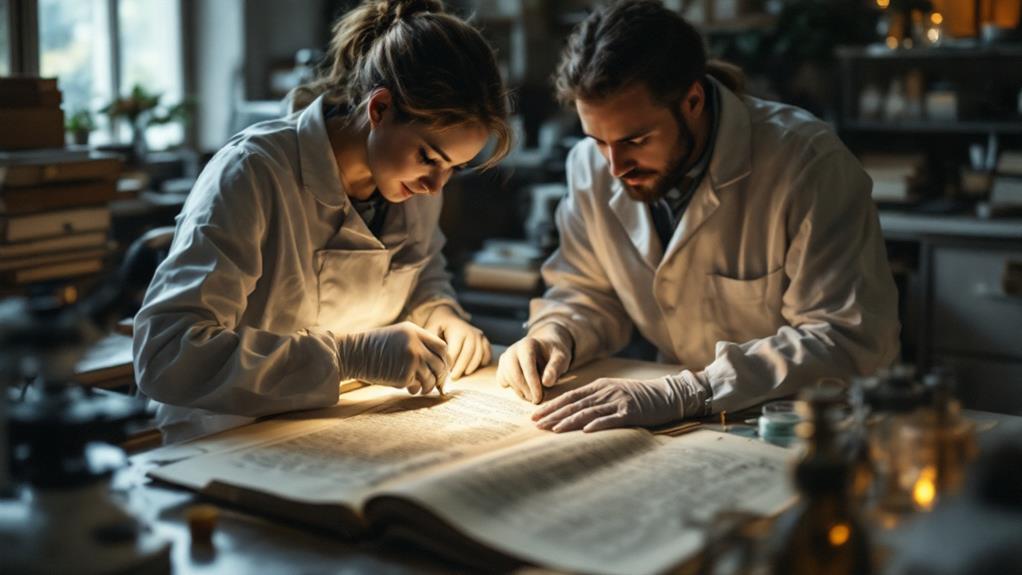
While environmental control creates the foundation for preserving ancient manuscripts, handling and storage practices guarantee their longevity. To start, always wash your hands before touching any manuscript. Natural oils can cause long-term damage. When handling, support the entire document with both hands, or use a book cradle to minimize stress on the spine.
Proper manuscript organization is essential. Store documents flat in acid-free folders to prevent bending or folding. If shelving them on their spine, make sure they're upright and not leaning, which can distort the binding over time. Use archival supplies, like acid-free boxes and folders, to protect manuscripts from light and dust.
For added protection, place manuscripts in a climate-controlled environment. Temperature fluctuations and humidity can cause materials to expand and contract, leading to potential damage. Label storage boxes clearly, so you can access them without excessive handling, reducing wear and tear.
Cleaning and Repair Methods
Proper cleaning and repair methods are critical for maintaining the integrity of ancient manuscripts. When handling these precious documents, commence with gentle techniques before considering more invasive methods. Begin by using a soft brush or a clean, dry cloth to remove loose dirt and dust. For more stubborn stains or grime, consider chemical cleaning, but exercise caution. Always test any cleaning agent on a small, inconspicuous area initially to verify it doesn't damage the manuscript. Avoid harsh chemicals that might strip away ink or weaken the paper.
For tears or breaks, adhesive repair is often necessary. Use archival-quality adhesives that won't yellow or become brittle over time. Apply the adhesive sparingly, using a fine brush to guarantee precision. Align the edges carefully before pressing them together, and use a non-stick layer, like wax paper, to prevent sticking to other surfaces. Let the repair dry under a gentle weight to maintain the manuscript's flatness.
Digitization and Documentation
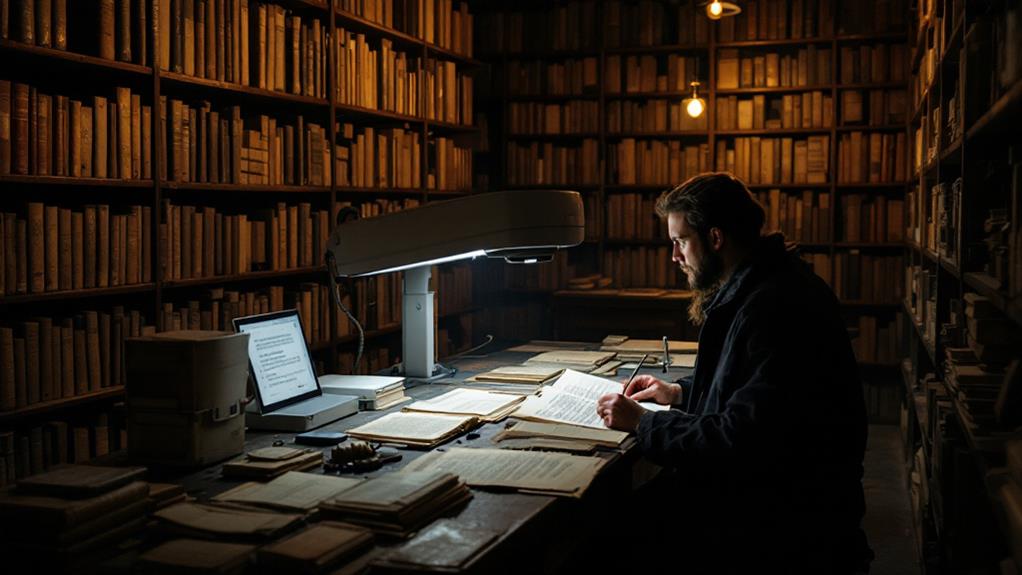
Having painstakingly cleaned and repaired ancient manuscripts, the next step involves guaranteeing their longevity through digitization and thorough documentation. By converting these fragile texts into digital formats, you markedly reduce the risk of physical degradation while increasing accessibility. Begin by selecting high-resolution scanners tailored for delicate materials. This guarantees every detail, from intricate script to subtle color variations, is captured accurately.
In digital archiving, applying consistent metadata standards is vital. Metadata acts as a digital fingerprint, providing important information about each manuscript, such as its origin, author, and historical context. This not only aids in organization but also improves searchability for future research.
However, digitization is more than just scanning. You need to guarantee that digital files are stored securely, using reliable platforms that offer redundancy and regular backups. Consider implementing a digital asset management system to streamline this process.
Documentation complements digitization by recording the manuscript's condition, any restoration work done, and any other relevant notes. This creates a thorough record that supports future conservation efforts. By adhering to these practices, you preserve the manuscript's legacy, making it accessible for both current scholars and future generations.
Protection From Biological Threats
Ancient manuscripts often face significant threats from biological agents like mold, insects, and bacteria. To protect these precious archival materials, you must implement effective mold prevention strategies. Start by ensuring proper climate monitoring in storage areas. Maintaining a stable environment with controlled temperature and humidity levels is fundamental, as fluctuations can promote mold growth.
Insect control is another important aspect. You should establish a thorough pest management plan that includes regular inspections and the use of safe pest deterrents. Non-chemical methods like traps can help monitor and reduce insect activity without damaging the manuscripts. Furthermore, prioritize sanitation protocols by keeping storage areas clean and free from food and organic debris, reducing the risk of attracting pests.
Biological monitoring plays a significant role in preservation techniques. Regularly assess the condition of the manuscripts and the storage environment to detect any signs of biological threats early. By staying vigilant, you can address issues before they escalate. Remember, the key to preserving these artifacts for future generations lies in proactive and consistent care. By following these steps, you'll be well-equipped to safeguard ancient manuscripts from biological threats.
Safe Transportation Strategies
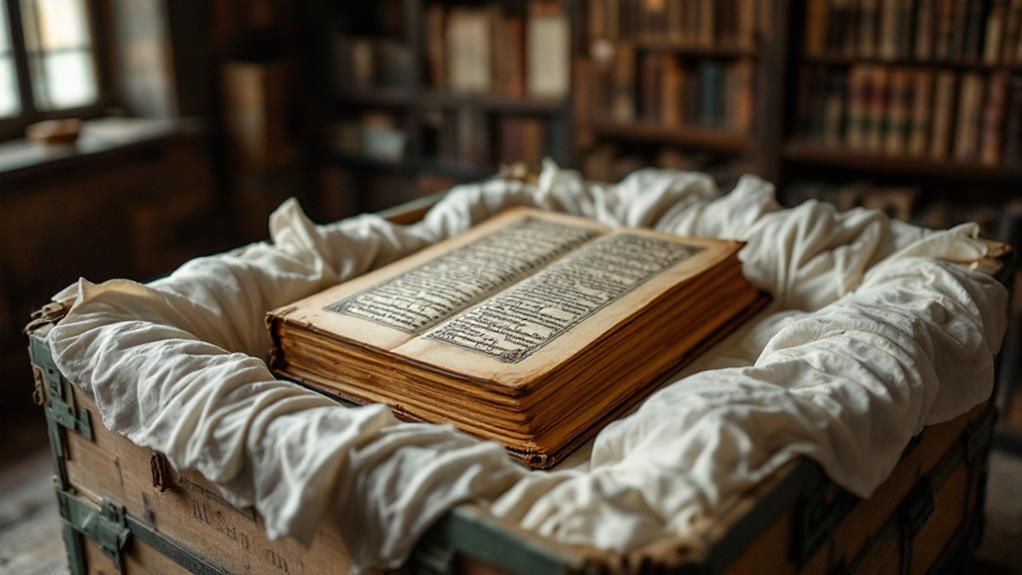
Transporting ancient manuscripts requires careful planning to guarantee their safety and integrity. You need to evaluate several key factors to ascertain that these irreplaceable jewels reach their destination unscathed. Initially, focus on transport logistics. Choose a reputable carrier experienced in handling delicate items. They should offer climate-controlled vehicles and real-time tracking to monitor the voyage and respond to any issues promptly.
Next, pay close attention to packaging materials. Opt for acid-free, archival-quality materials that won't damage or degrade the manuscripts. Bubble wrap and foam padding can provide further protection against shocks and vibrations during transit. Confirm that the packaging is secure but not too tight, allowing for any necessary air circulation.
Finally, establish a thorough checklist to ascertain you've covered all bases. Here's a quick rundown:
- Select a trusted carrier: Choose one with a proven track record in transporting fragile, valuable items.
- Use appropriate packaging: Verify all materials are archival-quality and provide ample cushioning.
- Plan for contingencies: Have a backup plan in place for delays or unexpected events.
Training for Conservators
Mastery in conservation is vital for those tasked with preserving ancient manuscripts. As a conservator, you must commit to ongoing professional development, guaranteeing you stay updated with the latest techniques and methodologies. It's not just about technical skills; understanding conservation ethics is similarly significant. These ethics guide your decisions, guaranteeing you balance preserving the manuscript's historical integrity with necessary interventions.
Attending workshops and seminars is an excellent way to improve your skills. These events offer hands-on practice and networking opportunities with experts in the field. Moreover, enrolling in specialized courses can deepen your understanding of specific conservation challenges. Regardless of whether it's learning about chemical treatments or climate control, these courses guarantee you're well-equipped to handle different scenarios.
Don't underestimate the value of mentorship. Working under experienced conservators provides insights that textbooks can't offer. They'll guide you in developing a keen eye for detail and honing your problem-solving skills. In addition, engaging in peer-reviewed research or contributing to academic publications can bolster your credibility and expertise in the conservation community. By investing in your professional development, you guarantee that your work not only preserves manuscripts for future generations but also honors their historical significance.
Community Involvement Initiatives
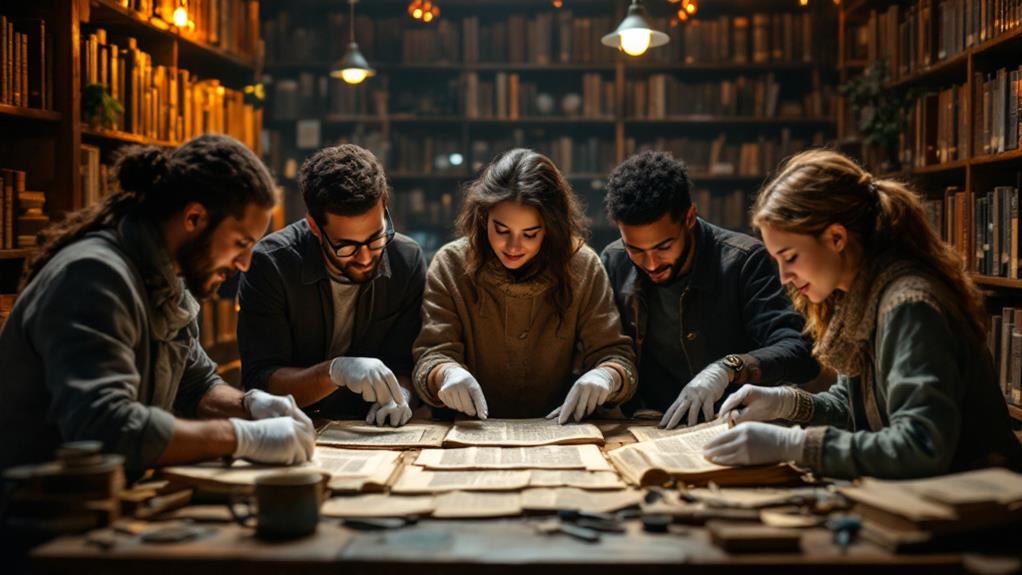
In recent years, community involvement initiatives have become essential in the conservation of ancient manuscripts. By actively engaging with your community, you can play a significant role in preserving these invaluable cultural gems. Here's how you can get involved:
- Community Workshops: Hosting or participating in workshops can improve skills and knowledge about manuscript conservation. These events provide hands-on experiences, allowing you to learn techniques and share ideas with experts and enthusiasts alike.
- Educational Outreach: Spreading knowledge is important. Organize talks or school programs to raise public awareness about the significance of preserving ancient manuscripts. Teaching young people about their cultural heritage guarantees these practices continue into the future.
- Volunteer Programs: Many conservation projects rely on dedicated volunteers. By joining a local volunteer program, you can contribute your time and talents to help maintain and restore ancient manuscripts. It's a rewarding way to make a tangible difference.
Future-Proofing Conservation Efforts
While community involvement forms the backbone of current conservation efforts, looking ahead is just as essential to guarantee the longevity of ancient manuscripts. You need to adopt future-proofing strategies that secure these valuables endure for generations to come. Start by choosing sustainable materials—it's imperative for reducing environmental impact and providing long-lasting preservation solutions. You should opt for archival-quality papers and eco-friendly storage options that protect manuscripts without harming the planet.
Next, consider technology integration as a significant tool. Digitalization is not just a trend; it's a necessity. By creating high-quality digital copies, you preserve the content even if the original artifact degrades. You can also use advanced software to monitor environmental conditions around stored manuscripts, adjusting temperature and humidity levels in real-time to prevent damage.
Incorporate cutting-edge technology into your conservation toolbox. Employ 3D scanning for detailed documentation or AI for analyzing manuscript conditions, spotting potential issues before they escalate. By adopting these inventive methods, you're not just reacting to challenges but proactively safeguarding cultural heritage. Future-proofing isn't just about preservation—it's about securing these manuscripts continue to tell their stories in a constantly changing world.
Related posts