Why Preservation Techniques Matter for Ancient Manuscripts
Preservation techniques for ancient manuscripts are essential because they keep history's rich tapestry accessible. You'll find these manuscripts provide critical insights into past cultures and knowledge. They face risks like mold, theft, and environmental changes. Effective preservation not only addresses these threats but also safeguards the integrity of unique linguistic features and historical contexts. Using methods like climate-controlled storage and digitization, you guarantee these precious texts endure for future study and appreciation. By exploring these strategies, you open the potential to preserve cultural heritage and improve scholarly research, revealing more about our shared past.
Importance of Manuscripts
Manuscripts often hold immense value as they provide a direct window into the past, offering insights into the thoughts, cultures, and knowledge of bygone periods. When you engage with these documents, you're not just reading history; you're connecting with the cultural heritage that shaped our world. Their historical significance cannot be overstated as they serve as primary sources for scholarly research, enabling a deeper understanding of human progression.
For educators, manuscripts offer unparalleled educational value, bringing history alive and highlighting the artistic expression captured in each handwritten line. You'll also appreciate the linguistic diversity these documents reflect, showcasing the evolution of language and communication. Guaranteeing manuscript accessibility is essential, allowing more people to investigate these gems without compromising their integrity.
Archival practices play a fundamental role in preserving these works, requiring ethical stewardship to maintain their condition for future generations. This responsibility often necessitates interdisciplinary collaboration, drawing on expertise from historians, conservators, and technologists to safeguard our shared legacy. By valuing these documents, you contribute to a broader appreciation of our past and guarantee that these invaluable windows into history remain open to inspire and educate for years to come.
Threats to Manuscript Longevity
Despite their significance, ancient manuscripts face numerous threats that jeopardize their longevity. Biological threats, such as mold, insects, and other pests, can rapidly deteriorate these precious documents. Environmental factors play a significant role too; fluctuations in temperature and humidity can cause irreversible damage. Human impact is another serious concern. Mishandling, theft, and even accidental destruction can occur without proper archival practices.
Technological challenges also pose a risk. With the rapid pace of digital advancements, there's a danger that the focus may shift away from physical preservation, leading to neglect. Yet, the cultural significance of these manuscripts cannot be overstated—they're essential to understanding historical context and maintaining educational value.
Economic implications arise when resources for preservation and protection are limited. Funding is often required for effective conservation, but not every institution can afford it. Legal considerations also come into play, as ownership disputes can hinder preservation efforts and access.
All these factors underscore the need for careful attention. As you consider the historical context and technical challenges, it's clear that preserving manuscripts is imperative for future generations. Ignoring these threats could mean losing invaluable connections to our past.
Role of Preservation Methods
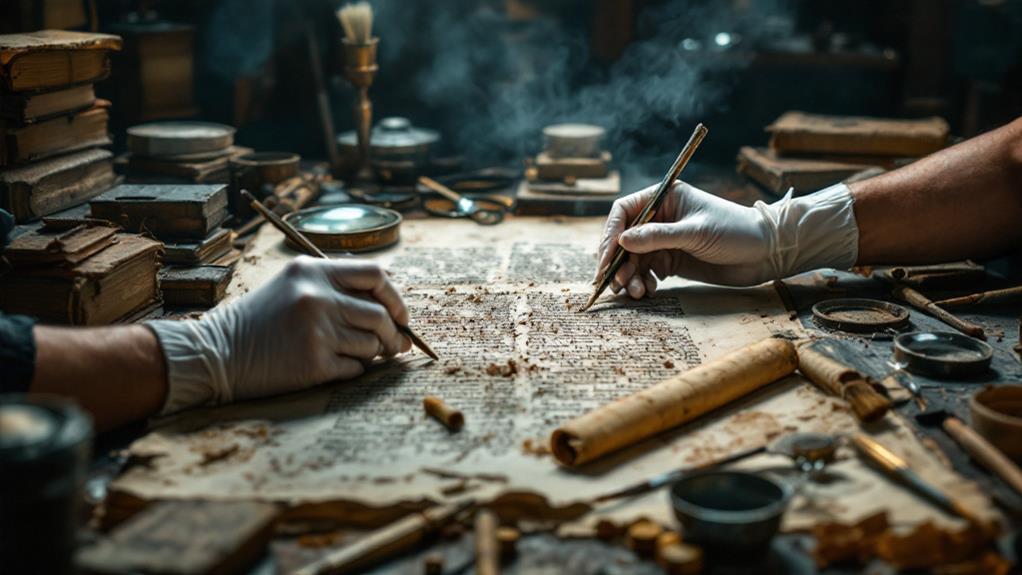
Preserving ancient manuscripts requires a multi-faceted approach to combat the numerous threats they face. As you explore preservation methods, you'll understand their crucial role in safeguarding these invaluable texts. Each manuscript holds a unique historical context and cultural significance, making its preservation fundamental. You can't just rely on one technique; instead, you need a combination of strategies tailored to the specific needs of each manuscript.
First, consider the material of the manuscript—whether it's papyrus, parchment, or paper. Each type requires different care to prevent deterioration. You might use deacidification processes to stabilize paper or apply gentle cleaning techniques to remove harmful substances. These methods are crucial in maintaining the manuscript's integrity, guaranteeing that future generations can access its content.
Additionally, understanding the historical context of a manuscript helps you make informed decisions about its preservation. Knowing its origin and use offers insights into the best ways to handle and store it. Furthermore, recognizing its cultural significance emphasizes the importance of careful preservation efforts. By employing the right preservation methods, you guarantee that these ancient manuscripts continue to educate and inspire, preserving a piece of our shared human heritage.
Climate-Controlled Storage
One of the most effective ways to guarantee the longevity of ancient manuscripts is through climate-controlled storage. When you store these precious documents, maintaining the right environment is essential. By focusing on humidity control and temperature regulation, you make certain that these manuscripts can withstand the test of time.
Humidity control is critical because excess moisture can cause mold growth, while too little can make the paper brittle. You should aim to keep relative humidity levels between 30% and 50%. This range prevents harmful conditions that could damage the manuscripts. Temperature regulation is just as significant. Fluctuations in temperature can lead to deterioration, so keep the storage environment stable, ideally between 65 and 70 degrees Fahrenheit.
Techniques in Digitization
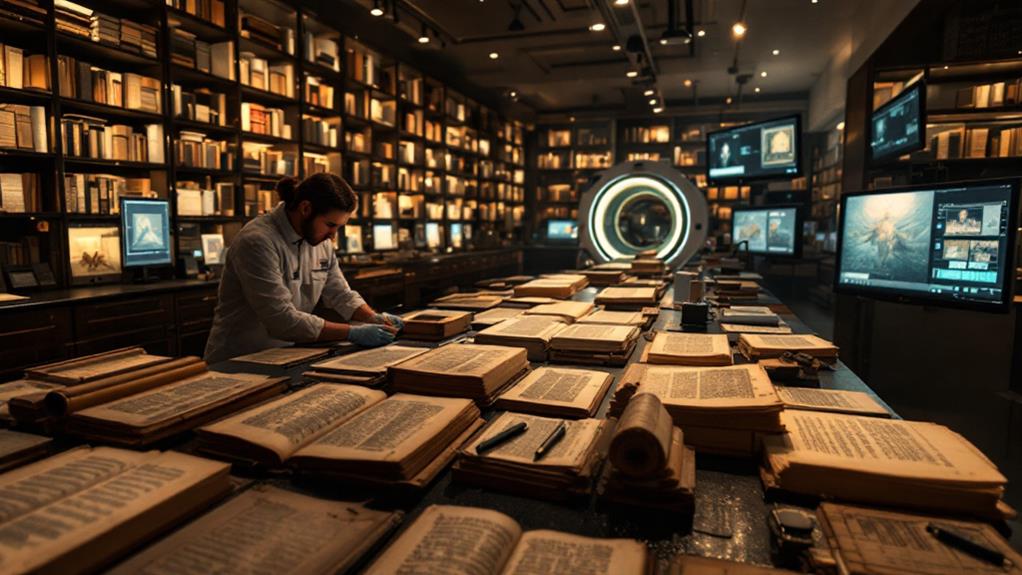
How do you guarantee ancient manuscripts are accessible to future generations while preserving their original form? Digitization is the key. By using advanced optical imaging techniques, you can capture high-resolution images of manuscripts, making sure every detail is preserved digitally. This process allows you to create a precise digital replica without handling the fragile original, thereby reducing the risk of physical damage.
Once you've captured these images, the next step is digital archiving. With digital archiving, you store and organize these digital replicas, making them easily accessible for researchers, historians, and enthusiasts worldwide. This method not only guarantees preservation but also democratizes access, allowing anyone with an internet connection to view these invaluable texts.
Optical imaging and digital archiving work hand in hand to preserve the integrity and accessibility of ancient manuscripts. By digitizing them, you effectively create a backup, safeguarding against potential physical degradation or loss. Additionally, digital archives can be improved with metadata, making it easier to search and study these documents.
Incorporating digitization into your preservation strategy not only protects manuscripts but also opens up new possibilities for research and education, making certain these treasures endure for generations to come.
Restoration and Repair Strategies
Restoration breathes new life into ancient manuscripts, guaranteeing their survival for future generations. When you restore a manuscript, you're not just repairing paper and ink; you're preserving history. Effective restoration involves understanding historical binding methods. By using techniques that reflect the original construction, you maintain the manuscript's authenticity. This might mean researching how the manuscript was originally bound and sourcing similar materials to recreate that binding faithfully.
Conservation ethics play a vital role in restoration and repair strategies. You must respect the integrity of the manuscript, making certain that any intervention is reversible. This guarantees that future conservators can undo your work if needed, maintaining the manuscript's longevity. It's essential to avoid over-restoration, which can alter the artifact's historical value. Instead, focus on minimal intervention to stabilize the document.
Consider the manuscript's context and history when deciding on restoration strategies. Every decision should prioritize the artifact's long-term preservation without compromising its original character. By balancing these aspects, you help these ancient texts withstand the test of time, allowing them to be appreciated by future generations while honoring their historical significance.
Handling and Care Guidelines
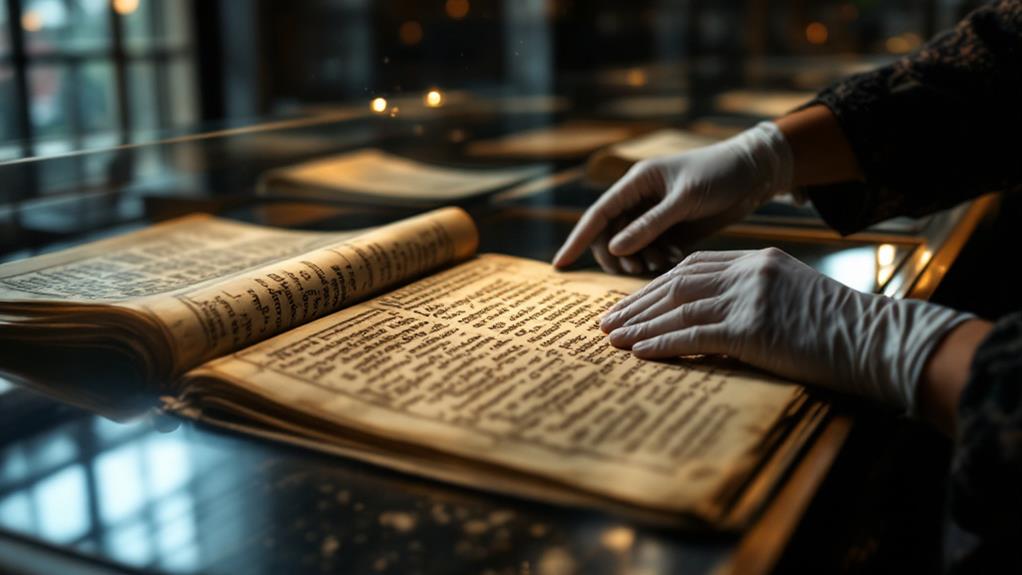
In regards to guaranteeing the longevity of ancient manuscripts, your handling practices are vital. It starts with proper storage. Always keep manuscripts in a stable environment, away from direct sunlight, moisture, and fluctuating temperatures. You should aim to store them in a cool, dry place, ideally in a room with climate control.
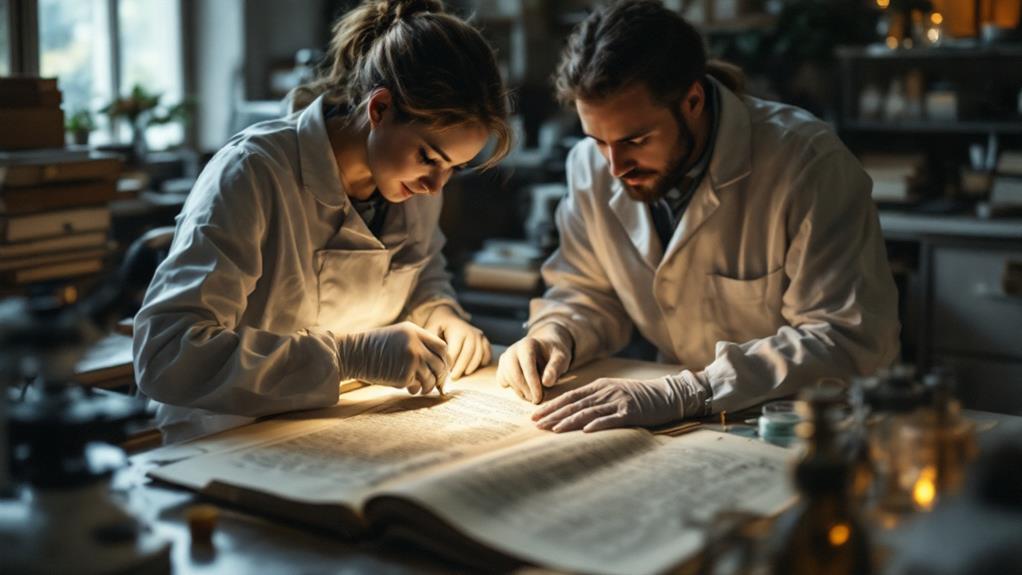
When handling these precious documents, use clean, dry hands or wear gloves to prevent oils and dirt from transferring. Limit direct contact and instead, use tools like spatulas or tweezers to turn pages when necessary. This minimizes the risk of tearing or staining.
Protective coverings play an important role in safeguarding manuscripts. Use acid-free folders or boxes for storage, which provide a buffer against environmental pollutants and physical damage. Never stack manuscripts directly on top of each other; instead, store them flat to avoid undue pressure.
When displaying manuscripts, use UV-filtering glass to protect against light damage. Rotate displays often to reduce prolonged exposure. By following these handling and care guidelines, you guarantee that ancient manuscripts remain preserved for future generations, maintaining their historical and cultural value.
Impact of Material Composition
Understanding how to handle manuscripts is just one part of their preservation. You also need to evaluate the impact of material composition. Different materials have unique vulnerabilities that affect how long they last and how they should be cared for.
- Ink Degradation: The type of ink used can greatly influence a manuscript's longevity. Some inks, especially iron gall ink, are prone to degradation, which can damage the paper or parchment.
- Parchment Durability: Parchment, made from animal skin, can be quite durable. However, it's susceptible to environmental stress, like changes in humidity and temperature, which can cause it to warp or crack.
- Fiber Analysis: Conducting fiber analysis on paper manuscripts can reveal the type of fibers used. This information helps determine the best preservation methods and predict how the manuscript might react to environmental changes.
- Chemical Treatment: Sometimes, chemical treatments are necessary to stabilize materials. However, these treatments must be carefully chosen and applied, as they can alter the manuscript's composition and influence text analysis.
Innovations in Preservation Science
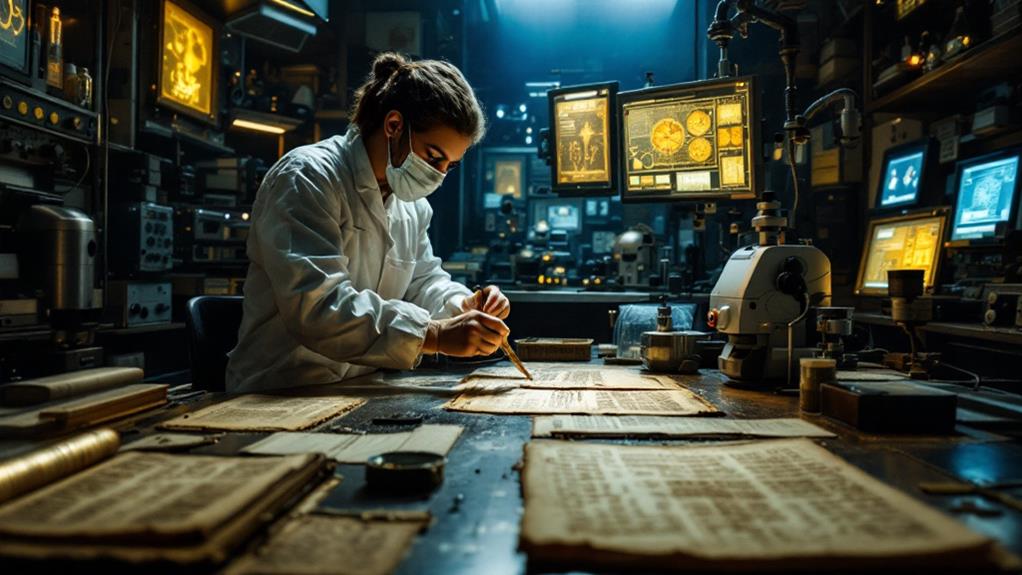
With advances in preservation science, we now have cutting-edge techniques that greatly improve the longevity of ancient manuscripts. You can now address biological factors like mold and pests with precision. For example, using non-invasive methods such as anoxic environments can effectively control these threats without harming the manuscripts. This technique deprives biological agents of oxygen, halting their growth and ensuring the manuscript remains intact.
Technological advancements have also transformed how you can preserve these valuables. Digital imaging techniques allow you to create high-resolution replicas of manuscripts, providing a backup in case of damage. This method not only helps in preserving the content but also reduces the need for physical handling, which can further degrade the original material.
Moreover, the introduction of advanced climate control systems helps maintain ideal storage conditions. You can monitor and adjust humidity and temperature levels in real-time, preventing the growth of mold and reducing paper decay. These innovations mean that you're not just reacting to damage; you're actively preventing it. By leveraging these modern techniques, you play a vital role in ensuring ancient manuscripts continue to offer their wisdom to future generations.
Future of Manuscript Conservation
The future of manuscript conservation promises even more revolutionary techniques that will redefine how you protect these ancient artifacts. You'll see emerging future technologies and collaborative initiatives that will drive this transformation. To stay ahead, consider these advancements:
- Digital Restoration: Imaging software and AI algorithms will enable you to restore faded texts virtually, offering a non-invasive method that preserves the original material.
- 3D Scanning and Printing: By using 3D scanning, you can create precise digital replicas of manuscripts. These can then be 3D printed, allowing researchers to study the physical properties without risking the original.
- Smart Conservation Materials: Future technologies will introduce materials that adapt to environmental changes. These materials can self-heal or alert you when conditions become harmful, ensuring the manuscripts' safety over time.
- Global Digital Archives: Collaborative initiatives will lead to the creation of interconnected digital archives, allowing scholars worldwide to access and study manuscripts without the need for physical travel.
Related posts