Why Historical Folios Were Considered Sacred Objects in Various Cultures
You'd find that historical folios hold sacred value across cultures for a variety of reasons. Their artistic mastery showcases stunning craftsmanship, with intricate designs and gold leaf adding elegance. They aren't just art; they also contain spiritual texts, acting as conduits for divine wisdom and deepening ritual experiences. Folios preserve cultural heritage, safeguarding identities and stories through generations. They serve as knowledge guardians, bridging past and present, while asserting symbols of power and authority, often commissioned by royalty. These factors combine to make them revered artifacts. There's much more to uncover about their profound cultural significance.
Artistic Mastery and Craftsmanship
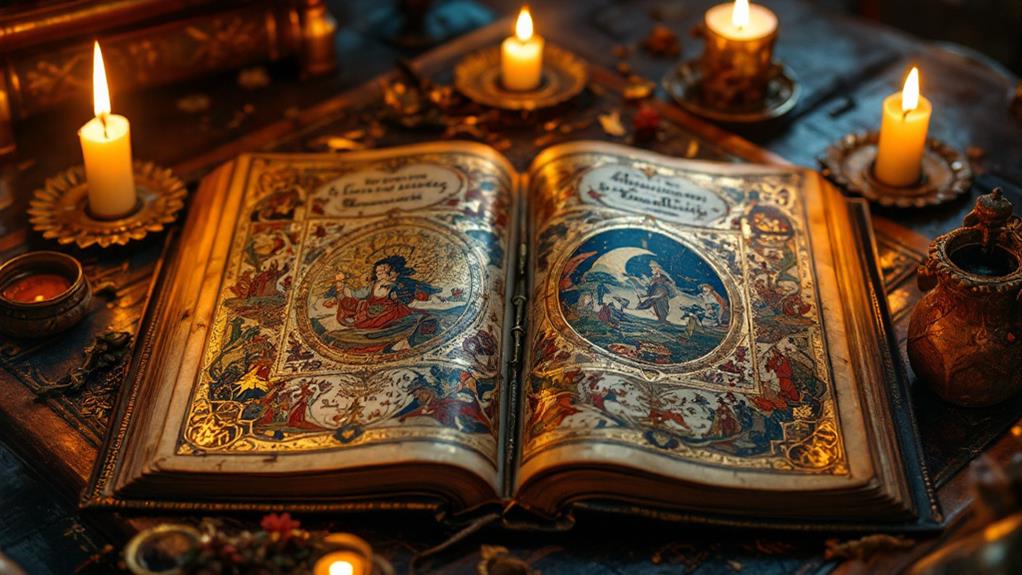
When you examine historical folios, you can't help but be captivated by the sheer artistic mastery and craftsmanship that went into creating these sacred objects. The illuminated manuscripts are extraordinary examples of this dedication to artistry. Each page is a representation of the skill and patience of the artisans who painstakingly crafted them. These manuscripts aren't just books; they're works of art, showcasing lively colors and intricate designs that have survived centuries.
You're likely to be drawn in by the decorative motifs that adorn these folios, ranging from the delicate interlace of Celtic knots to the rich, flowing designs of floral and fauna elements. These motifs weren't chosen randomly; they were carefully selected to improve the meaning and beauty of the text. As you investigate these folios, you notice that the margins often feature elaborate borders, teeming with life and movement, guiding your eyes through the narrative.
The use of gold leaf in illuminated manuscripts adds a level of elegance and prestige, emphasizing their importance. These touches of gold shimmer in the light, drawing your attention and inviting you to appreciate the remarkable skill involved in their creation.
Spiritual and Religious Significance
The spiritual and religious significance of historical folios can't be overstated. When you explore these ancient manuscripts, you uncover more than just ink and paper; you find sacred texts that have shaped beliefs and guided countless individuals through their lives. These folios often contain the foundational scriptures of diverse religions, acting as conduits of divine wisdom. They serve not just as records but as vessels of spiritual energy, revered in ritualistic practices across cultures.
Imagine participating in a ceremony where a historical folio is read aloud. The atmosphere is charged with reverence, each word resonating with power and purpose. Such rituals aren't merely routines; they're spiritual experiences that connect you to something greater than yourself. By engaging with these texts, you tap into a collective consciousness that spans generations.
Moreover, folios often feature intricate illuminations and calligraphy, which aren't just decorative but serve to highlight the sanctity of the words. You might find yourself awed by the artistry that enhances the text, emphasizing its divine origins. So, when you consider the spiritual and religious weight these folios carry, you're not just looking at historical artifacts; you're touching the very essence of human spirituality.
Preservation of Cultural Heritage
Safeguarding historical folios is vital for preserving cultural heritage, as these manuscripts are invaluable links to our past. By protecting them, you guarantee cultural continuity and maintain the threads that have woven together the tapestry of societies over centuries. These documents encapsulate stories, traditions, and knowledge that define a community's identity. When you preserve them, you're not just saving ink and paper; you're safeguarding the soul of a culture.
Imagine a world where these folios vanish. The loss would create voids in the collective memory of communities, stripping away the unique characteristics that set them apart. You'd lose the ability to trace the evolution of languages, art, and customs that have shaped society. It's imperative to recognize that these manuscripts are more than historical artifacts; they're living embodiments of a community's spirit.
Guardians of Knowledge and Wisdom
Acting as custodians of ancient wisdom, historical folios serve as gateways to centuries of accumulated knowledge. They bridge the gap between past and present, preserving insights long before written records were commonplace. In your investigation of these folios, you'll uncover how they complement oral traditions that have existed for generations. These documents don't just hold text; they capture the essence of storytelling practices that defined cultures.
You'll find that these folios are more than mere objects. They're vessels of knowledge that have withstood time, weathering the shifts in cultural landscapes. When storytellers relayed tales around fires, they weren't just entertaining—they were imparting lessons, ethics, and history. Historical folios preserve these narratives, guaranteeing the stories remain unforgotten even when the original voices have faded.
As you probe deeper, consider how these folios were revered in diverse societies. They were often treated with the same respect as the elders who carried oral traditions. By safeguarding these texts, communities maintained continuity of wisdom and learning. Through these folios, you're invited to engage with a rich tapestry of human experience, connecting with a legacy that transcends generations.
Symbols of Power and Authority
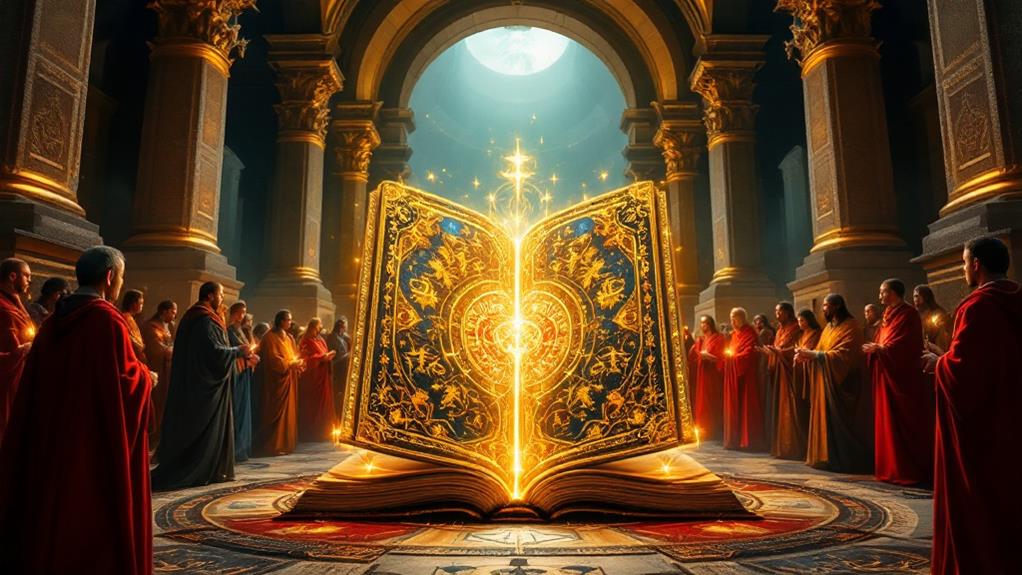
Across diverse cultures, historical documents weren't just relics of the past; they were potent symbols of power and authority. Imagine holding a document commissioned by a royal figure, its pages filled with edicts or treaties that shaped empires. Such records weren't mere accounts; they wielded immense political influence. When a king or queen issued a decree, the document became a physical embodiment of their rule, a proof of their control over lands and people.
You'd find that these documents often carried the weight of legitimacy. Rulers used them to assert their divine right to govern, claiming a direct link to the divine or the historically significant. By doing so, they reinforced their status and authority, ensuring their decrees were respected and followed. These documents, often stored in palaces or sacred spaces, served as reminders of the ruler's reach and the laws that bound society.
Moreover, royal commissions for such documents raised them to a special status. Their creation involved the kingdom's best scribes and artisans, reflecting the ruler's grandeur. By possessing or commissioning a document, rulers could consolidate their power, demonstrating their influence over both the temporal and spiritual domains.
Related posts