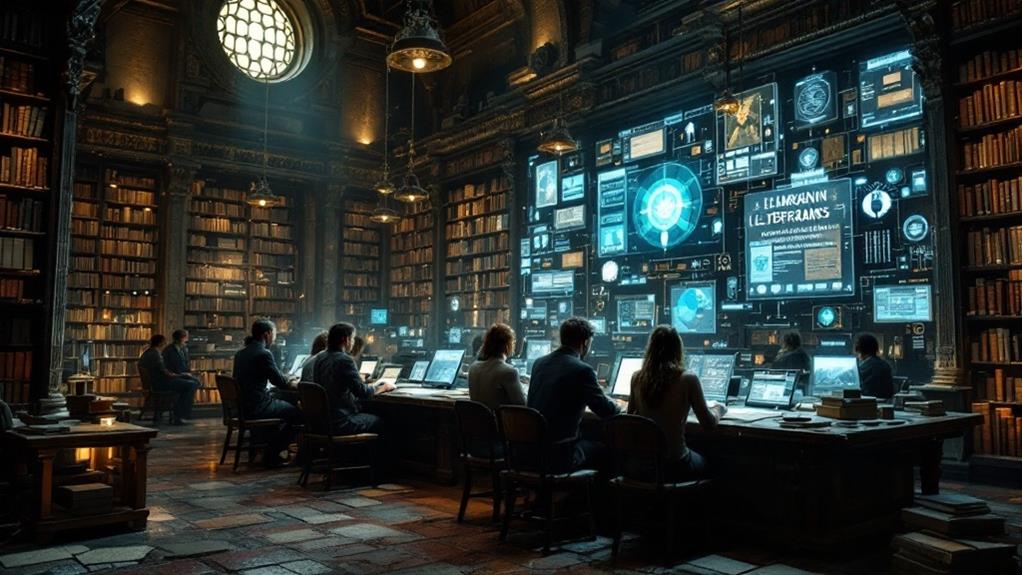
Why Historic Folios Remain Relevant in Modern Academic Research

You'll find that historic folios remain essential in modern research due to the rich insights they provide. Marginalia offer unfiltered perspectives and reader interactions across centuries. They guarantee authenticity by preserving original annotations and verifying sources. The connection to historical contexts allows researchers to understand cultural, political, and economic influences. Folios also improve cultural studies and interdisciplinary research by merging traditional narratives with contemporary methodologies. With the help of digital technology, they offer global accessibility and safeguard against deterioration. If you're curious about how folios continue to enrich academic discourse, there's more to uncover in this fascinating field.
Unique Insights From Marginalia
Marginalia in historic folios offer unique insights that you might not expect from the main text. When you plunge into these handwritten notes, you uncover layers of reader engagement that bring the past to life. It's easy to overlook these scribbles, but they're often where the real conversations happen. They capture the thoughts and reactions of readers across centuries, offering a raw, unfiltered look at how texts were perceived and interpreted. Unlike the main text, which presents a polished narrative, marginalia provide a more personal take, revealing how readers interacted with the material.
Authenticity of Primary Sources
When evaluating the authenticity of primary sources, you must consider several crucial factors. Firstly, focus on source verification. Confirm the origin of the document by examining any available metadata, such as dates, authorship, and locations. This data can help you trace the document's provenance, ensuring it hasn't been altered or misrepresented over time. Cross-reference the content with other known documents from the period to detect inconsistencies or anomalies.
Next, consider archival integrity. Assess the condition and handling of the document within archives. Reputable archives maintain strict protocols for storing and preserving documents, which minimizes the risk of tampering. If a document has been kept under such conditions, it's more likely to be authentic. Moreover, you should inquire about the chain of custody, which details the document's path from its creation to its current location. This chain offers insights into how the document might have been exposed to potential alterations.
Connection to Historical Contexts

Understanding the connection of a primary source to its historical context is crucial for interpreting its significance and accuracy. When you explore historic folios, you're not just reading old text; you're uncovering layers of meaning shaped by the time and culture they emerged from. Contextual analysis allows you to decode these complex layers and appreciate their historical significance. Here's how you can connect the dots:
- Identify Key Events: Determine the major events occurring during the time the folio was created. This helps in understanding the influences impacting the author or compiler.
- Consider Cultural Norms: Analyze the societal norms and beliefs prevalent at the time. They often shape the perspectives presented in the folio.
- Examine Political Climate: Investigate the political atmosphere, as it can provide insight into the motivations and biases present in the text.
- Analyze Economic Conditions: Economic factors can influence content and themes, revealing underlying messages about wealth distribution and class structures.
Preservation of Original Annotations
Exploring the historical context gives depth to your understanding, but likewise significant is preserving the original annotations found in historic folios. These annotations, often penned by the original owners or scholars of the time, offer invaluable insights into the thought processes, cultural norms, and academic practices of their time period. Preserving these scribbles and marginalia involves mastering specific annotation techniques. You must handle these artifacts with care, guaranteeing that any interventions or restorations don't alter or damage the original work.
The primary archival challenges you'll face include environmental factors like humidity and light, which can degrade paper and ink. You need to use controlled environments to prevent further deterioration. Furthermore, digital technologies now play an essential role in preservation. Digitizing these annotations not only safeguards them but also makes them accessible to a wider audience. However, guaranteeing that digital copies capture the nuances of the original handwriting and ink color presents another set of challenges.
As you engage with these historic folios, keep in mind each annotation is a bridge to the past. Proper preservation methods guarantee that this bridge remains intact for future scholars and researchers.
Impact on Cultural Studies
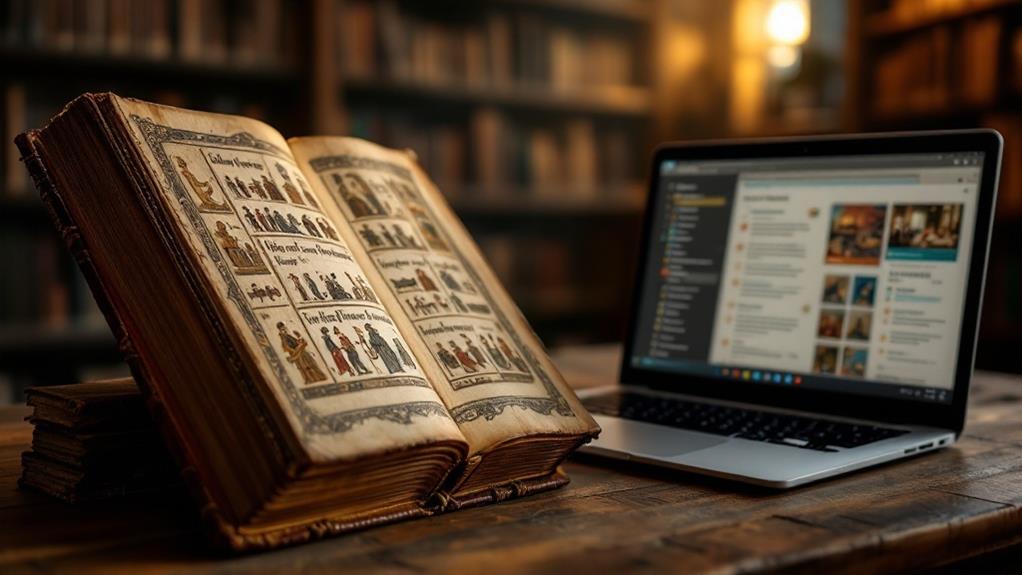
Many historic folios profoundly influence cultural studies by providing a direct lens into past societies. They capture the essence of cultural memory and serve as a bridge between the past and present. When you examine these folios, you uncover layers of textual heritage that reveal the beliefs, traditions, and social structures of bygone times. These documents aren't just relics; they actively shape your understanding of cultural dynamics.
Here's how historic folios impact cultural studies:
- Preservation of Cultural Memory: By studying these texts, you preserve the collective memory of societies, ensuring their stories and experiences endure.
- Insight into Textual Heritage: Folios offer a tangible connection to the literature and intellectual pursuits of historical communities, enriching your comprehension of their cultural contexts.
- Understanding Societal Values: They reflect the moral and ethical frameworks that guided past societies, helping you assess how those values have evolved.
- Influence on Modern Narratives: These documents shape contemporary cultural narratives by providing foundational texts that influence current academic and societal discourses.
Enhancing Interdisciplinary Research
Through the study of historic folios, you can advance interdisciplinary research by bridging distinct academic fields. Historic folios offer unique insights that allow researchers from diverse areas, such as literature, history, and art, to come together. By examining these texts, you can develop collaborative methodologies that improve your understanding of complex subjects. When historians and literary scholars work alongside scientists, for example, they can reveal new narratives and connections that might not emerge from a single-discipline approach.
Using groundbreaking frameworks, you can investigate how past knowledge informs present-day issues. Historic folios often contain rich data that, when analyzed through the lens of multiple disciplines, reveal patterns and insights that are vital for contemporary research. By employing these frameworks, you can generate fresh perspectives and solutions to modern challenges. Regardless of whether you're investigating environmental changes, social dynamics, or technological advancements, the interdisciplinary approach enabled by historic folios can be invaluable.
Moreover, engaging with these texts encourages a broader dialogue between fields, fostering a culture of collaboration and exploration. So, by integrating historic folios into your research, you not only preserve the past but also enrich the future of academic inquiry.
Challenges in Digital Interpretation

In the present electronic age, interpreting historic folios presents unique challenges that require careful navigation. As you immerse yourself in digital archives, you'll encounter issues that demand both digital literacy and a strong grasp of interpretive frameworks. These challenges aren't just technical hiccups; they shape how you understand and interact with historical texts. Here's what you need to contemplate:
- Digital Literacy: You must develop the skills to effectively use digital tools and platforms. Understanding how to access, manipulate, and analyze digital folios is vital in avoiding misinterpretations.
- Interpretive Frameworks: Applying the right interpretive frameworks is fundamental. Without them, the context and nuances of historic texts can easily be lost in translation, leading to flawed results.
- Data Quality: Digital versions of folios can suffer from poor scanning quality or incorrect metadata, which can obstruct your research and distort original meanings.
- Technological Changes: The rapid pace of technological advancement means you need to continually adapt to new software and methods for digital interpretation, which requires constant learning and flexibility.
Future of Folios in Academia
Adopting the future of folios in academia requires a forward-thinking approach that combines tradition with innovation. You need to recognize that while the physical folios hold immense historical value, their relevance today hinges on integrating them into the online environment. Digital archiving is key to preserving these valuables, guaranteeing that they are accessible to scholars worldwide. By digitizing folios, you not only safeguard them against physical deterioration but also open up new avenues for research and analysis.
Scholarly collaboration plays an essential role in this transformation. When researchers from diverse fields come together, they can uncover insights that might be overlooked by working in isolation. Collaborators can bring unique perspectives to the analysis of folios, enriching the academic discourse. Utilizing digital platforms, you can facilitate seamless communication and data sharing among scholars, fostering a collaborative environment that transcends geographical boundaries.
In this online era, don't underestimate the importance of merging traditional methods with modern technology. By doing so, you guarantee that historic folios remain an essential part of academic research, continually contributing to the expansion of knowledge. Embrace this evolution, and you'll help preserve the legacy of folios for generations to come.
Related posts