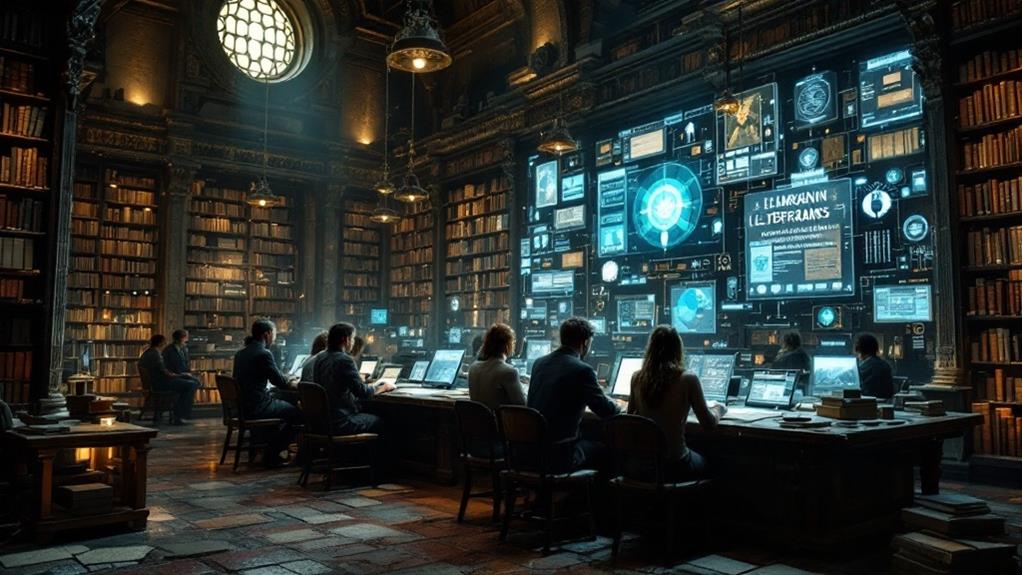
Unlocking Ancient Knowledge: Digital Tools for Accessing Historic Folios
Revealing ancient knowledge is easier than ever with digital tools that allow you to access historic folios without geographical constraints. Through digitization and high-resolution imaging, you can investigate rare manuscripts while preserving the originals. Advanced search and analysis tools make finding specific data quick and insightful. Engage with collaborators globally on shared platforms, or contribute to crowdsourcing projects to refine transcription accuracy. Virtual reality experiences offer engaging interactions with history, making learning both dynamic and accessible. These technologies not only protect fragile documents but also connect you to the past in unprecedented ways. Uncover more about these innovations.
Digitizing Rare Manuscripts
Imagine holding a fragile manuscript that's centuries old; now consider the benefits of digitizing such valuables. By embracing digital conservation, you're actively participating in manuscript preservation, ensuring these irreplaceable documents endure the test of time. Digitization shields them from physical degradation, environmental factors, and even mishandling. It's a proactive step in safeguarding history.
When you digitize rare manuscripts, you're not merely preserving the text; you're capturing every detail, from the unique ink strokes to the subtle texture of the parchment. This careful digital conservation allows for better scholarly access without risking damage. You can investigate these ancient documents with just a few clicks, making research more efficient and far-reaching.
Moreover, digitizing manuscripts democratizes access, breaking down geographical barriers. Scholars and history enthusiasts from around the world can appreciate and analyze these valuables without traveling. This global accessibility fosters collaboration and improves our collective understanding of history.
In short, by digitizing rare manuscripts, you're not just preserving the past; you're revealing it for future generations. You're making history accessible, ensuring that knowledge isn't lost but shared, cherished, and built upon for years to come.
High-Resolution Imaging Techniques
As you adopt the digital conservation of rare manuscripts, high-resolution imaging techniques become a crucial tool in capturing every intricate detail. These techniques allow you to create digital replicas that not only retain the original's essence but also reveal nuances otherwise invisible to the naked eye. By using advanced image improvement, you can bring faded texts back to life, highlight worn illustrations, and even uncover hidden layers beneath centuries of wear and tear.
Incorporating high-resolution imaging into your archival preservation efforts guarantees that these invaluable documents are safeguarded for future generations. The high level of detail captured means researchers can study these texts without handling the fragile originals, reducing the risk of physical damage. You can investigate each folio's texture, color, and intricate artistry as if holding them in your hands, yet without any deterioration.
Moreover, these techniques make it easier to share manuscripts with a global audience. Scholars worldwide can access high-quality images, collaborate on research, and generate new insights into historical contexts. High-resolution imaging bridges the gap between past and present, enabling you to preserve history while making it accessible and engaging for everyone.
Advanced Search and Analysis Tools

Harnessing advanced search and analysis tools transforms how you interact with digital archives. These tools streamline the exploration of vast collections, making it easier to reveal hidden insights and patterns. Semantic search boosts your ability to find relevant documents by understanding context and meaning, not just keywords. This means you don't have to sift through irrelevant results; instead, you access precisely what you need.
Text mining is another game-changer, allowing you to extract valuable information from large volumes of text. By identifying patterns, trends, and relationships, you can gain deeper understanding of historical contexts and narratives. This analytical approach opens doors to new interpretations and connections previously buried in the data.
Here's how these tools improve your research experience:
- Semantic Search: Find documents based on meaning and context, reducing irrelevant results.
- Text Mining: Uncover patterns and insights in large text volumes, revealing new historical narratives.
- Automated Analysis: Quickly analyze data without manual intervention, saving time and effort.
- Data Visualization: Transform complex data into clear, visual representations, making it easier to interpret findings.
Embrace these technologies to access ancient knowledge and revolutionize your research methodology.
Virtual Reality Experiences
Virtual reality experiences are transforming the way you examine historic folios, offering engaging adventures into the past like never before. Imagine stepping into a virtual world where ancient manuscripts come to life, and you're not just reading about history—you're living it. With captivating storytelling, these experiences allow you to investigate historical events and cultures in a way that books and static images simply can't match.
Through educational simulations, you can interact with the past in a deeply impactful manner. For instance, you might walk through the lively streets of medieval cities or witness crucial moments in history as if you were there. This hands-on approach improves your understanding and retention of historical knowledge by making it feel real and tangible.
You don't just see the words on a page; you experience the context, the environment, and the emotions of the time. This engaging learning improves your grasp of complex historical narratives, making connections that might have been overlooked in traditional study methods. By blending technology with history, virtual reality offers a revolutionary way to reveal the secrets of ancient folios, making history more accessible and engaging for everyone.
Collaborative Platforms for Researchers

Collaborative platforms revolutionize how researchers access and analyze historic folios, breaking down barriers that once isolated scholars. You don't have to work in solitude anymore; instead, you can tap into vast research networks to share insights and expertise. These platforms foster interdisciplinary collaboration, allowing historians, linguists, and technologists to gather virtually and contribute unique perspectives. By connecting with colleagues worldwide, you guarantee a more thorough understanding of ancient texts, revealing nuances that a single discipline might miss.
Here are four key ways collaborative platforms improve research:
- Real-time Communication: Engage in instant discussions with peers across the globe, exchanging ideas and feedback as you work. This immediacy accelerates the research process and leads to quicker findings.
- Shared Resources: Access a wealth of digital materials and tools that are collectively maintained, assuring everyone benefits from the latest advancements and findings.
- Cross-disciplinary Teams: Form teams with experts from diverse fields, combining skills to tackle complex problems and generate creative solutions.
- Network Expansion: Build and strengthen your professional network by connecting with other researchers in your area of interest, opening doors to future collaborations and projects.
Crowdsourcing Transcription Projects
Building on the power of collaborative platforms, crowdsourcing transcription projects offer a groundbreaking way to engage a broader community in the study of historic folios. By inviting people like you to contribute to the transcription process, these projects harness the collective intelligence and enthusiasm of participants worldwide. You don't need to be a professional historian to make a significant impact. Your involvement can help decipher and preserve invaluable texts, making them accessible to researchers and history enthusiasts alike.
Community engagement is at the heart of these projects. As you work alongside others, you contribute to a shared goal: enhancing the understanding of our past. This collaborative effort not only democratizes access to historical documents but also fosters a sense of shared ownership and responsibility. The more eyes on a document, the higher the likelihood of improving transcription accuracy, as diverse perspectives often catch errors or offer fresh insights.
Participating in crowdsourced transcription means you're part of a dynamic process that values every contribution. It's a chance to learn, connect, and make history come alive for a global audience. By joining these projects, you help bridge the gap between ancient texts and the electronic era.
Open Access Digital Archives

Open access digital archives revolutionize how we interact with historical documents by breaking down barriers to information. You can investigate rare manuscripts and ancient texts from anywhere in the world, without needing to visit a physical library. This accessibility fosters a deeper connection to our past, allowing you to engage with history in meaningful ways. The open access benefits extend beyond convenience, as they also promote inclusivity in scholarly research and educational resources.
Here's how open access digital archives make a difference:
- Wider Audience Reach: By removing paywalls, these archives allow everyone, from students to professional researchers, to access valuable historical data.
- Enhanced Collaboration: Open access encourages collaboration across disciplines and borders, enabling scholars to share insights and build upon each other's work.
- Digital Preservation Strategies: These archives support the preservation of fragile documents, ensuring that digital copies remain accessible for future generations even as physical media deteriorate.
- Cost-Effective Research: With free access to a wealth of information, you save on travel and subscription fees, redirecting those resources into furthering your research.
Embracing open access digital archives means embracing a future where knowledge knows no bounds, and you can be part of this transformative expedition.
Related posts