Understanding the Craft of Folio Production in the Medieval Era
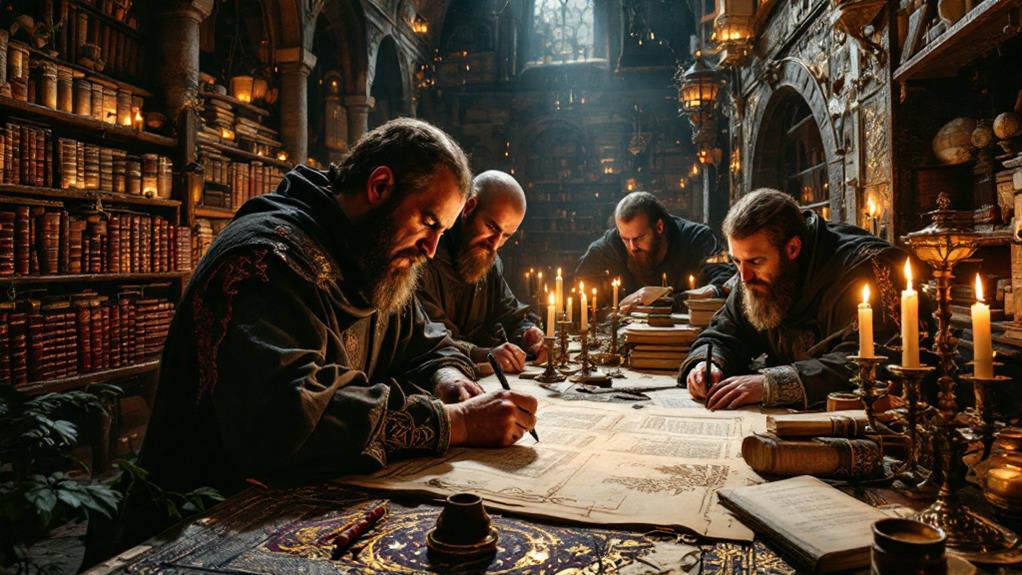
When exploring the craft of folio production in the medieval period, you start with the busy scriptorium where manuscripts were diligently crafted. Here, scribes worked under ideal light, each fulfilling specific roles to guarantee quality. The vellum, often made from calf, goat, or sheep, required careful preparation and inspection. Illumination brought manuscripts to life with lively imagery and symbolic colors, enhancing their themes. Precision in scribing using historical tools added authenticity, while binding techniques preserved the manuscripts' integrity. These folios weren't just books—they were cultural gems. There's much more to uncover about how these artifacts connected generations.
The Role of the Scriptorium
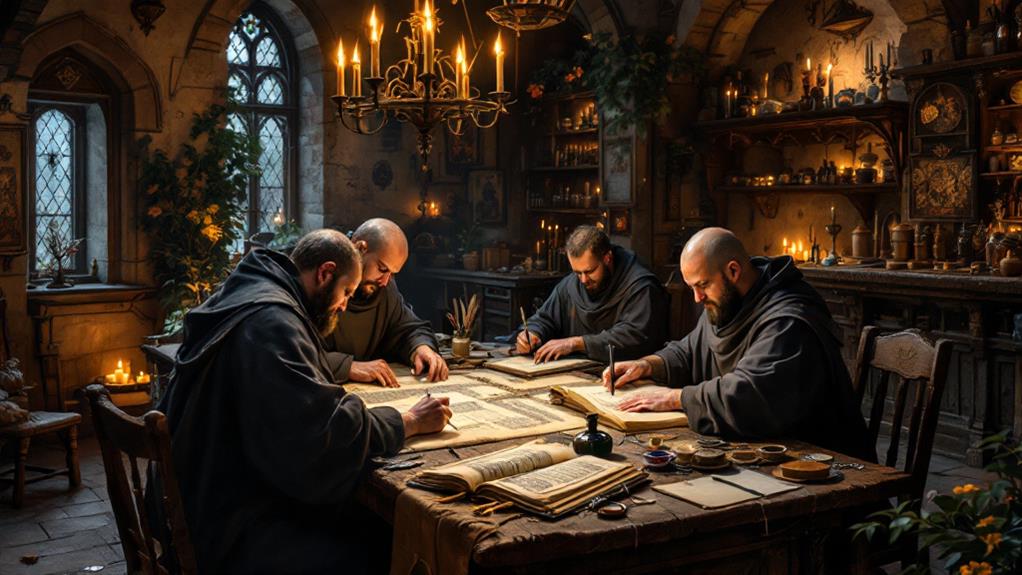
A scriptorium was more than just a room; it was the heartbeat of medieval manuscript production. Imagine stepping into this lively hub where every detail mattered, from the scriptorium layout to the careful process of manuscript organization. You'd find rows of desks arranged strategically to optimize light, guaranteeing scribes could clearly see their work. The layout wasn't random; it was designed for efficiency and focus, enabling scribes to produce manuscripts with precision and care.
In this thoughtfully organized space, every manuscript had its place. You'd see shelves lined with parchment, inks, and quills, each item neatly arranged to streamline the workflow. The organization of manuscripts was vital; they were often sorted by type, such as religious texts, scientific works, or legal documents. This system allowed scribes to access materials quickly, reducing disruptions in their painstaking work.
The scriptorium was a microcosm of order in a world where every detail counted. You'd witness a disciplined environment where collaboration and concentration combined to create beautifully crafted folios. Each scribe knew their role, contributing to a seamless process that guaranteed the manuscripts produced were as flawless as possible.
Selecting and Preparing Vellum
With the scriptorium lively with activity, attention now shifts to the backbone of manuscript creation: selecting and preparing vellum. You start by considering different vellum sources, typically skins from calves, goats, or sheep. Each source offers unique qualities; calfskin, known as parchment, provides a smooth and durable surface, while goatskin offers a slightly textured finish. Your choice depends on the manuscript's purpose and the scribe's preference.
Once you've selected the right type, the preparation methods begin. Initially, soak the skin in a lime solution to loosen any remaining hair and fat. Afterward, stretch it tightly on a frame known as a herse. This guarantees the skin dries flat and smooth. As it dries, scrape it carefully with a curved knife called a lunarium, removing excess tissue and achieving the desired thickness. This careful process demands patience and precision, as inconsistencies can affect the writing surface.
After drying, the vellum is cut to size. At this stage, it's crucial to inspect each sheet, verifying it's free of imperfections like holes or uneven texture, which could hinder the manuscript's readability and aesthetic.
The Art of Illumination
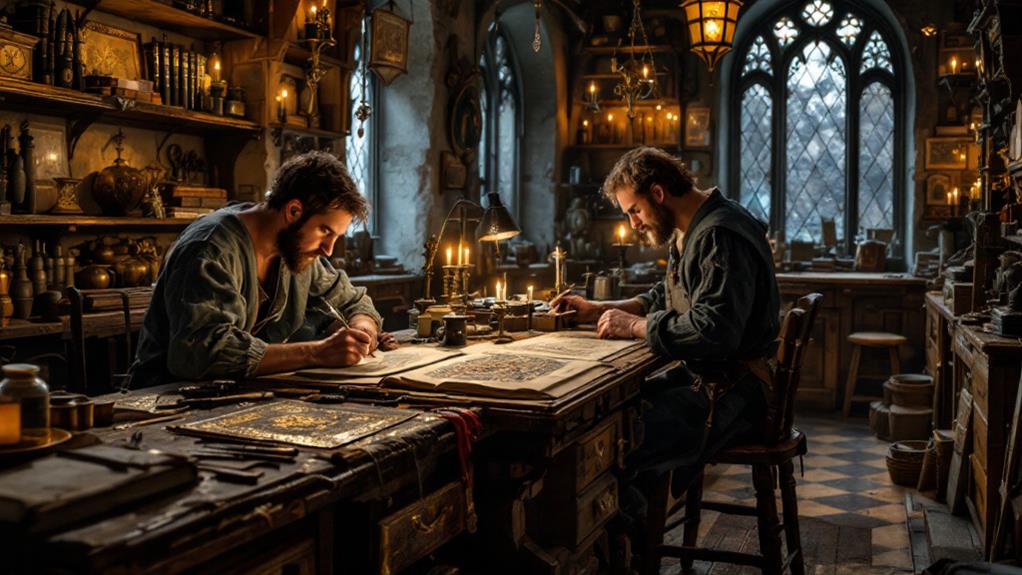
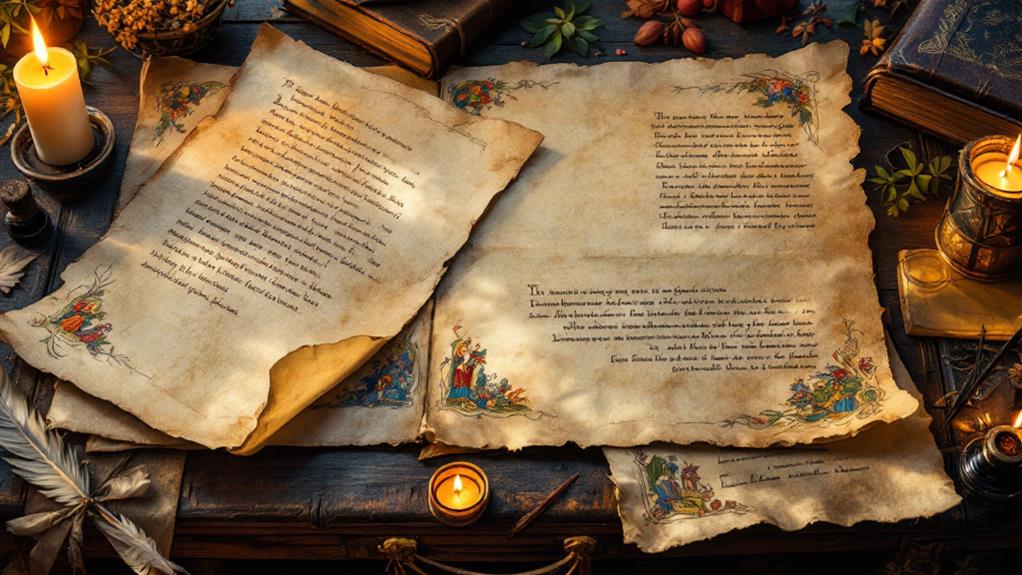
Brilliant colors and intricate designs transform a simple manuscript into a work of art through the process of illumination. As you investigate the world of medieval manuscripts, you'll notice how these lively embellishments breathe life into the pages. Illumination isn't just about decoration; it's a visual narrative that improves the manuscript themes. Each color and image is carefully chosen to convey deeper meanings. Color symbolism plays a significant role here. Gold, often used to depict divine light, reflects the sacred nature of religious texts. Blue, symbolizing heaven, is a favorite for Virgin Mary's robes, while red can signify both passion and power.
When you illuminate a manuscript, you're not merely adding beauty. You're weaving a story that complements the text. The artists, or illuminators, follow specific themes, ensuring that every element aligns with the manuscript's purpose. Regardless of it being a religious manuscript or a secular tale, illumination boosts the reader's understanding and appreciation. You can see how the interplay of color and design raises the manuscript from a simple document to a cherished artifact, inviting readers to investigate its layers of meaning and artistry. This is the transformative power of medieval illumination.
Scribing With Precision
Illumination captures the eye, but the foundation of any medieval manuscript rests on the diligent work of scribes. As you explore the world of scribing with accuracy, you'll uncover it's an art form rooted in careful attention to detail. Historical scribes used medieval tools like quills, knives, and rulers to guarantee text alignment was flawless. Each tool had a specific purpose, such as trimming the parchment or ruling lines to guide the scribe's hand.
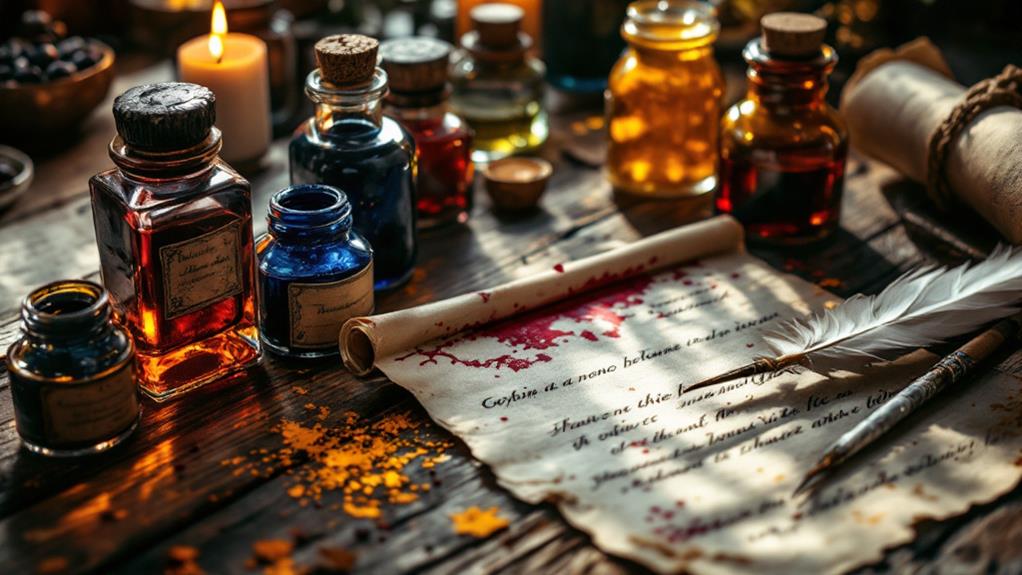
The quality of parchment was vital, as any imperfections could disrupt the flow of ink. Before scribing began, scribes prepared their ink with natural ingredients to confirm it adhered properly and stood the test of time, contributing to manuscript preservation. Different calligraphic styles were employed, each with its own set of scribing techniques, reflecting the intended use and audience of the manuscript.
Mastering these techniques required years of practice and dedication. By understanding the accuracy needed in text alignment and ink preparation, you gain insight into the sheer skill involved. The legacy of these manuscripts showcases not only the artistic flair of illuminators but also the precision and craftsmanship of the scribes who laid the groundwork.
Binding Techniques and Materials
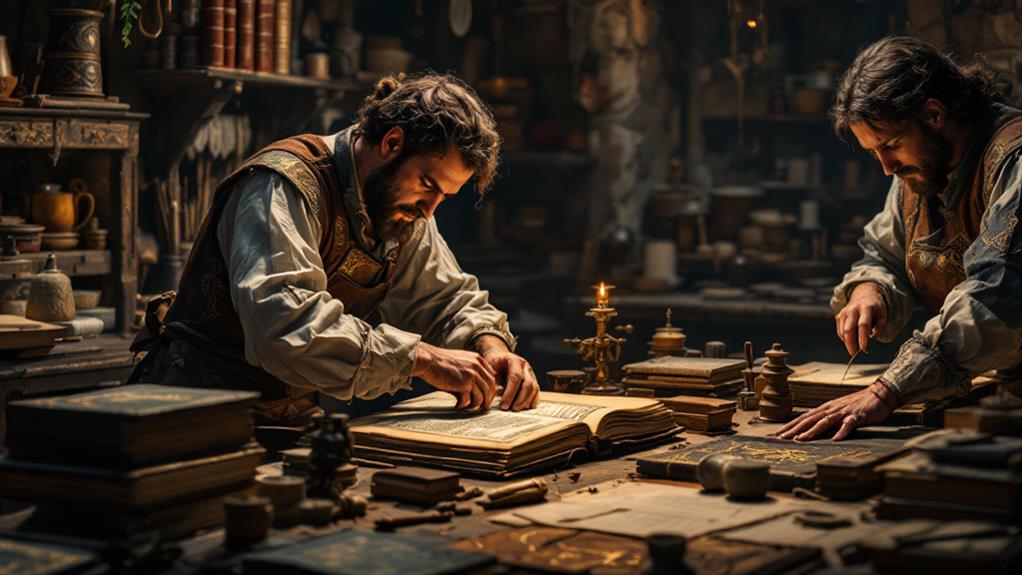
When you investigate the world of medieval bookbinding, you'll uncover a complex craft that was as essential as the scribing itself. Binding a folio required not just skill but also a keen eye for detail. The choices in sewing methods and cover materials played a significant role in the durability and aesthetics of the final product.
- Sewing Methods: You'd find that bookbinders employed a variety of sewing methods. The most common was the link-stitch technique, which provided flexibility and strength. Each folio was sewn onto cords or thongs, creating a robust spine able to withstand frequent use.
- Cover Materials: Leather was the go-to material for covers. Its availability and durability made it perfect for protecting the valuable contents. However, you might also encounter wooden boards used for heavier tomes, often covered in leather or fabric for added resilience.
- Endbands: Adding decorative endbands wasn't just about aesthetics. They reinforced the spine, helping the book maintain its shape over time.
- Fastenings: To keep folios tightly closed and safe from the elements, clasps or straps made of metal or leather were attached. These not only preserved the contents but also added an elegant finishing touch.
Cultural Significance of Folios
Revealing the pages of a medieval folio, you'll find more than just ink on parchment; these books were cultural jewels that reflected the societal values and intellectual pursuits of their time. Each folio told a story of the period's religious devotion and thirst for knowledge. Religious texts were central to medieval life, and folios often contained sacred scriptures, guiding the spiritual and moral compass of entire communities. These texts weren't just for reading; they were objects of reverence and deep cultural significance.
As you explore the world of manuscript preservation, you'll see how these folios served as crucial links to the past, preserving the wisdom and artistry of their creators. The painstaking process of crafting and maintaining these manuscripts was not just about keeping records but about honoring traditions and ensuring the continuity of cultural legacies. The labor-intensive work of scribes and artisans demonstrated society's commitment to knowledge and faith, making each folio a reflection of the time's values.
In essence, medieval folios were much more than books; they were cultural riches that encapsulated the period's intellectual pursuits and spiritual beliefs, connecting generations through their enduring presence.
Related posts