Understanding Provenance: A Key to Tracing Folio Heritage
Understanding provenance is essential for revealing the intricate history and cultural value of folios. It provides insights into the origin and path of each item, revealing the artistic lineage and social contexts that shaped their creation. By tracing ownership records and authenticating items, you can confirm their legitimacy and enrich their historical narrative. Provenance research uses both traditional and digital methods to investigate past records, while ethical considerations guarantee integrity. It's also significant for preserving folios against deterioration through techniques like digital archiving, which improves accessibility and fosters global collaboration. Delve further to uncover the stories within these historical gems.
Definition of Provenance
Provenance, at its foundation, is all about tracing the origin and history of an item or idea. When you're investigating provenance, you're fundamentally uncovering the artistic lineage that gives a work its unique identity. Imagine peeling back layers of time to see who created an artwork, who owned it, and how it traversed through different hands and cultures. It's akin to understanding a person's family tree, where each branch tells a story of origin and influence.
To explore provenance, you need to reflect on the cultural context surrounding an item. This means recognizing the environment and societal norms in which an object was crafted or an idea was conceived. By doing so, you grasp how these factors influence the creation and evolution of the work. You'd not only understand the object's background but also appreciate its place within the broader tapestry of history and culture.
Historical Significance
Understanding the historical significance of an item or idea gives you a deeper appreciation of its impact over time. When you investigate the cultural context surrounding a folio, you're not just looking at an old book; you're uncovering the social, political, and economic forces that shaped its creation and use. This knowledge enriches your understanding of the period it comes from, offering insights into the values and beliefs that prevailed during that time. By studying these dimensions, you can see how historical narratives have evolved, reflecting the shifts in society's perspectives and priorities.
As you examine a folio's historical significance, consider how it fits into the broader tapestry of history. What stories does it tell, and whose voices are amplified or silenced within its pages? Every detail, from the materials used to the language employed, contributes to the narrative. This awareness helps you appreciate the folio not just as an artifact, but as a living document that has traveled through time, carrying with it the imprints of countless lives and experiences. This understanding transforms a mere object into an essential piece of our shared human story.
Tracing Ownership Records
Delving into the task of tracing ownership records, you commence on an expedition that reveals the fascinating lineage of an item. The voyage begins with identifying all the ownership transfers that the item has gone through. Each transfer tells a unique story and adds a piece to the larger puzzle of the item's history. Your main goal is to compile these shifts into a coherent timeline, which is essential for understanding the item's past and its significance.
As you sift through documents, you encounter a range of challenges, the foremost being record accuracy. Historical records can be incomplete, damaged, or lost over time, making your task akin to detective work. You need to verify each piece of information carefully, guaranteeing that every recorded transfer is legitimate and correctly attributed. This verification often involves cross-referencing with multiple sources, such as auction records, estate inventories, and personal correspondence.
Your diligence guarantees that the lineage you uncover is as precise as possible. Inaccuracies can lead to misunderstandings about the item's history, so attention to detail is paramount. By piecing together these ownership transfers, you gain a deeper appreciation of the item's passage through time and its cultural significance.
Provenance and Authentication
Commence on the voyage of linking provenance with authentication, a significant step in confirming an item's legitimacy. When you explore provenance, you're not just tracing ownership; you're seeking connections that affirm the item's authenticity. Provenance serves as a roadmap, guiding you through the artistic attribution process. It helps identify the creator's hand, often imperative in the world of art and historical artifacts.
To truly authenticate an item, you must consider its cultural context. This involves understanding the historical and societal framework in which the item was created and used. By doing so, you can verify if the piece aligns with the time period and cultural movements of its alleged origin. This step is fundamental because it uncovers inconsistencies that might indicate a forgery or misattribution.
As you examine provenance records, look for documented evidence such as sales receipts, exhibition histories, and expert appraisals. These elements provide the backbone of authentication. Remember, each piece of evidence contributes to a broader narrative that either supports or challenges the item's authenticity. Ultimately, your goal is to construct a coherent story that solidifies the item's place in history and assures its artistic and cultural significance.
Notable Provenance Examples
Let's investigate some remarkable instances where provenance has played an essential role in the art world. The stories of historical manuscripts and their voyages through time can be both fascinating and heart-wrenching. Famous collectors have often been at the center of these tales, their collections sometimes becoming part of royal libraries or literary estates. Provenance helps us understand these connections, preserving cultural heritage and offering insights into the past.
Consider these emotional highlights:
- Art auctions have revealed lost masterpieces, returning them to rightful owners.
- Royal libraries have safeguarded rare manuscripts, offering a glimpse into royal tastes and interests.
- Manuscript theft has torn valuables from their origins, leading to decades-long quests for recovery.
- Literary estates preserve the works of great writers, with provenance ensuring authenticity and legacy.
- Digital archives now provide widespread access, but still rely on provenance to maintain the integrity of historical records.
The provenance of historical manuscripts not only reveals their origins but also traces the complex web of ownership and transactions over centuries. By understanding these notable examples, you grasp the sheer significance of documenting each folio's path, preserving our shared cultural heritage for generations to come.
Provenance Research Techniques
Provenance research techniques, fundamental for uncovering an artwork's history, often involve a blend of traditional and modern methods. You'll find that digital tools play a significant role, allowing you to access vast databases and archives at your fingertips. These resources, combined with archival methods, help trace ownership records, exhibitions, and past sales. Ethical considerations are imperative, especially when dealing with items that may have been acquired under dubious circumstances. Understanding legal implications is also crucial, as provenance can affect ownership rights and even lead to restitution cases.
Taking an interdisciplinary approach enriches your research, drawing insights from fields like art history, anthropology, and even forensic science. Scholarly collaboration is similarly significant; working with experts can provide you with deeper insights and access to specialized knowledge. Contemporary practices in provenance research are increasingly influenced by cultural impacts, acknowledging how heritage and identity shape the narrative of artworks. By employing these techniques, you not only uncover an artwork's history but also contribute to broader discussions about cultural heritage and its preservation. Remember, successful provenance research isn't just about finding facts; it's about piecing together stories that resonate across time and borders.
Challenges in Documentation
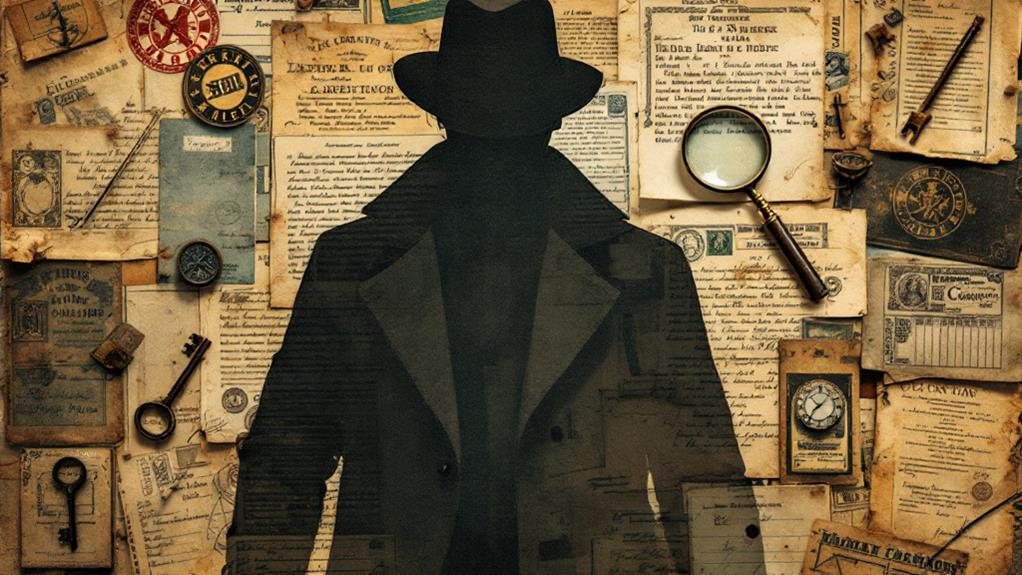
Steering through the challenges in documentation is crucial for accurate provenance research. As you explore the intriguing world of tracing folio heritage, you'll quickly realize that documentation can be a labyrinth. Digital archives, while revolutionary, often lack the consistency and completeness needed to weave a full historical narrative. You might encounter missing records, faded entries, or even conflicting data points. These issues can feel overwhelming when you're trying to piece together a cultural heritage puzzle.
Consider these challenges that might stir frustration:
- Missing Links: Documents that have vanished over time, leaving gaps in the story.
- Faded Records: Old documents with illegible writing, making them nearly impossible to decipher.
- Conflicting Information: Inconsistencies between sources that raise questions about authenticity.
- Digital Discrepancies: Variability in how data is stored and accessed in digital archives.
- Cultural Sensitivity: Ensuring respect and accuracy when dealing with cultural heritage materials.
These hurdles demand your attention and perseverance. As you navigate these obstacles, keep in mind that each piece of information is a crucial thread in the tapestry of history. Despite the challenges, your dedication to untangling these narrative threads enriches our understanding of the past.
Preserving Folio Legacy
Frequently, preserving the folio legacy requires a blend of careful attention and creative techniques. As a steward of these precious documents, you must prioritize folio conservation by guaranteeing they're stored in climate-controlled environments. Temperature and humidity fluctuations can cause irreversible damage, so monitoring these conditions is essential. Regular inspections help you spot and address issues like mold or insect infestations promptly.
In the information era, digital archiving plays an important role in preserving folio heritage. By digitizing these documents, you not only safeguard them against physical deterioration but also make them accessible to a broader audience. High-resolution imaging captures the intricate details of each folio, preserving every nuance for future generations. When you upload these images to secure databases, you protect them from potential loss due to natural disasters or accidents.
Moreover, digital archiving facilitates sharing and collaboration among scholars and researchers worldwide. You can contribute to a global network of knowledge by participating in online platforms dedicated to folio studies. This approach enriches the understanding of folio heritage and fosters a sense of collective responsibility in its preservation. By combining traditional conservation methods with modern technology, you guarantee the folio legacy endures.
Related posts