Understanding Preservation Methods for Manuscripts Through History
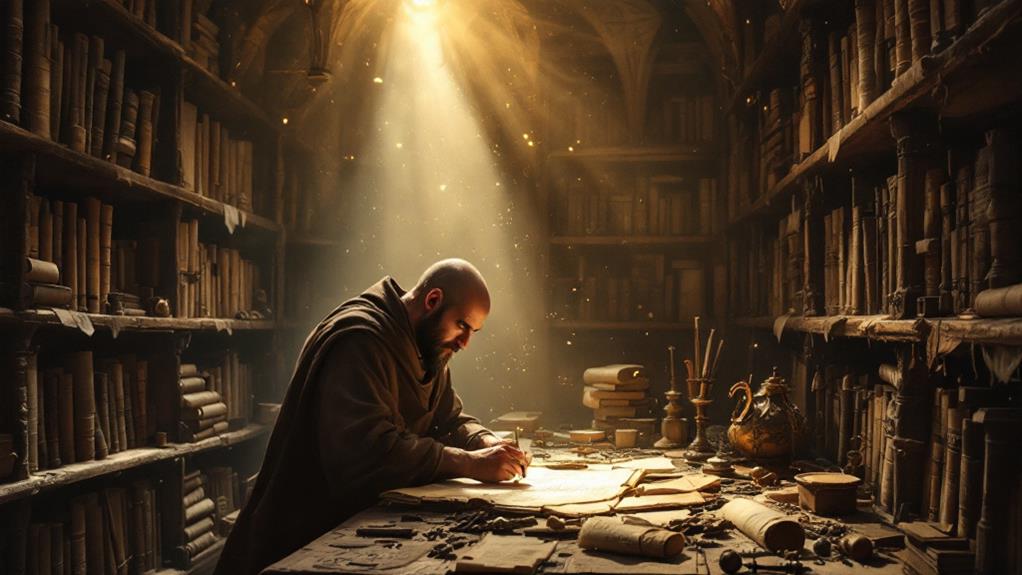
To understand manuscript preservation through history, start with ancient Egypt where papyrus was crafted and stored in dry environments. Progressing to the use of parchment and vellum, made from treated animal skins, guaranteed greater durability and allowed for detailed illustrations. During Medieval times, ink formulations and leather bindings improved to protect manuscripts from decay. The Renaissance period brought improved bookbinding and artistic techniques. Today, digital archiving and advances like 3D scanning safeguard manuscripts, while global collaborations address climate impact on preservation. Investigate these evolving methods to see how manuscripts have withstood the test of time and technology.
Ancient Papyrus Techniques
Exploring ancient papyrus techniques reveals fascinating insights into early manuscript preservation. As you investigate the world of ancient writing, you'll uncover how vital papyrus was to ancient civilizations, particularly in Egypt. Papyrus production began with harvesting the papyrus plant, a tall reed found along the Nile River. Workers would peel away the outer layers, slicing the inner pith into thin strips. These strips were then soaked, layered in crisscross patterns, and pressed together, allowing natural plant sap to bond them. This thorough process resulted in sheets that served as the primary writing medium for centuries.
Understanding preservation techniques is important when considering the durability of these ancient documents. Ancient scribes developed methods to enhance longevity, like storing scrolls in dry environments to prevent decay. You'll find that the ink formulation was another significant aspect. Pigments made from soot or ochre mixed with water and gum arabic created inks that adhered well to papyrus, ensuring the writing remained legible over time.
Parchment and Vellum Innovations
While ancient papyrus provided a foundation for early writing, the evolution of manuscript preservation saw considerable advancements with the development of parchment and vellum. By shifting from papyrus to these new materials, you benefited from increased durability and flexibility. Parchment production involved carefully preparing animal skins, usually from sheep, goats, or calves. This process included soaking, stretching, and scraping the skins to create a smooth, thin surface ideal for writing. The result was a material far more robust than papyrus, capable of withstanding the test of time.
Vellum, a finer variant of parchment, was crafted specifically from calfskin. Its characteristics included a softer texture and a lighter, more delicate appearance, making it a preferred choice for luxurious manuscripts. Vellum's qualities allowed for intricate illustrations and detailed calligraphy, which improved the visual appeal of manuscripts. By using vellum, you could guarantee that texts not only survived but did so beautifully, capturing the attention of those who read them.
These innovations in material considerably impacted the preservation of knowledge, allowing manuscripts to be stored and handled without the fragility associated with papyrus. Consequently, parchment and vellum innovations played a fundamental role in safeguarding historical texts.
Medieval Manuscript Care
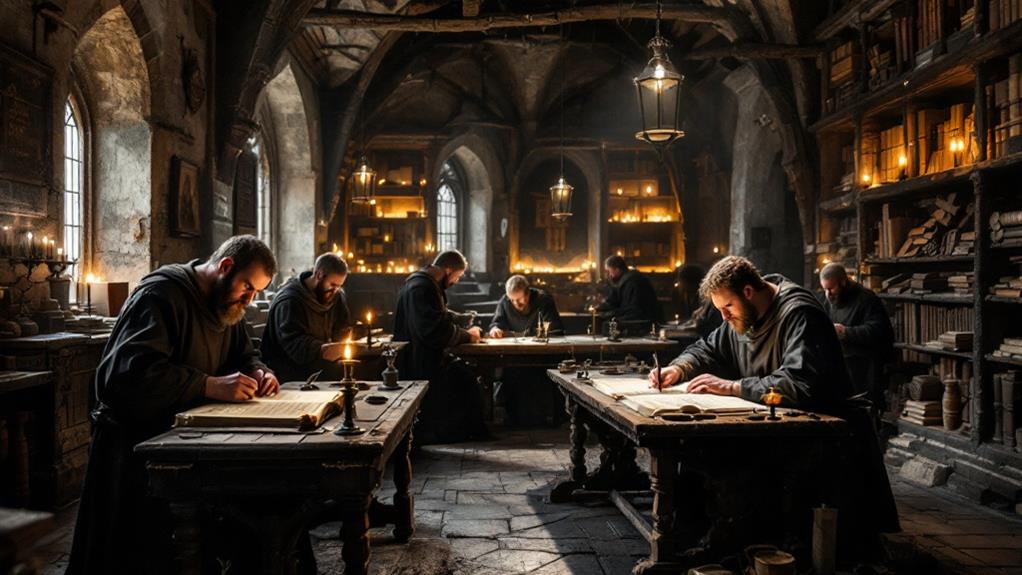
Caring for medieval manuscripts wasn't just about preserving the written word; it was an art in itself. You needed to understand different ink formulations used during this period. Distinct inks had unique properties and would react differently to environmental factors like humidity and temperature. Making sure your manuscripts were kept in stable conditions was key to preventing the ink from fading or bleeding.
Binding techniques were another vital element. Medieval scribes and binders employed a range of methods to guarantee manuscripts stayed intact over centuries. You'd likely find that earlier manuscripts used tight leather bindings, which needed specific conservation materials to maintain their flexibility and prevent cracking over time.
Manuscript storage was just as significant. You couldn't just place these works anywhere; they had to be stored in a controlled environment. You'd make certain they were kept away from direct sunlight and in rooms with regulated humidity to prevent deterioration.
Renaissance Preservation Advances
During the Renaissance, significant advancements were made in the preservation of manuscripts, reflecting the period's renewed interest in art, science, and literature. You'd be amazed at how Renaissance scribes utilized groundbreaking methods to guarantee the longevity of these precious documents. They developed sophisticated bookbinding techniques that not only protected manuscripts from damage but also improved their aesthetic appeal. These methods were essential in preserving cultural heritage and guaranteeing that knowledge was passed down through generations.
Consider some key advancements during this time:
- Renaissance scribes: They carefully copied texts, guaranteeing accuracy and longevity.
- Bookbinding techniques: Innovations like leather covers and stronger stitching methods improved durability.
- Illuminated manuscripts: Artists adorned texts with gold leaf and lively colors, making them both beautiful and valuable.
- Paper advancements: The quality of paper improved, allowing manuscripts to withstand the test of time better.
- Artistic preservation: Techniques to protect artworks and manuscripts from environmental damage were refined.
These advancements underscore the Renaissance's commitment to preserving its cultural and intellectual achievements. By embracing both artistic and practical methods, you see how this period laid the groundwork for modern preservation practices, guaranteeing the survival of invaluable historical records.
Challenges of Modern Preservation
Preservation today faces a multitude of challenges, reflecting the complex interplay between technology, environment, and human intervention. You might think digital archiving has simplified manuscript preservation, but it's not without hurdles. The rapid pace of technological change can render digital formats obsolete, risking the loss of valuable information. It's vital to regularly update digital archives to guarantee longevity and access.
Climate control is another significant issue. Manuscripts are susceptible to damage from temperature fluctuations and humidity. You need to maintain precise conditions to preserve these fragile items, which can be both technically challenging and costly. Proper climate control systems require constant monitoring and adjustment to prevent degradation.
Funding challenges are a persistent obstacle. Without sufficient financial resources, preservation projects can stall or fail. You must advocate for increased investment in preservation initiatives. Raising public awareness is fundamental to garner support from both the community and potential donors. People often underestimate the importance of preserving manuscripts, so educating the public can lead to better funding opportunities.
Technological Impact on Conservation
The challenges faced in modern preservation underscore the powerful role technology plays in manuscript conservation. You've got tools today that weren't even imagined a few decades ago. Digital archiving is transforming how you can store and access manuscripts, ensuring they're available for future generations without risking damage to the originals. This approach not only preserves the content but also makes it easily shareable across the globe.
By employing advancements in material science, you can better understand and counteract the deterioration of physical manuscripts. These scientific insights enable you to select the finest methods for repairing and preserving different materials, ensuring their longevity. Here's how technology impacts conservation:
- Digital Archiving: Store and back up manuscripts digitally, reducing physical handling.
- Material Science: Analyze materials to develop more effective conservation techniques.
- 3D Scanning: Capture detailed images of manuscripts, preserving their physical state digitally.
- AI and Machine Learning: Help in cataloging and identifying patterns in manuscript deterioration.
- Environmental Monitoring: Use sensors to maintain ideal conditions for manuscript storage.
Global Preservation Efforts
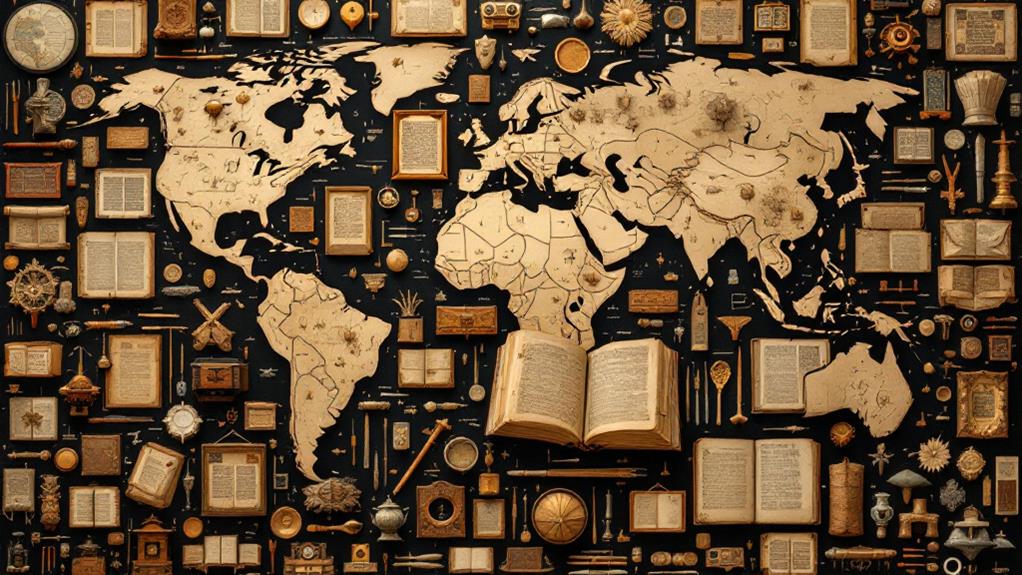
Across the world, countries are banding together to safeguard our shared cultural heritage through global preservation efforts. You'll find that international collaborations are fundamental to these endeavors. By working together, nations can develop effective archival strategies that protect manuscripts from threats like environmental damage and natural disasters. Climate considerations play a significant role in shaping these strategies, as rising temperatures and humidity levels can severely impact delicate materials.
Digital archiving has become an vital tool in these preservation efforts. By converting physical manuscripts into digital formats, you're ensuring that these valuables are accessible and resilient against physical deterioration. It's not just about saving space; it's about longevity and accessibility for future generations.
Funding initiatives are pivotal in supporting these global preservation efforts. Many countries and organizations are pooling resources to finance projects that might otherwise be impossible. You can contribute by advocating for increased funding and awareness about the importance of preserving our cultural heritage.
These global efforts show that when nations unite, they can protect and celebrate the rich tapestry of human history. By participating, you're playing a part in safeguarding our collective past for the future.
Related posts