Traditional vs. Modern Techniques in Preserving Ancient Manuscripts

When considering traditional versus modern techniques in preserving ancient manuscripts, you'll find a rich blend of careful attention and technological innovation. Traditional methods involve gentle cleaning, manual repairs, and protecting with proper storage. They respect the manuscript's original integrity. Modern techniques, like digital imaging and climate-controlled environments, improve durability and global access. Each method tackles challenges like ink fading and material deterioration differently. These efforts guarantee that you can experience historical documents without compromising their authenticity. By exploring further, you'll uncover how these approaches together become more than the sum of their parts.
Understanding Ancient Manuscripts
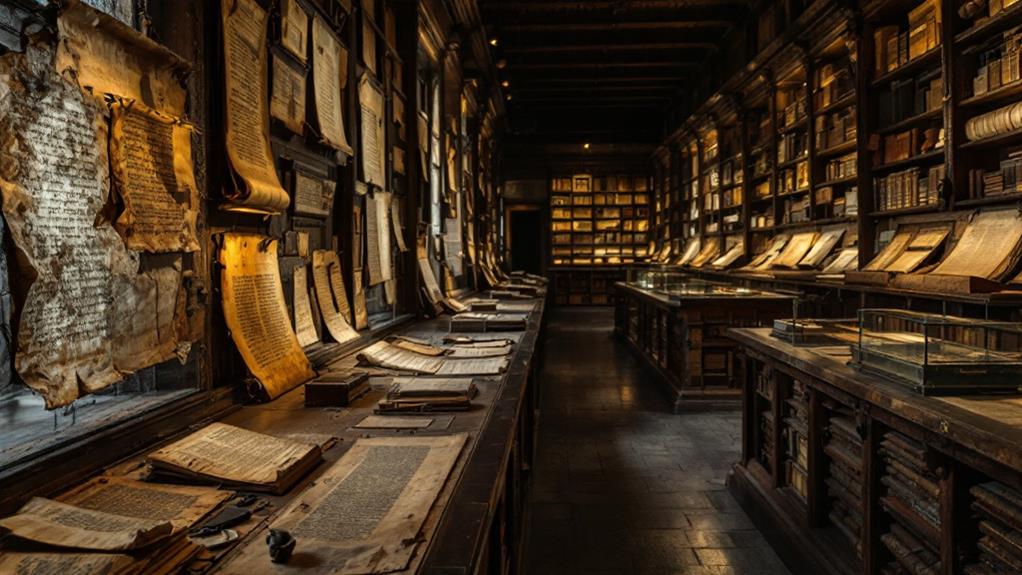
With regard to understanding ancient manuscripts, you need to investigate the rich tapestry of history they represent. Each manuscript offers a glimpse into the past, revealing the thoughts, beliefs, and knowledge of ancient cultures. To truly appreciate their value, focus on their manuscript origins. Consider the materials used—papyrus, parchment, or paper—and the inks crafted from natural sources. These details tell you about the technological advancements and resources available at the time.
Delve into the historical context surrounding these manuscripts. Think about the societies that produced them and the purposes they served. Were they religious texts, scientific treatises, or literary works? Each type reflects the priorities and intellectual pursuits of its period. This context not only highlights the manuscript's significance but also its role in shaping human thought.
Importance of Preservation
Preserving ancient manuscripts isn't just about keeping old books safe; it's about maintaining a connection to our shared human history. These texts hold immense cultural significance, offering a window into the historical context of their time. They provide educational value by deepening our understanding of past societies, languages, and ideas. As technology evolves, the impact of digitization can't be ignored, making these documents more accessible to the public and researchers worldwide.
However, the expedition to preserve these valuables isn't without its challenges. Conservation challenges arise from the delicate nature of ancient materials, which require specialized care. Funding sources are essential, as they support the necessary preservation efforts and technological advancements. You might wonder how these initiatives come together. Interdisciplinary collaboration plays a key role, bringing together historians, scientists, and technologists to develop effective preservation strategies.
Public engagement is similarly significant. By involving communities and raising awareness, you guarantee that the significance of these manuscripts is appreciated and supported. When you invest in preserving these works, you're not just saving a piece of paper; you're safeguarding the wisdom and stories of generations past, enriching both the present and future.
Traditional Cleaning Methods

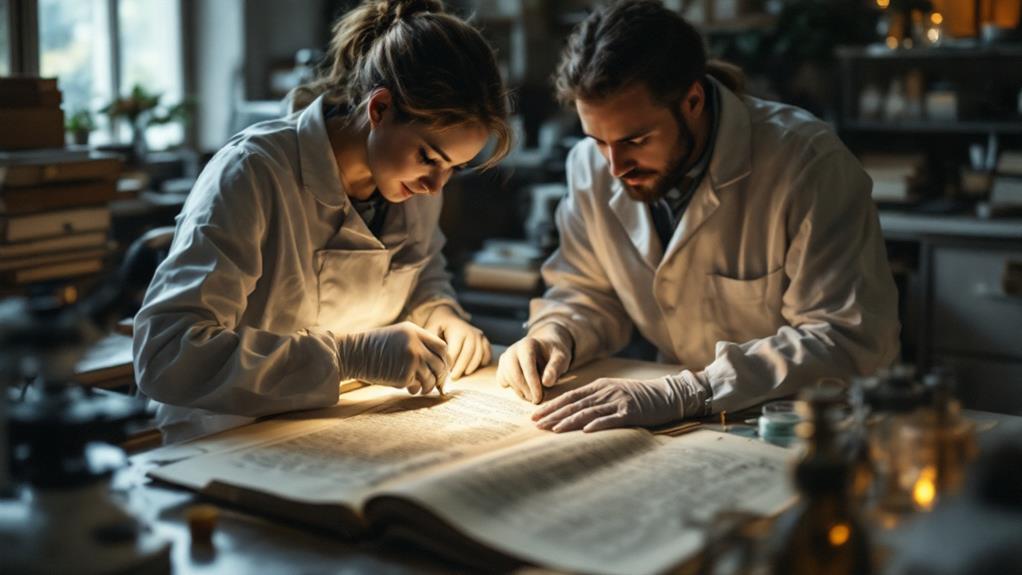
While modern technology offers new avenues for manuscript preservation, traditional cleaning methods remain foundational in the conservation process. You'll find that these methods are vital for maintaining the integrity of ancient texts. Start with dust removal, which is a gentle yet effective way to prevent further deterioration. Use soft brushes to avoid abrasive contact with delicate surfaces.
In papyrus care, moisture control is fundamental. Keep papyrus in a dry environment to mitigate the risk of water damage. If mold has already set in, mold treatment involves carefully dabbing affected areas with specially formulated solutions that won't harm the material.
Parchment handling demands a delicate touch. Always use clean, dry hands and handle the edges to minimize direct contact with the surface. Regarding ink restoration, you'll need to carefully test solvents on a small area to confirm they don't cause ink to bleed or vanish entirely.
Here's a brief checklist to guide you through the process:
- Practice careful surface cleaning to reveal hidden details.
- Use non-invasive tools for dust removal.
- Apply gentle solutions for mold treatment.
- Confirm careful manuscript handling to avoid damage.
Manual Repair Techniques
Countless manuscripts have survived the ravages of time thanks to skilled manual repair techniques. When you're faced with a fragile manuscript, your initial step might involve surface cleaning to remove dust and grime. This careful process guarantees you don't damage the delicate text. Next, you might focus on text stabilization, where you use specialized methods to prevent further ink fading or smudging.
If the manuscript has torn pages, paper mending becomes vital. You might employ hand stitching or adhesive application to repair these tears, guaranteeing the paper's integrity is maintained. Edge repair is another important task, where you gently reinforce fragile edges to prevent further deterioration.
For more extensive damage, folio reinforcement can be required. This involves strengthening the entire folio to prevent it from falling apart. Ink restoration might also be needed if the writing has faded. You'd carefully touch up the ink, guaranteeing the text remains legible without altering its original character.
These careful manual repair techniques require patience and precision. By mastering them, you can contribute to preserving these precious artifacts, guaranteeing they continue to be a window into the past for future generations.
Proper Storage Practices
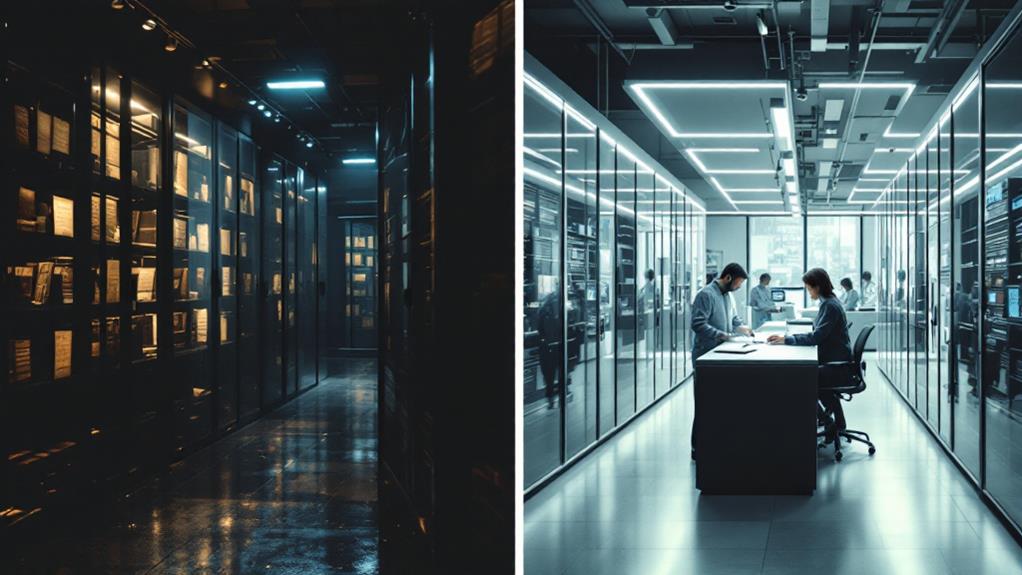
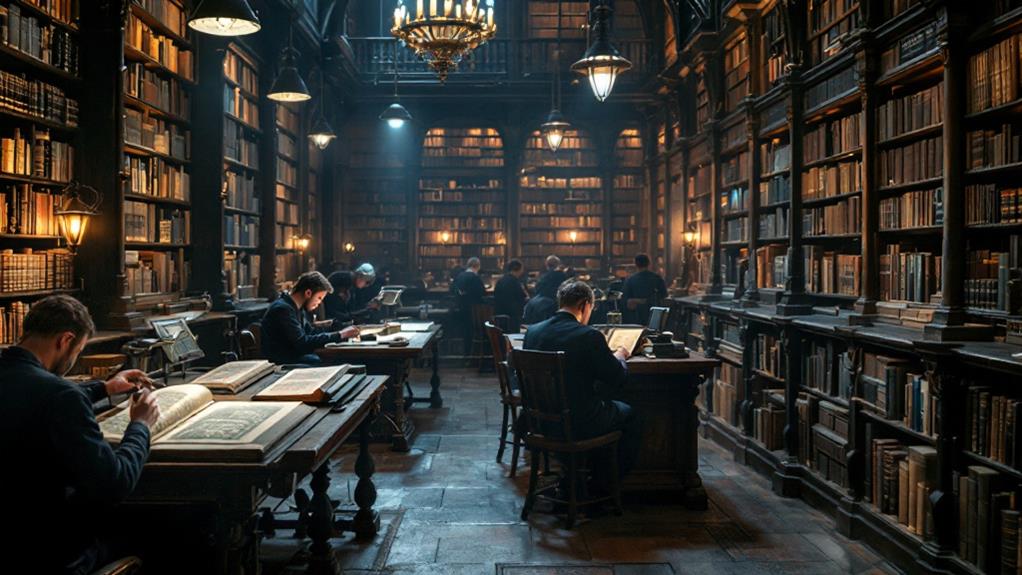
In regard to preserving manuscripts, proper storage practices play a vital role in safeguarding these delicate artifacts. You need to focus on creating an environment that protects them from deterioration. One of the most important aspects is managing the storage environment, with humidity control being a top priority. Excessive moisture can lead to mold growth and paper degradation, so maintaining a stable humidity level is imperative. Aim for a relative humidity of around 30-50% to keep the manuscripts in peak condition.
When you're selecting materials for storage, always choose archival materials. These are specially designed to be acid-free and lignin-free, guaranteeing they won't contribute to the decay of the manuscripts. Here are some steps you should take:
- Use acid-free folders and boxes to store manuscripts.
- Make certain shelving and storage units are made of materials that don't emit harmful gases.
- Regularly monitor the storage area for fluctuations in temperature and humidity.
- Store items flat or in a way that minimizes stress on the bindings.
Digital Imaging Innovations
Digital imaging technologies have transformed the way we preserve and access manuscripts. You've got a wealth of tools at your disposal, from scanning innovations that capture every detail to advanced imaging techniques that reveal hidden text. Manuscript digitization isn't just about creating a digital copy; it's about guaranteeing these ancient texts remain accessible for future generations. By using digital restoration, you can repair damage without altering the original artifact.
Preservation technology doesn't stop at scanning. Archival software enables you to organize and manage these digital files efficiently. With robust metadata standards, you can verify that each manuscript's history and details are carefully documented. This visual documentation allows for improved study and analysis, offering insights previously unavailable.
Virtual access is another game-changer. Through interactive archives, you can investigate and engage with manuscripts from anywhere in the world. Imagine accessing a rare text from your own home, without risking damage to the original. This approach not only democratizes access but also fosters global collaboration. By embracing these digital innovations, you're not just preserving the past—you're making it available and relevant for the present and future.
Climate-Controlled Environments
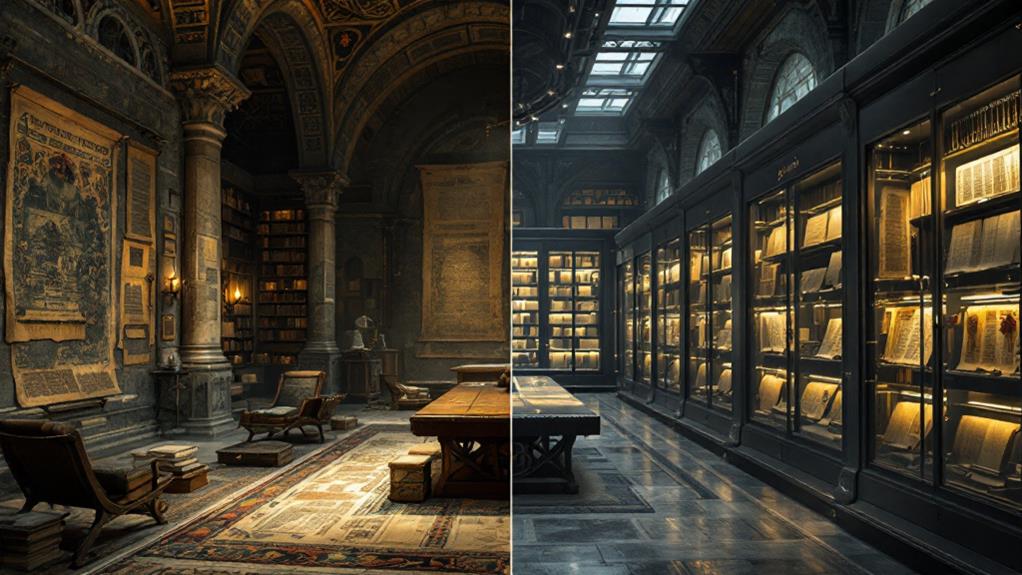
When it comes to preserving manuscripts, maintaining a stable environment is crucial. You need to focus on several key aspects to guarantee the longevity of these precious documents. Initially, think about humidity control. Too much moisture can lead to mold growth, while too little can cause brittleness. Temperature monitoring is similarly significant; fluctuations can weaken materials over time. You should also consider air filtration systems to remove pollutants that might damage manuscripts.
- Light exposure: Limit to prevent fading and degradation.
- Pest management: Implement strategies to keep insects and rodents at bay.
- Material selection: Choose storage materials that support the manuscripts' preservation.
- Conservation goals: Outline clear objectives to guide your preservation efforts.
Achieving environmental stability is your primary goal. You'll want to create a climate-controlled environment that maintains consistent conditions. This approach allows you to protect the manuscripts from external threats while preserving their integrity. By focusing on these elements, you can guarantee that your collection remains intact for future generations. Remember, each manuscript is unique, so tailor your strategies to meet the specific needs of your collection. This way, you'll be supporting both current conservation goals and future preservation efforts.
Chemical Treatment Advances
While maintaining a stable environment is fundamental for manuscript preservation, chemical treatment advancements offer supplementary layers of protection. You might wonder how these treatments work and their effectiveness. Modern chemical treatments can strengthen fragile paper, prevent ink from fading, and ward off mold and pests. These advances are essential for enhancing archival stability, as they can considerably extend the lifespan of delicate documents.
However, you must always prioritize chemical safety. Handling these treatments requires understanding the materials used and guaranteeing they don't cause more harm than good. It's important to select chemicals that won't degrade the manuscripts further or pose health risks to handlers. This careful selection process guarantees treatment effectiveness without compromising safety.
When applying chemical treatments, consider preservation ethics. This involves weighing the benefits of extending a manuscript's life against the potential risks of altering its original state. It's a delicate balance, as you aim to respect the historical integrity of the manuscripts while using modern science to safeguard them. By staying informed and cautious, you can use chemical treatments to protect ancient manuscripts, guaranteeing they remain accessible for future generations without sacrificing their authenticity.
Balancing Ethics and Technology
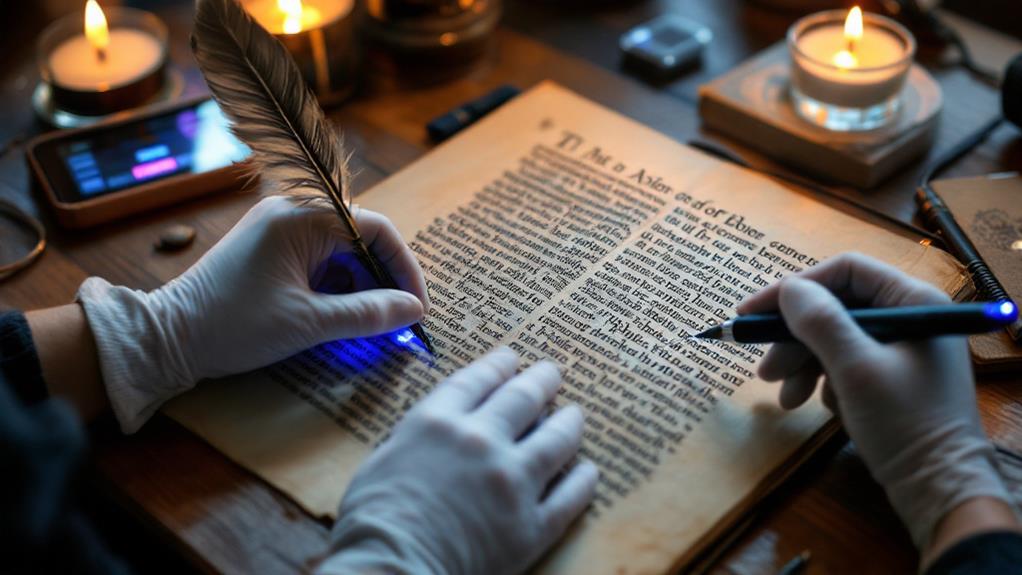
Balancing the ethical considerations with technological advancements is vital when preserving manuscripts. You face preservation dilemmas that demand attention to both the cultural significance and historical context of these works. It's imperative to navigate technology implications while respecting the original integrity of the manuscripts. Consider these factors when choosing preservation strategies:
- Ethical considerations: Confirm that methods respect the cultural and historical value of the manuscripts without compromising their authenticity.
- Accessibility issues: Technology can improve access for a broader audience, but it raises questions about who gets to view these works and how they're shared.
- Environmental impacts: Digital preservation may seem eco-friendly, but it requires electricity and resources, potentially negating its benefits.
- Funding challenges: Advanced technologies often come with high costs, requiring careful allocation of financial resources and collaborative efforts.
Future of Manuscript Preservation
As we look ahead, the future of manuscript preservation hinges on the groundbreaking integration of cutting-edge technologies and traditional methods. You'll find that this approach not only protects these invaluable texts but also guarantees their longevity for generations to come. By combining sustainable practices with creative technology, such as digital archiving and 3D scanning, you're able to create precise replicas without compromising the integrity of the original manuscripts.
Engaging in collaborative initiatives is key to advancing this field. You can partner with universities, tech companies, and cultural institutions to pool resources and expertise. This teamwork allows for the development of new tools and methods, making preservation more efficient and accessible. For instance, shared digital platforms can allow multiple institutions to access and contribute to a growing database of preserved manuscripts.
It's essential to keep in mind that while technology plays a significant role, traditional techniques shouldn't be disregarded. They offer invaluable insights into the historical context and material composition of manuscripts. By merging these approaches, you guarantee a thorough preservation strategy. Ultimately, your commitment to sustainable practices and collaboration will guide the future of manuscript preservation, making sure these gems remain resilient and accessible.
Related posts