Tracing the Evolution of Folio Scripts From Medieval to Modern Times
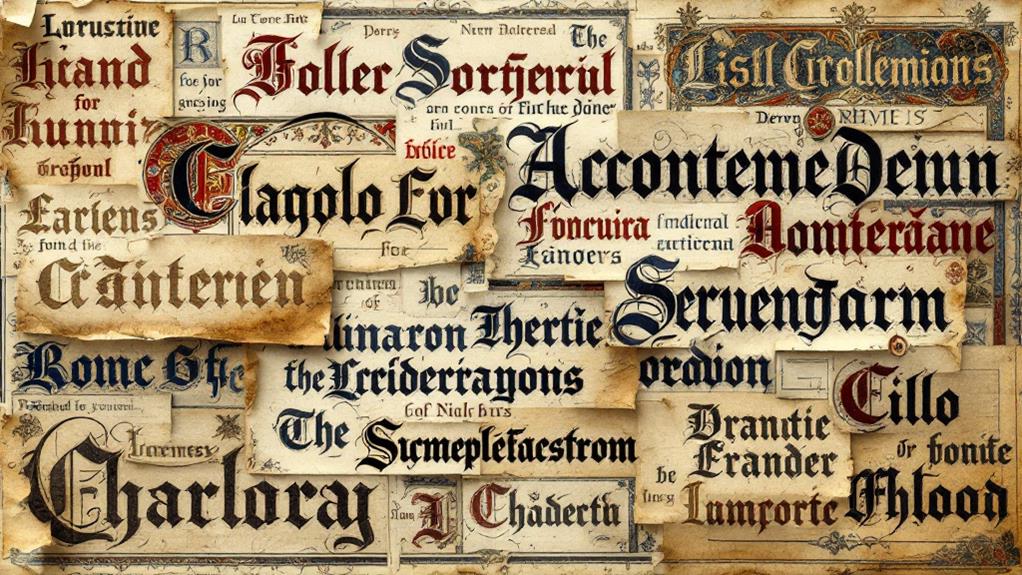
You're setting out on an expedition through the evolution of folio scripts, tracing their path from the hands of medieval scribes in dimly lit scriptoria to the bold fonts of today. These scripts began as carefully crafted manuscripts on vellum or parchment, showcasing lively illuminations and unique styles. The printing press transformed this art, making text widely accessible and shifting focus from calligraphic beauty to text preservation. With industrialization, diverse typographic styles emerged, further altering how texts were presented. Now, digital typography includes these roots, offering a dynamic future. By exploring this evolution, you'll uncover the rich tapestry of script history.
Origins of Medieval Manuscripts
Medieval manuscripts have a fascinating origin story that connects you directly to the rich tapestry of history. Picture yourself in a dimly lit scriptorium where monastic scribes diligently copy texts by hand. These skilled individuals were the guardians of knowledge, painstakingly creating manuscripts that have transcended time. You'd be amazed by the script variations, as each monastery often had its unique style, which contributed to the diversity of medieval literature.
Manuscript illumination added a visual splendor that would captivate your senses. Intricate decorations and vivid colors not only improved the text but also reflected the cultural influences of the period. Parchment materials, made from treated animal skins, formed the durable pages of these manuscripts, while the codex format—essentially the book form we recognize today—allowed for easier reading and transportation compared to scrolls.
The historical significance of these manuscripts is immense, as they house the intellectual and cultural heritage of their ages. Thanks to intensive preservation efforts, you can still appreciate these gems today. Understanding their origins offers you a window into a world where the written word was a sacred endeavor, connecting past and present.
Craftsmanship of Illuminated Texts
Imagine a richly adorned manuscript, its pages aglow with gold leaf and brilliant pigments that practically leap off the parchment. This is the essence of illuminated artistry, where the craftsmanship of illuminated texts comes alive. You're not just looking at a book; you're witnessing a historical tapestry woven with calligraphic techniques and cultural symbolism. The creation of such manuscripts was an artistic collaboration between scribes and illuminators, each contributing their expertise. Scribes carefully selected material choices, like vellum or parchment, to guarantee manuscript preservation, while illuminators used pigments and gold leaf to enrich thematic motifs.
These texts held immense historical significance, serving as both religious and secular gems. They communicated stories, beliefs, and knowledge through their radiant designs. The choice of themes often reflected societal values, with motifs like religious iconography or mythical creatures offering a glimpse into the cultural psyche of the time. You can see how every brushstroke and letter was intentional, crafted to endure through centuries. In the end, the craftsmanship of illuminated texts wasn't just about aesthetics; it was a reflection of the dedication to preserving knowledge and celebrating the beauty of written word.
Impact of the Printing Press

With the advent of the printing press, a transformative shift occurred in the world of written communication. You no longer had to rely solely on painstakingly hand-copied manuscripts, making the preservation of texts more efficient and widespread. This technological breakthrough allowed for the rapid reproduction of folio scripts, ensuring that significant works were less likely to be lost over time. Before this, manuscript preservation required careful attention and often faced the threat of damage or destruction.
The printing press didn't just revolutionize preservation; it amplified the cultural significance of written works. You could access a broader range of texts, and ideas spread faster and more widely than ever before. This democratization of knowledge meant that more people could engage with literature, philosophy, and science, fostering a more informed society.
Additionally, the cultural significance of specific texts increased as they became more accessible. Writers and thinkers influenced each other more directly, leading to a lively exchange of ideas across regions. You can see how this innovation paved the way for future developments in literature and education, setting a new standard for how information was shared and valued within society.
Transition to Printed Books
Embracing the shift from folio scripts to printed books marked a significant moment in literary history. This change profoundly impacted how knowledge spread and was preserved. Handwritten notes and manuscripts, previously the primary means of recording information, began to wane in favor of printed texts. The cultural significance of this alteration can't be overstated; it democratized access to knowledge, allowing more people to read and learn.
In the historical context, the change also represented a move away from labor-intensive calligraphic techniques. While the artistry of handwritten manuscripts carried immense educational value and artistic expression, the efficiency of printed books guaranteed the preservation and dissemination of content on a much larger scale. Manuscript preservation became more focused on maintaining historical records rather than creating new works.
For bibliographic studies, this period offered rich opportunities to examine the evolution of text and its societal impacts. Printed books not only preserved the essence of previous manuscripts but also introduced new ways to engage with literature and learning. This alteration underscored a significant point where education and culture became more accessible, paving the way for future innovations in the literary world.
Rise of Typographic Styles

The rise of typographic styles transformed the visual landscape of printed books, introducing a myriad of fonts and layouts that improved readability and aesthetic appeal. As you explore this period, you'll find that the changes were not just about aesthetics but also about function. Typography began to reflect cultural shifts and technological advancements, making books more accessible and engaging. This phase saw a calligraphic revival, where designers harked back to elegant script styles, incorporating the fluidity of hand-drawn letters into print.
In contrast, modern minimalism emerged as a counter-movement, emphasizing simplicity and clarity. This approach stripped away ornate elements, focusing instead on clean lines and legibility. As a reader, these shifts offered you a richer and more diverse reading experience. You could choose styles that matched your personal taste or the tone of the content.
Here's what you might notice in this typographic evolution:
- Diverse fonts: A wide range of typefaces were created, each with unique characteristics.
- Layout experimentation: Designers played with spacing and alignment to improve readability.
- Cultural reflection: Typography mirrored the values and trends of the time.
- Functional design: Emphasis on making text accessible and easy to read.
Influence of Industrialization
As typographic styles flourished, the onset of industrialization marked a pivotal moment in the evolution of folio scripts. You'd notice how industrial aesthetics began to influence the design of these scripts, leaving a lasting mark on their development. The age's technological advancements, like the steam-powered printing press, enabled mass production, making folio scripts more accessible than ever. This change in production had significant cultural implications, as it not only democratized information but also altered how society interacted with printed materials.
Industrialization didn't just change the way folio scripts were produced; it transformed their artistic expressions as well. With new machinery, designers could experiment with bold typefaces and intricate designs, reflecting the age's fascination with progress and innovation. These changes carried historical significance, reshaping the visual landscape of printed media and leaving an indelible mark on future typographic trends.
As society evolved through these industrial shifts, folio scripts became symbols of modernization and progress. They mirrored the rapid changes in society, capturing the spirit of an age that valued efficiency and innovation. You can see how this period redefined what folio scripts represented, paving the way for the future of typography.
Advent of Digital Typography
Technological revolution transformed the world of folio scripts, ushering in a period where pixels replaced ink and screens became the new canvas. You've probably noticed how digital design has redefined typeface evolution, making it more dynamic and adaptable. With online publishing, you can share content instantly, reaching a global audience without the constraints of physical media. This shift necessitated a focus on mobile readability, ensuring text is clear and engaging on any device.
In today's world, font accessibility is essential. Designers prioritize creating inclusive typefaces that cater to diverse visual needs. This improves graphic communication, allowing everyone to engage with content effortlessly. To enhance user experience, adaptive typography adjusts to different screen sizes and resolutions, ensuring text remains easy to read.
Here are a few aspects of how digital typography has evolved:
- Typeface Evolution: New typefaces are designed specifically for digital environments.
- Mobile Readability: Text is optimized for smartphones and tablets.
- Font Accessibility: Inclusive designs cater to varied audiences.
- Adaptive Typography: Text adapts to different screen sizes seamlessly.
As you navigate this online realm, appreciate how these innovations have transformed the way you interact with text, making reading more accessible and enjoyable than ever.
Future of Folio Scripts
Looking ahead, the future of folio scripts promises even more groundbreaking advancements. As digital preservation tools evolve, you'll find it easier than ever to access and store these historical documents. This guarantees their longevity and keeps their cultural significance alive for future generations. With an artistic revival underway, folio scripts are being reimagined in modern contexts, blending traditional aesthetics with new design innovations.
These scripts aren't just about nostalgia; they have contemporary applications that can augment your creative projects. Regardless of whether you're a designer, educator, or artist, integrating folio scripts into your work can provide a rich, historical depth. They're also becoming crucial educational resources. By studying these scripts, you'll gain insights into past societies and artistic expressions, enriching your understanding of history and culture.
Design innovations continue to push the boundaries of how folio scripts are used today. Cutting-edge technology allows for more interactive experiences, enabling you to engage with these scripts in dynamic ways. As you investigate the future of folio scripts, you'll unveil a world where the past and present converge, offering endless possibilities for creativity and learning. Adopt this evolution and let it inspire new avenues of expression.
Related posts