Top Methods for Conserving Ancient Manuscripts: A Guide for Historians
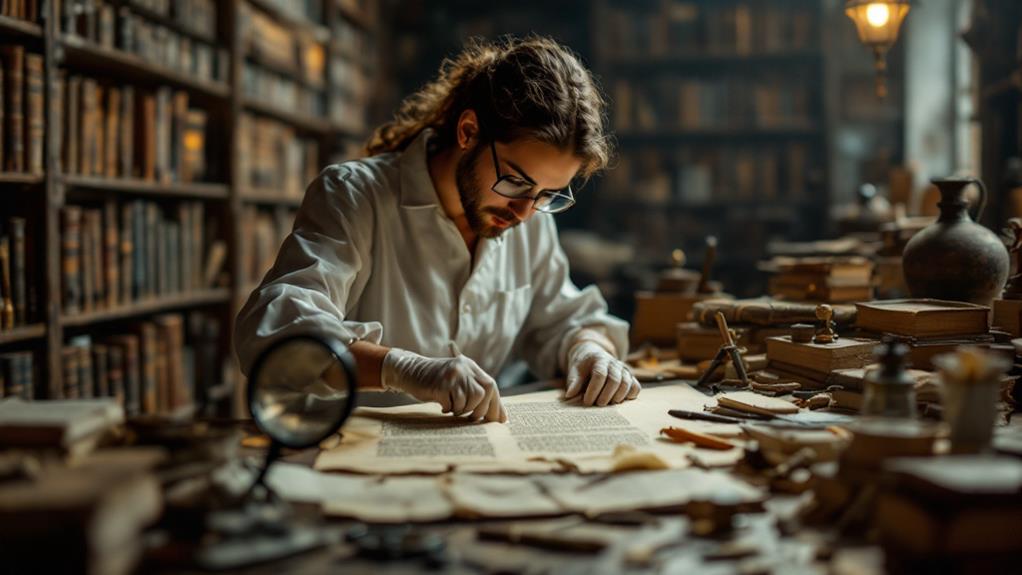
To conserve ancient manuscripts, you'll want to focus on maintaining ideal environmental conditions like controlled humidity and temperature. Handle manuscripts carefully, using supports and clean, dry hands, often with gloves. Use acid-free archival materials for storage to prevent degradation and employ digital preservation by creating high-resolution images to reduce physical handling. Collaborate with technology experts to utilize advanced techniques such as spectral imaging and machine learning. If you're looking to refine your conservation techniques further, exploring these methods can offer just the insights you need to protect and preserve these invaluable pieces of history.
Environmental Control Techniques
To effectively preserve ancient manuscripts, mastering environmental control techniques is vital. You need to prioritize climate monitoring to guarantee that these delicate artifacts remain in an ideal environment. Start by investing in reliable sensors for constant climate monitoring, as this enables you to track changes in conditions that could harm your manuscripts.
Humidity control is similarly significant. Maintaining a consistent humidity level, ideally between 30-50%, helps prevent mold growth and paper degradation. Use dehumidifiers or humidifiers as needed, depending on your climate conditions, to maintain a stable environment.
Temperature regulation goes hand in hand with humidity control. Keep temperatures in the storage area between 60-70°F to slow down the chemical reactions that can cause deterioration. Avoid fluctuations, as they can exacerbate damage over time.
Light management is another essential aspect. Excess exposure to light, especially UV rays, can fade inks and weaken paper fibers. You should use UV filters on windows and control artificial lighting to protect manuscripts from light damage.
Proper Handling Procedures
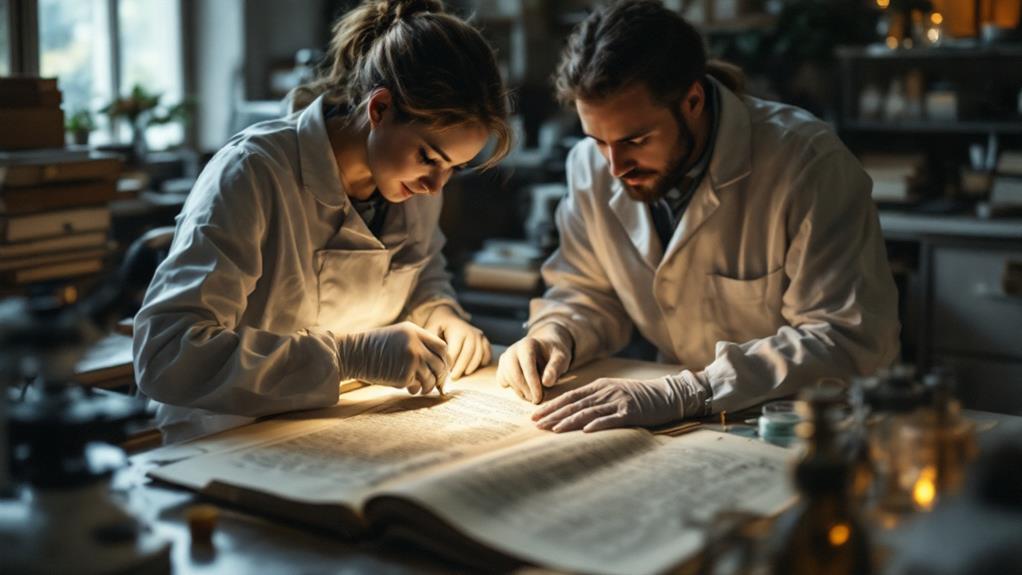
Handling ancient manuscripts correctly is crucial to their preservation. You should always prioritize proper handling to avoid causing irreversible damage. Initially, verify your hands are clean and dry before touching any manuscript. Oils and dirt from your skin can deteriorate the paper. It's a good idea to wear gloves, preferably cotton, to maintain the manuscript's condition over time.
When you handle a manuscript, follow these steps to assure its longevity:
- Safe Storage: Always return manuscripts to their designated safe storage areas after viewing. This might include acid-free boxes or climate-controlled environments that protect against light, temperature, and humidity fluctuations.
- Viewer Etiquette: Respect the manuscript's fragility. Use a support cradle to hold the book open at a safe angle, and avoid forcing it flat. This prevents damage to the spine and binding.
- Minimal Contact: Turn pages slowly and carefully, touching only the edges. This minimizes stress on the paper and reduces the risk of tears.
Use of Archival Materials
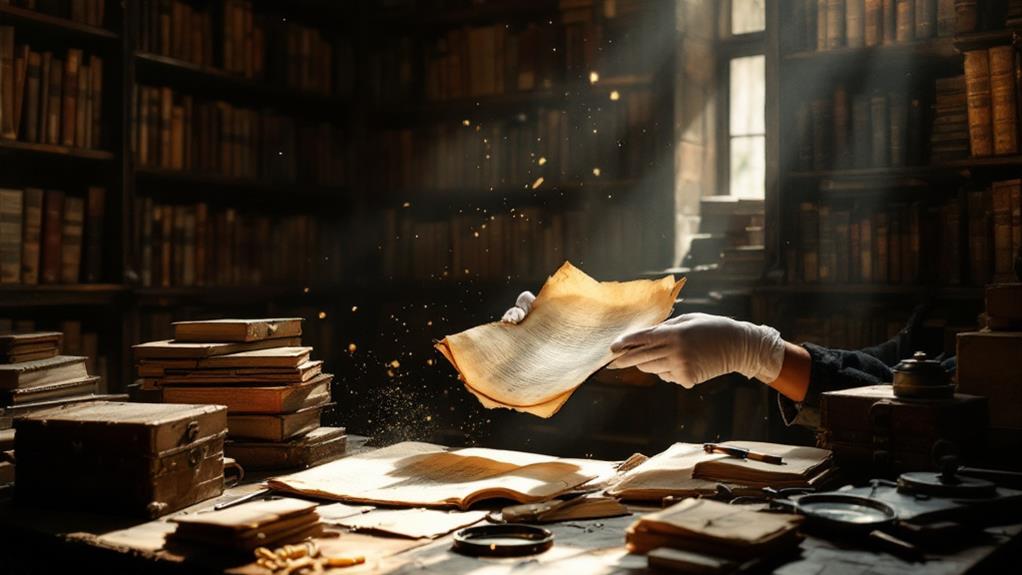
Someone might wonder why specific materials are necessary for preserving ancient manuscripts. Well, the answer lies in the unique requirements of these fragile documents. In terms of archival storage, choosing the right materials is essential. You can't just store manuscripts in any old box or folder. Instead, you need acid-free, lignin-free boxes and folders to prevent deterioration over time. This kind of material selection helps protect against environmental factors like humidity and light, which can damage paper and ink.
When you're choosing archival materials, consider the specific needs of each manuscript. Some might require buffered paper, while others are better suited to unbuffered options. Pay attention to the type of ink used in the manuscript; some inks are more sensitive to chemical reactions than others.
You should also think about supplementary protective layers, like Mylar or polyester sleeves, which provide an extra shield against dust and handling. By investing in high-quality archival storage solutions, you guarantee that these historical valuables remain intact for future generations. Remember, the right material selection isn't just about preservation; it's about respecting the legacy of those who created these manuscripts.
Digital Preservation Strategies
In the current technological age, preserving ancient manuscripts doesn't stop at physical storage; it extends into the domain of digital preservation. By employing digital strategies, you guarantee these invaluable texts withstand the test of time and technology. Here's how you can effectively approach digital preservation:
- Digital Imaging: Start with creating high-resolution digital images of the manuscripts. This process not only captures every intricate detail but also reduces the need to handle the physical document frequently, minimizing wear and tear.
- Metadata Management: It's essential to accompany every digital image with thorough metadata. Metadata management helps in cataloging and retrieving documents efficiently, guaranteeing that the context and provenance of each manuscript are preserved alongside the image itself.
- Cloud Storage Solutions: Utilize cloud storage to house digital copies. This provides a secure and scalable environment that protects against data loss due to hardware failures or natural disasters. Confirm that data is regularly backed up and access is properly controlled.
Restoration and Repair Methods
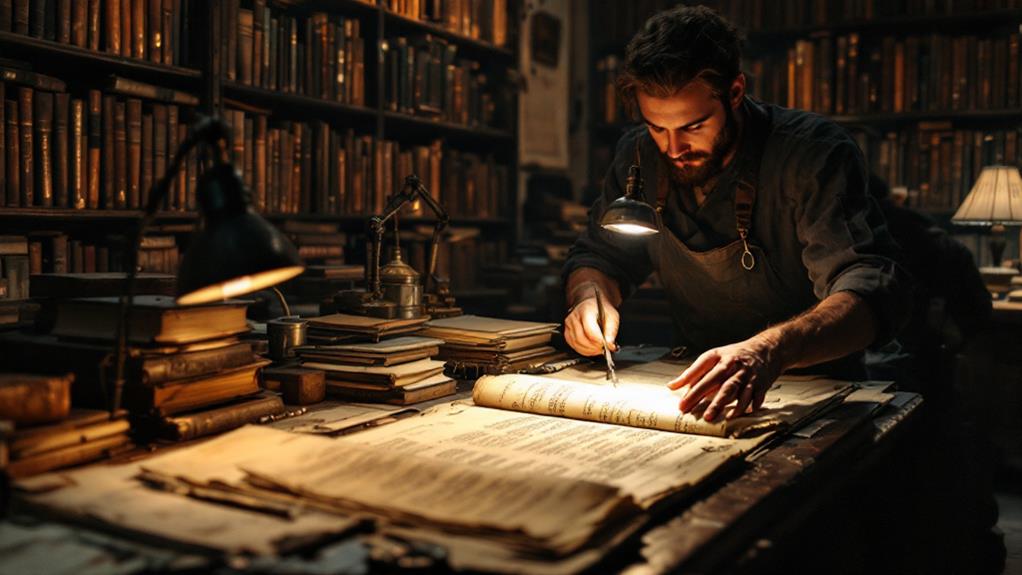
While digital preservation secures the longevity of ancient manuscripts in the virtual domain, the physical condition of these texts also demands attention. As a historian, you know that handling and repairing these manuscripts is essential for maintaining their integrity. Restoration and repair methods focus on addressing paper aging and ink preservation, ensuring that the manuscripts remain accessible for future generations.
To tackle paper aging, you initially need to assess the extent of any damage. Look for signs like discoloration, brittleness, or tears. If the paper's structure is compromised, consider using Japanese tissue paper for repairs. It's lightweight and mimics the original paper's texture, allowing you to reinforce weak areas without adding bulk.
Ink preservation requires a careful approach to prevent further degradation. Pay attention to ink flaking or fading, as they indicate a need for stabilization. Use a fine brush and reversible conservation adhesives to secure loose ink particles. This method doesn't interfere with the manuscript's legibility or historical value.
Training and Education for Conservators
Becoming a skilled conservator requires more than just passion; it demands formal education and hands-on experience. To excel in this field, you need a blend of academic knowledge and practical skills. Here's how you can achieve the necessary conservator qualifications:
- Pursue a Relevant Degree: Start with a bachelor's degree in fields like art history, archaeology, or conservation science. This foundational education is essential for understanding the historical context and scientific principles behind preservation techniques.
- Enroll in Specialized Programs: Consider enrolling in master's programs or certificate courses focused on conservation. These programs provide intensive training in materials science, ethics, and specific conservation methods, preparing you for real-world challenges.
- Gain Practical Experience: Seek internships or apprenticeships under experienced conservators. Hands-on experience in conservation labs or museums offers invaluable insights and improves your problem-solving skills.
Once you've established your qualifications, don't overlook the importance of continuing education. The field of conservation evolves with new materials and techniques, so attending workshops, conferences, and seminars is critical. This ongoing learning guarantees that you stay updated with the latest advancements and maintain high standards in your work. Remember, your commitment to education can make a significant difference in preserving our cultural heritage.
Collaborations With Technology Experts

Partnering with technology experts revolutionizes the conservation of ancient manuscripts. When you engage in interdisciplinary partnerships, you open doors to cutting-edge tools and techniques that can breathe new life into historical artifacts. By collaborating with tech specialists, you gain access to state-of-the-art solutions like 3D scanning, digital imaging, and machine learning algorithms. These technologies allow you to analyze fragile manuscripts without causing damage, providing insights that were previously inaccessible.
Imagine using spectral imaging to discover hidden text or faded ink that's invisible to the naked eye. Such tools can reveal details that help you understand the manuscript's history and context more deeply. Additionally, digital preservation safeguards these gems against time and environmental hazards, allowing future generations to access them.
Interdisciplinary partnerships don't just provide tools; they also offer fresh perspectives. Tech experts might approach problems differently, sparking creative solutions that you might not have considered. By blending historical expertise with technological know-how, you're not only preserving manuscripts but also enriching the field of conservation. So, welcome these collaborations, and watch how they transform your approach, revealing the hidden stories within ancient pages.
Related posts