Top Challenges in Restoring Ancient Folios and Manuscripts
Restoring ancient folios and manuscripts involves facing several key challenges. You'll need to protect them from humidity and temperature changes that cause material deterioration and fading inks. Deciphering the text demands patience and creative digital tools to improve faded sections. Reconstructing bindings requires an understanding of original techniques and careful selection of materials mimicking historical properties. Ethical decisions about authenticity versus functionality can be tricky, balancing cultural significance with preservation. Original methods, like digital archiving and nanotechnology, improve preservation while maintaining integrity. Investigate these complexities to fully grasp the delicate balance restoration requires.
Material Deterioration
Material deterioration is a critical issue you'll encounter when restoring ancient folios. As a conservator, you'll need to be vigilant about how environmental factors contribute to material degradation. These ancient texts have been exposed to varying conditions over centuries, each leaving its mark. Humidity, temperature fluctuations, and exposure to light are chief culprits, accelerating the breakdown of fragile paper and parchment.
You'll find that controlling these environmental factors is vital in slowing the degradation process. High humidity can lead to mold growth, while low humidity can cause brittleness. Temperature changes can exacerbate these issues, causing expansion and contraction that weakens the folio's structure. Light exposure, especially UV, can also lead to the breakdown of organic materials, making them more fragile and prone to disintegration.
To combat these issues, you'll need to implement proper storage solutions, such as climate-controlled environments, that regulate temperature and humidity. Use UV-filtering glass or protective covers to shield the folios from harmful light. Your approach must be thorough, addressing all aspects of environmental control, to preserve the integrity of these invaluable historical documents for future generations to study and appreciate.
Fading Inks and Pigments
While addressing material deterioration, you'll inevitably encounter the challenge of fading inks and pigments in ancient folios. This issue can greatly affect the ink longevity and color stability, essential for preserving historical texts. As a restorer, understanding the factors contributing to this fading is fundamental. Here's what you should consider:
- Environmental Conditions: Exposure to light, humidity, and temperature fluctuations can deteriorate ink and pigment. Ensuring a stable environment is critical for preserving color stability.
- Chemical Composition: Different inks and pigments have varying levels of resilience. Knowing the original materials can help you choose the appropriate conservation methods to improve ink longevity.
- Previous Restoration Attempts: Past interventions might have used incompatible materials, accelerating fading. Reviewing earlier restoration efforts is imperative before proceeding with new treatments.
- Storage Solutions: Proper storage, such as using acid-free materials and protective coverings, can greatly reduce exposure to harmful elements, thereby slowing down the fading process.
Text Deciphering
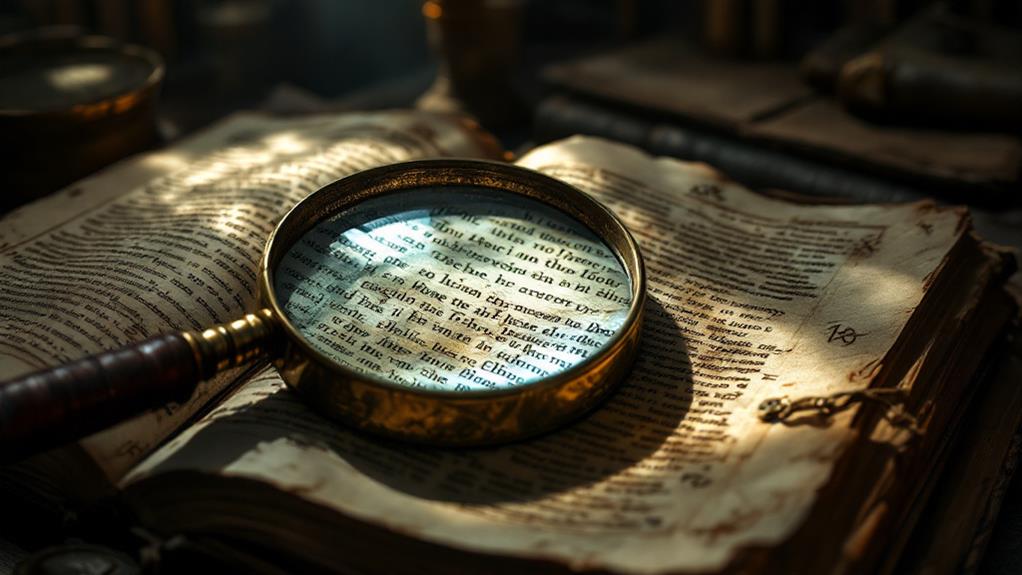
How do you tackle the intricate task of text deciphering in ancient folios? Initially, you need a keen eye for detail and patience. Text recognition is your best friend here. Start by examining the script style, which often gives clues about the manuscript's origin and time period. Historical context is essential; understanding the time and culture when the manuscript was created helps you interpret unusual symbols or language peculiarities.
You'll want to use digital tools and technologies to improve faded text, allowing you to see what's invisible to the naked eye. These tools can help you piece together fragmented sections and identify recurring patterns. Don't forget to cross-reference with other texts from the same timeframe. This can verify your findings and fill in the gaps.
Binding Restoration
Once you've deciphered the text, the focus shifts to binding restoration, a task that guarantees the manuscript's physical integrity. It's essential to address this with care, as improper handling can lead to further damage. You'll need to understand different binding techniques and how they evolve over time. This knowledge helps you choose the right approach for each manuscript. Historical adhesives, often made from animal glue or plant-based materials, play a significant role. Their characteristics can affect how pages hold together, so knowing their properties is imperative.
Here's a quick guide to tackling binding restoration:
- Identify the Original Binding Techniques: Before any repairs, study the original binding style. Each manuscript is unique, and understanding its original state will guide your restoration efforts.
- Assess the Condition of Historical Adhesives: Determine the current state of any remaining adhesives. This assessment will inform if you should preserve, reinforce, or replace them.
- Select Appropriate Modern Materials: When historical adhesives can't be salvaged, choose modern materials that mimic the original properties without causing harm.
- Implement Conservation Techniques: Apply conservation methods that respect the manuscript's historical significance, ensuring it remains intact for future generations.
Ethical Restoration Decisions

Navigating through the intricate domain of ethical restoration decisions requires a delicate balance between preserving authenticity and guaranteeing usability. You're tasked with making choices that respect the manuscript's cultural significance while also reflecting on its future accessibility. It's not just about fixing what's broken; it's about understanding the manuscript's story and the weight it carries. Authenticity assessment becomes vital in this process, as you evaluate what elements are fundamental to the manuscript's original form and what changes can be justified for its preservation.
You might face dilemmas, like if to replace a deteriorated page with modern materials or attempt to recreate it using traditional methods. Each decision has implications for the manuscript's historical accuracy and cultural importance. You have to reflect on the potential loss of original materials against the manuscript's future legibility and use. It's not an easy task; every choice impacts how future generations will perceive the text.
In every step, keep in mind the manuscript's cultural significance. You're not just preserving an object; you're safeguarding a piece of history. Your ethical restoration decisions will help guarantee that these ancient folios continue to educate and inspire.
Innovative Preservation Techniques
Balancing ethical restoration decisions with the need to preserve ancient folios leads us to investigate revolutionary preservation techniques. As you probe into this field, you'll find that creative methods are reshaping how we approach the care and longevity of these precious artifacts. Let's examine some cutting-edge techniques:
- Digital Archiving: Adopt technology to create high-resolution digital copies of manuscripts. This not only preserves the content in case of deterioration but also makes the documents more accessible for research and education.
- Environmental Control: Carefully monitor and adjust temperature, humidity, and light exposure in storage areas. This helps to prevent damage caused by mold, insects, and other environmental factors.
- Nanotechnology: Use advanced materials and techniques to strengthen fragile paper fibers and protect them without altering their appearance. This guarantees the manuscript remains intact for future generations.
- Laser Cleaning: Apply precise laser technology to remove dirt and contaminants from surfaces without damaging the underlying material. This technique is especially useful for delicate manuscripts that cannot withstand traditional cleaning methods.
Related posts