
The Value of Folios in Researching Ancient and Medieval History

Exploring folios lets you reveal essential insights into ancient and medieval history. These manuscripts disclose how knowledge was transmitted, illuminating the processes scribes used to preserve ideas. You'll find a window into the lives and values of past societies through annotations and artistic expressions. Despite advancements in digital archives, folios offer unique textures and cultural nuances that digital copies often miss. They facilitate interdisciplinary research and connect scholars globally. Preservation remains significant, ensuring these gems withstand time. Keep exploring to discover how folios continue to shape our understanding of history.
Unlocking Historical Insights
Delving into the world of ancient and medieval history, folios serve as invaluable keys that unseal a cache of historical insights. When you engage in manuscript analysis, you're not just reading words from the past; you're piecing together fragments of human civilization. Each folio you come across holds the potential to reveal the thoughts, beliefs, and knowledge of a bygone age. You'll find that the careful study of these documents allows you to uncover the processes of textual transmission, which were instrumental in preserving and disseminating ideas across generations.
As you examine a folio, pay attention to the script, annotations, and marginalia. These elements offer a glimpse into the scribes' world, showing you how ideas were communicated and transformed over time. It's fascinating to see how the same text could evolve as it was passed from hand to hand, each scribe adding their unique touch. By analyzing these changes, you gain a deeper understanding of how knowledge was curated and shared in ancient and medieval societies. Through this, folios become not just relics of the past but dynamic documents that continue to inform and inspire your historical explorations.
Cultural Significance of Folios
While examining the cultural significance of folios, you'll find they serve as more than just historical records; they are windows into the lives and values of ancient and medieval societies. These folios showcase artistic expression through manuscript illumination, where intricate designs and lively colors bring texts to life, reflecting the aesthetic preferences and spiritual beliefs of their creators. This artistic endeavor wasn't merely decorative; it played a crucial role in textual transmission, ensuring that significant works survived through generations.
Folios also demonstrate the codex evolution, marking a shift from scrolls to bound books, which transformed how information was organized and accessed. This change facilitated scholarly collaboration, allowing academics to share, critique, and build upon each other's work more effectively. It also led to more systematic archival practices, preserving the intellectual heritage of civilizations for future study.
Preservation Techniques and Challenges

How do we guarantee the longevity of these invaluable folios that hold the keys to understanding ancient and medieval history? It's a challenge that requires both precision and dedication. Manuscript conservation involves a combination of techniques designed to protect these fragile documents. You need to take into account different factors, such as the environment, handling practices, and storage solutions.
To preserve these historical gems effectively, follow these steps:
- Environmental Control: Maintain stable temperature and humidity levels. Fluctuations can cause irreparable damage to manuscripts.
- Proper Handling: Always handle folios with clean hands or wear gloves. Mishandling can lead to tears or smudges.
- Archival Storage: Use acid-free materials for storing folios. This minimizes chemical reactions that can degrade the paper.
- Regular Assessments: Conduct routine checks to identify and rectify any signs of deterioration promptly.
Each step plays a vital role in ensuring these folios remain intact for future generations. However, challenges persist, like limited resources and funding. Manuscript conservation isn't a one-size-fits-all approach, but with careful planning and execution, you can mitigate many risks and extend the life of these precious artifacts.
Folios in Modern Research
In the current electronic age, the role of folios in modern research remains essential, bridging the gap between past and present. You might think that with digital archives becoming more prevalent, the significance of physical folios would diminish. However, they continue to serve as invaluable resources for manuscript analysis. By examining these ancient documents, you gain insights that digital copies alone can't provide, such as texture, color variations, and marginalia that reveal historical context.
When you engage in scholarly collaboration, folios can act as a common thread connecting researchers from diverse fields. Interdisciplinary approaches thrive when historians, linguists, and scientists come together to decode and interpret ancient texts. Folios often hold secrets that require multiple perspectives to fully understand. By working with physical folios, you can foster a sense of shared revelation that digital platforms can't entirely replicate.
Digital archives do play an important role, though, by increasing access to folios worldwide. You can collaborate with experts across the globe without leaving your desk, enhancing your research's reach and scope. Despite the rise of technology, folios still form the backbone of thorough historical research, intertwining the past with today's digital advancements.
Case Studies and Discoveries
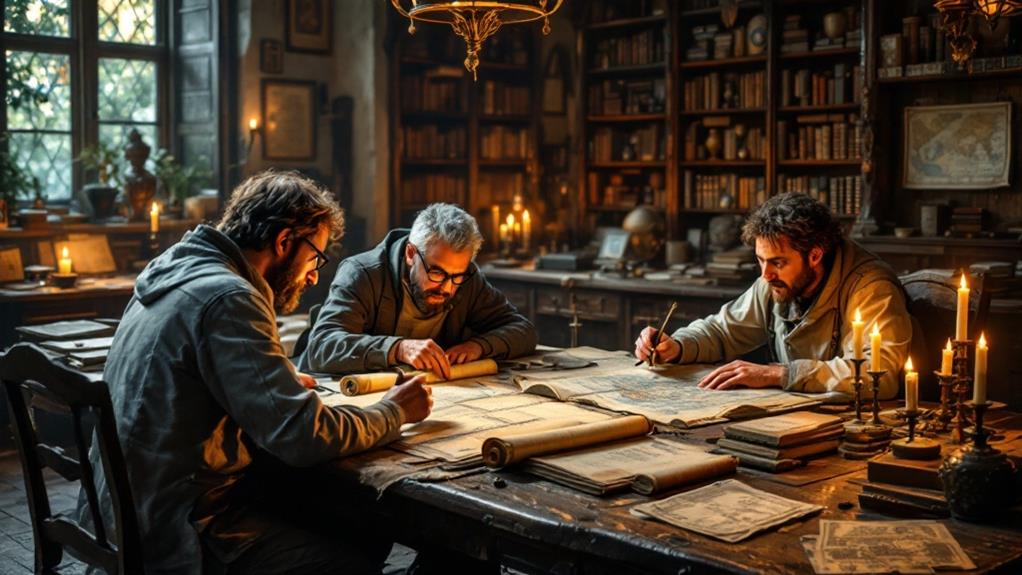
Case studies of folios have led to remarkable findings in the field of ancient and medieval history. By diving into manuscript analysis, you've seen how researchers reveal hidden details in these historical documents. For example, textual criticism allows scholars to identify variations and errors in transcriptions, leading to more accurate historical narratives. Here are some revelations made possible through folios:
- Lost Texts Rediscovered: Manuscript analysis has enabled the recovery of lost works, like Aristotle's texts, previously thought extinct. This reshapes our understanding of philosophical development.
- Historical Contextualization: By scrutinizing the marginalia within folios, you can gain insights into the socio-political environment of the time, offering a clearer picture of historical events.
- Authorship Attribution: Textual criticism helps determine the origins of anonymous or disputed works. This is essential in attributing texts to rightful authors, refining historical authorship records.
- Cultural Exchange Evidence: Folios provide evidence of cultural exchanges between regions. Through the study of language and style, you can trace the movement of ideas and their influence across borders.
These case studies highlight the vital role of folios in shaping our comprehension of ancient and medieval history, making the past more vivid and accurate.
Related posts