The Unique Materials Behind Historical Folios: From Vellum to Ink
Uncovering the unique materials behind historical folios is like stepping into a tapestry of ancient craftsmanship. You'll find vellum, crafted from calfskin, which demanded careful cleaning, soaking, and stretching to create a smooth writing surface. Parchment offered durability and flexibility, making it the perfect choice for preserving religious and scholarly texts. Early paper, such as papyrus and Chinese bamboo paper, showcased early societies' ingenuity. Inks, like iron gall and carbon-based variants, brought stories to life, while pigments from minerals and plants added lively colors. Binding materials guaranteed folios endured over time. There's much more to reveal in this rich history.
The Craft of Vellum
In the domain of historical folios, the craft of vellum stands out as a precise art form that's worth exploring. When you investigate vellum production, you'll uncover a detailed process that has been perfected over centuries. Vellum, made primarily from calfskin, requires extensive preparation and care. The skin undergoes a thorough cleaning, soaking, and then is carefully stretched on a frame. It's scraped carefully to achieve the desired thinness and smoothness, ideal for writing or illustration.
Understanding the historical significance of vellum is vital. During the Middle Ages and Renaissance, vellum was the premier choice for manuscripts due to its durability and quality. When you consider the iconic documents like the Magna Carta or illuminated manuscripts, you're looking at vellum's legacy. It played a significant role in preserving knowledge and culture before the advent of paper.
The Role of Parchment
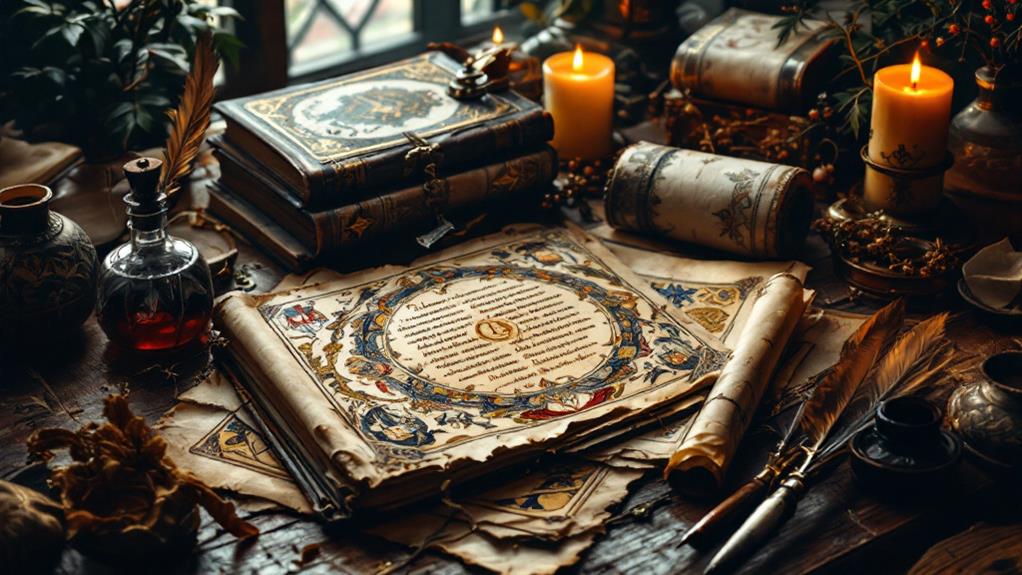
Understanding parchment's role in historical folios reveals its profound impact on manuscript culture. When you investigate the world of parchment, you'll uncover its significance in preserving history. Parchment, made from animal skins, offered a durable and flexible medium that was fundamental before paper became widely available. Its production required skill and precision, involving processes like soaking, liming, and stretching the skins. This careful parchment production guaranteed a smooth surface, perfect for writing and illustrating.
As you examine historical uses, you'll find that parchment was favored for religious texts, legal documents, and scholarly works. Its longevity meant that crucial information could be preserved for generations. Unlike other materials, parchment resisted decay and allowed for lively, lasting ink application. This made it indispensable for creating medieval manuscripts and illuminated texts that remain significant cultural artifacts today.
You might be surprised to learn how parchment also facilitated the spread of knowledge. By enabling the creation of portable and durable books, it played a pivotal role in education and communication throughout history. So, next time you see an ancient manuscript, remember how parchment's unique qualities contributed to its survival and significance.
Ancient Paper Varieties
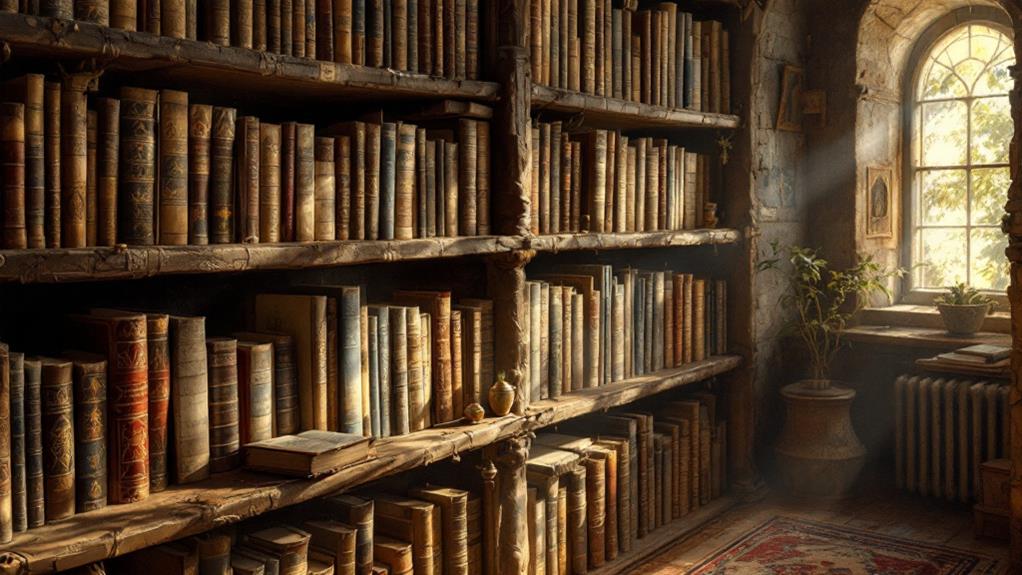
Innovation in material crafting marked a significant shift with the advent of ancient paper varieties. You'd find that long before modern paper as it is understood took form, civilizations around the world were experimenting with their own versions. One of the earliest forms was the papyrus scrolls, used by the ancient Egyptians. These scrolls were crafted by layering strips of the papyrus plant, pressing them together, and drying them under pressure. This technique resulted in durable sheets that were ideal for recording everything from religious texts to administrative records.
On the other side of the globe, the Chinese were developing bamboo paper. Unlike papyrus, bamboo paper was made by pulping bamboo fibers, then spreading the pulp into thin sheets and allowing it to dry. This process was revolutionary because it didn't rely on a specific plant's structure, as papyrus did, but instead created a versatile material that could be adapted to different needs.
As you investigate the world of ancient paper varieties, you'll appreciate how these innovations laid the groundwork for modern paper-making techniques. Both papyrus and bamboo paper highlight the resourcefulness of early societies in their quest to document knowledge and culture.
Traditional Ink Compositions
Exploring ancient paper varieties naturally leads to a curiosity about the inks that adorned those early materials. You might wonder how scribes chose the components for their ink recipes. Traditional ink compositions hold historical significance, as they've evolved alongside writing materials over centuries. Ancient societies relied on locally available resources, often producing ink through trial and error. In these times, ink wasn't just a writing tool; it was vital for preserving knowledge.
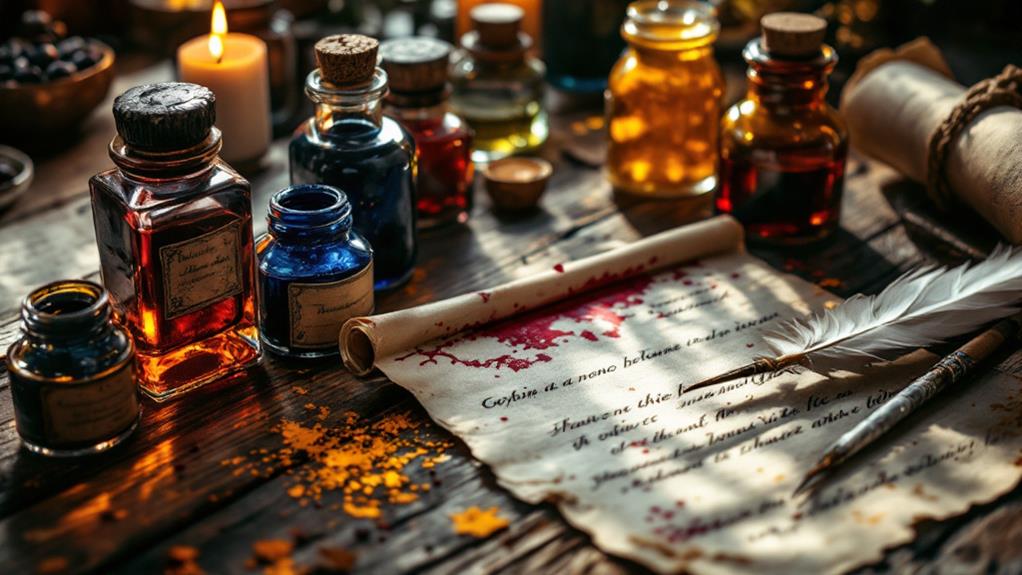
You'd find that many ink recipes from history involved a combination of plant sources, minerals, and even animal products. For instance, iron gall ink, widely used in medieval Europe, was made from tannin-rich oak galls mixed with iron salts. This ink became a staple due to its permanence and deep color. Meanwhile, carbon-based inks, like lampblack ink, were popular in Asia, created by mixing soot with water and a binding agent.
The craft of ink-making was an art, with each recipe carefully guarded. As you investigate deeper into historical ink compositions, you see the remarkable ingenuity of early civilizations in creating inks that stood the test of time, ensuring that their stories and knowledge endured.
Pigments and Dyes
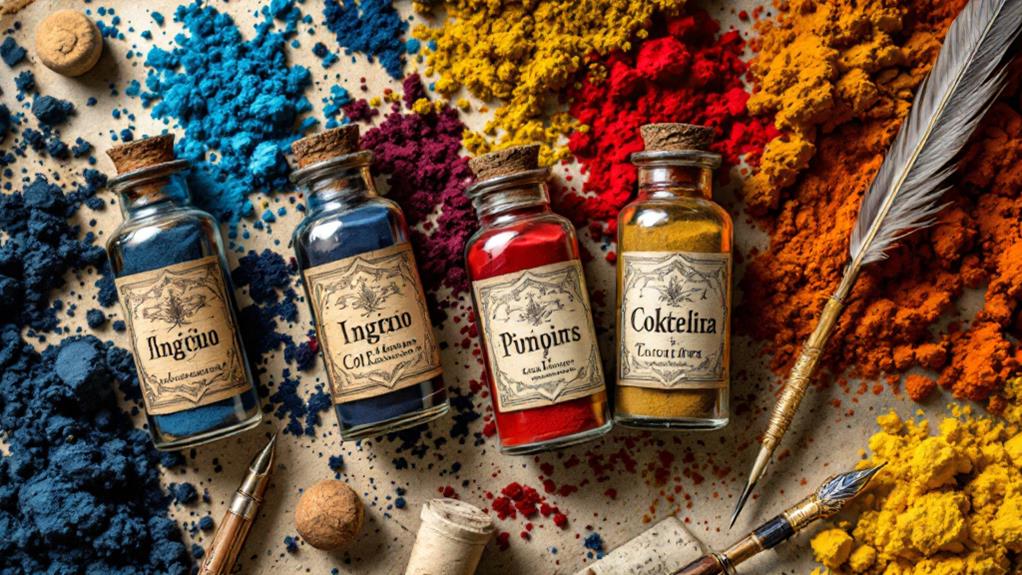
In the domain of historical folios, pigments-and-dyes played a vital role in enlivening manuscripts and artworks with brilliant hues. You'd find that artisans sourced these pigments from the natural world, relying on minerals, plants, and even insects. For instance, lapis lazuli, a semi-precious stone, was ground into a brilliant blue pigment known as ultramarine. This lively blue, often reserved for sacred images, symbolized the heavens and divine truth.
The choice of color wasn't arbitrary; it carried deep symbolism. Reds, extracted from madder roots or cochineal insects, often represented power and passion. Meanwhile, yellow pigments, derived from saffron or ochre, signified light and enlightenment. Each color could communicate a narrative, reflecting the manuscript's underlying themes and enhancing its visual storytelling.
As you investigate these historical folios, you're not just seeing colors; you're witnessing the detailed craft of selecting and blending pigments to convey meaning. Understanding the natural sources of these pigments and their associated color symbolism offers you a richer appreciation for the artistry involved. It's a reflection of the skilled hands and keen eyes that brought ancient manuscripts to life in a kaleidoscope of hues.
Binding Materials
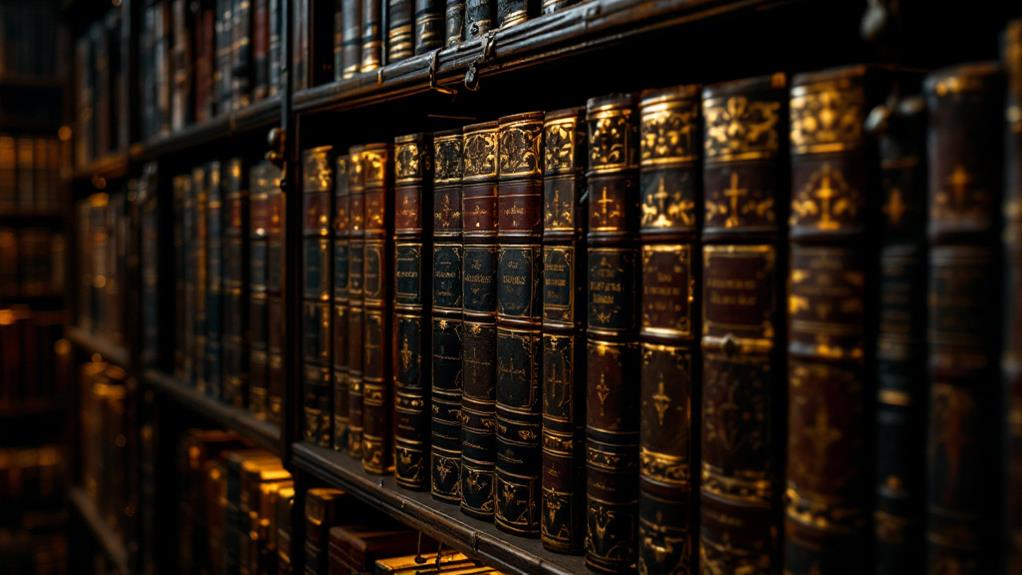
While pigments and dyes brought manuscripts to life with lively colors, binding materials assured these creations stood the test of time. When you examine historical folios, the binding techniques used are remarkable. These methods guaranteed that each page stayed intact, allowing generations to enjoy the content within. Leather was a popular choice, offering durability and flexibility. You'd find leather bindings in many ancient texts, often improved with intricate designs or embellishments.
Historical adhesives played a vital role in the binding process. They were typically made from natural substances like animal glue or starch-based pastes. These adhesives were not only strong but also adaptable, guaranteeing that the folios could withstand frequent handling without falling apart. It was a delicate balance of strength and flexibility, giving manuscripts the resilience needed against the wear and tear of time.
Another common technique was sewing pages in conjunction with linen or hemp threads, which provided extra stability. This method, combined with robust covers, made manuscripts both functional and enduring. By understanding these binding materials, you gain a deeper appreciation for the craftsmanship and foresight involved in preserving history through books.
Preservation Challenges
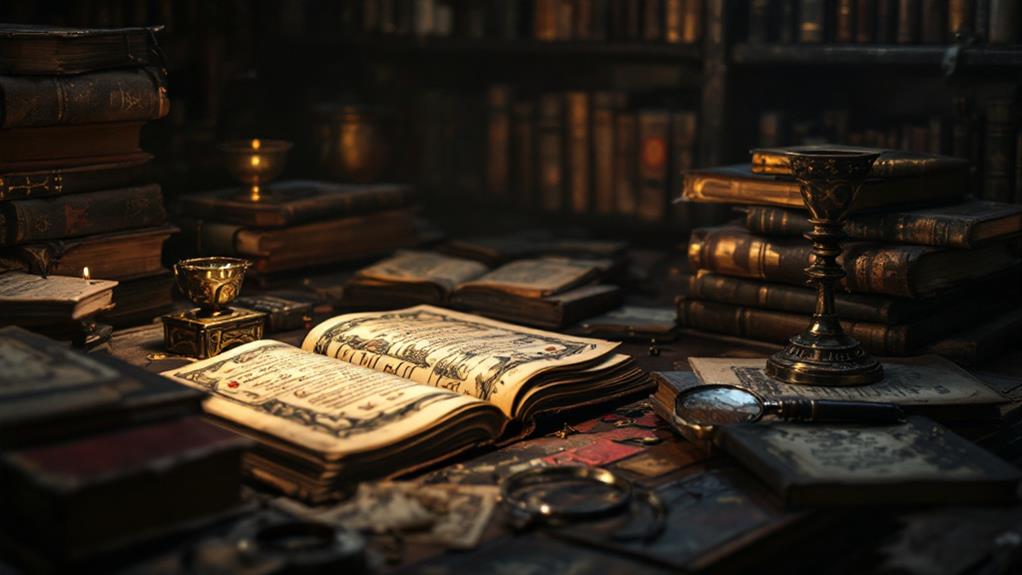
Despite the robust materials and techniques used in binding historical folios, preserving these assets presents unique challenges. Environmental factors like humidity and light exposure can degrade materials like vellum and ink, leading to fading or mold growth. Proper temperature control is essential; fluctuations can cause materials to expand and contract, damaging bindings and pages.
You must handle these folios with care. Mishandling can result in tears, creases, or even loss of pages. Implementing careful handling practices, like using gloves and supporting pages while turning, can mitigate such damage. Similarly significant are storage conditions. Folios should be stored in a stable environment, ideally in acid-free boxes or cases that protect them from dust and pollutants.
Restoration techniques are crucial when damage occurs. Skilled conservators can repair bindings and stabilize the materials, but these procedures should be minimally invasive to preserve authenticity. As a modern solution, digital archiving offers an excellent way to preserve the content of these folios, allowing you to access them without risking physical harm. By understanding these challenges and implementing best practices, you can guarantee these historical treasures endure for future generations.
Related posts