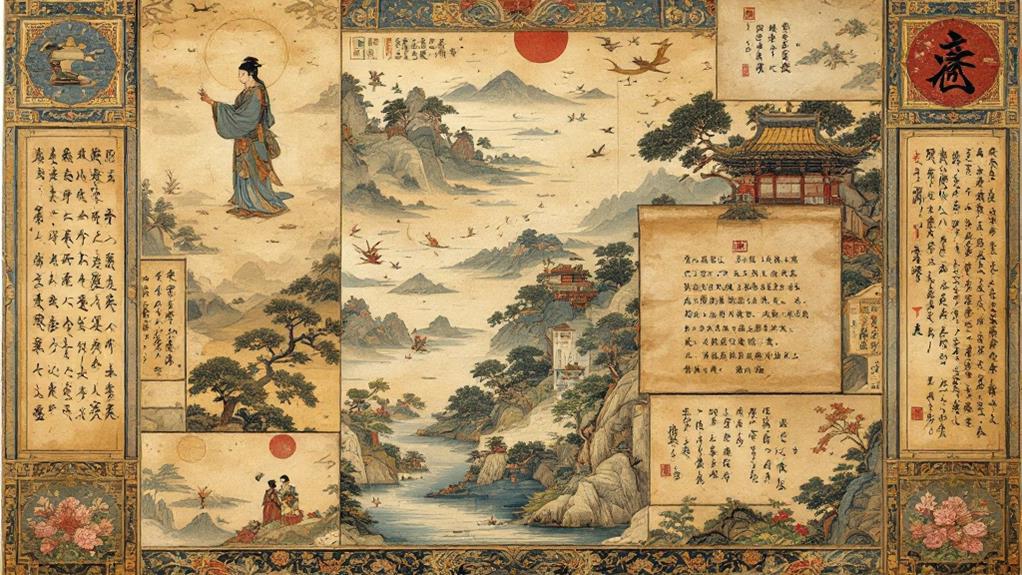
The Tale of Genji: Japan’s Masterpiece and the World’s First Novel

You're about to uncover "The Tale of Genji," Japan's revered masterpiece by Murasaki Shikibu, heralded as the world's premier novel. Written in the Heian Period, it reflects the age's sophistication, court life, and cultural exchanges with China. The narrative follows Hikaru Genji, a nobleman steering through love and power through poetic imagery and intricate relationships. You'll find themes of love, longing, and societal expectations artfully woven into its prose, illustrating the rigid hierarchies and gender roles of the time. As the prototype of the stream of consciousness technique, Genji's tale set the stage for future literary achievements.
Origins and Authorship
The Tale of Genji, often regarded as the world's initial novel, was penned by the brilliant Murasaki Shikibu during the early 11th century. As you investigate its origins, you'll find it reflects the sophisticated Heian Period, a time when court life thrived in Japan. Murasaki Shikibu, herself a lady-in-waiting, drew upon her experiences and observations of the aristocratic lifestyle to craft this masterpiece. Her intimate knowledge of court life allowed her to depict the intricacies of relationships and gender roles with remarkable precision.
You'll notice that the narrative structure of The Tale of Genji is a demonstration of literary innovation. Murasaki wove a complex tapestry of interconnected stories, offering deep character development that was unprecedented at the time. This pioneering approach paved the way for future novelists around the world. Additionally, the novel serves as a window into cultural exchange, illustrating how Chinese literature and philosophy influenced Japanese society during the Heian Period.
In reading The Tale of Genji, you're not just exploring a fictional narrative; you're engaging with a rich tapestry of historical and cultural insights that Murasaki Shikibu masterfully integrated into her work.
Historical Context
During the Heian Period, Japan experienced a flourishing of art, culture, and court life that set the stage for The Tale of Genji. As you investigate this period, you'll notice that the social hierarchy was intricately designed, with the imperial family and nobility at the top. This structure profoundly influenced daily life and interactions at the court, where aesthetic values were highly prized. Women, although limited in political power, played significant roles in cultural and literary pursuits, contributing to the period's rich tapestry.
The political landscape of the Heian Period was marked by intrigue and subtle power plays, often reflecting the philosophical influences of the time. Confucianism and Buddhism shaped the way people viewed authority and relationships, while literary traditions flourished, allowing for unique expressions of these ideas. You'll find that cultural exchanges, particularly with China, introduced new artistic and intellectual concepts, enriching Japan's own creations.
Significant historical events, such as the rise and fall of influential families, provided a backdrop for the intricate narratives of court life. In this lively setting, The Tale of Genji emerged, capturing the essence of a period defined by elegance and complexity.
Plot Overview

Emerging from the lively backdrop of the Heian Period, "The Tale of Genji" invites you into a world where courtly elegance and intricate relationships take center stage. At its heart is Hikaru Genji, a nobleman whose life unfolds through a rich narrative structure marked by emotional depth and complexity. As you traverse the novel, you'll witness Genji's rise in the imperial court, his romantic escapades, and the challenges he faces in maintaining love and power.
The narrative structure of "The Tale of Genji" is both linear and episodic, spanning multiple generations. Each chapter reveals different facets of Genji's character development and those around him. You'll notice how his relationships shape his path, offering insights into his ambitions, vulnerabilities, and growth. Through encounters with diverse women, from noble ladies to commoners, Genji's character is intricately developed, reflecting the subtleties of human emotion and societal expectations.
Key Themes
At the heart of "The Tale of Genji" lie key themes that resonate through its intricate narrative. You'll find the enduring theme of love and longing woven into the fabric of Genji's experiences, highlighting the emotional depth of human connections. Nature symbolism plays an essential role, reflecting the fleeting beauty of life, akin to cherry blossoms that bloom brilliantly yet briefly. This transient beauty mirrors the impermanence of relationships and happiness.
The novel also investigates social hierarchy, illustrating the rigid structures that dictate personal identity and influence every character's life. You'll notice how these hierarchies affect Genji's relationships, emphasizing the constraints of class. Gender roles are another crucial theme, as the novel examines the expectations and limitations placed on both men and women in Heian society. These roles shape characters' choices and interactions, adding layers of complexity to their lives.
Spiritual reflection is subtly interwoven, prompting you to reflect on the deeper meanings behind actions and desires. It encourages readers to contemplate the spiritual connections that transcend worldly concerns. Ultimately, these themes create a rich tapestry, inviting you to investigate the intricate layers of human experience.
Literary Style
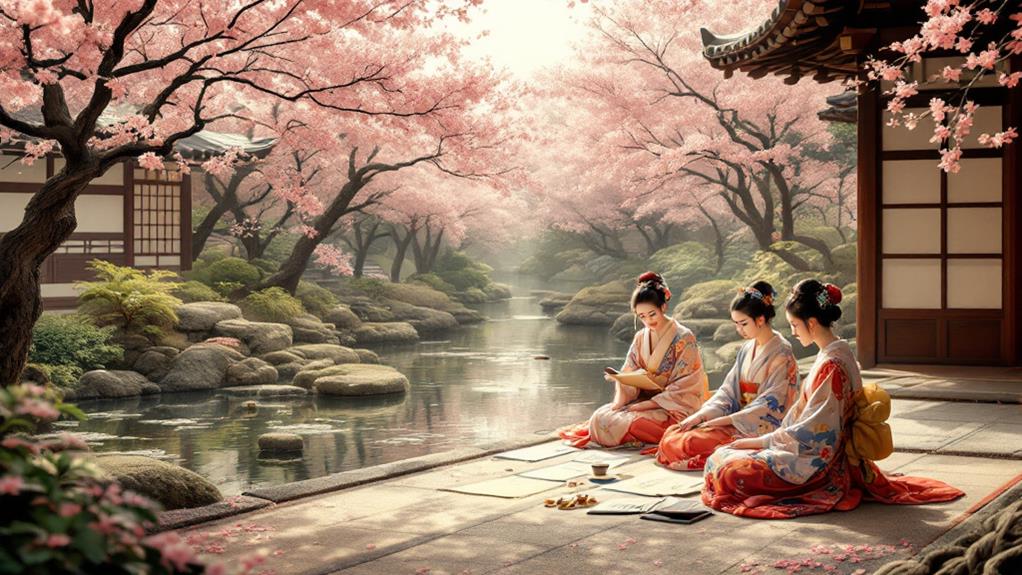
As you reflect on the intricate themes of "The Tale of Genji," the novel's literary style becomes a likewise fascinating aspect to investigate. Murasaki Shikibu employs narrative techniques that envelop you in the Heian period's world. The novel's structure resembles a scroll, seamlessly weaving together a tapestry of events and emotions. You find yourself drawn into a fluid narrative that shifts elegantly between characters' inner thoughts and their interactions, allowing you to experience a multi-dimensional storytelling approach.
Shikibu's use of poetic imagery enriches the novel, drawing you into vivid scenes that evoke the beauty and transience of nature. This imagery isn't just decorative; it deepens your understanding of the characters' emotional landscapes. When you read about Genji wandering through gardens or gazing at the moonlit sky, you're not only envisioning these scenes, you're also feeling the melancholy and longing that they symbolize.
Incorporating a mix of prose and poetry, the novel's style mirrors the complexity of its characters' lives. Through these narrative techniques, "The Tale of Genji" offers you a masterful blend of artful storytelling and emotional depth, setting a standard for future literature.
Cultural Significance
"The Tale of Genji" isn't just a cornerstone of Japanese literature; it also holds profound cultural significance that has resonated through centuries. As you investigate its pages, you're introduced to a vivid cultural representation of Heian-period Japan, where court life unfolds with intricate details. The novel examines gender roles, offering insights into how men and women navigated their societal positions. This aspect challenges you to reflect on the shifts in these roles over time.
You'll find that the story is a masterpiece of artistic expression, with its use of seasonal imagery and aesthetic values painting a picture of the period's beauty. The novel's emotional depth allows you to connect with its characters, feeling their joys and sorrows as if they were your own. Social hierarchy plays an essential role, illustrating the complexities of rank and power in court life.
As you read, spiritual themes intertwine with everyday experiences, offering moral lessons that encourage you to ponder the nature of love, duty, and human interactions. "The Tale of Genji" serves as a timeless reflection of universal truths, bridging the past with present-day cultural appreciation.
Character Analysis
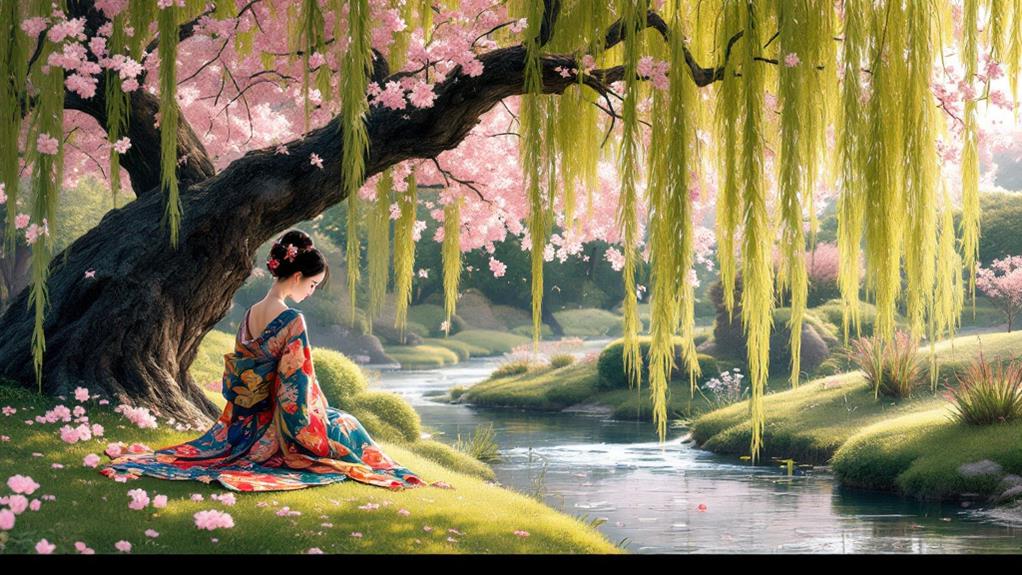
Delving into the character analysis of "The Tale of Genji", you'll uncover a rich tapestry of personalities that breathe life into the narrative. At the heart of the story is Hikaru Genji, a complex protagonist whose character motivations drive much of the plot. As you investigate his relationships, you'll notice Genji's perpetual quest for love and acceptance, shaped by his status as the emperor's illegitimate son. His interactions with women reveal a deep yearning for connection, yet they are often marked by fleeting passion and emotional turmoil.
Consider the relationship dynamics between Genji and Murasaki, his most cherished companion. This bond, rooted in both affection and control, illustrates Genji's struggle with power and vulnerability. Murasaki herself is a fascinating character, embodying a blend of resilience and sensitivity. Her motivations revolve around loyalty and love, but she also grapples with her autonomy.
In contrast, characters like Lady Rokujo introduce themes of jealousy and rivalry, adding layers of complexity to the narrative. Her motivations, driven by pride and unfulfilled desires, create tension and highlight the intricate web of human emotions. Understanding these characters enriches your appreciation of this timeless masterpiece.
Influence on Literature
While "The Tale of Genji" is celebrated for its rich character development, its influence on literature is likewise profound. As you investigate its impact, you'll realize that it doesn't just tell a story; it reshapes storytelling itself. Murasaki Shikibu's masterpiece introduced narrative techniques that continue to echo through literary history. Here's how it left its mark:
- Stream of Consciousness: Before this term was coined, "The Tale of Genji" offered a glimpse into characters' thoughts and emotions, giving readers an intimate view of their inner worlds.
- Complex Characters: The depth and complexity of Genji and others set a precedent for multidimensional character development, influencing countless authors to create well-rounded personas.
- Interwoven Plots: Its intricate, interwoven storylines inspired later works to investigate non-linear narratives, enriching the reader's experience by weaving multiple threads.
- Cultural Insight: The novel provides a window into Heian-era Japan, encouraging future writers to embed cultural and historical contexts into their narratives.
Modern Interpretations
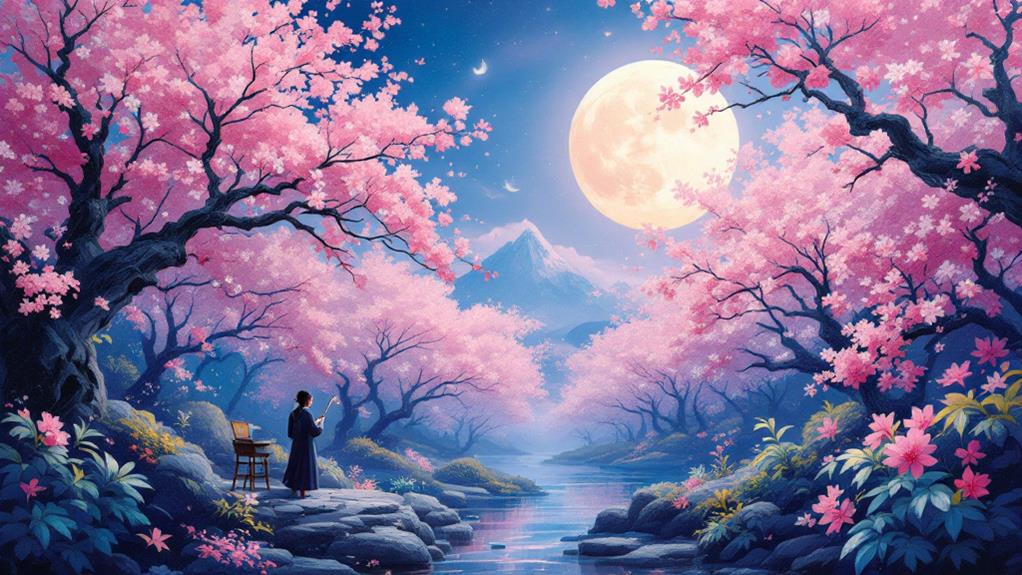
As you investigate modern interpretations of "The Tale of Genji," you'll find its timeless themes and creative narrative techniques continue to inspire contemporary adaptations. Many artists and writers are drawn to the feminine perspective embedded within the original text, offering fresh insights into gender roles and relationships. This perspective provides a rich tapestry for modern storytellers to examine, often highlighting complexities of identity and power dynamics that resonate with today's audience.
The narrative structure of "The Tale of Genji" also plays a crucial role in its adaptability. With its intricate plotlines and multi-layered characters, the novel invites reinterpretation in diverse forms, from cinema and theater to manga and anime. These adaptations often experiment with the original's episodic nature, creating new storytelling techniques that capture Genji's essence while making it accessible to a modern audience.
Legacy and Impact
The legacy of "The Tale of Genji" lies in its profound influence on literature and culture across centuries. You can see how its cultural legacy has shaped storytelling through its narrative innovation and emotional depth. This masterpiece isn't just a story; it's a societal reflection that captures the intricacies of court life, gender roles, and human emotions. Its timeless relevance continues to resonate today.
Consider these impacts:
- Cultural Legacy: "The Tale of Genji" has become a significant reference point for understanding Japanese culture and history. It's a mirror reflecting the Heian age's societal norms and values.
- Global Impact: The novel transcends cultural boundaries, influencing writers and artists worldwide. Its themes and artistic expression create cross-cultural connections that continue to inspire generations.
- Narrative Innovation: As one of the initial novels, it introduced literary techniques that have influenced narrative forms globally. Its use of psychological depth and character development was groundbreaking.
- Historical Influence: The novel provides insights into the Heian epoch, offering a window into the past that enriches our understanding of historical contexts and gender roles.
Related posts