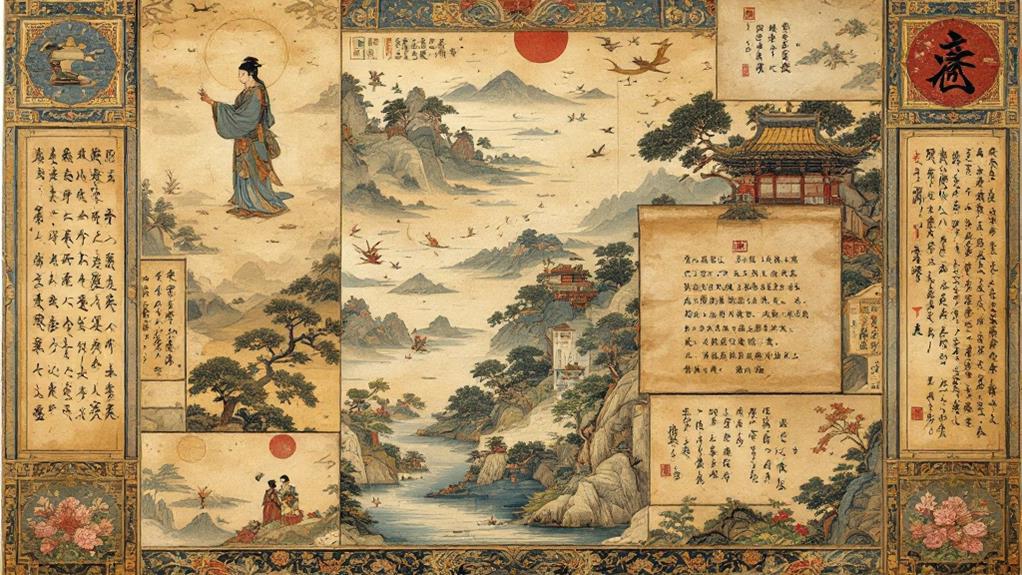
The Tale of Genji: How a Japanese Folio Became the World’s First Novel

You might not realize that "The Tale of Genji," penned by Murasaki Shikibu in the Heian period, is considered the world's pioneering novel. Set in the elegant and complex world of imperial Japan, it captures the intricacies of court life, love, and duty. Murasaki used her unique court position to examine gender dynamics, crafting multi-dimensional characters that reflect real human experiences through groundbreaking narrative techniques. This work didn't just shape Japanese literature; it became a cornerstone of world literature, influencing countless translations and adaptations. Uncovering its depth reveals much about its timeless appeal and cultural legacy.
Origins of The Tale of Genji
Dating back over a thousand years, the origins of *The Tale of Genji* offer a fascinating glimpse into the world of Heian-era Japan. As you investigate this masterpiece, you'll uncover its rich historical context, which is deeply rooted in the imperial court's culture and politics. The Heian period, known for its elegance and sophistication, provides the backdrop to this intricate narrative. You see, the court's societal norms, artistic pursuits, and intricate relationships play a significant role in shaping the story's environment and characters.
In *The Tale of Genji*, you'll notice narrative themes that reflect the complex web of human emotions and societal expectations of the time. These themes include love, duty, and the transient nature of life, depicted through the life and loves of the protagonist, Prince Genji. By weaving together these themes, the story offers profound insights into the human condition, resonating with readers even today. As you probe into the novel, you'll appreciate how it mirrors the Heian court's values and concerns, providing a timeless examination of personal and societal dynamics. Through its origins, *The Tale of Genji* remains a window into a world long past yet enduring.
Murasaki Shikibu's Influence
Murasaki Shikibu's brilliance shines through in every aspect of *The Tale of Genji*. You can't help but be drawn into the world she crafts, reflecting her own life's experiences and the gender dynamics of her time. Living in the Heian age, Murasaki navigated a society that placed rigid constraints on women. Despite these challenges, she used her unique position at the imperial court to observe and critique the interpersonal politics and relationships that defined her period.
As you explore the novel, you notice how Murasaki's life profoundly influences the narrative. Her intimate understanding of the court's inner workings allowed her to portray the subtleties of aristocratic life with authenticity. She brings to light the complex roles women played, often behind the scenes, influencing events without overt power. Through her writing, you witness how she challenges and redefines the gender dynamics, offering a nuanced perspective that was revolutionary for her time.
Literary Structure and Style

In exploring the literary structure and style of *The Tale of Genji*, you'll find that it mirrors the depth and complexity of Murasaki Shikibu's experiences. The novel employs sophisticated narrative techniques that weave together a tapestry of court life, relationships, and personal growth. The structure is fluid, allowing you to investigate the intricacies of Heian-era Japan through Genji's life expedition. This dynamic storytelling is a hallmark of Shikibu's work, providing a framework that's rich and engaging.
When examining character development, you'll notice Shikibu's careful attention to detail. Characters are multi-dimensional, evolving throughout the story in a way that reflects real human experiences. This depth is achieved through:
- Inner Monologues: Characters' thoughts and feelings are laid bare, giving you insight into their motivations and emotions.
- Dialogue: Conversations reveal personal and societal tensions, shaping character arcs and relationships.
- Symbolism: Objects and settings often carry deeper meanings, contributing to character and plot layers.
These elements combine to create a novel that's not only a narrative of its time but a timeless investigation of human nature, inviting you to uncover the subtleties of Shikibu's literary artistry.
Cultural Impact and Legacy
*The Tale of Genji* has left an indelible mark on both Japanese culture and world literature. When you investigate its narrative themes, you see how it reflects the complexity of human emotions and relationships, making it timeless. The story, set in the Heian age, offers a window into the historical context of that period, revealing the intricacies of court life, politics, and societal norms. By understanding these elements, you gain insight into how people lived and thought, making the novel a valuable cultural artifact.
In Japan, *The Tale of Genji* isn't just a story; it's a cornerstone of cultural identity. It influenced art, poetry, and even the way people viewed romance and aesthetics. Its themes of love, loss, and the passage of time resonate deeply, allowing readers to connect across centuries. You'll find its impact in traditional Japanese paintings and even in modern media, illustrating its enduring legacy.
Globally, *The Tale of Genji* introduced the world to Japanese literature. It demonstrated how narrative themes could transcend cultural barriers, paving the way for future international literary exchanges. Understanding its legacy enriches your appreciation of both Japanese culture and world literature.
Global Recognition and Adaptations

Over the centuries, *The Tale of Genji* has achieved global recognition, transcending its origins to become a fixture in world literature. It's not just a cornerstone of Japanese culture; it's touched readers and creators worldwide. The novel's intricate narrative and rich character development have led to countless global adaptations and a thriving international readership. Each adaptation breathes new life into Genji's story, ensuring its relevance across cultures and generations.
To better understand its impact, consider these points:
- Translations: From Arthur Waley's pioneering English version to recent translations in numerous languages, *The Tale of Genji* has captivated readers worldwide, expanding its international readership.
- Film and Theater Adaptations: Directors and playwrights have transformed the text into compelling visual and stage performances, offering fresh perspectives that resonate with diverse audiences.
- Influence on Modern Literature: Authors across the globe draw inspiration from its narrative style and character complexity, weaving its essence into contemporary storytelling.
These adaptations have not only maintained the novel's legacy but also expanded its influence. Engaging with Genji's world invites you to investigate themes of love, ambition, and the human condition, universally relatable across time and culture.
Related posts