The Symbolism of Colors in Illuminated Manuscripts
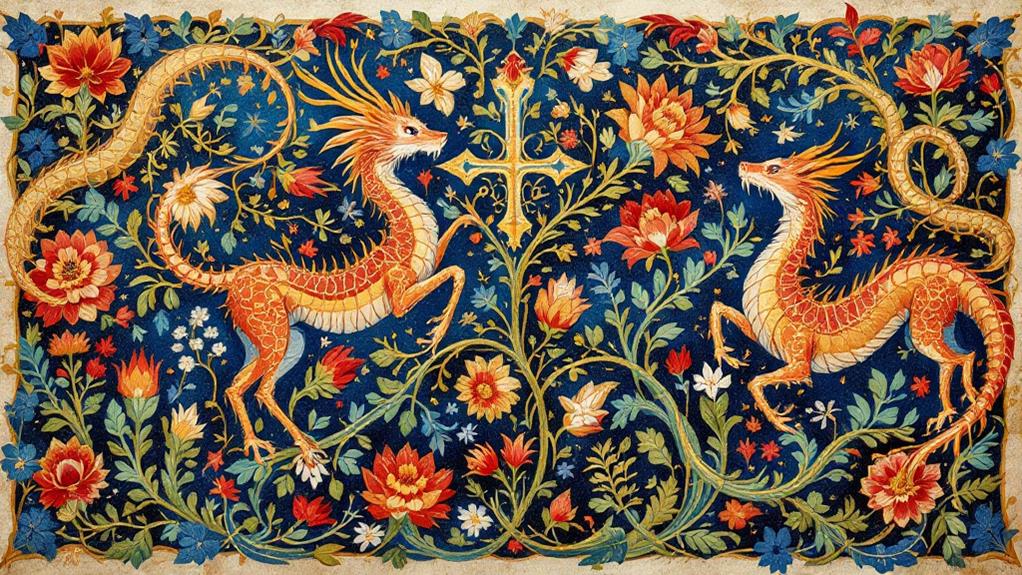
In illuminated manuscripts, colors aren't just decorative; they're key to conveying deep meanings and cultural values. You'll find deep blues often symbolize divine wisdom, hinting at the vastness of the heavens. Fiery reds speak to passion and power, demanding attention and symbolizing sacrifice. Gold and yellow exude heavenly glory, reflecting spiritual illumination. Vivid greens evoke life and renewal, while pure whites capture innocence and fresh beginnings. Mysterious blacks weave tales of death and the unknown, contrasting brightly colored elements. Ultimately, regal purples signify status and divine authority. There's so much more behind these lively hues waiting to be revealed.
The Role of Color in Manuscripts
Colors in manuscripts aren't just decorative elements; they play a crucial role in conveying meaning and enhancing the reader's experience. When you examine these lively pages, you notice that each color carries its own symbolism, deeply rooted in historical significance and cultural interpretations. Manuscript artistry is a deliberate process where aesthetic choices are made to create emotional impact. The selection of pigments wasn't arbitrary; each hue was chosen with a specific purpose, often reflecting the societal values and beliefs of the time.
You might find that different colors were sourced from a range of pigments, each with its own unique origin and meaning. For example, red, often derived from costly materials like cinnabar, could symbolize power or divine love. These pigment sources were carefully selected, and their application required skilled artistic techniques to guarantee longevity and liveliness. As you explore deeper into the manuscripts, you realize that the artists' understanding of color symbolism guided their work, allowing them to communicate complex ideas and emotions effectively.
Ultimately, the role of color in manuscripts is multifaceted, intertwining historical, emotional, and cultural threads to create a rich tapestry that transcends mere artistry.
Blue: Divine Wisdom and Mystery
Among the many hues found in manuscripts, blue stands out for its association with divine wisdom and mystery. When you encounter blue in illuminated manuscripts, you're seeing more than just a color. It holds spiritual significance, often representing the heavens and the divine. This association with the celestial domain imbues blue with a sense of vastness and depth, evoking the infinite nature of wisdom and the uncharted mysteries of the universe.
Artists didn't choose blue lightly. They employed artistic techniques that made blue a prominent feature in their works. To create lively blues, they often used lapis lazuli, a precious stone imported from distant lands, demonstrating blue's value and significance. Using this rare pigment signified not only the manuscript's significance but also the spiritual gravitas of the subject matter being depicted.
As you study these manuscripts, notice how blue is often used to frame sacred figures or highlight significant text. This deliberate use of color guides your perception, drawing your attention to the divine and the mysterious. Fundamentally, blue serves as a bridge between the mortal and the divine, inviting you to investigate the spiritual depths illuminated within these pages.
Red: Passion, Power, and Sacrifice
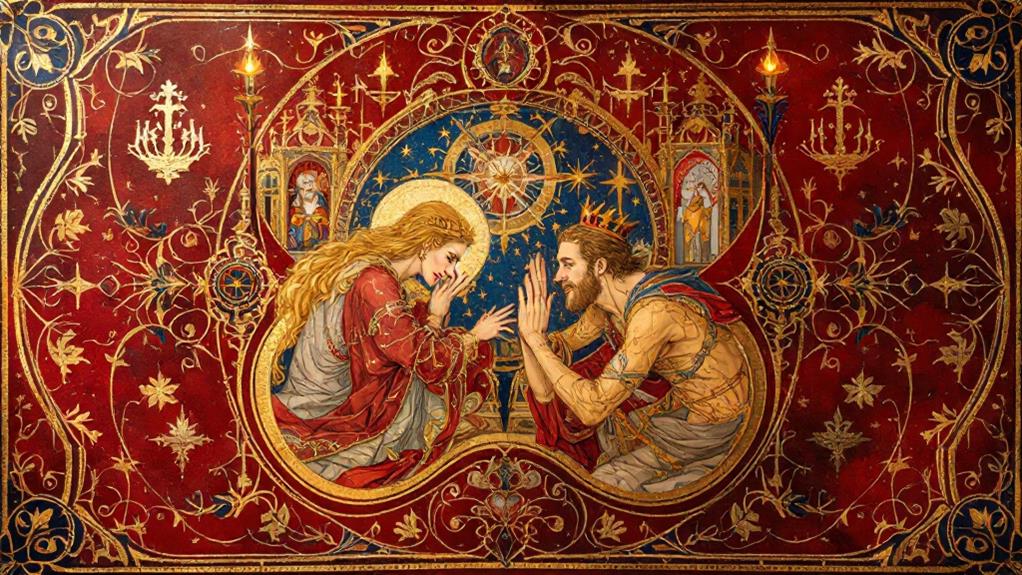
In the domain of manuscript art, red commands attention with its powerful symbolism of passion, power, and sacrifice. You can feel the emotional impact as lively red hues leap from the pages, capturing the essence of human fervor and determination. Historically, red symbolism has been significant in highlighting key figures and crucial moments. Illuminators used artistic techniques like vermilion and madder to guarantee the brilliance of red, underscoring its importance in manuscripts.
As you investigate cultural interpretations, you'll see how red embodies both life and death; it's the color of blood, evoking both energy and sacrifice. Its psychological effects are profound, stirring feelings of urgency and intensity. Red's thematic representations range from the passion of Christ to the valor of warriors, often linking to literary connections where characters embody these traits.
Consider these emotional aspects of red in illuminated manuscripts:
- Passion: Feel the fervent love and devotion that red brings to life, painting stories of heart and soul.
- Power: Witness red's commanding presence, symbolizing authority, and leadership.
- Sacrifice: Reflect on red's portrayal of ultimate sacrifices, where life and death converge.
In these ways, red colors your understanding of history and emotion.
Gold and Yellow: Heavenly Glory
Radiating a sense of divine presence, gold and yellow hues in manuscripts symbolize heavenly glory and spiritual illumination. As you investigate these lively colors, you'll notice how they bring a manuscript to life with their ability to capture the essence of divine light. Gold symbolism is powerful, reflecting sacred gold's association with the divine domain and eternal truth. When you see these golden tones, they evoke a sense of spiritual brightness, inviting you to contemplate the mysteries of the heavens.
Yellow hues, though less opulent than gold, still carry a profound significance. They signify the light of understanding and wisdom, guiding you toward enlightenment. In illuminated manuscripts, these colors work together, creating a balance between the material and celestial worlds. They serve as a reminder of the heavenly illumination that guides one's spiritual expedition.
When you turn the pages of a manuscript adorned with these colors, you're not just witnessing art; you're engaging with a visual sermon. These hues invite you to reflect on your own path to spiritual enlightenment, encouraging a deeper connection with the divine. Welcome the sacred gold and yellow hues, and let their heavenly glory inspire your soul.
Green: Life, Renewal, and Fertility
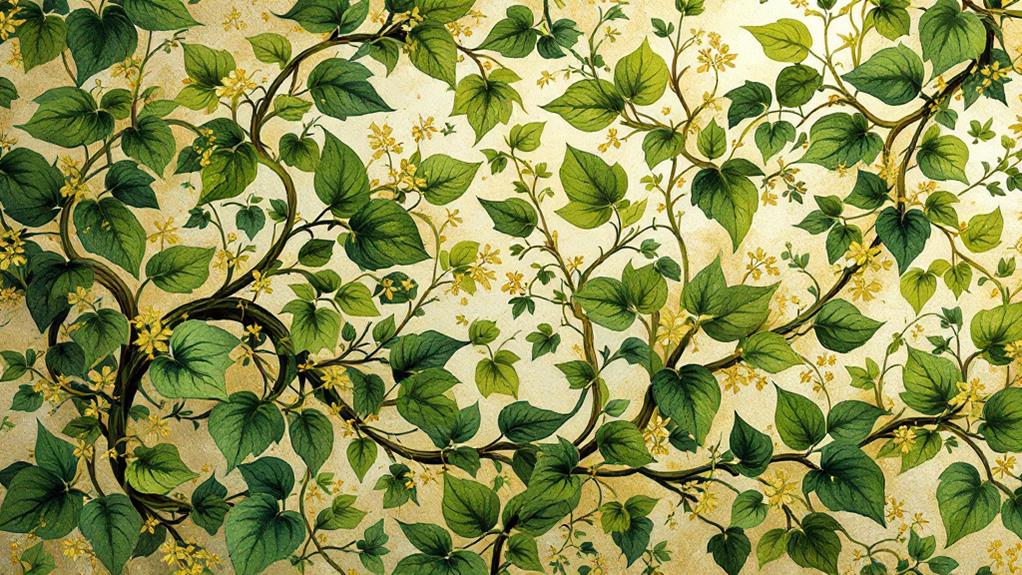
Why does green hold such an enchanting presence in manuscripts? It's a hue bursting with meaning and emotion. Green symbolism often represents life itself, capturing the essence of renewal and fertility. As you flip through the pages of illuminated manuscripts, you'll notice how botanical imagery, intertwined with nature motifs, breathes life into each scene. The lively contrasts between green and other colors highlight the seasonal cycles and connect you to the natural world's rhythms.
Consider this to evoke emotion:
- Rebirth and Renewal: Green's cultural interpretations often tie back to spring, when life awakens from winter's slumber.
- Hope and Healing: Green's healing properties are believed to calm the mind, offering a sense of peace and rejuvenation.
- Growth and Fertility: In its lush depictions, green symbolizes the earth's bounty, celebrating the cycle of growth and abundance.
These emotional associations resonate through history, imbuing manuscripts with a timeless quality. The use of green isn't just decorative; it's intentional, evoking hope and inspiration. As you admire these works, let the layers of meaning within each green stroke remind you of nature's enduring essence and beauty.
White: Purity and Innocence
As you investigate the lively world of green in manuscripts, another color quietly makes its mark: white. White carries symbolic interpretations of purity and innocence, often associated with clean slates and fresh beginnings. Throughout history, this color has held immense historical significance in illuminated manuscripts. Artists used white to convey a sense of divine light and celestial purity, often illustrating figures like angels or the Virgin Mary with luminous halos.
In terms of artistic techniques, scribes and illuminators utilized white as a backdrop to emphasize other dynamic colors, creating a stark contrast that highlighted significant elements. This technique added depth and clarity to the intricate designs. Emotional associations with white often evoke feelings of peace and tranquility, underscoring themes of holiness and virtue.
Cultural variations further enriched the meaning of white. In Western traditions, it symbolized innocence and new beginnings, while in Eastern traditions, it might have represented mourning or surrender, highlighting the color's versatile nature. The religious implications of white are profound, frequently used in manuscripts to denote divine purity and spiritual enlightenment. By understanding these layers, you appreciate how white silently yet powerfully shapes the narrative in illuminated manuscripts.
Black: Death and the Unknown
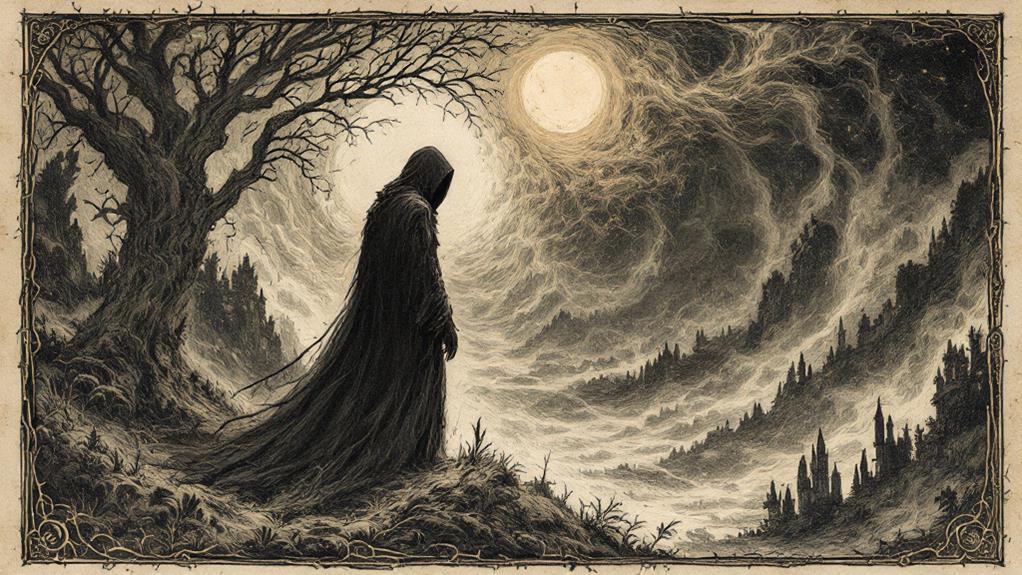
How does black, a color often associated with mystery and finality, shape the narrative of illuminated manuscripts? Black symbolism in these intricate works conveys profound themes of death and the unknown. It serves as a visual cue, guiding your emotions and thoughts as you explore the pages. Cultural interpretations of black have evolved, yet its historical associations with mourning and the afterlife remain potent. Artists employed specific artistic techniques to harness black's emotional impact, using it sparingly to highlight the gravity of death or the enigma of the unexplored.
Consider these evocative elements:
- Fear of the Unknown: Black's presence can make you feel the unsettling uncertainty of what lies beyond, tapping into a deep-seated societal belief.
- Literary References: Manuscripts often use black to underscore themes of despair or finality in stories, enhancing psychological effects on the reader.
- Contrast and Clarity: In manuscripts, black provides contrast, making lively colors more striking and emphasizing the somber tones of death.
Ultimately, black's role in illuminated manuscripts isn't just about color; it's about weaving a narrative that connects with human emotions and societal beliefs.
Purple: Royalty and Reverence
Purple in illuminated manuscripts immediately captures your attention, signifying a domain of royalty and reverence. This striking color is deeply rooted in purple symbolism, conveying power and prestige. Historically, purple's rarity and the expense of its dyes raised its status, reserving it for the elite. When you see purple in manuscript decoration, you're witnessing an intentional choice meant to highlight royal associations and communicate authority and importance.
Artists employed specific artistic techniques to create this lively hue, often using costly materials like Tyrian purple. By doing so, they guaranteed that the color's historical significance was not only preserved but also magnified in the eyes of those who beheld these works. The emotional impact of purple can't be overstated. Its rich, deep tones evoke a sense of awe and admiration, compelling you to appreciate the cultural meanings embedded within the manuscript's pages.
Beyond earthly power, purple also holds spiritual connections. It often symbolizes divine authority and the sacred, bridging the gap between mortal and divine domains. In this way, purple serves as a visual reminder of the intertwined nature of royalty and spirituality in the art of illuminated manuscripts.
The Influence of Cultural Contexts
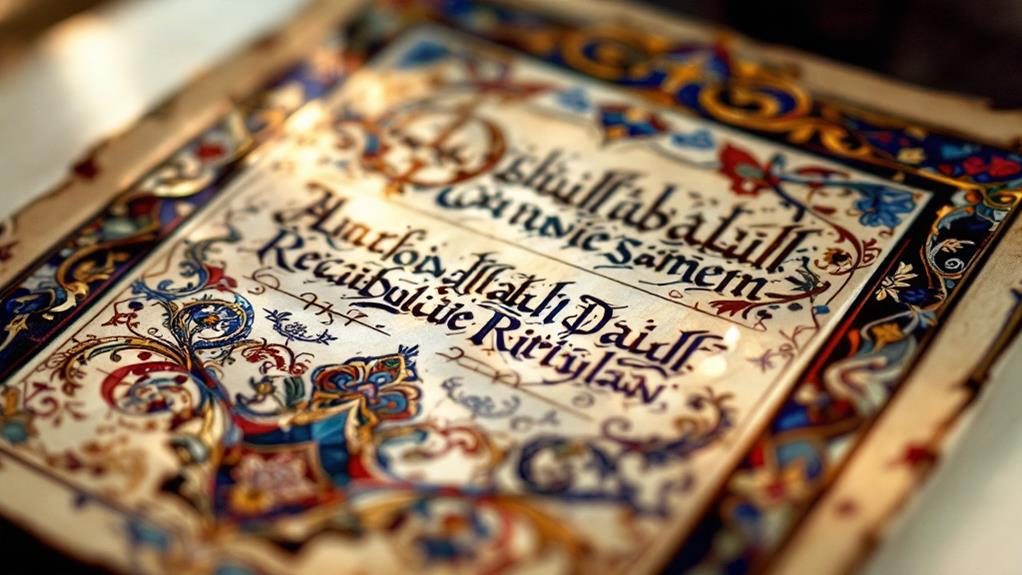
Within the rich tapestry of illuminated manuscripts, the influence of cultural contexts shapes the meaning and use of colors. You'll find that each hue carries a weight far beyond its visual appeal, deeply embedded in cultural interpretation and historical significance. Cultural contexts drive the regional variations in color use, with religious symbolism often dictating choices. For instance, a lively red might evoke divine love in one manuscript, while symbolizing martyrdom in another, all depending on the cultural lens.
Colors also denote social status and gender representation. In certain societies, only the elite could afford manuscripts with gold leaf or expensive pigments, making the artworks symbols of wealth and power. Ethnic influences further diversify these interpretations, as artistic techniques and color palettes vary widely across different cultures.
To truly appreciate these manuscripts, consider:
- The Historical Significance: Colors offer a window into the past, reflecting societal values and beliefs.
- Regional Variations: Uncover how geography dictates color symbolism, altering its meaning across borders.
- Social Status and Gender Representation: Notice how colors communicate identity and hierarchy in manuscripts.
Related posts