The Role of Parchment in the Creation of Ancient Folios
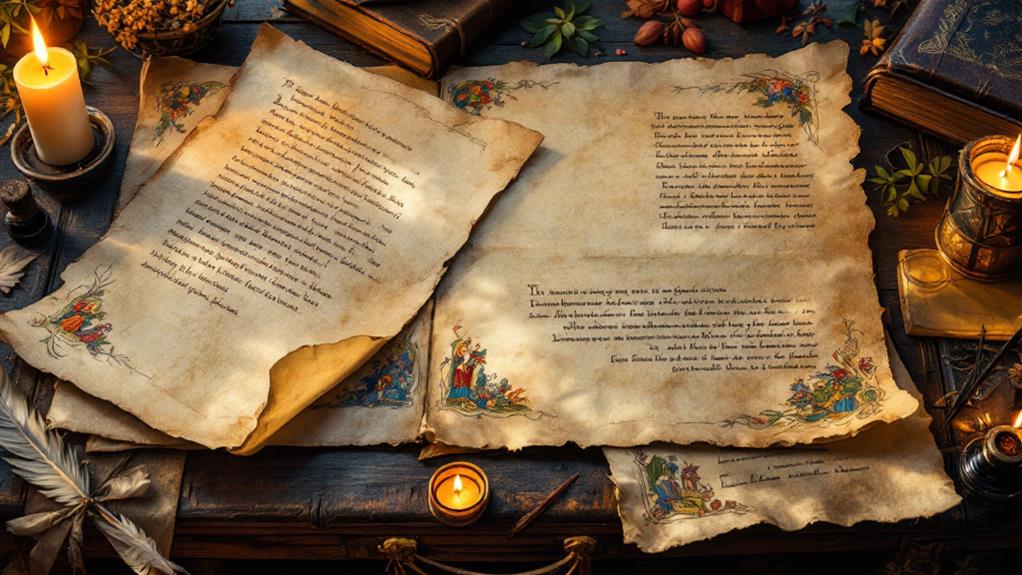
You're exploring a topic where parchment truly shines as the backbone of ancient folios. Originating in ancient times, it provided a versatile and durable alternative to papyrus and clay tablets. Animal hides went through a careful process to become smooth, polished writing surfaces. Parchment's resilience allowed it to hold complex texts and vivid illustrations, making it indispensable for religious and scholarly manuscripts. Its ability to be folded and stitched without cracking made it perfect for binding into books. If you continue, you'll uncover more about how parchment's legacy still influences modern manuscript creation today.
Origins of Parchment
Parchment has an intriguing origin that dates back to ancient times when people needed a durable and reusable writing surface. You might find it fascinating that parchment emerged as a solution to the limitations of earlier materials like papyrus and clay tablets. While papyrus was lightweight, it was also fragile and unsuitable for extensive use. Clay tablets, on the other hand, were cumbersome and hardly portable. This necessity paved the way for parchment, made from animal skins, which provided a robust and flexible alternative.
As you explore its historical significance, you'll see that parchment became a cornerstone of ancient documentation. By the second century BCE, it was widely used across the Mediterranean region, particularly in Pergamon, where its production was refined. The city even gave parchment its name, derived from "pergamena." Many ancient texts and religious manuscripts were inscribed on parchment, highlighting its role in preserving knowledge and culture.
Parchment's durability guaranteed that critical documents, like treaties and religious texts, survived through the epochs. Its adaptability and resilience allowed scribes to write and erase texts, making it invaluable in historical contexts, where documentation was key to cultural legacy.
Parchment Production Process
Creating parchment involves several careful steps that transform raw animal hides into a versatile writing material. Initially, you need to select the right animal sources. Goats, sheep, and calves are commonly used because their hides provide the ideal thickness and durability. Once you've chosen your hide, soak it in a lime solution. This step helps loosen the hair and any remaining flesh, making it easier to scrape away.
After soaking, you'll stretch the hide on a frame, securing it tightly. This is where ancient techniques come into play. Using a curved knife, you'll thoroughly scrape both sides of the hide, removing excess tissue and ensuring an even surface. This detailed process requires patience and skill to prevent tearing the hide.
Once the scraping is complete, the hide must dry while still on the frame. This drying process helps achieve the taut, smooth texture parchment is known for. Ultimately, you'll sand the surface to remove any imperfections, leaving a clean, polished finish ready for writing. By following these steps, you adopt the art of parchment-making, a tradition that has enabled the preservation of countless ancient texts.
Advantages Over Papyrus
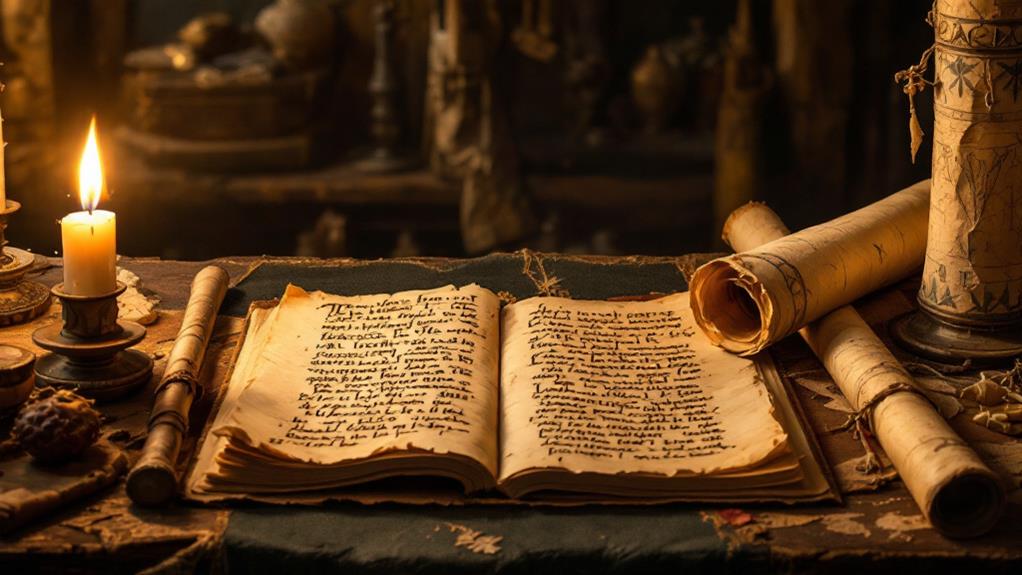
With the careful process of parchment-making complete, it's clear why this material held certain advantages over papyrus in ancient times. Initially, consider parchment's versatility. Unlike papyrus, parchment could be folded, stitched, or bound without cracking, making it ideal for creating folios that needed to be durable and flexible. This versatility allowed scribes to produce more complex and practical book formats, which were vital for the dissemination of knowledge.
Additionally, parchment offered a smoother, more uniform writing surface. Papyrus, made from plant fibers, often had an uneven texture that could hinder writing clarity and precision. In contrast, parchment's surface allowed for finer, more intricate script and illustrations. This was fundamental for documents intended to carry detailed information or artwork, like illuminated manuscripts.
Moreover, because parchment is made from animal skin, it was not limited by the geographic availability of papyrus plants. This meant that societies far from the Nile could produce their writing materials locally, reducing dependency on trade routes. By using parchment, you could guarantee a steadier supply and avoid shortages that might disrupt record-keeping and communication. These parchment advantages made it a superior choice in many regions and applications.
Parchment's Durability and Preservation
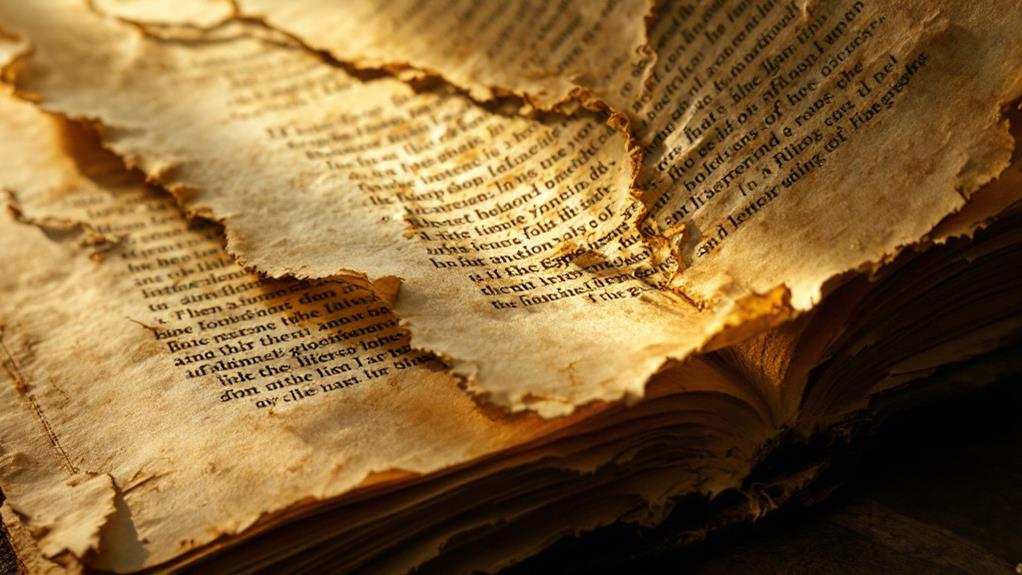
Unlike many ancient materials, parchment stands out for its remarkable durability and preservation qualities. You might wonder what makes parchment so resilient. This strength comes from its composition; parchment is made from animal skin, primarily sheep, goats, or calves. Its fibrous structure guarantees it withstands the test of time, unlike other materials that deteriorate. When you consider historical parchment usage, it's clear why ancient scribes favored it for documents that needed longevity.
To preserve parchment, several parchment conservation techniques have been developed. These methods guarantee that even centuries-old parchments can be maintained for future generations. You may find it fascinating that proper storage and controlled environments play vital roles in this process. Parchment requires specific humidity levels and temperatures to prevent it from becoming brittle or moldy.
Here are some reasons why parchment elicits such admiration:
- Longevity: Parchment can last for millennia if properly cared for.
- Elegance: Its texture and appearance have an undeniable aesthetic appeal.
- Significance: Many of history's most notable documents were written on parchment.
- Resilience: It withstands wear and environmental challenges better than many other ancient materials.
Use in Religious Manuscripts
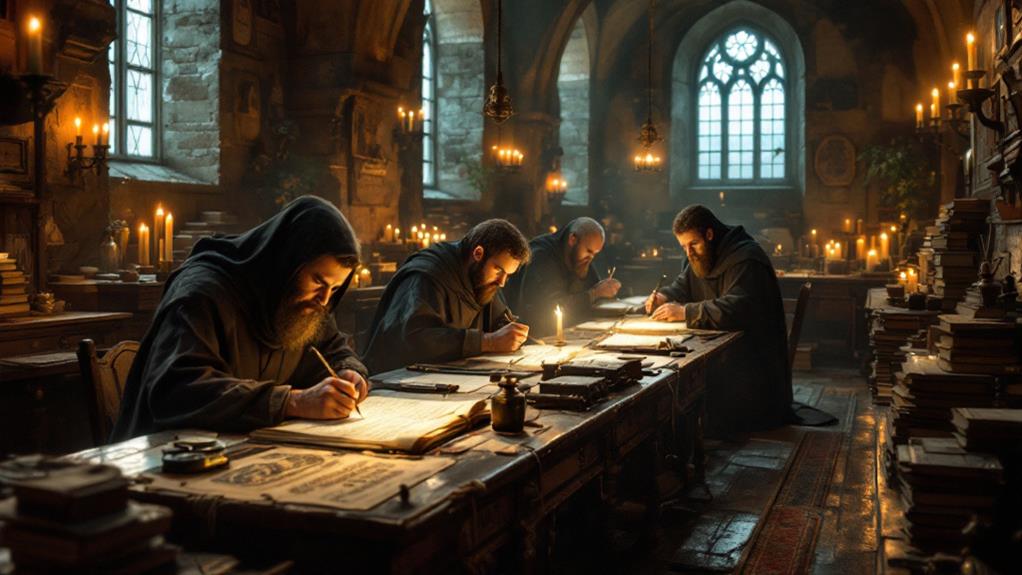
Religious manuscripts owe much of their survival and continued reverence to the use of parchment. When you consider sacred texts, the importance of their preservation becomes clear. Parchment provided a durable medium that not only survived the test of time but also allowed these texts to be cherished and passed down through generations. Its resilience against decay and damage meant that sacred writings could be safeguarded, maintaining their spiritual and historical significance.
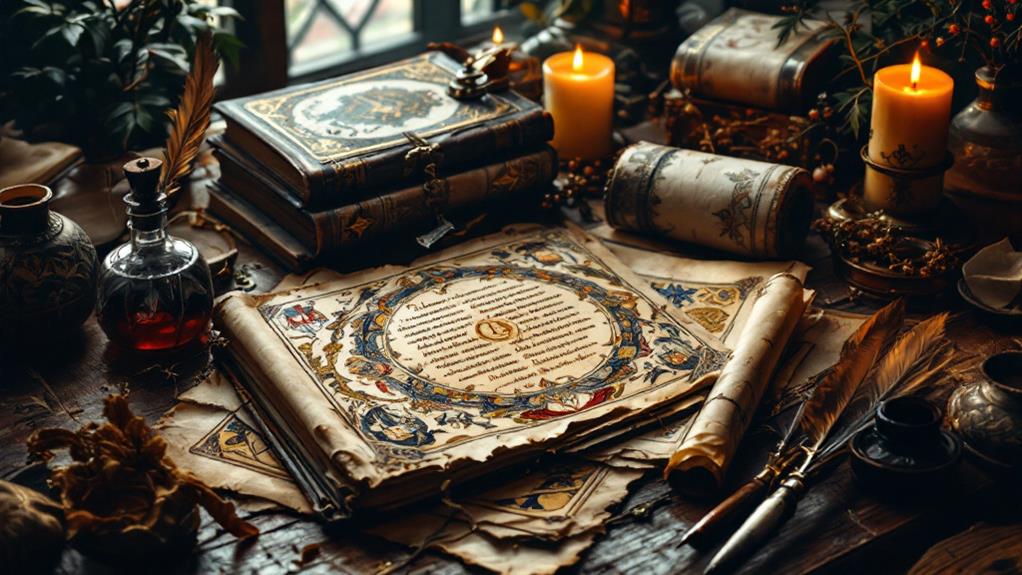
Moreover, parchment enabled the flourishing of manuscript illumination, a practice that raised religious texts into works of art. As you turn the pages of these ancient texts, you'll find intricate designs and lively colors that embellish the words, enhancing the reader's engagement and reverence for the content. The smooth surface of parchment allowed scribes and artists to create detailed illustrations and embellishments, making each manuscript unique and visually engaging.
In religious communities, these illuminated manuscripts were not only objects of devotion but also symbols of divine beauty and craftsmanship. You can see how the artisans' devotion was reflected in their careful work, ensuring that sacred texts were not only read but also visually celebrated, strengthening spiritual connections across time.
Role in Medieval Scholarship
Parchment's significance in medieval scholarship can't be overstated. As you investigate medieval libraries, you'll find that parchment wasn't just a medium; it was the backbone of scholarly communication. Scholars relied on it for preserving knowledge, enabling them to write, edit, and share their findings. Imagine walking into a library, where rows of parchment-bound manuscripts hold the collective wisdom of centuries. Each folio represents a scholar's dedication to advancing human understanding.
The emotional weight of parchment in this situation can be felt through these key points:
- Preservation: Parchment guaranteed that critical texts survived the test of time, safeguarding knowledge for future generations.
- Accessibility: It allowed for the creation of multiple copies, making scholarly works available to a wider audience within medieval libraries.
- Collaboration: Parchment facilitated scholarly communication by enabling annotations and commentary, fostering dialogue among thinkers.
- Legacy: The durability of parchment preserved the scholarly achievements of medieval intellects, influencing education and thought for centuries.
In essence, parchment was more than a writing surface; it was an enabler of intellectual progress. Its role in medieval scholarship continues to evoke admiration for the scholars who painstakingly filled its pages with knowledge.
Artistic Contributions to Folios
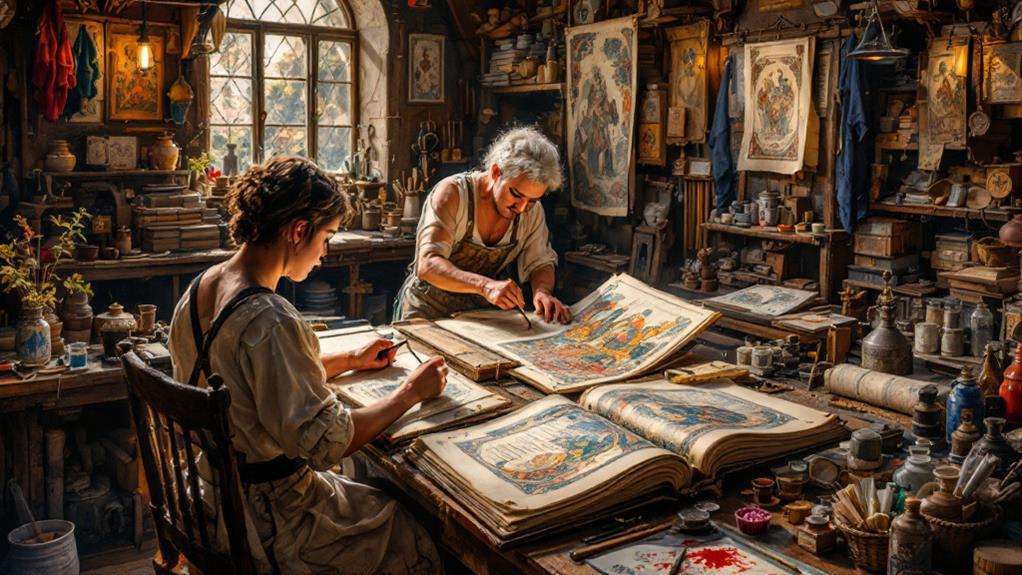
As you continue exploring the rich history of ancient folios, you'll uncover that parchment served not only as a vessel for scholarly ideas but also as a canvas for artistic expression. Artists and scribes transformed these folios into illuminated manuscripts, where lively colors and gold leaf brought pages to life. You'll find that these manuscripts were not just about the text; they were a celebration of beauty and skill. The illumination involved intricate designs that required careful attention to detail, making each folio a unique masterpiece.
You'll notice that decorative borders played a significant role in enhancing these manuscripts. The borders often framed the text with elaborate patterns, intertwining vines, and mythical creatures. They didn't just serve a decorative purpose; they guided your eye and provided a visual context that complemented the written word. Each border was a reflection of cultural influences and regional styles, revealing much about the period's artistic trends.
Legacy in Modern Manuscripts
Today, you'll find that the legacy of ancient folios lives on in modern manuscripts, where traditional techniques blend with contemporary innovations. The historical significance of these ancient practices is immense, shaping how we perceive and create written works today. By preserving the art of manuscript creation, you're not just continuing a long-standing tradition; you're keeping alive a cultural impact that's transcended centuries.
Consider the emotional resonance of modern manuscripts:
- Connection to the Past: By using techniques like hand-illuminated pages, you're forging a direct link to the artisans of the past, honoring their craftsmanship.
- Artistic Expression: You have the opportunity to incorporate lively designs and personal touches, turning each page into a masterpiece that speaks volumes.
- Cultural Preservation: Every manuscript you create serves as a vessel of cultural heritage, ensuring that future generations appreciate the art and history behind written words.
- Legacy Building: As you blend ancient methods with new ideas, you're contributing to a living legacy, inspiring others to investigate the beauty of manuscript creation.
Related posts