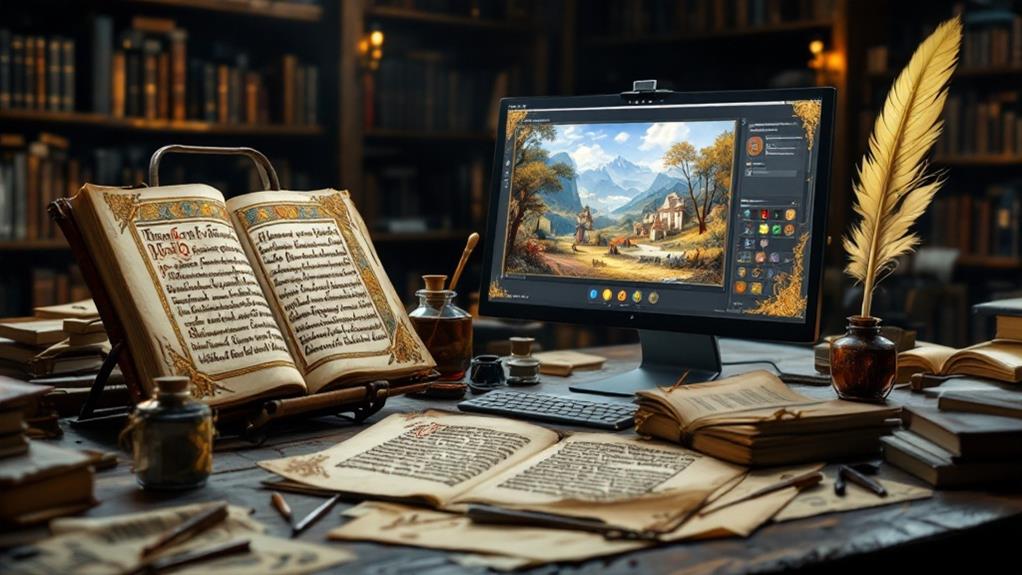
The Role of Folios in Modern Education: Lessons From the Past

Folios have always played an essential role in education, evolving from medieval handwritten manuscripts to modern digital portfolios. They were once the backbone of knowledge preservation, housing critical texts and providing early forms of student assessment. Today, you can use folios to improve self-reflection and foster personalized learning through both paper and digital formats. They encourage organizational skills, creativity, and a growth mindset. Teachers are fundamental in managing folios effectively, ensuring fair assessments and nurturing a supportive learning environment. By integrating historical practices with modern tools, folios continue to shape dynamic and engaging educational experiences you might find fascinating.
Historical Significance of Folios
Have you ever wondered why folios have held such a significant place in history? They're more than just old books; they're windows into the past. During the medieval period, folios were vital for preserving knowledge. Medieval manuscripts, often painstakingly handwritten on these large pages, contained everything from religious texts to scientific treatises. Monasteries and universities guarded them like valuables, ensuring that the wisdom of the epochs wasn't lost to time.
As you move into the Renaissance, folios played a key role in education. This period marked a rebirth of learning, and folios were at the heart of it. They housed the ideas of influential thinkers, artists, and scientists. Students and scholars relied on them to access the works of Plato, Aristotle, and other luminaries whose thoughts shaped the Renaissance education system. Folios weren't just books; they were the cornerstone of learning, enabling the spread of revolutionary ideas that would eventually shape the modern world.
Folios vs. Digital Portfolios
In the current education landscape, the role of folios has evolved into a fascinating dialogue with digital portfolios. As you navigate this dynamic environment, you'll notice how traditional methods like paper-based folios offer a tactile, personal touch. They allow students to physically engage with their work, providing a sense of ownership and accomplishment. However, these methods can be cumbersome and less efficient regarding storage and accessibility.
Now, consider the digital evolution. Digital portfolios have transformed how students and educators compile, organize, and share work. They're easily accessible across multiple devices, making it simple for you to showcase achievements anytime, anywhere. With digital portfolios, updating and refining content becomes a streamlined process, promoting ongoing learning and reflection.
Despite the allure of technology, traditional folios still hold value. They encourage you to slow down and engage deeply with content. But in a world increasingly driven by digital innovation, the balance between these approaches is essential. By understanding the strengths of both traditional methods and digital evolution, you can create a hybrid approach that enhances the benefits of each, preparing students for a future where adaptability is key.
Benefits for Student Development

Between the domains of traditional folios and digital portfolios lies a unique opportunity for student development. By engaging with both formats, you'll uncover that each offers distinct benefits that enrich your learning experience. One key advantage is the improvement of self reflection skills. As you curate your work, you naturally engage in evaluating your progress, understanding your strengths, and identifying areas for improvement. This continuous process of introspection bolsters your ability to critically assess your own work and develop a growth mindset.
Moreover, folios promote personalized learning, allowing you to tailor your educational experience to match your interests and goals. By selecting and organizing your work, you're encouraged to investigate topics that resonate with you, deepening your engagement and motivation. This personalization fosters a sense of ownership over your learning, making education more meaningful and relevant to your life.
Additionally, the process of creating and maintaining a folio hones your organizational and communication skills. As you learn to present your work coherently, you gain confidence in your ability to articulate your thoughts and ideas clearly. Ultimately, folios not only support academic growth but also equip you with crucial skills for lifelong learning.
Implementing Folios in Classrooms
To successfully implement folios in classrooms, it's essential to integrate them seamlessly into the curriculum. Begin by identifying how folio assessment aligns with your learning objectives. Folios provide a platform for students to compile their work over time, showcasing growth and areas needing improvement. They highlight individual strengths, allowing for tailored feedback and personal development. To make folios effective, guarantee they're embedded in regular class activities, not just an add-on.
Encourage students to use folios for creative expression. They can include multiple formats like essays, projects, and multimedia. This assortment not only caters to different learning styles but also fosters a sense of ownership over their work. Structure assignments so they naturally fit into the folio format, helping students see the value in their efforts.
Incorporate regular review sessions where students can reflect on their progress and set future goals. This reflection is key to the folio's success, promoting self-awareness and critical thinking. Make the folio assessment criteria clear from the start, so students know what's expected. By doing this, you'll create a dynamic learning environment that values creativity and continuous improvement, ultimately enhancing students' educational experience.
Teacher's Role in Folio Management

As folios become an essential part of the learning process, your role as a teacher is critical in managing and guiding their effective use. You need to guarantee that folio assessments are conducted fairly and consistently, providing valuable feedback to students. This requires a solid understanding of assessment criteria and the ability to communicate these clearly to your students. By doing so, you help them understand their strengths and identify areas for improvement.
Teacher training plays a significant role in equipping you with the necessary skills to manage folios effectively. Training sessions can introduce you to different digital tools that streamline the folio management process, making it easier to track student progress and provide timely feedback. Moreover, ongoing professional development guarantees you stay updated on best practices and creative strategies in folio assessment.
Additionally, you're responsible for fostering a supportive environment where students feel encouraged to express their creativity and take ownership of their learning experience. This involves guiding them in setting achievable goals and reflecting on their progress. By actively engaging in folio management, you not only improve student learning but also contribute to creating a more dynamic and personalized educational experience.
Future of Folios in Education
In the evolving landscape of education, folios hold promising potential to transform how students engage with learning. As education adopts folio evolution, you'll notice a shift towards more personalized and reflective learning experiences. This evolution isn't just about a change in format but a fundamental transformation in how students collect, organize, and reflect on their work.
Digital integration plays an essential role in this shift. With online platforms, students can easily compile and share their folios, allowing for real-time collaboration and feedback from peers and educators. You can imagine a classroom where students use digital tools to create a dynamic portfolio that evolves over time, capturing their learning experience in a way that's both accessible and meaningful.
Furthermore, digital integration enables a seamless connection between different subjects, encouraging interdisciplinary learning. You won't be limited to paper and pen; instead, you can incorporate multimedia elements like videos, podcasts, and digital art, making your folio a thorough showcase of your skills and interests. As folio evolution continues, it's clear that integrating digital tools will not only improve learning but also prepare students for a future where digital literacy is key.
Related posts