The Role of Digital Tools in Preserving Ancient Folios

You might not realize it, but digital tools are transforming how we preserve ancient folios. High-resolution imaging captures intricate details without touching the fragile papers, while multispectral analysis uncovers faded or hidden writings. Optical Character Recognition (OCR) converts scanned images into machine-readable data, making texts clearer. Tools like Adobe Photoshop improve the visibility and clarity of these ancient manuscripts. With 3D scanning and virtual reality, you can investigate delicate artifacts without risk. Digital archiving guarantees global accessibility, inviting collaboration and community involvement. As technology evolves, these digital techniques promise even more exciting possibilities. Curious about more innovations?
Digital Imaging Techniques
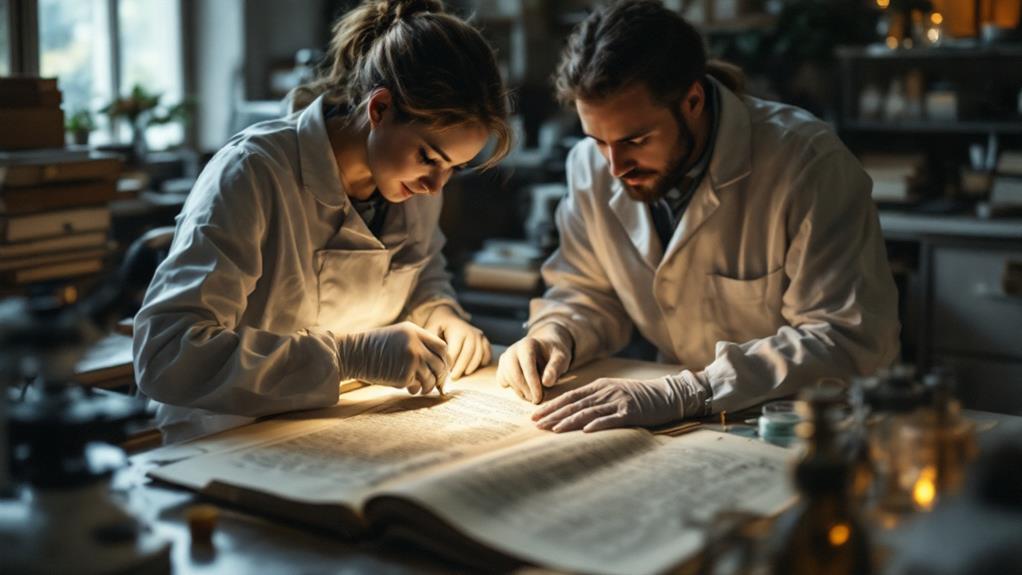
Digital imaging techniques are transforming the way we preserve ancient folios. You're no longer limited to traditional methods that can sometimes cause more harm than good. High resolution imaging allows you to capture every intricate detail of these fragile documents without physically handling them. It offers a digital representation that can be studied and shared without risking the original's integrity. By using high resolution imaging, you guarantee that even the minutest details, like faint ink or delicate textures, are preserved for future study.
Multispectral analysis takes digital imaging a step further. This technique lets you investigate layers of text and images that might be invisible to the naked eye. You can analyze folios under different wavelengths of light, revealing hidden writings or faded inks. It's like having a digital forensic toolkit at your fingertips. With multispectral analysis, you're not just preserving what's visible; you're uncovering lost histories embedded in the folios themselves.
3D Scanning Innovations
Emerging advancements in 3D scanning are transforming the preservation of ancient folios. You can now capture the intricate details of fragile manuscripts without physically touching them, which minimizes the risk of damage. 3D scanning technology allows you to create detailed virtual replicas, preserving not only the text but also the texture, color, and even the unique imperfections of each page. By using 3D scanning, you're able to reconstruct folios in remarkable detail, making it easier to study and share these valuables with researchers and enthusiasts worldwide.
3D scanning also improves your ability to integrate metadata efficiently. As you scan each folio, you can embed crucial information directly into the digital file. This integration helps you keep track of critical data like provenance, historical context, and any previous conservation efforts. Metadata integration guarantees that all the relevant information is readily accessible, streamlining research and reference processes.
These innovations in 3D scanning are a game-changer for preserving ancient folios. By creating precise virtual replicas and improving metadata integration, you're not only safeguarding the physical manuscripts but also enriching the way they're studied and appreciated in the online era.
Archiving and Data Storage

As you adopt the power of 3D scanning for preserving ancient folios, the next logical step is guaranteeing these digital valuables are stored securely and accessibly. Archiving involves more than just saving files; it requires a strategic approach to manage and retrieve data efficiently. Metadata management becomes crucial here, as it allows you to organize and tag each digital file with relevant information, making future searches a breeze. Handling metadata properly guarantees that even the most complex collections are easily navigable.
When considering data storage options, cloud solutions stand out for their flexibility and accessibility. They not only offer scalability but also guarantee your data is backed up and less vulnerable to physical damage or loss. With cloud solutions, you can access your archives from anywhere, facilitating research and collaboration across the globe.
To effectively archive and store your digital folios, consider the following:
- Implement a robust metadata management system: This enables quick and efficient retrieval of digital files.
- Utilize cloud solutions for storage: Guarantee your data is safe and accessible from any location.
- Regularly update your storage protocols: Stay current with technological advancements to maintain data integrity and security.
Enhancing Text Legibility
Clarity becomes a crucial aspect when improving the text legibility of ancient folios. You want every detail, every stroke, to be visible. Digital tools come into play here, offering cutting-edge solutions for text improvement. These tools can refine blurred or faded characters, making them more readable without altering their authenticity. You can adjust contrast, brightness, and sharpness to bring out hidden details in the text.
One effective method is using optical character recognition (OCR) technology. OCR assists in converting scanned images of text into machine-readable data. This conversion allows you to manipulate and improve the text further, guaranteeing readability enhancement. You can also employ multi-spectral imaging, which involves capturing images under different light wavelengths, revealing text invisible to the naked eye.
Don't forget about software like Adobe Photoshop or GIMP, which are equipped with advanced features for manual text improvement. By using these tools, you can address issues like stains or ink bleed-through, notably improving the clarity of these precious documents. With these digital interventions, you make certain that ancient knowledge isn't lost to time but is preserved with improved readability for future generations.
Virtual Reality Applications

Virtual reality (VR) applications offer a transformative approach to exploring and preserving ancient folios. You can plunge into engaging experiences that bring the past to life, allowing you to examine rare manuscripts without risking damage. By simulating a 3D environment, VR provides a unique way to interact with these historical artifacts in a virtual space, enhancing your understanding and appreciation.
Imagine wandering through a digital library, where you can zoom in on intricate details and flip through pages as if they were right in front of you. These educational applications not only make history accessible but also captivating, fostering a deeper connection with the past. Here's how you can benefit from VR applications in preserving ancient folios:
- Interactive Learning: Engage with folios in a way that traditional methods can't offer, making learning both fun and impactful.
- Accessibility: Access rare manuscripts from anywhere in the world, eliminating the need for physical travel and handling.
- Preservation: Protect fragile documents by providing a virtual alternative for study and exploration, reducing wear and tear.
Embrace the potential of VR to transform your understanding and preservation of ancient manuscripts.
Facilitating Global Collaboration
Building on the engaging experience of VR applications, digital tools also play a significant role in facilitating global collaboration for preserving ancient folios. You can easily connect with researchers, historians, and preservationists worldwide, thanks to platforms that support collaborative projects. These tools allow you to share insights, techniques, and findings, fostering a rich cultural exchange that benefits everyone involved.
Imagine you're working on a project to restore a centuries-old manuscript. You're not limited by location anymore. Instead, you can collaborate with experts from different countries, each contributing their unique expertise. This global partnership can lead to groundbreaking solutions and more effective preservation methods.
Digital tools also enable you to create virtual workspaces where teams can gather, discuss, and develop strategies in real-time. Shared databases allow you to access and contribute data seamlessly, ensuring everyone stays informed and aligned. In addition, these platforms often provide translation services, breaking down language barriers and promoting a true cultural exchange.
Expanding Public Access

The democratization of knowledge takes center stage as digital tools expand public access to ancient folios. With open access initiatives, you can now investigate these historical gems without the need to visit a physical archive. These digital platforms break down barriers, allowing anyone with internet access to probe into the past. This shift isn't just about making information available; it's about fostering a deeper connection between you and the world's rich cultural heritage.
Digital tools encourage community engagement by inviting you to participate actively. You can contribute to transcriptions, translations, or even help in identifying unknown artifacts. This involvement transforms passive consumption into active participation, enhancing both personal and collective understanding.
Consider these benefits of expanded access:
- Broadened Educational Opportunities: You can access a wealth of information for research, teaching, or personal growth, no matter where you are.
- Cultural Preservation: By engaging with digital folios, you help preserve and promote cultural heritage for future generations.
- Enhanced Collaborative Projects: Open access fosters collaboration, enabling diverse voices to come together and share insights, leading to more thorough interpretations of ancient texts.
Future Prospects in Preservation
Looking ahead, digital tools promise to revolutionize how we preserve ancient folios. Imagine using 3D modeling to create precise replicas of these delicate artifacts. With this technology, you can examine each folio without risking damage to the original. Machine learning algorithms will improve restoration techniques by predicting deterioration patterns, guaranteeing timely interventions. It's an exciting time where technology meets tradition, enriching our approach to safeguarding cultural heritage.
Interactive exhibits will bring these ancient texts to life, allowing you to investigate their history and significance in engaging ways. These exhibits can serve as powerful educational outreach tools, making the past accessible to a wider audience. You'll be part of a community that values cultural heritage, promoting deeper understanding and appreciation.
However, these advancements require adequate preservation funding. By advocating for increased investment, you can make certain these projects have the resources they need. Community engagement will also play a vital role. When communities rally around preservation efforts, they strengthen the bond between technology and tradition, securing a future where ancient folios continue to inspire. Your involvement in these initiatives can help shape a future where history is preserved for generations to come.
Related posts