The Power of Royal Patronage in the Production of Historical Manuscripts
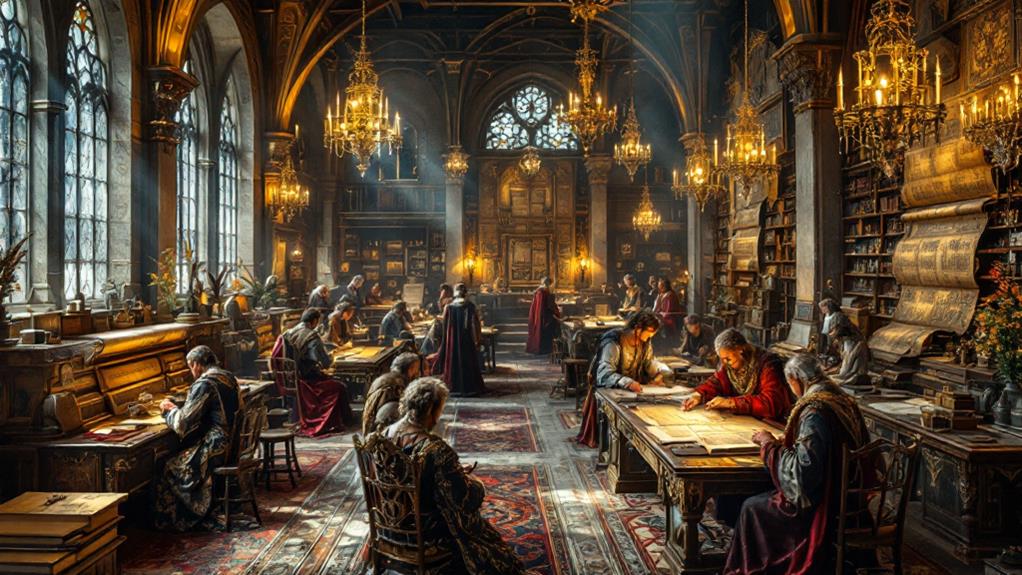
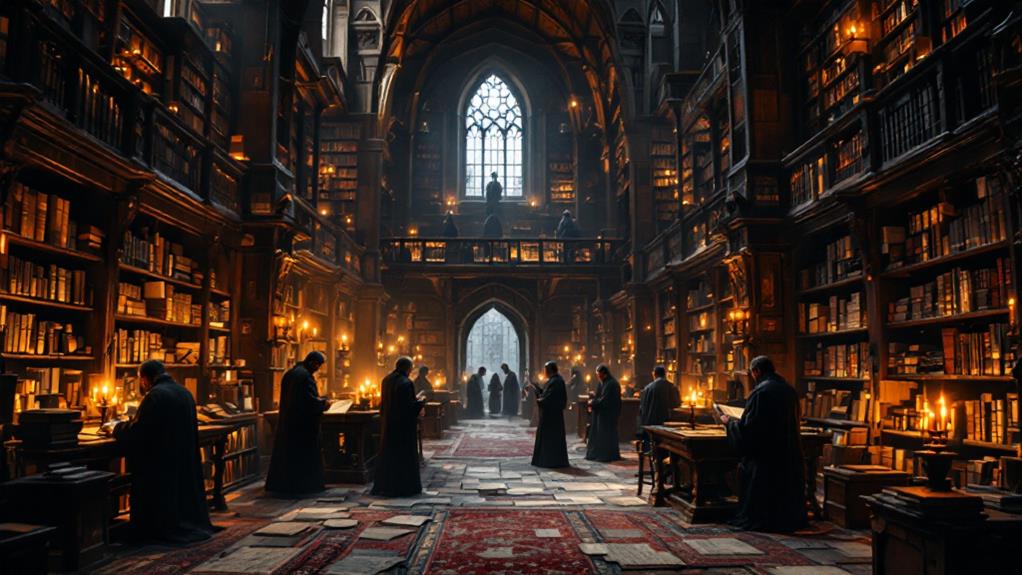
You'll find that royal patronage greatly influenced the production of historical manuscripts. Monarchs shaped the themes, styles, and purposes to reflect political agendas and reinforce their legacy. Their financial backing allowed for the lavish creation and preservation of manuscripts, securing skilled artisans' input in crafting visually striking works. Richly illustrated pages asserted authority and legitimized rulers through symbolism. Royal commissions, often stored in grand libraries, played a vital role in preserving cultural identity and historical narratives. With their support, manuscripts became more than mere texts—they became enduring cultural gems, hinting at the profound impact on historical storytelling.
Influence of Monarchs on Manuscripts
Throughout history, monarchs have wielded significant influence over the creation and preservation of manuscripts. As you explore this fascinating subject, you'll uncover how royal influence shaped the very fabric of manuscript evolution. Monarchs, with their vast resources and authoritative power, often dictated the themes, styles, and purposes of these manuscripts. Their preferences and political agendas could steer the direction of literary and artistic endeavors, resulting in a rich tapestry of texts that reflected the prevailing ideologies and cultural values of their period.
Imagine you're a scribe or an artisan in the royal court. The monarch's preferences directly impact your work, guiding your hand in the creation of illuminated manuscripts, chronicles, and religious texts. These documents not only served educational or religious purposes but also acted as tools for propaganda, reinforcing the monarch's power and legacy. By favoring specific stories or interpretations, rulers could subtly alter the course of manuscript development, ensuring their reign and ideals were immortalized.
In this way, the influence of monarchs was crucial. Their decisions and tastes left an indelible mark on the manuscripts of their time, guiding the cultural and historical narratives that would be passed down through generations.
Resources and Support From Royalty
Royalty provided a wealth of resources and support that was vital in the flourishing of manuscript culture. When monarchs offered royal grants, they guaranteed that scribes and artists had the financial backing necessary for their labor. This manuscript funding allowed for the creation of lavishly illustrated and carefully crafted works. You'd find that these grants often came with artistic direction from the royals themselves, who wanted their manuscripts to reflect their tastes and political messages.
The historical context played a significant role, as monarchs used manuscripts to assert their authority and legitimize their rule. By supporting the production of historical records, they created a legacy to be preserved for future generations. Royal libraries, stocked with these precious manuscripts, became centers of learning and culture, showcasing the intellectual prowess of the kingdom.
Preservation efforts were also a priority. Royals understood the value of maintaining these works for posterity, so they invested in the best materials and storage methods available. Through these efforts, you can see how royal patronage not only shaped the content and quality of manuscripts but also guaranteed their survival over centuries.
Collaboration With Skilled Artisans
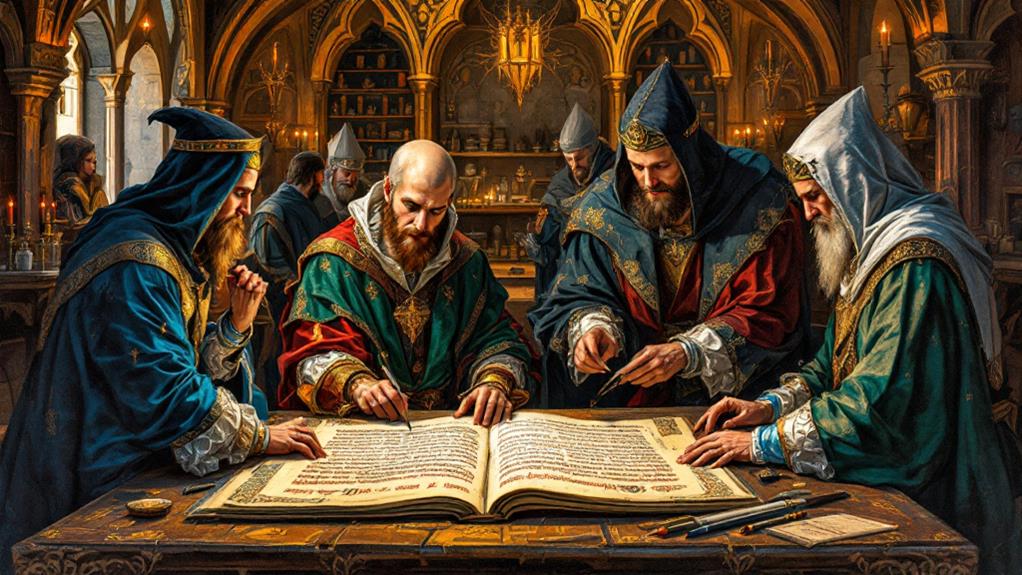
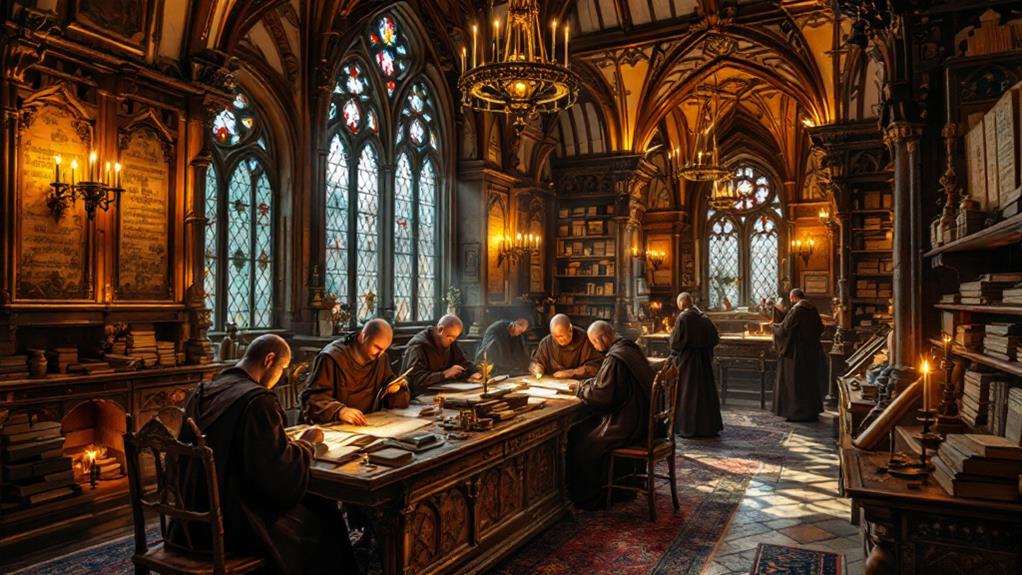
While monarchs provided the necessary resources and support, the creation of exquisite manuscripts wouldn't have been possible without the collaboration with skilled artisans. These artisans were the unsung heroes behind the lively illustrations and intricate designs that filled the pages. You'd find them working diligently in artist workshops, where they honed their craft and shared groundbreaking manuscript techniques. Their expertise in diverse areas, such as calligraphy, illumination, and bookbinding, was crucial to transforming raw materials into works of art.
In these workshops, artisans combined their unique skills to create cohesive and visually stunning manuscripts. Each artisan contributed to different stages of the production process, ensuring that every aspect of the manuscript was executed with precision. You'd see calligraphers carefully crafting letters with fluid elegance, while illuminators added colorful shades and gold leaf to bring the pages to life. Bookbinders then assembled the manuscript, protecting its contents while adding their own artistic touch.
Through collaboration, these artisans raised the manuscripts beyond mere texts, turning them into cultural gems. Their dedication and craftsmanship were instrumental in the lasting legacy of historical manuscripts, showcasing the power of royal patronage combined with artistic skill.
Artistic Vision and Royal Aspiration
In the creation of historical manuscripts, an artistic vision often intertwined with royal aspiration to produce masterpieces that transcended simple documentation. You can see how monarchs, driven by royal inspiration, sought to craft a legacy that would endure for centuries. They didn't just want records; they wanted a representation of their reign that reflected their ideals and ambitions. This led to a unique blend where the artistic identity of the age was shaped by the desires of the throne.
As you investigate these manuscripts, you'll notice how the royal patron's aspirations directly influenced the artistic choices. Monarchs often employed skilled artisans to guarantee that the visual narrative aligned with their political and cultural objectives. By doing so, they not only preserved their lineage but also projected their power and sophistication. This artistic identity became a tapestry of royal inspiration, weaving intricate details that spoke volumes about the monarch's vision.
Your understanding of this interplay reveals how the aspirations of kings and queens were not just personal dreams but crucial in shaping the artistic landscapes of their time. Through their patronage, they left a lasting artistic legacy that continues to captivate and inform.
Symbolism and Authority in Art
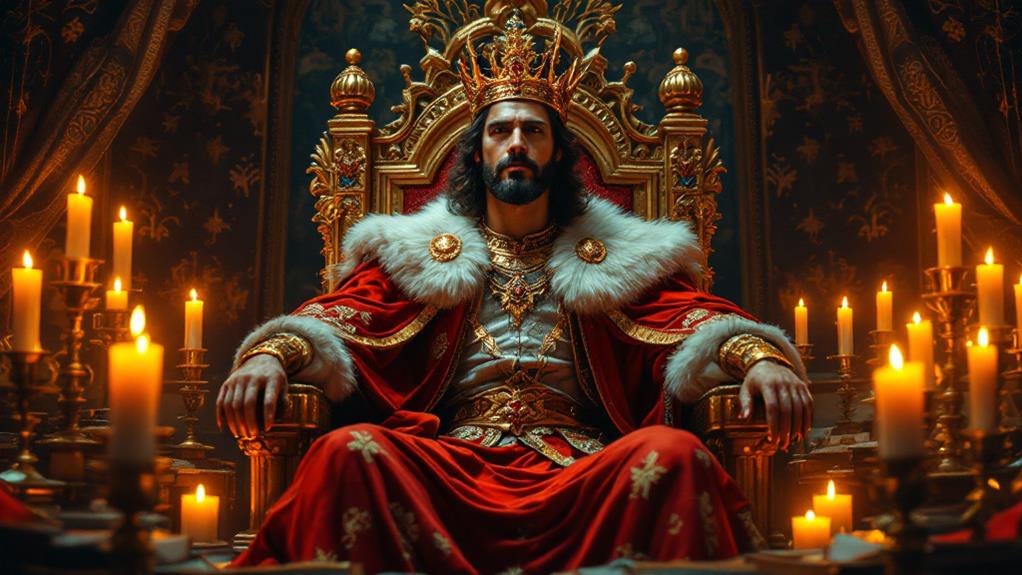
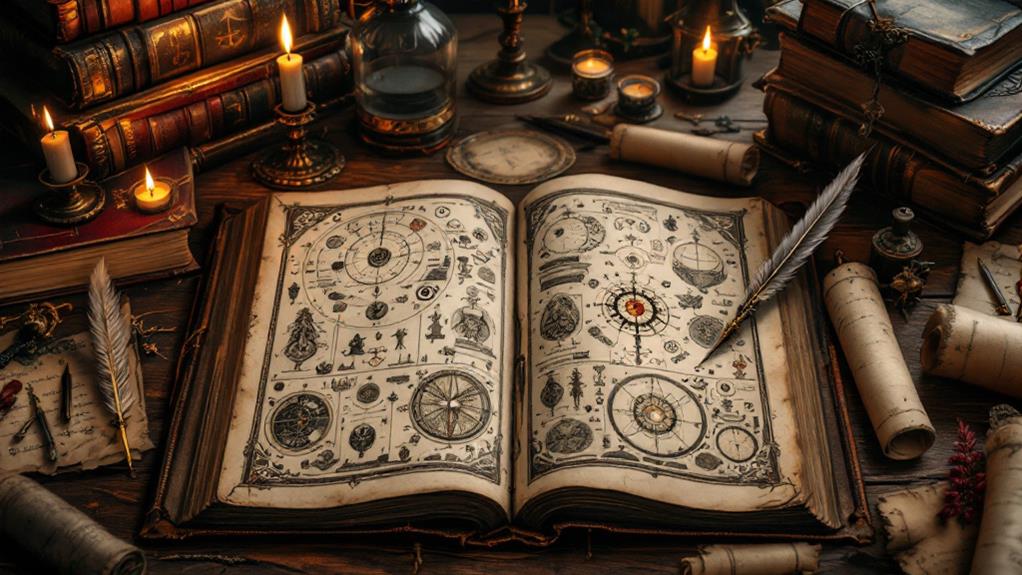
Amidst the pages of historical manuscripts, the symbolism embedded within the art reveals the interplay of power and authority. As you investigate these works, you'll notice how symbolic representation becomes a vital tool for conveying messages of dominance and legitimacy. For instance, the presence of regal imagery—crowns, scepters, and thrones—doesn't just embellish the pages; it asserts the ruler's divine right to govern. You'll see how these symbols serve as a visual language, communicating the sovereign's power to both literate and illiterate audiences.
Artistic authority plays a significant role in crafting these symbolic messages. As an artist commissioned by royalty, you'd be tasked with translating political narratives into visual form. Your work would need to align with the ruler's ideology, reinforcing their image and influence. The intricate designs and motifs aren't mere decorations; they're deliberate choices that reflect the artist's understanding of power dynamics. You'd often work closely with patrons to guarantee the art aligns with their vision of authority. Through this collaborative process, the manuscript becomes a reflection of both artistic skill and the strategic use of symbolism to uphold royal authority.
Preservation of Knowledge Through Patronage
Royal patronage's vital role in preserving knowledge through historical manuscripts can't be overstated. When you consider how monarchs supported scribes and scholars, it's clear they contributed greatly to knowledge preservation. Their investment guaranteed that key texts were not only copied but also carefully maintained through manuscript conservation. By doing this, royal patrons helped protect the intellectual heritage of their time.
Here's how this support made a profound impact:
- Funding: Royal patronage provided the necessary financial resources to create and preserve manuscripts. Without this backing, many texts might have been lost to history.
- Access to Experts: Monarchs often employed the best scribes and scholars. By providing them with resources and a stable environment, they enabled the production of high-quality, accurate manuscripts.
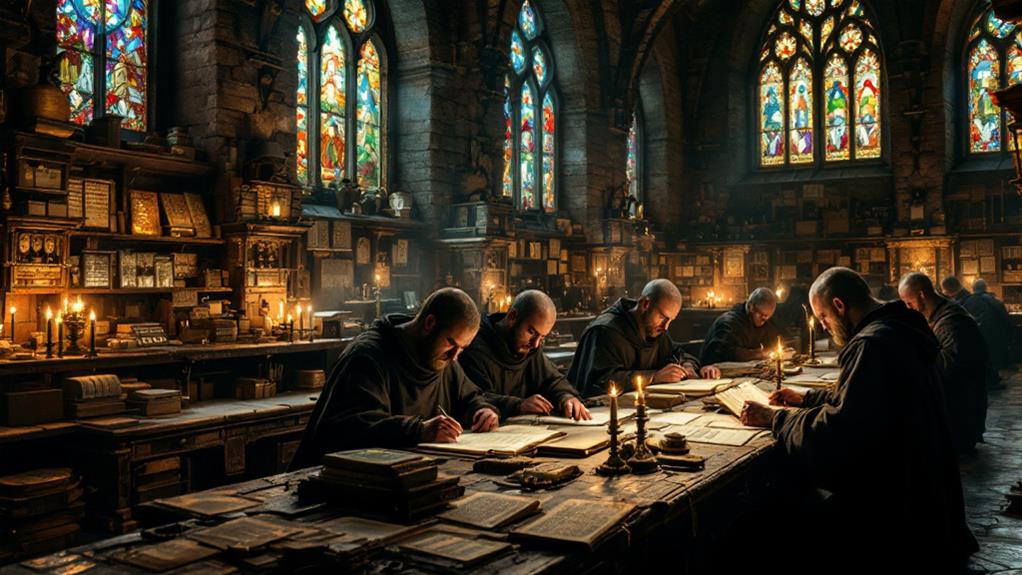
- Infrastructure: Royals established libraries and scriptoria, creating spaces where knowledge could be safely stored and accessed by future generations.
- Cultural Prioritization: By valuing and commissioning works, royals placed a high cultural importance on knowledge preservation, which encouraged others to follow suit.
In embracing the power of royal patronage, you see a legacy that extends beyond their reigns, securing the survival of invaluable historical knowledge for future generations.
Cultural Impact of Royal Commissions
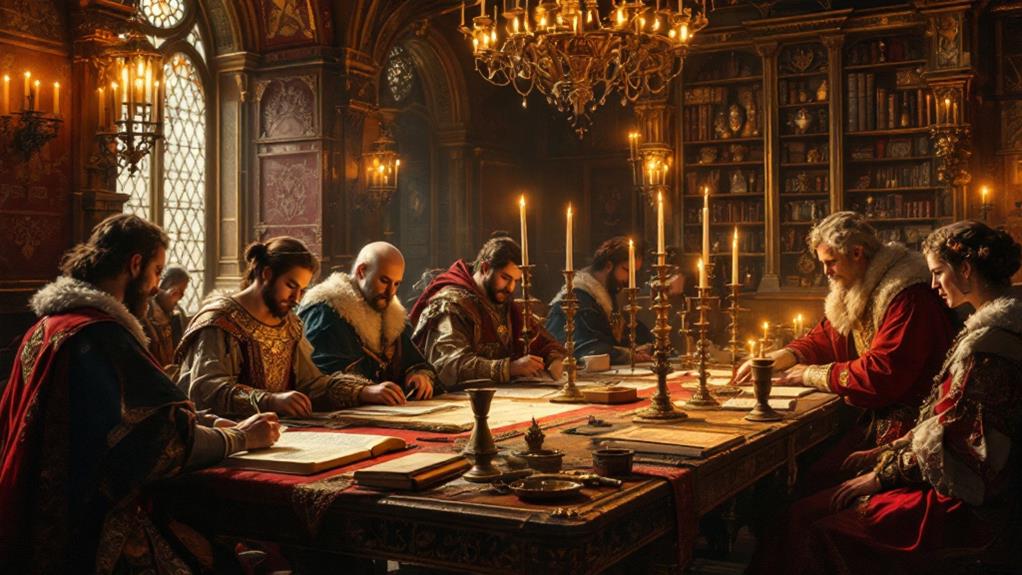
Recognizing the preservation of knowledge through patronage highlights another significant aspect: the cultural impact of royal commissions. When a monarch commissions a manuscript, they're not just preserving history—they're shaping cultural identity. You see, royal commissions often reflect the ideals and values of their time. They play a vital role in defining how society views itself and its heritage. By supporting specific themes or styles, a ruler can promote a particular narrative or artistic direction, influencing how future generations perceive their past.
Royal commissions also drive artistic innovation. When artists and scribes work under royal patronage, they have the resources and freedom to investigate new techniques and ideas. This environment fosters creativity, leading to groundbreaking works that push the boundaries of existing artistic norms. As a result, these commissioned manuscripts often become cultural gems, reflecting the height of the artistic achievements of their period.
Moreover, these works serve as a bridge between different cultures. By incorporating diverse influences, they enrich the cultural tapestry of a kingdom. In this way, royal commissions not only preserve the past but also inspire future generations, ensuring that cultural identity remains dynamic and constantly changing.
Legacy of Royal Manuscripts
Throughout history, royal manuscripts have left a profound legacy that continues to influence our understanding of the past. These manuscripts hold immense historical significance, offering insights into the culture, politics, and beliefs of the times they were created. As you investigate the legacy of these documents, you'll find that they've shaped historical narratives and influenced the way we perceive different periods. Here's how the legacy of royal manuscripts manifests today:
- Historical Significance: They provide a direct link to the past, allowing you to witness history through the eyes of those who commissioned them.
- Cultural Heritage: These manuscripts are prized for their artistic beauty and are essential components of cultural heritage, bridging gaps between generations.
- Manuscript Conservation: Efforts to preserve these documents guarantee their survival for future study, maintaining their condition and accessibility.
- Educational Value: They serve as invaluable resources for researchers and historians, offering firsthand accounts that deepen your understanding of historical events.
Related posts