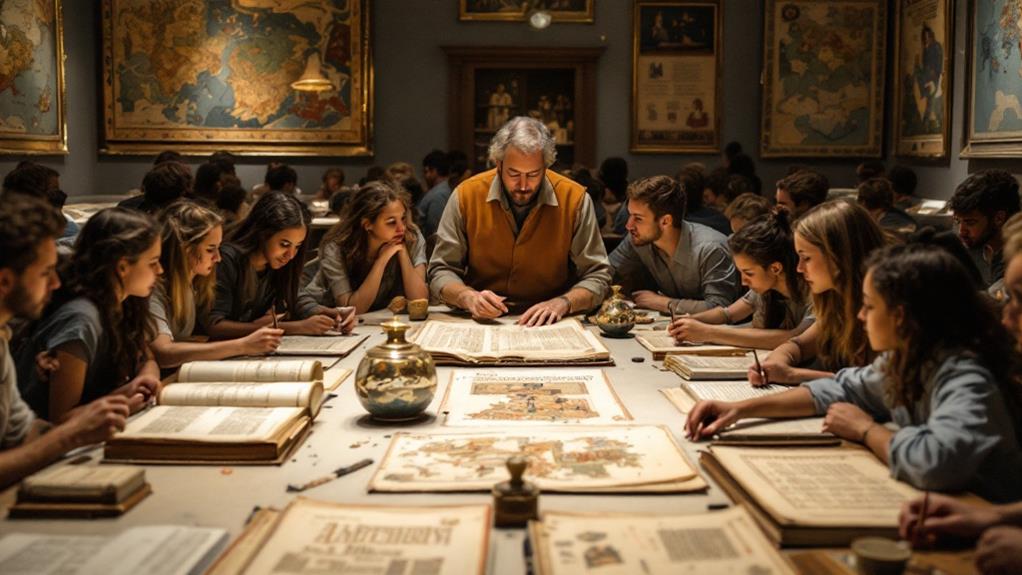
The Journey of Folios: From Private Collections to Museum Exhibits
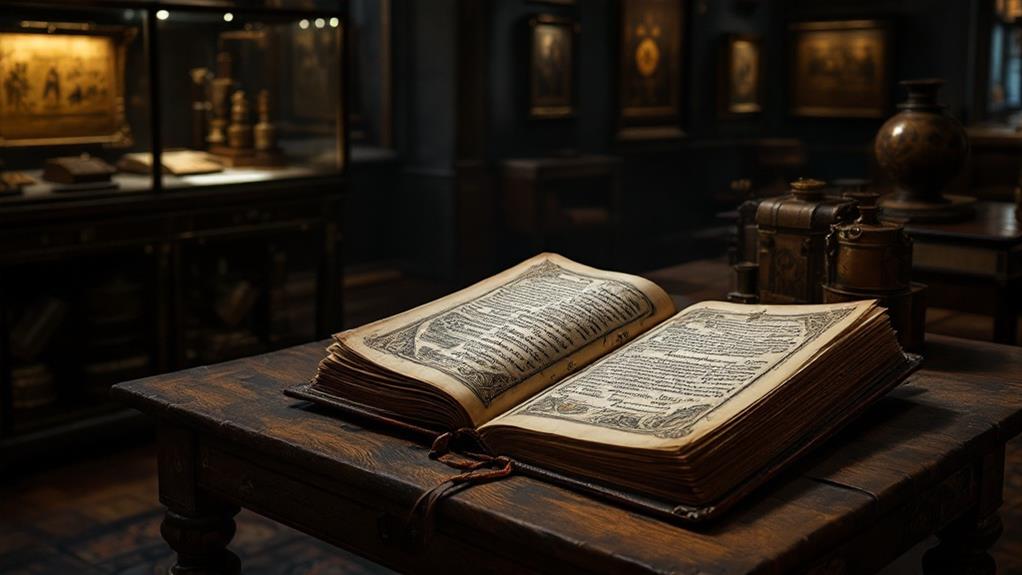
You'll find that folios have traveled a remarkable path from private collectors' gems to public museum showcases. They began as practical alternatives to scrolls, quickly becoming more than just written records. Collectors prize them for their beauty and historical significance, shaping their value and demand. Preservation guarantees their survival, balancing traditional care with modern digitization. Libraries and museums play pivotal roles, turning private curiosities into accessible cultural touchstones. Exhibits breathe life into these historic pages, engaging you through creative displays and narratives. The expedition of folios mirrors the broader story of human curiosity and cultural development, inviting further exploration.
Origins of Folios
Delving into the origins of folios reveals a fascinating evolution in the way humans recorded and preserved information. You might find it intriguing how folio history is intertwined with the development of manuscript production. Initially, people used scrolls, which were cumbersome and difficult to handle. As the demand for more efficient ways to store information grew, folios emerged as a revolutionary solution. Essentially, a folio is a single sheet of paper or parchment, folded once to create four pages. This simple yet effective design transformed how manuscripts were produced and handled.
The shift from scrolls to folios marked a significant change in manuscript production. You can see how this change allowed scribes and scholars to organize texts more effectively, making it easier to navigate through multiple pages. Furthermore, folios facilitated the inclusion of illustrations and annotations alongside text, enriching the content and making it more engaging.
Manuscript production during the medieval period relied heavily on folios, as they were easier to bind into codices, or books. This development not only improved the durability of written works but also contributed to the dissemination of knowledge, laying the foundation for modern book design.
Private Collectors' Influence
Private collectors have played an essential role in preserving and shaping the history of folios. As a collector, you bring a unique perspective and passion to the world of folio collecting. Your motivations can range from a deep appreciation for art and literature to a desire for investment and prestige. You carefully select pieces that resonate with your personal interests and values, often seeking out rare and historically significant works.
The impact of your efforts is evident in the market trends that stem from your preferences. When you favor certain artists, authors, or periods, you inadvertently influence the demand and value of those folios. This, in turn, affects how other collectors and institutions perceive and prioritize their own acquisitions.
The Art of Preservation

Preservation's essential role in the life of folios can't be overstated, as it guarantees these cultural gems endure for future generations. To achieve this, you must engage in both traditional conservation techniques and adopt digital preservation. These methods guarantee that folios remain accessible despite their fragile nature. Start by considering environmental factors—temperature and humidity control in archival storage is imperative to prevent deterioration over time.
Understanding the historical significance of each folio guides your approach to preservation. Use restoration methods sparingly, focusing on maintaining integrity rather than altering original features. Ethical considerations come into play when deciding how much intervention is necessary, balancing the folio's authenticity with its longevity.
Digital preservation offers an avenue to combat accessibility issues. By digitizing folios, you can share them more widely, allowing scholars and enthusiasts to study them without risking physical damage. However, this too requires careful handling to guarantee digital files remain intact and accessible over time.
Preservation isn't just about maintaining the past; it's about making certain these artifacts can continue to be appreciated and studied. As you navigate the art of preservation, keep in mind that every decision shapes the future of these invaluable historical documents.
Folios in the Renaissance
Throughout the Renaissance, folios played an essential role in the cultural and intellectual blossoming of the timeframe. You'd find that they weren't just books; they were masterpieces of folio craftsmanship. These folios beautifully showcased manuscript aesthetics with ornate designs and detailed illustrations. Renaissance innovations in printing and binding techniques allowed for more elaborate and durable folios, making them valued possessions.
Artistic collaborations thrived during this epoch. Artists, scribes, and scholars worked together, resulting in folios that were not only visually stunning but also intellectually stimulating. These folios served as platforms for intellectual exchanges, where ideas flowed freely across disciplines and borders. With the rise of patronage systems, wealthy individuals and families commissioned these works, ensuring that literary trends and scholarly works reached wider audiences.
Folios from this period hold immense historical significance. They capture the zeitgeist of a time when art, science, and literature were evolving rapidly. Regardless of whether you were a patron admiring the craftsmanship or a scholar engrossed in new ideas, Renaissance folios offered a window into the lively world of that time. They remain timeless artifacts that continue to inspire and educate us today.
The Role of Libraries

Libraries have always been the guardians of folios, providing a sanctuary for these invaluable works and ensuring their preservation for future generations. By housing rare collections, they offer you unique access to texts that might otherwise be lost. Library archives serve as a cache, where you can investigate historical documents and conduct research using rich resources. Their preservation techniques are vital, employing controlled environments and expert handling to maintain these works' integrity.
In recent years, digitization efforts have transformed how you can engage with folios. Libraries have adopted technology to make rare texts more accessible, allowing you to view them online from anywhere. This increases community access and supports educational programs, making these priceless resources available to students, researchers, and the public.
Libraries also play a significant role in public engagement. They organize exhibits and events that invite you to delve into the world of folios, sparking curiosity and fostering a deeper appreciation for these works. Through:
- Interactive workshops
- Lectures and discussions
- Collaborative projects
libraries create opportunities for you to connect with folios on a personal level, ensuring their relevance in the contemporary world.
Transition to Public Ownership
In the current evolving society, the change to public ownership of folios marks a significant shift in how these valued works are managed and accessed. This change aims to improve public accessibility, allowing more people to appreciate and learn from these cultural gems. With public ownership, folios are no longer confined to private collections, but are instead shared with a broader audience. This shift not only democratizes access but also enriches the cultural landscape by preserving historical works for future generations.
You might wonder about the ownership debates that often accompany such changes. Some argue that private collectors have the resources to better preserve these delicate works. However, public institutions like museums and libraries often provide more opportunities for scholarly research and public engagement. As folios move into public ownership, they become part of a shared heritage, fostering a sense of community and collective responsibility.
The challenge lies in balancing preservation with accessibility. Public institutions must guarantee these folios remain in good condition while making them available to you and others. This change to public ownership is a dynamic process, reshaping how society values and interacts with these historical artifacts.
Curating Folio Exhibitions
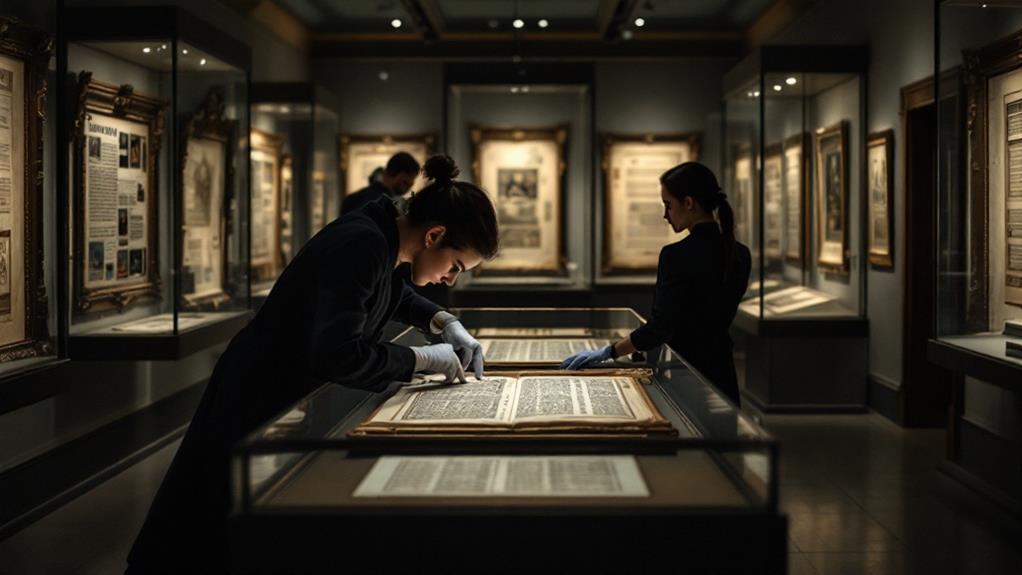
In the context of curating folio exhibitions, the focus shifts to how these remarkable works are presented to the public. As a curator, your task is to create an exhibition design that not only captivates but also educates. You'll want to contemplate how the layout of the space can improve the audience's understanding and appreciation of each folio. The right design can guide visitors on an expedition, highlighting the unique stories behind these historical pieces.
To increase audience engagement, think about incorporating interactive elements that invite visitors to connect with the folios on a deeper level. This might include digital touchscreens that provide supplementary context or audio guides that narrate the history and significance of the works. Engaging storytelling techniques can transform a static display into a dynamic experience.
Reflect on these aspects when planning your exhibition:
- Lighting and ambiance: Use lighting to draw attention and create mood.
- Narrative flow: Arrange folios in a sequence that tells a compelling story.
- Interactive stations: Include elements that encourage visitor participation.
Folios in Modern Museums
As you move from the intricacies of exhibition design, consider the evolving role of folios in contemporary museums. Today, digital folios are transforming the way visitors interact with historical and modern artworks. Folio technology improves folio accessibility, allowing for interactive exhibitions that invite you to engage directly with the material. Through touchscreens and digital displays, museums offer dynamic educational programs that connect you with both ancient texts and contemporary artists.
The integration of folio restorations with these technologies means you can experience the vibrancy of restored works in a way that's both engaging and informative. Museums utilize narrative storytelling to create a connection between you and the folios, making the content more relatable and captivating.
Community engagement is crucial in this new period, as museums foster cultural collaborations to expand the reach and understanding of folios. By involving diverse voices and perspectives, you get a richer, more inclusive experience. Through these efforts, museums not only preserve the past but also inspire future generations. Folios in modern museums are no longer static artifacts but active participants in a dialogue that bridges time and culture.
Cultural Impact and Legacy
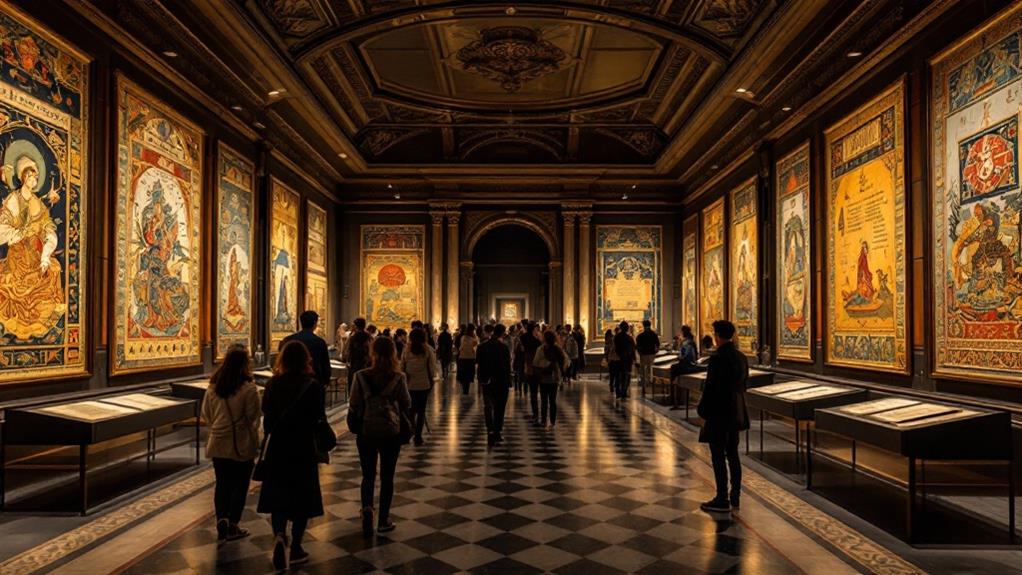
Understanding the cultural impact and legacy of folios means recognizing their profound influence on art, knowledge, and society throughout history. These cherished documents carry immense cultural significance, offering insights into the historical context of their creation. You'll find that folios reflect the artistic value and societal reflections of their time, providing a window into the past that's both educational and enlightening. They serve as crucial educational tools, connecting you with a range of disciplines and fostering interdisciplinary connections.
When you engage with these folios, you're not just observing relics of the past; you're partaking in a dialogue that spans centuries. The legacy preservation of these works guarantees that future generations continue to benefit from their wisdom and beauty. Through community engagement, museums and libraries bring these folios to life, inviting you to examine their pages and uncover the stories they hold.
- Cultural Significance: Folios capture the essence of their time, preserving significant cultural narratives.
- Educational Role: They serve as gateways to learning, inspiring curiosity and exploration.
- Interdisciplinary Connections: Folios bridge multiple fields, enriching your understanding of the world.
Related posts