The Influence of Religion on Historical Manuscripts and Folios
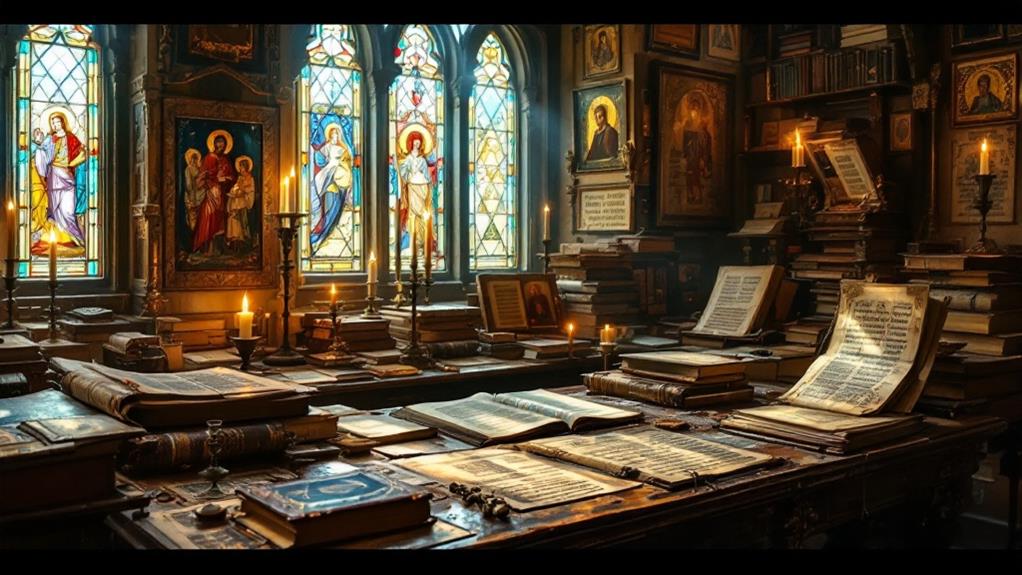
Religion has deeply influenced historical manuscripts and folios through patronage, symbolism, and craftsmanship. Religious leaders often commissioned these works to demonstrate piety, promote spiritual ideas, and preserve sacred texts. Artists used lively colors, gold leaf, and intricate illustrations to bring these theological narratives to life. Monastic communities played a vital role in copying and preserving these manuscripts, ensuring their survival. Furthermore, religious exchanges fostered diverse interpretations and styles, enriching the textual and artistic heritage across cultures. The intersection of religion and manuscripts offers a fascinating glimpse into the socio-cultural and spiritual dimensions of history and faith.
Religious Patronage and Commissioning
When exploring the impact of religious patronage and commissioning on historical manuscripts, it becomes clear that these practices were essential in shaping the content and aesthetics of many works. You'll notice that patrons, often religious figures or wealthy believers, had significant influence over the inclusion of religious symbolism and sacred narratives within manuscripts. Their motivations varied, from a desire to demonstrate piety to a wish to guarantee the propagation of particular theological messages.
As you investigate manuscript illumination, you'll see that patrons often commissioned artists to create visually stunning works that not only conveyed religious themes but also showcased the patron's status and devotion. The detailed illuminations served to improve the sacred narratives, making them more accessible and engaging to viewers. This artistic endeavor was not just about embellishment; it was about creating a connection between the divine and the earthly domain through vivid imagery.
Understanding the motivations of these patrons helps you appreciate how their investments in manuscripts were not just financial but also deeply spiritual. Their choices in religious symbolism and narrative focus shaped the way these texts were read and interpreted, leaving a lasting legacy on religious literature.
Thematic Elements in Sacred Texts
While religious patronage shaped the physical and visual aspects of historical manuscripts, it also played a notable role in determining the thematic elements embedded within sacred texts. You'll find that symbolic imagery often serves as a bridge between abstract beliefs and tangible understanding. For example, the use of light and darkness can symbolize divine presence and spiritual enlightenment, helping you grasp deeper spiritual concepts.
Narrative structures in these texts aren't just stories; they're carefully crafted to align with ritual significance and moral teachings. By following these narratives, you'll encounter lessons that guide ethical behavior and spiritual growth, reflecting the values and beliefs of the time.
Historical context greatly influences these thematic elements, providing you with insights into the socio-political climate when these texts were written. Such context allows you to understand why certain themes were emphasized and how they resonated with the intended audience.
Textual variations across different manuscripts often highlight diverse interpretations and applications of these themes. As you investigate different versions, you'll notice how adaptations in symbolic imagery or narrative emphasis reflect the evolving needs and beliefs of distinct communities, enhancing your understanding of the texts' enduring relevance.
Craftsmanship and Artistic Techniques
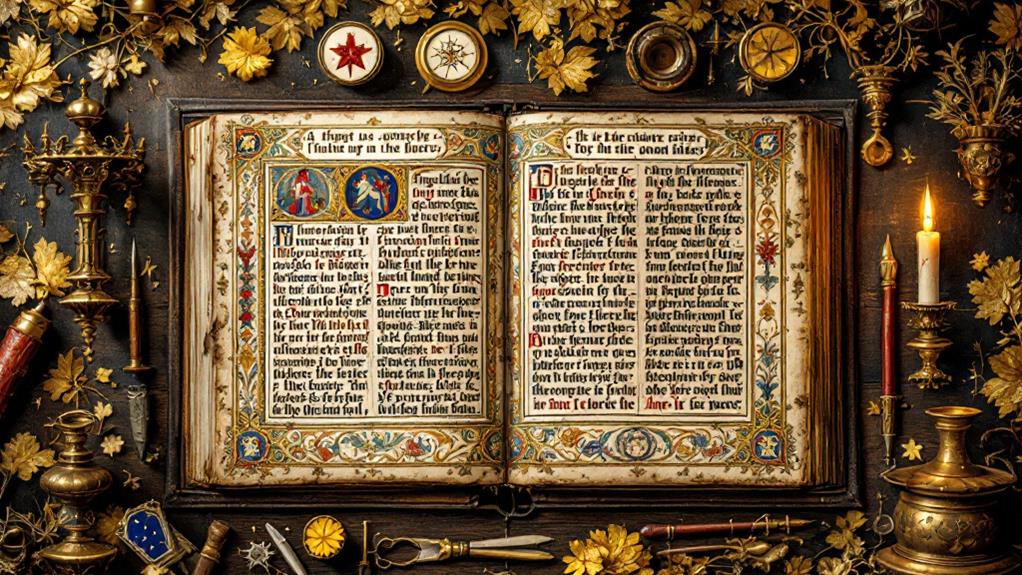
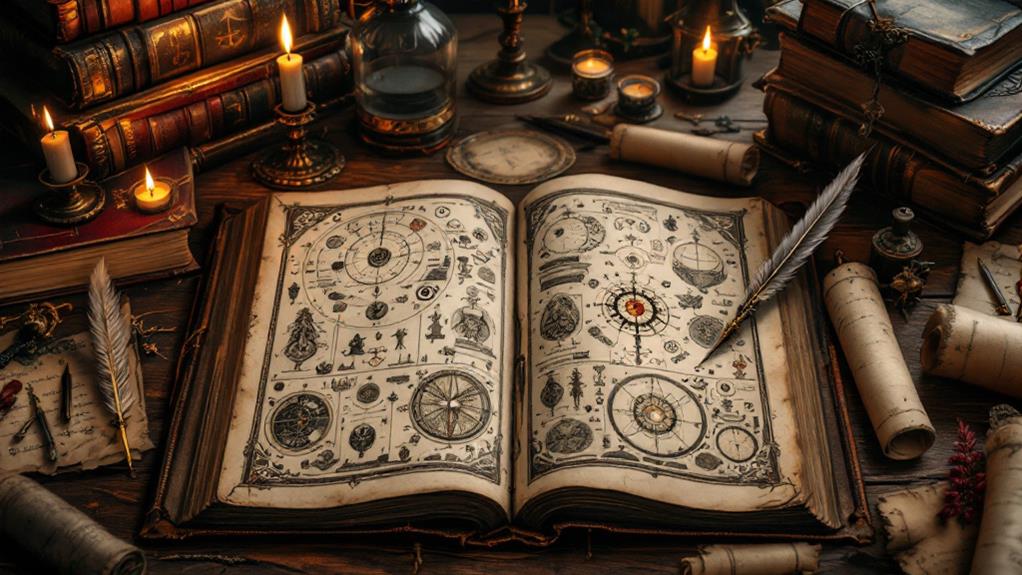
Craftsmanship and artistic techniques in historical manuscripts draw you in with their intricate details and masterful execution. When you look closely, you see how illuminated illustrations bring stories to life, capturing your imagination with lively colors and gold leaf accents. These illustrations are not just decorative; they're a demonstration of the skill and devotion of the artisans who created them. You can almost feel their passion in every stroke of the quill and daub of the brush.
Parchment preparation is another critical aspect of these masterpieces. Craftsmen took great care in preparing animal skins, transforming them into smooth, durable surfaces perfect for receiving ink and paint. As you run your fingers over the parchment, you appreciate the thorough process that guarantees each page remains a worthy canvas for the scribe's art. The labor-intensive preparation is a demonstration of the value placed on these manuscripts, making them valued artifacts of the past.
As you explore further into these manuscripts, you notice the harmonious blend of craftsmanship and artistic techniques. Each manuscript becomes a reflection of the religious fervor and aesthetic sensibilities of its time, drawing you into its historical and spiritual essence.
Preservation by Monastic Communities
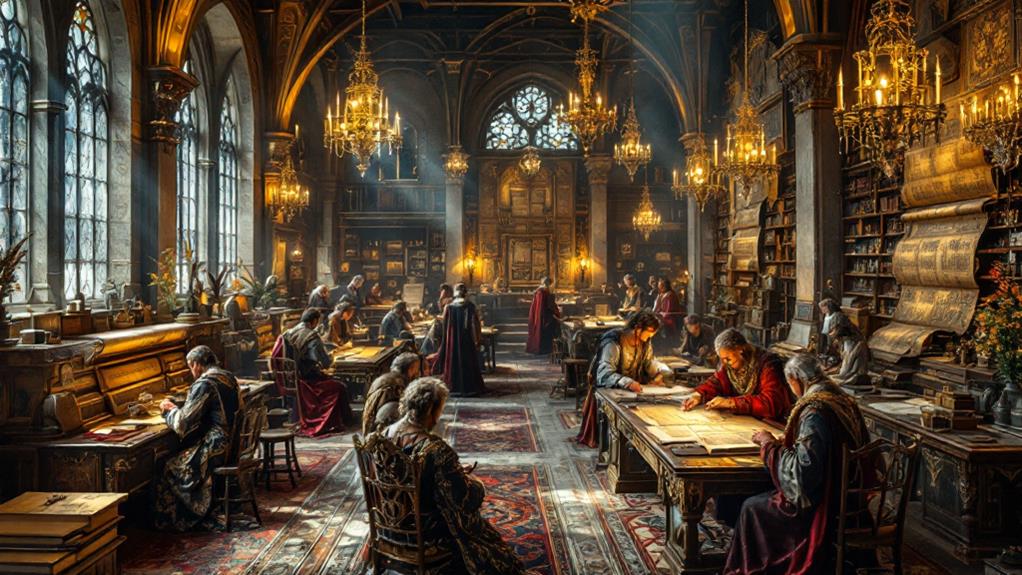
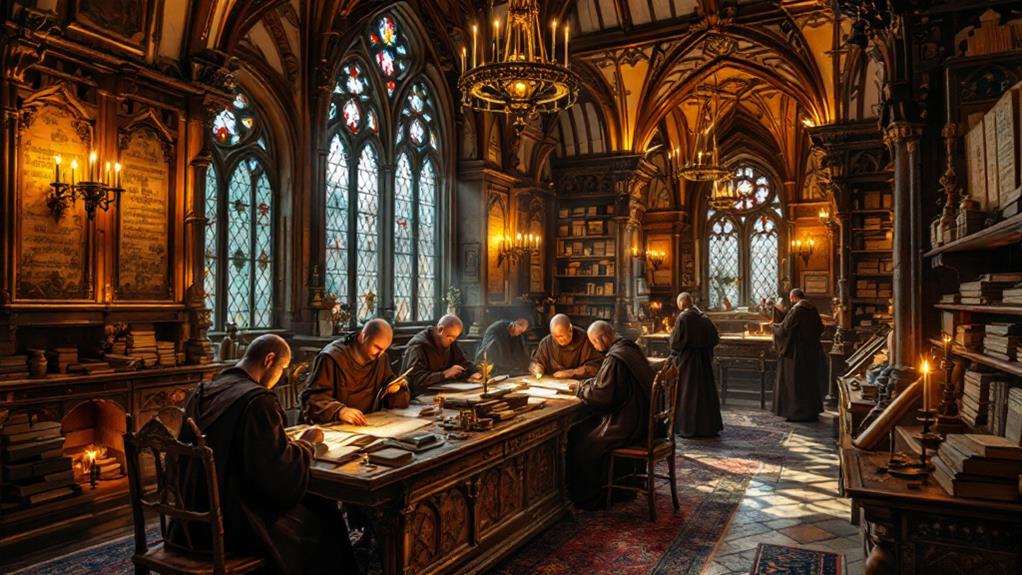
Within the walls of monastic communities, the preservation of historical manuscripts was both a sacred duty and a labor of love. You'd find monks dedicated to carefully copying texts, guaranteeing that knowledge endured through the years. Their scriptorium practices were essential, serving as the backbone of this preservation process. In these rooms, each monk followed a strict routine, focusing on accuracy and detail to avoid mistakes.
Manuscript illumination played a significant role in this endeavor. It wasn't just about copying text; it was about transforming manuscripts into visual masterpieces. Illuminators used lively colors and gold leaf to bring these works to life, making them not only informative but also beautiful. This artistry guaranteed that the manuscripts stood the test of time, attracting future generations to their cultural and religious significance.
Here's how monastic communities contributed to manuscript preservation:
- Scriptorium Practices: Monks dedicated hours daily to copying and correcting texts.
- Manuscript Illumination: Artistic embellishments improved both durability and appeal.
- Archival Storage: Manuscripts were stored in controlled environments, protecting them from decay.
Cross-Cultural Religious Exchanges
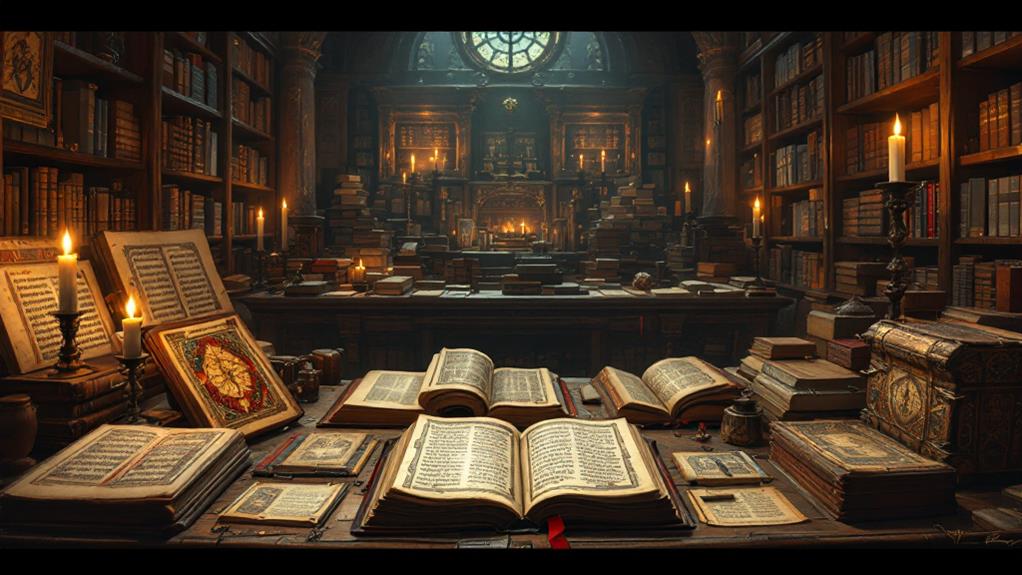
Monastic communities didn't just preserve manuscripts; they also played an essential role in the exchange of religious ideas across cultures. As a member of such a community, you'd find yourself at the center of lively interfaith dialogue. Engaging with scholars from different religious traditions, you'd share and gain insights into a range of sacred texts. The manuscripts you handle wouldn't just be religious artifacts; they'd be living testimonies of spiritual exchange.
Imagine the scene: a scholar from a distant land arrives with a scroll containing wisdom from their own religious tradition. You'd offer your own sacred texts in return. This mutual sharing isn't just about the written word; it's an exchange of philosophies, ethics, and spiritual insights. Your role is instrumental in fostering understanding and respect among diverse faiths.
You'd witness firsthand how monks acted as bridges, connecting East and West, sharing Buddhist sutras, Christian gospels, or Islamic treatises. These exchanges didn't just enrich the libraries but also the spiritual lives of those involved. Your community's commitment to interfaith dialogue highlights the significance of collaboration, reminding you that sacred texts can unite rather than separate.
Evolution of Religious Thought
How has religious thought evolved over centuries, weaving through the fabric of history like a dynamic tapestry? You see, it's a fascinating expedition marked by doctrinal shifts and interfaith dialogue. Religions haven't remained static; they've adapted to cultural, social, and political changes. Initially, religious thought was often rigid, with strict adherence to established doctrines. However, as societies interacted, the exchange of ideas led to significant transformations.
- Doctrinal Shifts: Over time, religions have experienced shifts in their core teachings. These shifts often arise from reinterpretations of sacred texts and are influenced by new understandings in science and philosophy.
- Interfaith Dialogue: Engaging in conversations with other faiths has been essential in the evolution of religious thought. Through dialogue, religions have found common ground, leading to more inclusive and expansive worldviews.
- Cultural Adaptation: As religions spread across different regions, they've integrated local customs and traditions. This adaptability has guaranteed their survival and relevance in diverse cultures.
Related posts