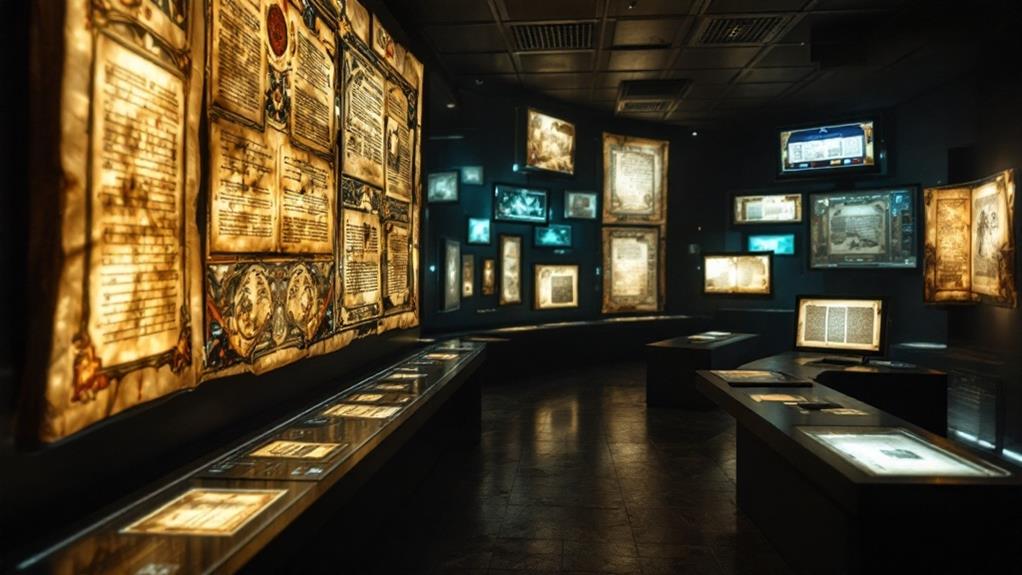
The Impact of Digitizing Historical Folios on Modern Scholarship

Digitizing historical folios revolutionizes your access to rare manuscripts and fragile documents, making them available from anywhere with an internet connection. It democratizes knowledge, allowing everyone to engage with cultural heritage without the traditional barriers. Digitization preserves these invaluable artifacts while encouraging interdisciplinary collaboration and overcoming geographical constraints. You benefit from cost-effective research solutions and the interactive nature of digital platforms, which foster creativity and efficiency. However, challenges like technical limitations and copyright issues persist. As digital archiving advances, investigate how future trends could further transform your scholarly experience.
Accessibility of Rare Manuscripts
The digitization of rare manuscripts transforms accessibility, allowing you to investigate historical artifacts previously confined to distant archives. With technology integration, digital literacy becomes crucial, equipping you to navigate these complex documents effectively. As you engage with virtual exhibitions, you're not just a passive viewer; instead, you actively participate in manuscript interpretation, revealing the narratives hidden within ancient texts.
User engagement reaches new heights through digital platforms, encouraging you to probe deeper into history. Collaborative projects foster connections between scholars and the public, promoting educational outreach that transcends geographical boundaries. By participating in these initiatives, you contribute to a dynamic exchange of knowledge, enriching your understanding of the past.
Technology integration also raises questions of archival ethics, ensuring that digitized materials are handled responsibly. As a user, you must respect these guidelines, acknowledging the cultural significance of each document. Through these ethical practices, you help preserve the integrity of our shared heritage.
In this digital age, you're empowered to investigate rare manuscripts with unprecedented accessibility, fostering a deeper appreciation for history. By embracing digital literacy and engaging with these resources, you become an active participant in preserving and interpreting our collective past.
Preservation of Fragile Documents
When handling fragile documents, digitization plays a crucial role in their preservation. You know how delicate these materials can be, often at risk of damage from light, temperature, or even touch. By converting these fragile materials into digital formats, you're not only safeguarding their content but also minimizing the need for physical handling. This process guarantees that the original documents remain intact for future generations.
Digital preservation offers a practical solution to the challenges posed by fragile materials. You can create high-resolution images or scans that provide a detailed view of the documents without risking their integrity. This method allows you to investigate and study the texts without exposing them to harmful conditions. Furthermore, digitization allows for the implementation of backup systems, guaranteeing that even if the physical copies deteriorate, the information won't be lost.
Moreover, you gain the ability to share these preserved digital copies with scholars and researchers worldwide. This reduces the need for moving delicate documents across distances, which can sometimes lead to further degradation. Ultimately, digital preservation is a proactive step you can take to maintain the invaluable heritage embedded in fragile historical documents.
Democratization of Knowledge

Gaining access to historical folios through digitization democratizes knowledge, making it available to anyone with an internet connection. This shift to open access transforms how you engage with cultural heritage. No longer confined to physical libraries or archives, these invaluable resources become accessible through online platforms. Regardless of whether you're a student, researcher, or history enthusiast, you can investigate a wealth of information at your fingertips.
Digital literacy plays a significant role in this democratization process. By developing your skills, you improve your ability to navigate and interpret these digital collections effectively. This guarantees a richer user experience, allowing you to probe deeper into historical contexts and narratives.
Community engagement thrives in this digital environment as knowledge sharing becomes more widespread. People from diverse backgrounds contribute to discussions, enriching the collective understanding of historical events. With content curation, you can personalize your investigation, tailoring it to your specific interests and needs.
Enhancing Interdisciplinary Collaboration
Digitizing historical folios markedly improves interdisciplinary collaboration. You can now engage in interdisciplinary research more seamlessly through data sharing and collaborative tools. These digital resources allow scholars from diverse fields like digital humanities, history, and computer science to work together, breaking down traditional academic silos. You'll find that scholarly networks foster a dynamic environment where ideas flow freely, leading to cutting-edge research outcomes.
By utilizing open access platforms, you can tap into a wealth of digitized materials, enabling you to participate in resource exchange that would have been unimaginable before. This open access fosters joint initiatives, encouraging experts from varied disciplines to contribute their unique perspectives to historical inquiries. These collaborations can lead to groundbreaking revelations that might have been overlooked in a single-discipline approach.
Moreover, digital tools facilitate real-time data sharing, making it easier for you to contribute to and benefit from ongoing research efforts. Through these means, interdisciplinary research becomes more than just a possibility—it becomes a thriving reality. In this interconnected academic landscape, digitized historical folios serve as a catalyst for improved interdisciplinary collaboration, transforming how you engage with and expand scholarly networks.
Overcoming Geographical Barriers
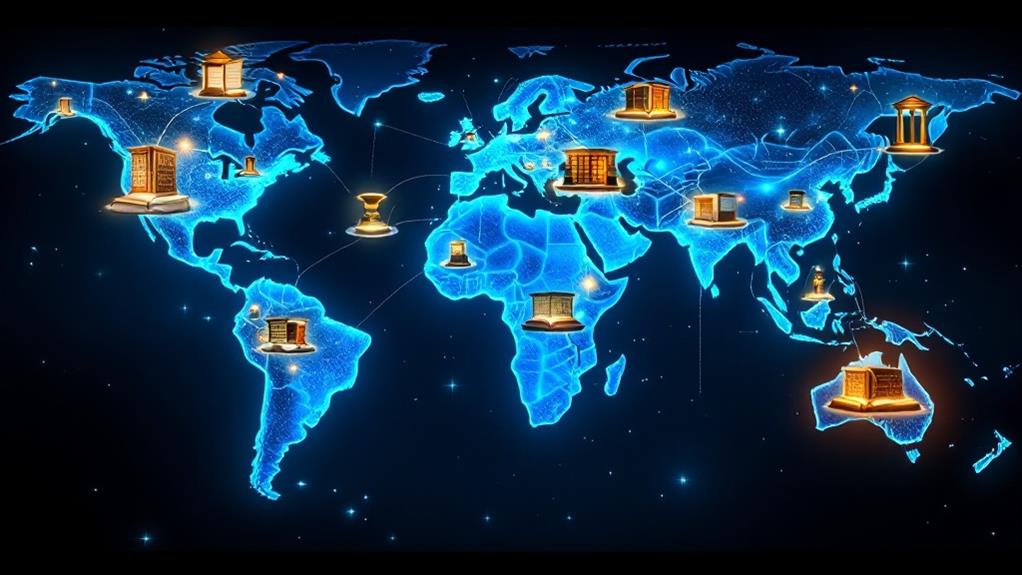
Building upon the collaborative potential of digitized historical folios, another significant advantage is the ability to overcome geographical barriers. When you access these folios online, you're no longer restricted by physical distance. Researchers, educators, and history enthusiasts worldwide can engage with these documents without leaving their locations. This opens up unprecedented opportunities for global engagement and learning.
With digital outreach strategies, institutions can reach an international audience keen to investigate historical gems. You can participate in virtual lectures or seminars that bring together experts from different continents, enriching your understanding through diverse perspectives. Virtual exhibition platforms further extend this reach. Imagine examining a carefully curated online exhibition of medieval manuscripts from your home or classroom. These platforms allow you to experience history in a dynamic and interactive way, often accompanied by expert commentary and analysis.
Moreover, the digitization of historical folios transforms how you collaborate. You can easily share findings, insights, and resources with peers across the globe, fostering an environment of shared knowledge and innovation. This capability not only improves the quality of research but also democratizes access to historical archives, ensuring that geographical boundaries don't limit your scholarly pursuits.
Cost-Effective Research Solutions
Through digitization, historical folios offer you cost-effective research solutions that were once unimaginable. The era of expensive travel and accommodation to access rare documents is over. Now, with just a few clicks, you can plunge into a world of knowledge from the comfort of your home. Digitized folios eliminate the need for physical handling, reducing costs associated with preservation and maintenance. Plus, you don't have to worry about wear and tear on fragile documents.
Open source tools are a game-changer, providing you access to powerful software without the hefty price tag. These tools allow you to analyze, annotate, and share your findings seamlessly. They often come with robust features that foster creativity and efficiency, enabling you to focus on your research without worrying about costs.
Collaborative platforms also play an essential role in cost-effectiveness. They let you work with other scholars worldwide, sharing resources and insights without incurring travel expenses. These platforms improve communication and collaboration, allowing you to build networks and partnerships that enrich your research. By leveraging these digital resources, you can achieve high-quality research outcomes without breaking the bank.
Advancements in Digital Archiving

As you explore cost-effective research solutions, you'll find that advancements in digital archiving are reshaping how we interact with historical documents. These innovations offer new ways to preserve, access, and study folios, enhancing both scholarship and user engagement. By integrating metadata standards, archives guarantee content discoverability and data interoperability, allowing for seamless cross-referencing across platforms.
Technological innovations in digital curation and preservation techniques have transformed archival practices. Here's how:
- Enhanced Metadata Standards: Implementing robust metadata standards guarantees consistent organization and easy retrieval, making research more efficient.
- Improved User Engagement: Digital platforms are designed to engage users interactively, offering tools that allow for thorough exploration and analysis of historical content.
- Advanced Preservation Techniques: Using cutting-edge technology, digital archives can preserve delicate documents without the risk of physical degradation, ensuring they remain accessible for future generations.
- Increased Data Interoperability: By adopting common frameworks, digital archives enable data sharing between different systems, facilitating broader research opportunities.
These advancements not only improve the accessibility of historical documents but also foster a more dynamic interaction between scholars and the materials they study. With these tools, you can probe deeper into history with unprecedented ease and precision.
Challenges in Digitization Efforts
Digitization's allure often overshadows the significant challenges that accompany this monumental task. Initially, ensuring data integrity during the conversion of historical folios is a major hurdle. You must be vigilant about maintaining the accuracy and authenticity of these precious documents. Copyright issues can also be a minefield, as maneuvering legal frameworks to digitize and share materials often requires expertise and patience.
Technical limitations present another barrier. Not every document can be easily scanned or stored, and some may require specialized equipment or software. Furthermore, developing metadata standards is essential for making these collections searchable and accessible, yet it can be complex and time-consuming.
User engagement is another challenge. Even if you create a digital archive, people need to know how to use it. This highlights the importance of digital literacy. Offering training or resources can help users make the most of these platforms.
Funding opportunities are critical but often scarce, limiting the scope of digitization projects. Successful initiatives frequently rely on collaborative platforms to pool resources and expertise. By partnering with other institutions, you can overcome some of these challenges, though it requires careful coordination and shared goals.
Future Trends in Digital Scholarship

Despite the challenges in digitization efforts, the horizon of digital scholarship holds promising trends that can redefine how we engage with historical documents. You're about to witness a transformation in how these materials are presented and analyzed. Here are some exciting trends to keep an eye on:
- Data Visualization: Imagine exploring historical folios with visual aids that bring intricate details to light. Data visualization tools can help you spot patterns and connections that aren't immediately obvious, making complex information more digestible and engaging.
- Interactive Platforms: These platforms will change how you interact with historical content. Instead of static pages, you'll have dynamic interfaces allowing you to dig deeper, annotate, and even collaborate with others in real-time, making research more collaborative and insightful.
- Machine Learning Integration: With machine learning, you can automatically transcribe and translate documents, saving time and improving accuracy. This technology will open up historical texts to a broader audience, removing language barriers and making scholarship more inclusive.
- Augmented Reality (AR): AR can revolutionize your experience by overlaying digital information onto physical spaces. Imagine standing in a museum and using your smartphone to view supplementary content and context about the exhibits, enriching your understanding of historical artifacts.
These trends promise to make digital scholarship more engaging, accessible, and revolutionary.
Related posts