The Evolution of Folio Ownership: From Monarchy to the Modern Era
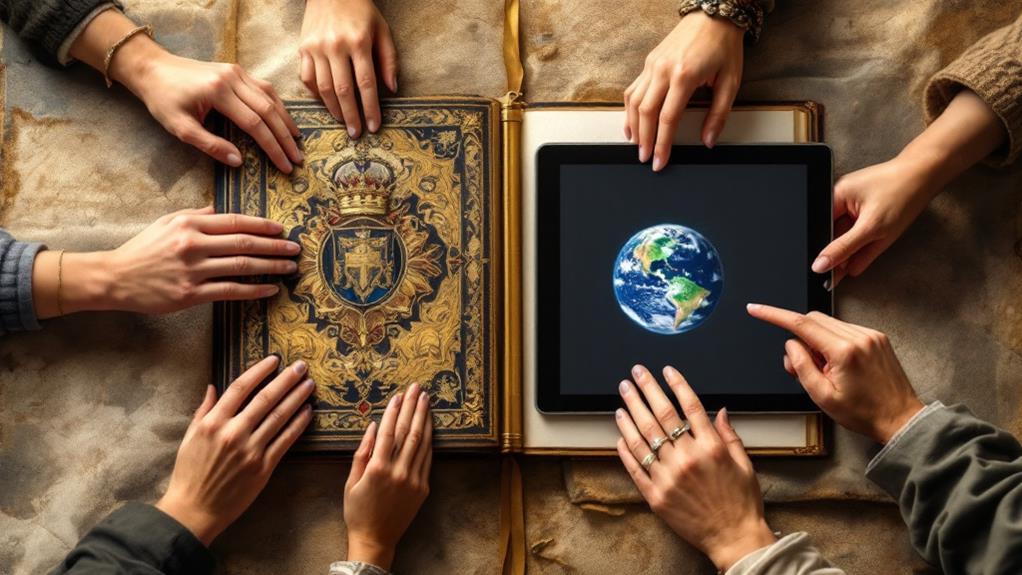
You'll find folio ownership fascinating as it evolves from a symbol of monarchical power to a keystone of modern knowledge access. Initially, monarchs used folios to reflect authority, power, and cultural priorities, with royal libraries housing vast collections. Over time, private collectors and innovations like the printing press made folios more accessible, breaking monopolies and democratizing knowledge. Public libraries and the digital revolution further expanded access, transforming how you interact with information. Today, digital technology offers unprecedented global access and engagement with these artifacts. The expedition continues to redefine cultural heritage and access, promising intriguing insights ahead.
Royal Libraries and Authority
The grandeur of royal libraries has long symbolized the authority and power wielded by monarchs throughout history. As you step into these vast collections, you're not just seeing books; you're witnessing centuries of royal patronage. Monarchs understood that amassing a library was more than a display of wealth—it was a declaration of their intellectual dominance and cultural influence. By sponsoring scholars, acquiring rare manuscripts, and assembling vast collections, they asserted their reign over knowledge along with territories.
Each book and manuscript within these libraries carries historical significance, offering a glimpse into the past. You might find that these collections preserved the wisdom of ancient civilizations, the advances of the Renaissance, and the philosophies that shaped modern thinking. They were curated with care, reflecting the political and cultural priorities of the times. Royal patronage guaranteed that these libraries became centers of learning and innovation, drawing scholars and thinkers from all corners of the world.
As you investigate the lineage of these libraries, you'll see how they stood as monuments to a monarch's influence, shaping the intellectual landscape and asserting their place in history. Such institutions are enduring legacies of their reigns.
Folios as Symbols of Power
Beyond the grandeur of royal libraries, individual folios themselves became potent symbols of power. When you hold a folio, it's not just about the text or illustrations; it's about the folio craftsmanship that went into creating something truly magnificent. The intricate details, the quality of materials, and the artistry involved speak volumes about the authority and status of its owner. Each folio is a reflection of the skill of artisans who poured their talent into every page, making these books more than just vessels of knowledge—they're assertions of influence.
In many cultures, possessing a folio with exceptional craftsmanship indicated more than wealth; it signified a deep connection to cultural significance and intellectual prowess. You might find that owning such a folio aligns you with the thinkers and leaders of your time, reflecting your own aspirations for power and respect. The folio becomes a bridge between you and the past, anchoring your place in society's upper echelons.
When you admire a folio's craftsmanship, you're engaging with a piece of history, acknowledging the cultural significance that raises it beyond mere paper and ink to a symbol of enduring power.
The Rise of Private Collections

In recent decades, private collections have experienced a dramatic rise, reshaping the landscape of folio ownership. As a private collector, you understand the cultural significance of these valuable documents. Folios not only represent history but also offer unique insights into the past. You've adopted advanced preservation techniques to maintain their condition, knowing it directly impacts their market value. The international trade of folios has made it easier to acquire rare pieces, though you're always mindful of their historical provenance to guarantee authenticity.
You've noticed that investment trends favor folios, as their value often appreciates over time. This makes them a smart addition to your portfolio. However, you don't just see them as investments. You appreciate the role of exhibition practices, often sharing your collection with museums and cultural institutions. Community sharing not only increases public access but also improves your reputation among fellow collectors.
Digital cataloging has become a critical tool in managing your collection. It allows efficient organization and easy access to information about each piece. By adopting these modern techniques, you contribute to preserving the legacy of these historical artifacts for future generations while enjoying the personal and financial rewards.
Impact of the Printing Press
With the advent of the printing press, the world of folio ownership transformed dramatically. Suddenly, you didn't need to be a monarch or a member of the elite to own a folio. Printing innovations made books more accessible and affordable, breaking the monopoly that scribes and religious institutions held over textual preservation. You could now own a piece of the world's knowledge without waiting for a manuscript to be painstakingly copied by hand.
The printing press democratized information, putting it within reach of the burgeoning middle class. As a result, you might've noticed a shift in how knowledge was valued. Instead of being hoarded by the few, it was shared and spread across communities. This accessibility led to an explosion of ideas and literacy rates soared. The impact was profound—more people could engage with literature, science, and philosophy, driving intellectual growth.
In your hands, a folio became a gateway to the world's ideas, fostering a culture of inquiry and debate. Textual preservation no longer meant safeguarding a single, fragile manuscript. It meant producing thousands of copies, ensuring the survival of knowledge through generations. The printing press didn't just change folio ownership; it transformed how you interacted with and perceived information.
Spread of Public Libraries

The rise of public libraries marked a significant shift in the accessibility of knowledge. You suddenly found yourself with access to a world of information that was once the privilege of the elite. Public libraries became hubs of community engagement, fostering a sense of belonging and shared purpose. They played a vital role in literacy promotion, offering resources and programs that encouraged reading and learning among all age brackets.
By stepping into a public library, you tapped into a wealth of cultural preservation. Libraries became custodians of history, safeguarding documents and books that narrate the story of human civilization. This historical significance guaranteed that both current and future generations could learn from the past.
Moreover, public libraries provided unparalleled educational access. Regardless of whether you were a student, a lifelong learner, or someone simply curious, libraries offered the tools and resources to expand your knowledge. With the advent of technological integration, libraries adapted, providing not just books, but also digital resources and internet access, further bridging the knowledge gap.
In essence, public libraries transformed the way you engage with information, making it a cornerstone of community, education, and culture in the modern period.
Democratization of Knowledge
Countless innovations have paved the way for the democratization of knowledge, breaking down barriers that once confined information to a select few. You can now access a wealth of information with just a few clicks, a luxury unimaginable in past centuries. This revolution in knowledge accessibility has transformed societies, ensuring that education and information are no longer privileges reserved for the elite. The rise of the internet, open-source platforms, and digital libraries plays a significant role in this shift, making information readily available to anyone with an internet connection.
Information equity is more than just access; it's about ensuring everyone has the same opportunities to learn and grow. You see this in initiatives aimed at providing free educational resources to underserved communities, bridging gaps that have historically hindered progress for many. By leveling the playing field, more individuals can contribute to innovation and societal advancement.
As you navigate this period of unprecedented knowledge accessibility, keep in mind that the ability to access information is a powerful tool for empowerment. It's not just about acquiring knowledge; it's about using it to drive change and improve lives across the globe.
Folios in the Industrial Age

As the Industrial Revolution unfolded, folios underwent significant transformation, mirroring the period's technological advancements. With the rise of mechanized printing, folios became more accessible and affordable, breaking free from the confines of elite circles. You'd witness a surge in production, making these collections available to a broader audience. Industrial advancements in paper production and printing technology meant folios could be produced at unprecedented speeds and volumes. This shift allowed for quicker dissemination of knowledge and ideas, catalyzing further cultural shifts.
During this time, you'd notice how folios evolved not just in relation to availability but also in content. As societies industrialized, there was a growing demand for technical manuals, scientific journals, and educational materials. Folios started reflecting the changing needs and interests, serving as tools for education and professional development. It's remarkable how these shifts in folio content paralleled the broader societal changes of the time.
Moreover, public libraries began to emerge, further democratizing access to folios and fostering a culture of reading and learning among the masses. In the Industrial Period, folios were no longer just artifacts of the past; they became instruments of progress and enlightenment.
The Digital Revolution
While the Industrial Age set the stage for mass dissemination, the Digital Revolution has completely transformed folio ownership and access. You're no longer limited by physical boundaries, as digital preservation and virtual curation make it possible to investigate folios from anywhere in the world. Interactive experiences allow you to engage with these works in ways that were once unimaginable. With the help of augmented reality, you can see a folio come to life, providing you with a deeper understanding and appreciation.
Online communities have sprung up, connecting you with fellow enthusiasts and experts. These platforms often rely on crowdfunding initiatives to support digital archiving projects, ensuring folios are preserved for future generations. However, you might face accessibility challenges, as not all digital collections are easily available to everyone. Copyright issues also complicate matters, raising questions about who truly owns digital versions of these works.
Your engagement with folios has never been more engaging, yet it requires traversing a landscape filled with both opportunities and obstacles. As you investigate this digital domain, you become part of a global network dedicated to preserving and sharing the rich history of folios.
Online Access to Rare Works

Imagine the thrill of accessing a rare manuscript from the comfort of your home. Thanks to digital archives and virtual galleries, what was once a privilege of the few is now available to anyone with an internet connection. Digital accessibility opens doors to a universe of knowledge, allowing you to investigate online exhibitions and examine rare manuscripts without the need to travel to distant libraries or museums.
Here's what you can experience with online access to rare works:
- Digital Archives: Immerse yourself in collections from all over the world, right from your laptop.
- Virtual Galleries: Browse historical artifacts and manuscripts like you're walking through a museum.
- Manuscript Digitization: View high-resolution images of centuries-old texts, zooming in on details like never before.
- E-book Platforms: Read digitized versions of rare works, making them as accessible as a novel on your Kindle.
- Scholarly Databases: Access academic insights and research materials that were previously confined to physical spaces.
With these tools, investigating the past has never been easier. The online universe transforms how you interact with history, making it less about ownership and more about shared experience and learning.
Future of Folio Ownership
The future of folio ownership is set to undergo a transformative shift as digital technology continues to revolutionize how we interact with historical texts. You'll find that libraries are no longer just physical spaces but are evolving into collaborative libraries, where shared digital platforms allow for wider access to rare and valuable folios. This shift means that you can virtually investigate collections from anywhere in the world, breaking down geographical barriers that once limited scholarly research and public enjoyment.
In this new age, sustainable collections will become the norm. Instead of individual institutions holding isolated archives, they'll collaborate to digitize and share resources. This not only preserves the originals by reducing physical handling but also guarantees that these cultural gems remain accessible for future generations. You'll see a focus on sustainable practices, where digital copies reduce the need for costly physical storage and maintenance.
Moreover, you'll have the opportunity to engage with these texts in creative ways, using tools that allow for interactive annotations, translations, and analyses. This democratization of access empowers you to contribute to a broader understanding of our shared heritage, transforming how folios are owned and appreciated.
Related posts