The Book of Kells: Why It Remains an Icon of Celtic Art
You'll uncover the Book of Kells as a timeless icon of Celtic art due to its stunning intricacy, lively colors, and deep-rooted cultural essence. Created by monks in the 9th century, it captures Celtic creativity and resilience during challenging times, showcasing intricate knotwork and bright illustrations. Its symbolic imagery, such as eternal Celtic knots and animal motifs, conveys profound spiritual truths and the divine narrative. Modern digital adaptations have broadened access, further cementing its influence on contemporary art. There's so much more to reveal about this masterpiece's enduring legacy and cultural impact if you're curious to delve deeper.
Historical Background
The Book of Kells, almost always revered as a masterpiece of medieval art, dates back to the early 9th century. You'll find that it's deeply rooted in Celtic history, reflecting a time of profound cultural and religious change. During this period, Christianity was spreading across the Celtic lands, and this manuscript became a crucial element in that shift. It wasn't just a book; it was a symbol of the merging of Christian beliefs with Celtic traditions.
In understanding the manuscript's creation, you should know it was likely crafted by monks at the monastery of Iona, an island off Scotland's coast. These monks fled to Kells, Ireland, to escape Viking raids, bringing their precious work with them. The Book of Kells was intricately designed as a liturgical book containing the four Gospels, but it served a greater purpose in the preservation of Celtic art and culture.
As you investigate its history, you'll notice that the Book of Kells is more than an artifact; it's a reflection of the resilience and creativity of the Celtic people. Its creation marks a significant moment in the preservation of Celtic heritage amid external challenges.
Artistic Techniques
With an eye for detail and an appreciation for complexity, the creators of the Book of Kells employed a variety of remarkable artistic techniques that continue to captivate audiences today. As you investigate this masterpiece, you'll notice how these techniques raise the manuscript into an unparalleled work of art. One method they used was manuscript illumination, where vivid colors and gold leaf transform simple pages into glowing, lively displays. The use of illumination wasn't just for decoration; it played a role in highlighting significant passages and themes.
Another key technique involves color symbolism, where specific hues are chosen to convey deeper meanings. For example, gold often represents divinity, while green can signify growth and renewal. This deliberate use of color improves the spiritual and cultural messages within the text.
Consider the following artistic techniques found in the Book of Kells:
- Intricate Knotwork and Interlace Patterns: These elaborate designs require careful craftsmanship and symbolize the interconnectedness of life.
- Miniature Portraits and Figures: Detailed illustrations of saints and biblical scenes bring stories to life.
- Geometric Precision and Symmetry: Balanced compositions draw the viewer's eye and create a sense of harmony.
These techniques, among others, make the Book of Kells a timeless icon of Celtic art.
Symbolic Iconography
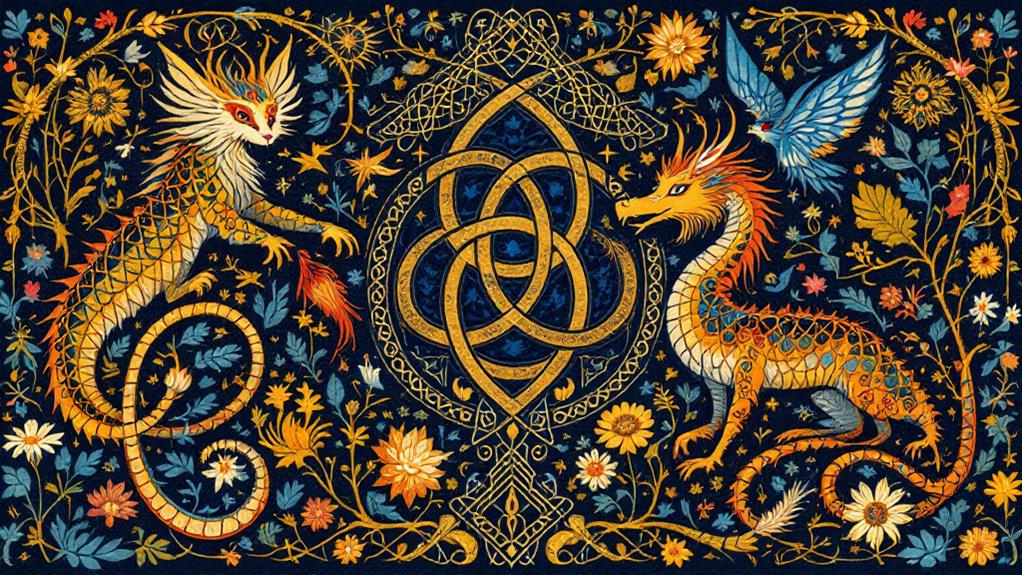
Investigating the artistic techniques of the Book of Kells reveals more than just craftsmanship; it discloses a rich tapestry of symbolic iconography. When you probe into its pages, you're immersing yourself in a world where every detail serves a purpose. The intertwining patterns and vivid colors aren't merely decorative—they're infused with Celtic symbolism. Each spiral, knot, and mythical creature tells a story, conveying messages that go beyond the text itself.
Manuscript illumination in the Book of Kells transforms biblical narratives into visual feasts, where the intricate designs highlight themes of eternity and divinity. You'll notice how the Celtic knots, with their endless loops, symbolize the infinite nature of God. The use of animals, such as the peacock and fish, links to Christ's resurrection and the spread of Christianity. Every page is a demonstration of the monks' devotion and their belief in the power of imagery to communicate sacred truths.
As you investigate these illuminated pages, you realize the Book of Kells isn't just a religious manuscript. It's an artistic bridge that connects you to the spiritual and cultural essence of the Celtic world.
Cultural Significance
Step into the lively world of the Book of Kells, where its cultural significance transcends mere artistry. This masterpiece isn't just about intricate designs and vivid colors; it's a profound emblem of Celtic identity and an enduring artistic legacy. When you investigate its pages, you're not just seeing a book; you're immersing yourself in the rich tapestry of Celtic culture. This manuscript serves as a bridge, connecting modern readers to ancient traditions and values.
Consider these three aspects that highlight its cultural importance:
- Preservation of Celtic Identity: The Book of Kells conserves the essence of Celtic life, showcasing their symbols, artistry, and values. It reminds you of a time when art was a crucial expression of cultural identity.
- Artistic Legacy: This manuscript isn't just a relic; it's a living symbol of the creativity and skill of Celtic artists. By studying it, you gain insight into the techniques and innovations that continue to inspire contemporary art.
- Cultural Continuity: The Book of Kells secures the survival of Celtic traditions, allowing future generations to appreciate and understand the richness of their heritage.
In essence, the Book of Kells isn't merely a book; it's a cultural icon.
Religious Influence

The Book of Kells isn't just a masterpiece of art; its religious influence runs deep and wide, shaping spiritual understanding for centuries. As you investigate its pages, you're not only witnessing intricate Celtic designs but also delving into a world where monastic traditions and theological themes intertwine. The monks who painstakingly created this illuminated manuscript were not merely artists; they were spiritual guides, embedding layers of religious meaning into every detail.
You can see how the Book of Kells reflects the monastic lifestyle, emphasizing dedication, discipline, and devotion. It captures the essence of early Christian Ireland, where monks lived in isolated communities, focusing on spiritual growth and scriptural study. In this sacred text, the theological themes are vividly expressed. The intricate illustrations of the four Gospels don't just tell stories; they convey profound truths about faith, redemption, and divine presence.
Preservation Efforts
While the Book of Kells captivates with its religious depth, its preservation tells another compelling story. You might not realize it, but safeguarding this ancient manuscript comes with significant conservation challenges. The fragile vellum pages are susceptible to damage from light, humidity, and temperature fluctuations. To address these issues, preservationists have implemented strict environmental controls, ensuring the manuscript remains stable and protected from potential harm.
Digitization initiatives have played an essential role in preserving the Book of Kells. By creating high-resolution digital versions, you help reduce the need for physical handling and provide wider access to this iconic piece of Celtic art. These initiatives allow scholars and enthusiasts worldwide to study the intricate details without risking damage to the original artifact.
Here are three key preservation efforts:
- Controlled Environment: The manuscript is stored in a climate-controlled environment to minimize degradation from external factors.
- Digitization: High-quality digital scans are created to preserve the visual details and minimize handling.
- Public Access Management: Limited public display times help reduce exposure to light and physical wear.
Modern Interpretations

Often, modern interpretations of the Book of Kells breathe new life into its ancient artistry, showcasing its relevance in the present cultural landscape. You can investigate stunning digital adaptations that allow you to plunge deep into the intricate details of this masterpiece without setting foot in a museum. These digital versions make it easy to zoom in on the lively illustrations and complex calligraphy, offering a fresh perspective on centuries-old craftsmanship.
Contemporary exhibitions take it a step further by integrating the Book of Kells into modern art contexts. Imagine walking into a gallery where traditional Celtic motifs meet cutting-edge technology. Artists and curators often use multimedia installations to create an engaging experience that captures the essence of the Book of Kells while infusing it with contemporary flair. By doing so, they highlight the timeless beauty and adaptability of Celtic art.
In today's world, such interpretations guarantee the Book of Kells isn't just a relic of the past but a dynamic part of our cultural dialogue. As you engage with these modern renditions, you'll find yourself appreciating the profound impact this ancient manuscript continues to have on art and creativity.
Global Impact
Recognized worldwide, the Book of Kells has transcended its origins to become a symbol of artistic achievement and cultural heritage. This illuminated manuscript is not just a relic of Irish history; it's a confirmation of the power of global outreach and cultural exchange. As you investigate its global impact, you'll find how it has inspired countless artists and scholars across continents.
- Artistic Influence: The intricate designs and vivid colors of the Book of Kells have influenced artistic styles far beyond Ireland. From tattoo artists to digital designers, creators worldwide draw inspiration from its unique patterns and motifs.
- Academic Study: Universities globally study the Book of Kells as a prime example of medieval art and religious symbolism. Its presence in academic curricula guarantees cultural exchange, allowing students from diverse backgrounds to engage with Celtic history.
- Tourism and Exhibitions: The Book's global outreach is evident through international exhibitions. When it travels, it draws crowds enthusiastic to experience its beauty firsthand, fostering a deeper understanding of Celtic art and history.
The Book of Kells isn't just a book; it's a bridge connecting cultures, an enduring piece of global heritage that continues to captivate imaginations worldwide.
Visitor Experience
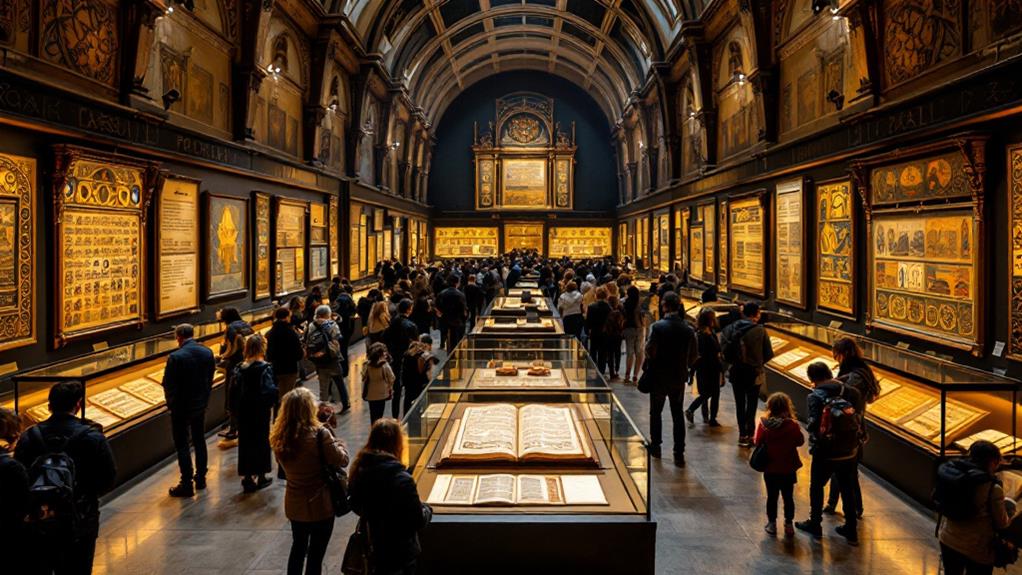
When you visit the Book of Kells exhibition, you're immediately drawn into a world of lively colors and intricate designs. The moment you step inside, the ancient manuscript's brilliance captures your attention. The exhibition thoughtfully combines history with modern technology, offering interactive exhibits that let you probe deeper into the artistry and significance of this iconic work.
You'll find touchscreens displaying high-resolution images of the manuscript's most enchanting pages, allowing you to investigate every detail up close. These interactive features engage you, making the experience more engaging and educational. As you navigate through the exhibition, you might join one of the guided tours, where knowledgeable guides share fascinating insights about the monks who created the manuscript and the techniques they used. These tours provide context and elevate your appreciation of the Book of Kells' historical and cultural importance.
The exhibition doesn't just showcase the manuscript; it invites you to participate in its story. Regardless of being an art enthusiast or a history buff, the Book of Kells exhibition offers a unique visitor experience that leaves you with a deeper understanding of Celtic art and its enduring legacy.
Related posts