The Artistic Brilliance of the Book of Kells: A Medieval Treasure
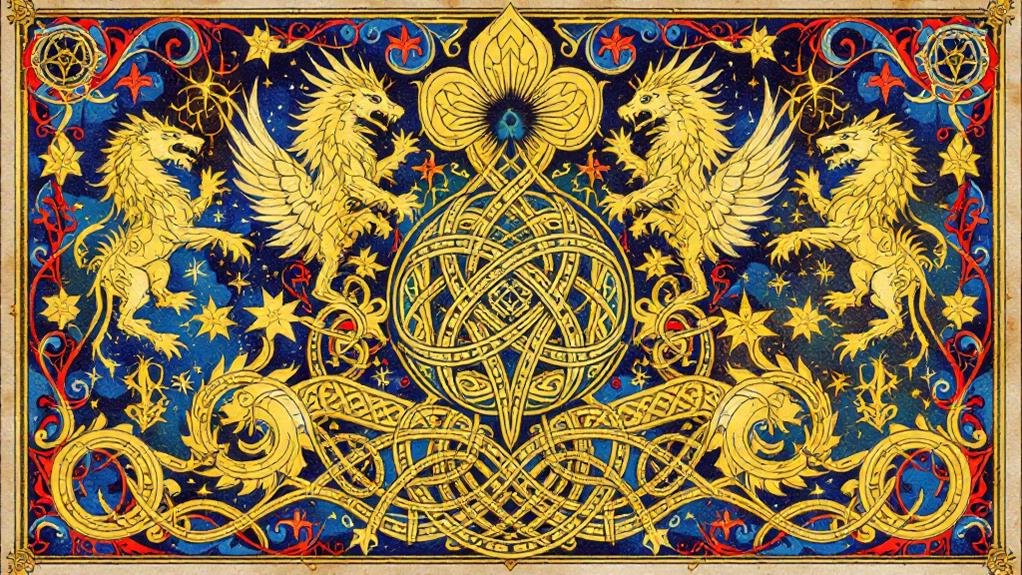
Investigate the Book of Kells, a stunning medieval gem showcasing the fusion of Celtic artistry and Christian themes. Created during the 8th and 9th centuries, it reflects the resilience of a culture flourishing amidst Viking invasions. This illuminated manuscript uses bright natural pigments and gold leaf to bring religious text to life on vellum pages. Its intricate designs and patterns display a blend of spiritual symbolism with detailed calligraphy. Each page is a reflection of the monastic dedication to beauty and faith, enchanting viewers with its lively colors and ornate artistry. Uncover more about this magnificent masterpiece's significance.
Historical Context and Origin
The Book of Kells, an exquisite example of medieval artistry, originated in a time marked by both cultural flourishing and turmoil. As you examine its historical context, imagine the 8th and 9th centuries in Ireland, a time when Celtic heritage thrived despite Viking invasions. Monasteries became centers of learning and spirituality, fostering an environment where art and religion intertwined. The monks who created the Book of Kells worked amidst this dynamic backdrop, seeking to illuminate the Christian gospels with unparalleled beauty.
In understanding its origin, you must recognize the significance of manuscript illumination. This art form was crucial in preserving religious texts and demonstrating the spiritual devotion of its creators. The intricate designs, lively colors, and symbolic imagery reflect the rich tapestry of Celtic culture, merging indigenous traditions with Christian themes. You'll notice how the Book of Kells stands as a symbol of the time's artistic brilliance and the resilience of its people.
Materials and Techniques
Appreciating the Book of Kells' historical backdrop improves your understanding of its creation, especially when considering the materials and techniques employed by the monks. These skilled artisans worked carefully, transforming simple materials into a masterpiece. You might find it fascinating that the manuscript production involved crafting vellum from calfskin, a painstaking process requiring accuracy. This provided the smooth, durable pages crucial for the intricate designs.
In terms of pigment sources, the monks displayed remarkable resourcefulness, using natural ingredients to create lively colors. For instance, they derived deep blues from lapis lazuli, a precious stone imported from Afghanistan. The rich greens came from verdigris, while the reds were extracted from multiple sources like ochre and insects.
Key techniques in the production of the Book of Kells included:
- Quill and Ink: Crafted from feathers, quills allowed for detailed calligraphy.
- Gilding: Gold leaf application added luminosity to the illustrations.
- Layering Colors: Built up pigments for depth and texture.
- Geometric Patterns: Used compasses and rulers for precision.
Understanding these materials and techniques gives you a deeper appreciation for the Book of Kells' enduring allure and the monks' artistic brilliance in manuscript production.
Iconography and Symbolism
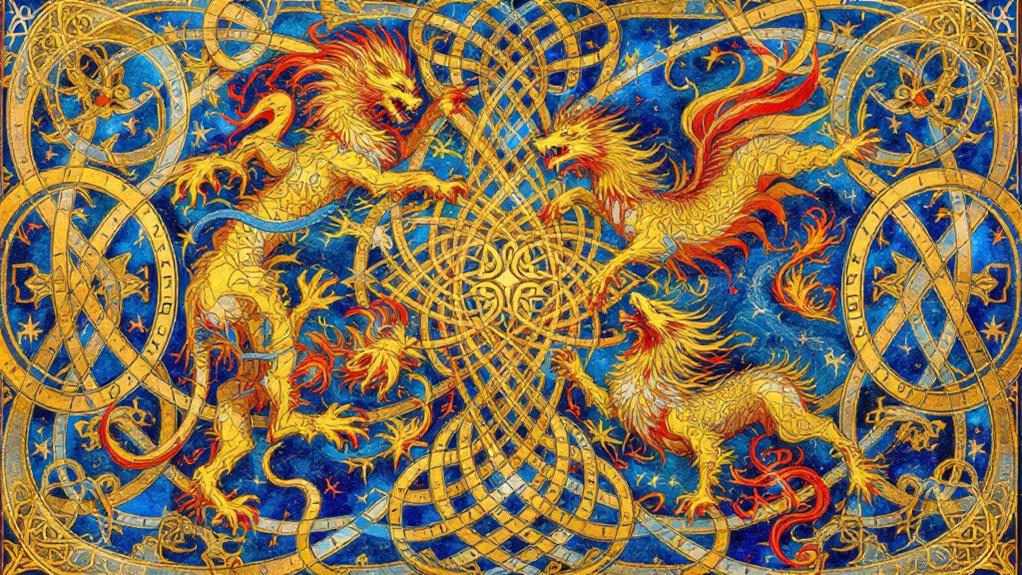
Delving into the iconography and symbolism of the Book of Kells reveals a rich tapestry of meaning woven through its pages. You'll find spiritual symbolism intertwined with narrative imagery, each element telling a unique story. The religious iconography captures the essence of Christian doctrine, with illustrations of Christ, Mary, and the apostles. These figures are often depicted with lively color symbolism, where gold signifies divinity and purple denotes royalty.
Animal motifs abound, with lions, eagles, and fish representing diverse Christian virtues and stories. For example, the lion symbolizes resurrection due to its mythological association with waking from sleep. Geometric patterns further augment these illustrations, offering a sense of order and harmony, while also reflecting the medieval fascination with sacred geometry.
Botanical elements, like vines and flowers, weave throughout the pages, symbolizing growth and eternal life. These elements are often paired with celestial representations, such as stars and suns, which emphasize the divine nature of the text. By examining these intricate details, you'll gain a deeper understanding of the Book of Kells, appreciating its role not just as a religious manuscript but as a masterpiece of medieval art and spirituality.
Artistic Style and Features
When you engage yourself in the artistic style and features of the Book of Kells, you're immediately captivated by its elaborate and intricate designs. As one of the most famous illuminated manuscripts, it showcases the pinnacle of manuscript artistry. The Book of Kells is a masterpiece of visual storytelling, blending Celtic patterns with Christian iconography to create pages filled with decorative elements that are both beautiful and meaningful.
The artistic techniques used in this medieval gem highlight the cultural significance of its time. The monks who crafted it employed a variety of methods to guarantee every page was a work of art. You'll find:
- Celtic Patterns: Intricate interlaced designs that reflect the monastic tradition and Celtic heritage.
- Color Symbolism: Vivid hues that convey deeper spiritual meanings and highlight significant passages.
- Decorative Elements: Ornate initials and borders that transform text into visual art.
- Visual Storytelling: Illustrations that narrate biblical tales with vivid imagery and detail.
Each of these features contributes to the complete splendor of the Book of Kells, making it a timeless symbol of cultural and artistic excellence. Its enduring beauty and craftsmanship continue to inspire admiration and awe.
Pages of Notable Significance
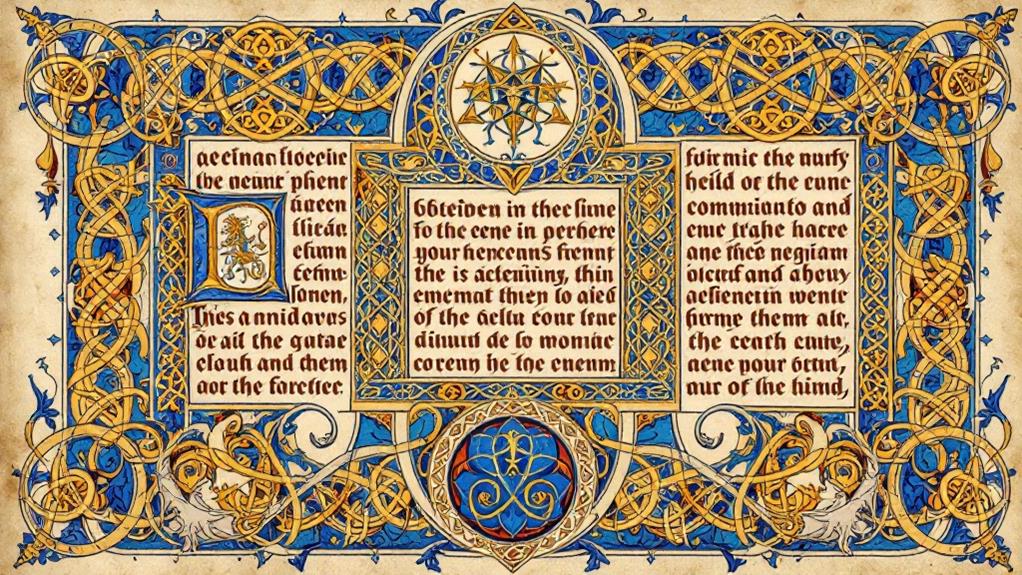
Among the pages of the Book of Kells, certain folios stand out for their exceptional artistry and historical importance. As you explore this masterpiece of illuminated manuscripts, you'll uncover pages that capture the essence of Celtic art, intertwining intricate designs with bright colors and spiritual symbolism. One such page is the Chi Rho page, a stunning piece where the Greek letters Chi and Rho, representing Christ, explode into a tapestry of swirling patterns and figures. This folio draws your attention with its careful detail and lively hues, embodying the pinnacle of medieval artistic achievement.
Another notable page is the Virgin and Child folio. Here, you'll find an exquisite portrayal of Mary and Jesus, surrounded by elaborate knotwork and animal motifs that reflect the deep connection between the sacred and the natural world in Celtic art. This page highlights the manuscript's role in conveying religious narratives through visual splendor, making it a significant cultural artifact.
Each of these pages not only showcases the skill of the monks who crafted them but also offers a window into the spiritual and artistic life of their time, serving as a reflection of the enduring power of illuminated manuscripts.
Preservation and Conservation
Preserving the breathtaking artistry of the Book of Kells requires careful attention and ongoing conservation efforts. You've got to understand, this isn't just about keeping a book intact; it's about maintaining a significant piece of history. The delicate vellum pages and intricate illustrations demand specialized restoration techniques and careful archival practices.
When thinking about preservation, consider:
- Environmental Control: You need to regulate temperature and humidity to prevent damage.
- Restoration Techniques: Experts use non-invasive methods to repair and stabilize fragile pages.
- Archival Practices: Proper storage materials, like acid-free paper and boxes, are important to avoid deterioration.
- Digitalization: Creating high-resolution digital copies guarantees the art is accessible without risking the original.
Each of these steps plays a key role in safeguarding the Book of Kells. You're not just preserving a manuscript; you're protecting a window into medieval artistry and craftsmanship. Every decision and action taken by conservators is aimed at extending the life of this remarkable artifact. By employing these methods, you ensure that future generations can experience the awe-inspiring beauty of the Book of Kells just as you do today.
Cultural Impact and Influence

How has the Book of Kells managed to capture the imagination of so many over the centuries? It's not just an illuminated manuscript; it's a masterpiece that embodies the spirit of cultural exchange and artistic inspiration. When you look at its pages, you'll see a fusion of Christian iconography with intricate Celtic designs, showcasing the dynamic interaction between different traditions. This synthesis has sparked curiosity and admiration, drawing people from diverse backgrounds to investigate its pages and ponder its origins.
The Book of Kells has inspired countless artists and scholars. You'll find traces of its influence in modern design, literature, and art, where its motifs and stylistic elements continue to inspire new creations. It's not just the beauty that captivates you, but also the layers of history and culture intertwined within its pages. This medieval gem has served as a catalyst for cultural dialogue, encouraging you to appreciate the blend of traditions that have shaped our world.
Modern Interpretations and Legacy
The allure of the Book of Kells doesn't stop with its historical significance; it continues to inspire contemporary interpretations and leave a lasting legacy. Artists and scholars worldwide draw from its intricate designs and lively colors, finding new ways to integrate these elements into modern art forms. You might encounter these influences in unexpected places, from fashion to graphic design. The book's rich history and mystical charm lend themselves well to contemporary adaptations that breathe new life into its ancient motifs.
In today's technological era, technology plays an essential role in preserving and sharing the Book of Kells with global audiences. Digital reproductions make it possible for you to investigate every page in stunning detail without ever setting foot in a museum. This shift has led to a broader appreciation and understanding of its artistic and cultural importance.
- Artists incorporate its motifs into modern visual arts.
- Digital platforms provide global access to its intricate pages.
- Designers use its patterns in textiles and home decor.
- Educators include it in curricula to teach medieval art.
With each new interpretation, the Book of Kells continues to captivate and inspire, proving its enduring legacy.
Related posts