The Art of Bookbinding in Ancient Folios
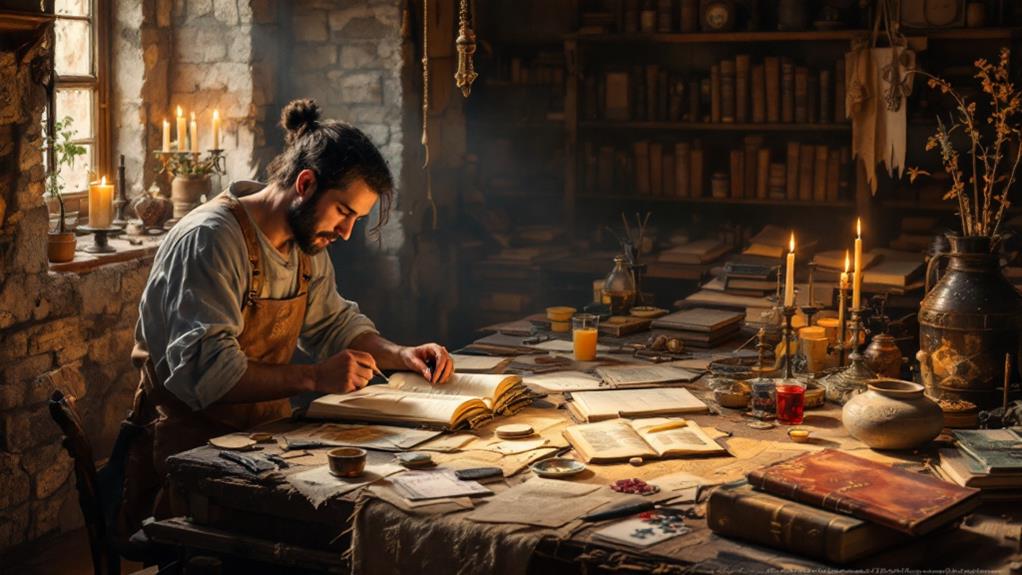
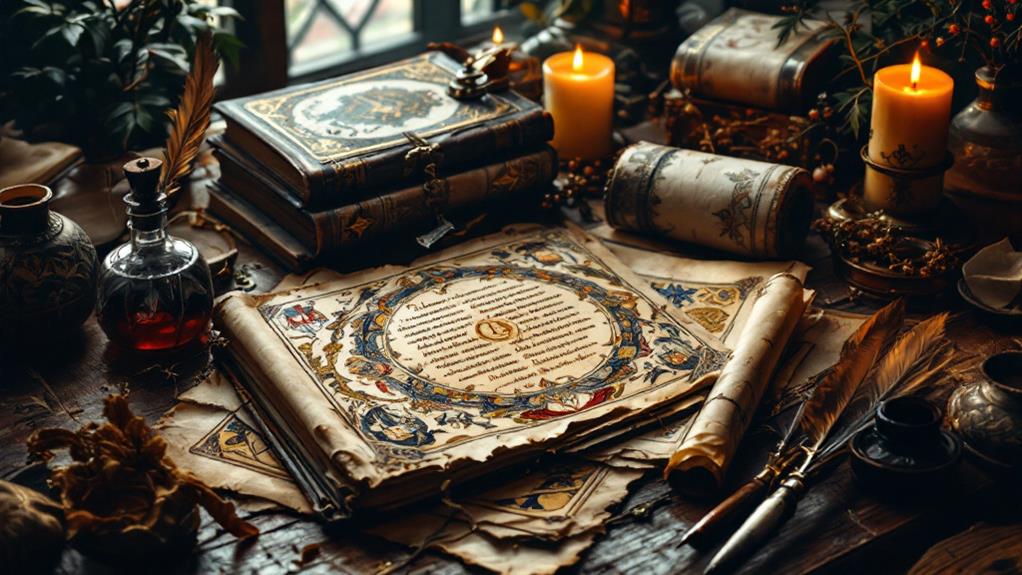
Uncover the enchanting art of bookbinding in ancient folios, reflecting humanity's quest to preserve knowledge. You'll find early methods like Egyptian papyrus techniques and Roman codices. Bookbinders used durable materials such as leather and vellum, incorporating silk and gold leaf for beauty. Techniques varied across cultures; for example, Japanese stab binding showcased intricate thread patterns. Decorative elements like gilded edges and embossed covers added charm. Ancient folios face preservation challenges, yet they inspire modern bindings that respect tradition while embracing innovations. Investigate the stories and artistry held within these pages for unparalleled insight into the past.
Origins of Bookbinding
Bookbinding traces its roots back to ancient civilizations, where the need to preserve and organize written knowledge began to take shape. You might not realize it, but the origins of bookbinding have a deeply historical relevance. As societies evolved, so did their methods for recording and safeguarding information. Initially, this meant using scrolls, which were practical but limited in durability and storage. As cultural evolution progressed, so did the desire for more efficient ways to compile and protect significant texts.
The early Egyptians and Greeks were among the pioneers, exploring methods to stitch papyrus sheets together, creating the precursor to the modern book. You can imagine how transformative this shift was. It allowed for easier access to information and contributed considerably to the spread of knowledge across regions. The Romans, too, played a crucial role, introducing the codex format, which more closely resembles the bound books you're familiar with today.
Understanding the origins of bookbinding gives you insight into how vital it was for historical record-keeping and cultural transmission. The evolution from rudimentary scrolls to intricately bound volumes reflects humanity's ongoing quest to preserve its collective knowledge and creativity across generations.
Materials and Tools
As the craft of bookbinding evolved from its early origins, the materials and tools used became increasingly sophisticated, reflecting advancements in technology and artistry. Early bookbinders relied on basic binding materials like leather, vellum, and parchment, which were prized for their durability and flexibility. As time progressed, more diverse materials such as silk, cotton, and even gold leaf began to embellish the covers, adding aesthetic value and prestige to the folios.
You might find it fascinating how tool evolution played a crucial role in transforming bookbinding practices. Simple hand tools like awls and needles were fundamental for sewing pages together, but as techniques improved, more specialized tools emerged. Bone folders helped create crisp creases, while brass rulers guaranteed precision in cutting and folding. The introduction of presses and ploughs allowed for more even trimming of pages, enhancing the final product's neatness and uniformity.
Next time you glance at an ancient folio, consider the skilled hands that selected each binding material and wielded these evolved tools. Their expertise and innovation laid the groundwork for the beautiful, durable books we cherish today.
Techniques Across Cultures
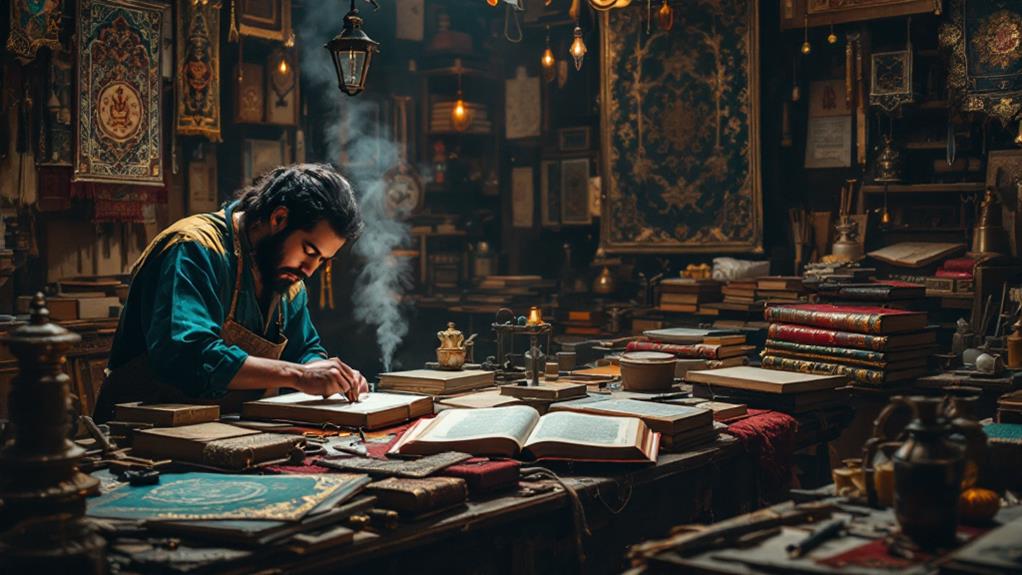
Throughout history, diverse cultures have developed unique bookbinding techniques that reflect their distinct artistic traditions and practical needs. In Japan, you might investigate Japanese Stab Binding, a method where the book's spine is left exposed, and intricate patterns are created using thread. This technique emphasizes simplicity and elegance. Voyage to ancient Egypt, and you'll find Egyptian Papyrus Techniques, where papyrus sheets were glued together, rolled, and sometimes bound, serving both practical and religious purposes.
Byzantine Leatherwork offers another fascinating method, with robust leather covers that provided durability and protection for religious texts. If you examine Chinese traditions, you'll encounter Chinese Silk Threads, where silk was used to stitch and secure pages, highlighting the value placed on aesthetics and durability.
In India, Indian Manuscript Styles often involved palm leaves bound with cords, reflecting a focus on sacred texts. Persian Miniature Art integrated detailed illustrations into their bindings, emphasizing visual storytelling. African Bark Cloth was another groundbreaking method, using local materials to create functional bindings. Ultimately, the Roman Codex Methods introduced the modern book form, with pages sewn together along one edge, transforming how texts were accessed and read.
Decorative Elements
Having investigated the diverse techniques across cultures, it's clear each method carries its own artistic expression and functionality. When exploring decorative elements in ancient folios, you'll find a fascinating array of craftsmanship. Gilded edges immediately catch your eye, shimmering under the light and adding a luxurious touch to every page. These edges not only serve an aesthetic purpose but also protect the pages from dust and damage.
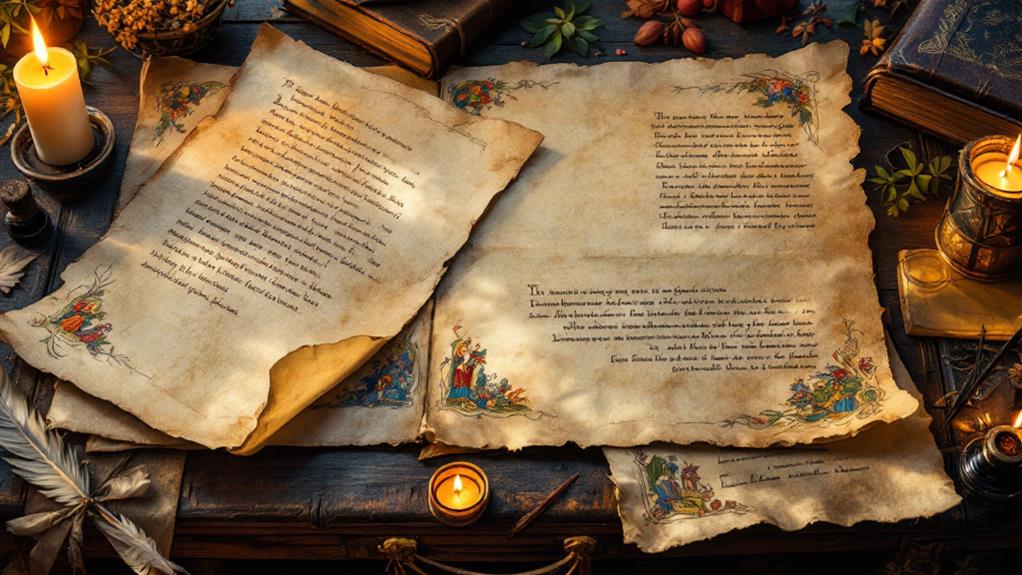
Embossed covers add depth and texture, inviting you to run your fingers over intricate designs. These raised patterns often tell stories or symbolize the book's contents, making each folio unique. Ornamental patterns dance across both covers and pages, drawing you into the book's world before you even begin reading. Illustrated pages further captivate your imagination, with detailed artwork that complements the text.
The spine of the book often features unique stitching, a reflection of the artisan's skill and creativity. This decorative yet functional element guarantees the book's durability. Ultimately, decorative endpapers provide a beautiful shift from the exterior to the interior, often mirroring the book's theme or period. These elements together raise each ancient folio into a masterpiece of art and literature.
Preservation Challenges
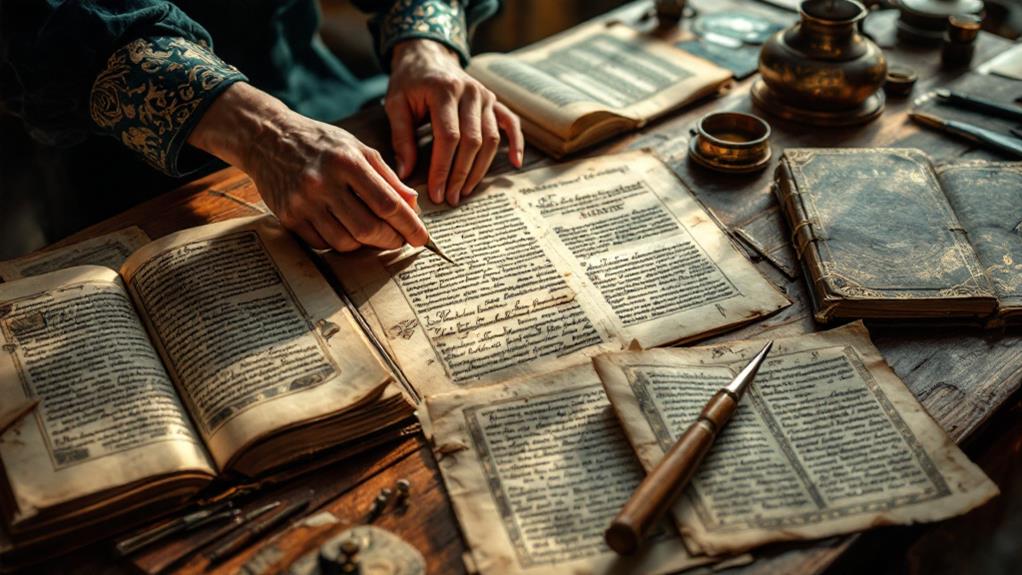
Preserving ancient folios comes with a host of challenges that can't be ignored. As you explore the world of bookbinding, it's essential to understand these obstacles. Conservation methods must be both creative and respectful of the original materials. One of the biggest hurdles is addressing the environmental factors that threaten these valuable works. Humidity, temperature, and light exposure can wreak havoc on delicate pages and bindings, causing them to degrade over time.
When thinking about preservation, consider the following:
- Humidity: Too much moisture can lead to mold growth, while too little can make pages brittle.
- Temperature: Fluctuations can cause materials to expand and contract, leading to warping or cracking.
- Light exposure: Ultraviolet light can fade inks and damage fibers, leading to irreversible harm.
You need to tailor conservation methods to each folio's specific needs, ensuring they're kept in conditions that mitigate these risks. Regular monitoring and adjustments are essential. It's not just about preserving the physical object but also maintaining its historical and cultural significance. By understanding these challenges, you play a part in keeping these ancient artifacts alive for future generations.
Influence on Modern Bindings
Understanding the preservation challenges of ancient folios not only helps in safeguarding them but also profoundly influences modern bookbinding techniques. By studying these old texts, you learn to appreciate their historical significance and cultural impact. Ancient bookbinders faced issues like fragile materials and environmental threats. Today, these challenges inspire groundbreaking solutions in modern bindings, ensuring durability and aesthetic appeal.
When you incorporate ancient methods into contemporary practices, you're not just preserving books; you're honoring their legacy. Techniques such as hand-sewn bindings and the use of natural adhesives provide a tactile connection to history. These methods emphasize the book as an art form, rather than just an object of knowledge.
Moreover, understanding the cultural impact of ancient folios encourages you to value craftsmanship. The care and precision found in these early works remind you of the importance of detail and quality. This perspective shifts modern bookbinding from mere production to an art that respects tradition while embracing new technologies.
Notable Ancient Folios
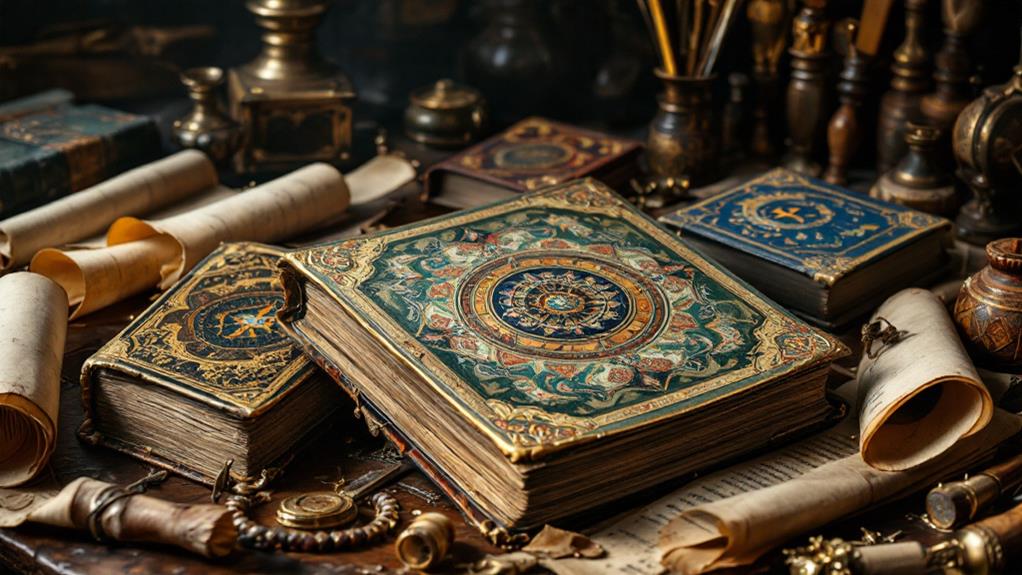
The allure of ancient folios lies in their ability to transport you to a different period, offering a glimpse into the artistry and intellect of past civilizations. When you explore these notable ancient folios, you encounter famous manuscripts that hold immense historical significance. Each folio tells a story, not just through its words, but through its intricate bindings that have preserved wisdom for centuries.
Consider these examples to appreciate their timeless beauty and importance:
- The Book of Kells: This illuminated manuscript, created by Celtic monks in the 9th century, dazzles with its lively illustrations and intricate knotwork, embodying the zenith of Insular art.
- The Codex Sinaiticus: One of the oldest complete manuscripts of the Christian Bible, dating back to the 4th century, it offers vital insights into early Christian texts and their evolution over time.
- The Dead Sea Scrolls: Uncovered in the mid-20th century, these ancient Jewish texts date from the 3rd century BCE to the 1st century CE, shedding light on the religious practices and beliefs of the Second Temple period.
These famous manuscripts showcase the historical significance of ancient folios, reminding you of the art and knowledge that have shaped human history.
Bookbinding Today
In the present-day world, bookbinding has evolved into both a craft and an art form, merging traditional techniques with modern innovations. You can now investigate a variety of methods, from hand-sewn bindings to machine-assisted processes. Digital bookbinding has emerged as a popular option, allowing you to create custom books with ease. This method utilizes software to design layouts, which are then printed and bound, offering flexibility and precision.
Sustainable practices have gained traction in the bookbinding community. You're encouraged to use eco-friendly materials like recycled paper and natural adhesives. By choosing these options, you contribute to reducing the environmental impact of your projects. Furthermore, many artisans now focus on durability, ensuring books last longer and reduce waste.
If you're interested in learning bookbinding, workshops and online tutorials are widely available. You can start with basic techniques and gradually incorporate more advanced methods. The satisfaction of crafting a book with your own hands is immense, and the possibilities for creativity are endless. Regardless of whether you're binding a family photo album or a personalized journal, today's bookbinding techniques offer a unique blend of tradition and innovation for you to investigate.
Related posts