
The Accessibility Revolution: How Digital Archives Are Preserving Folios
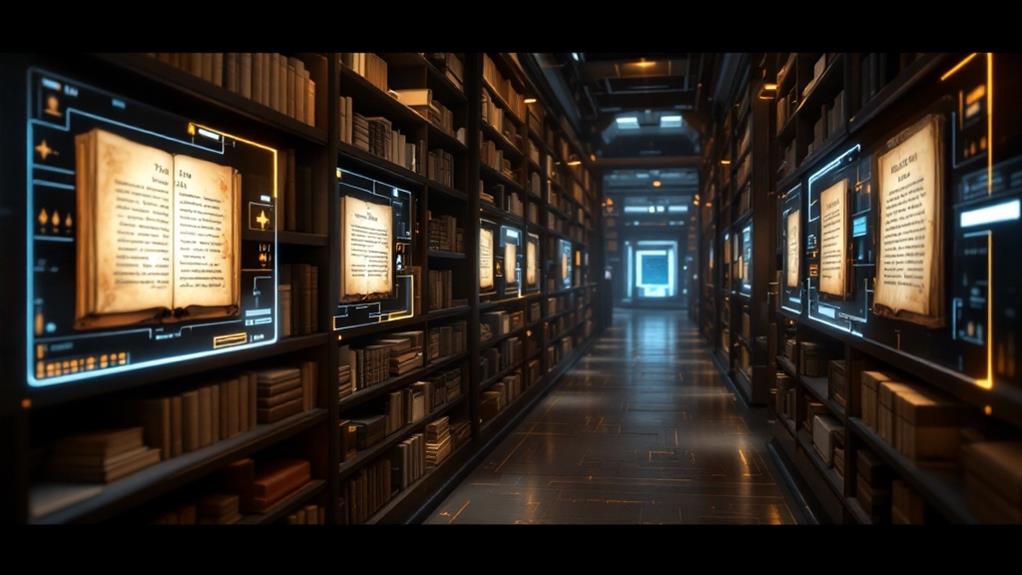
You're witnessing a digital transformation that guarantees ancient folios are accessible to everyone. Digital archives, with their high-resolution scanning and advanced metadata, capture and preserve every detail, safeguarding cultural heritage. These archives offer global access, enabling educational outreach and community collaboration while maintaining strict ethical standards to respect the integrity of original documents. Challenges like technical hurdles and metadata standardization are met with cutting-edge technologies like AI and cloud storage. By engaging with these resources, you improve your digital literacy, exploring a vast world of preserved history and diverse narratives waiting to be explored and shared.
Understanding Digital Archives
Digital archives are everywhere in the present tech-driven world, and understanding them is fundamental for anyone traversing the digital environment. As you navigate through countless digital collections, developing digital literacy becomes significant. This skill empowers you to effectively find, evaluate, and use information stored in these archives. Without digital literacy, you might find yourself overwhelmed or even misled by the sheer volume of data available.
When delving into digital archives, it's also important to reflect on archival ethics. As you engage with these resources, ask yourself about the sources' integrity and the privacy of the individuals whose information might be represented. Ethical considerations guarantee that you respect the rights and dignity of individuals and communities, even in a digital space. They guide you in understanding what's appropriate to share, access, or use in your research or personal exploration.
You'll find that many digital archives are curated with specific intentions, often reflecting the priorities and biases of their creators. By honing your digital literacy skills and adhering to archival ethics, you can critically assess these repositories, assuring that you engage with them responsibly and thoughtfully.
Benefits of Digital Preservation
Preserving digital content offers numerous advantages that improve our ability to interact with information. Digital preservation improves user engagement by providing easy access to vast collections from anywhere in the world. It supports educational outreach by making resources readily available for teachers and students, thereby promoting digital literacy. With increased user accessibility, people of all abilities can investigate archives that were once out of reach, fostering a more inclusive environment.
Community involvement grows as digital archives encourage collaborative projects and shared experiences. Local groups can contribute to preservation efforts, ensuring that diverse voices and stories are heard. Adhering to archival standards and preservation ethics guarantees that materials are maintained accurately and respectfully, safeguarding cultural heritage for future generations.
Effective funding strategies are essential for sustaining digital archives. By demonstrating the benefits of digital preservation, you can attract donors and secure grants, ensuring long-term viability. As you delve into these archives, you become part of a global conversation about history, culture, and knowledge, enriching your understanding of the world. Digital preservation not only protects information but also empowers you to connect with it in meaningful ways. Welcome this revolution and unveil the endless possibilities waiting at your fingertips.
Challenges in Digitizing Folios

While digital preservation opens up new worlds of accessibility and engagement, digitizing folios presents a unique set of challenges that can complicate this process. Initially, you're dealing with technical hurdles. The fragility of ancient folios means you need specialized equipment to capture high-resolution images without causing damage. Handling these delicate materials requires precision to avoid wear and tear, which isn't always easy. Plus, inconsistent formats and sizes of folios demand adaptable scanning technologies that can be costly and complex to implement.
Preservation ethics also play an essential role. You've got to weigh the benefits of accessibility against the potential for damage. Handling these fragile documents involves ethical considerations, such as deciding if the digitization process might harm the original work. Preservation ethics require you to guarantee the integrity and authenticity of the content, which can be challenging when digital versions may not capture the nuances of the original material.
Moreover, metadata creation and standardization present hurdles. You must create detailed, accurate metadata for each folio to make sure they're easily searchable and accessible, but this is time-consuming and requires expertise. Balancing these challenges is key to successful digitization.
Technologies Driving the Revolution
When you think about the transformative shift in digital archives, it's impossible to ignore the technologies leading this revolution. Artificial intelligence and machine learning are at the forefront, enabling smarter and faster processing of vast amounts of information. They analyze complex data with ease and help in sorting, tagging, and categorizing content, making your search experience more efficient.
Cloud storage offers a dynamic solution for housing digital archives, ensuring you can access them from anywhere at any time. This not only supports open access but also secures backup and recovery processes, safeguarding valuable folios against loss. The user interface plays a significant role, too, as it determines how you interact with these digital assets. A well-designed interface improves your experience, making navigation intuitive and enjoyable.
Content management systems are fundamental, providing the backbone for organizing and maintaining digital collections. They streamline the process of updating and sharing content, keeping everything in order. Data visualization tools come into play by transforming raw data into visually appealing charts and graphs, helping you quickly grasp complex information.
Importance of High-Resolution Scanning
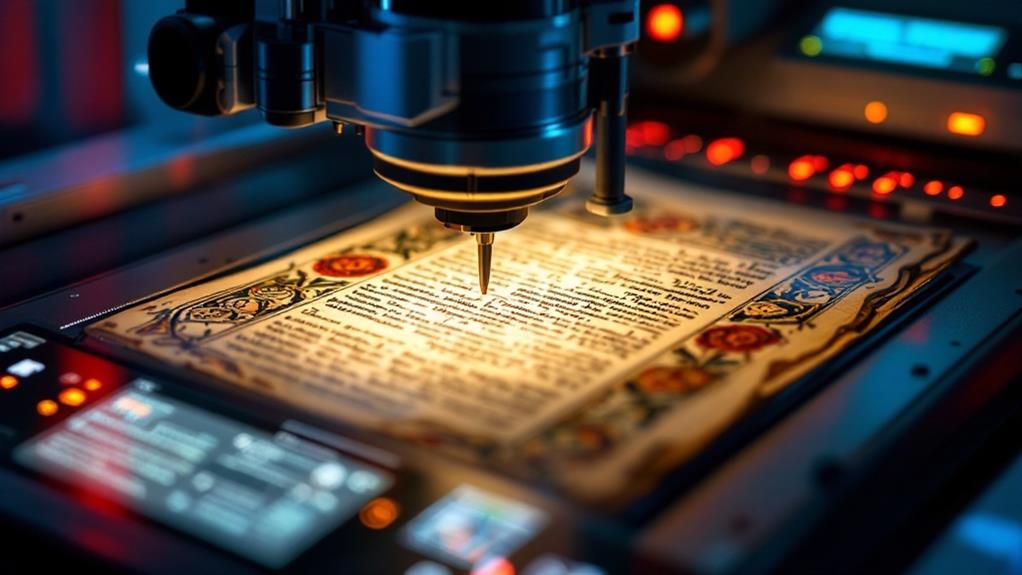
In the domain of digital archiving, high-resolution scanning plays a significant role. You might wonder why it's so imperative. Well, high quality imaging guarantees that every detail of a document is captured, preserving the integrity and authenticity of precious folios. Without it, critical information could be lost, impacting research and historical accuracy. High-resolution scanning aligns with archival standards, which are guidelines that help maintain the quality and consistency of digital archives. These standards guarantee that scanned images are usable and valuable for generations to come.
Consider the following benefits of high-resolution scanning:
- Accuracy: By capturing every tiny detail, you guarantee that no information is lost. This is especially significant for documents with intricate designs or faded text.
- Preservation: High-resolution scans reduce the need for handling fragile originals, thereby prolonging their lifespan. You're fundamentally creating a digital backup that can withstand the test of time.
- Accessibility: High-quality images can be easily shared and accessed by researchers and the public, breaking down geographical barriers and democratizing access to knowledge.
Role of Metadata in Archives
Metadata's fundamental role in archives can't be overstated. It serves as the backbone of digital archiving, guaranteeing that information is not only preserved but also accessible. You need to focus on metadata quality to guarantee the data's reliability and accuracy. Adhering to metadata standards is vital because they provide a uniform approach, promoting consistency across different archives.
When you investigate metadata schema, you'll find they define the structure and type of metadata you use, guiding how information is categorized and retrieved. Effective metadata management involves overseeing metadata workflows, from creation to application, guaranteeing efficiency and accuracy in archiving processes.
Metadata enrichment improves the value of your archives by adding context and detail, making the information more user-friendly and searchable. However, achieving metadata interoperability is key when integrating diverse systems, allowing for seamless exchanges between different platforms and guaranteeing users can access extensive data sets.
Incorporating metadata applications into your digital archives improves their functionality, offering advanced search capabilities and better data organization. By focusing on these elements, you'll create a robust archiving system that not only preserves digital folios but also optimizes their accessibility and usability.
Global Initiatives and Collaborations
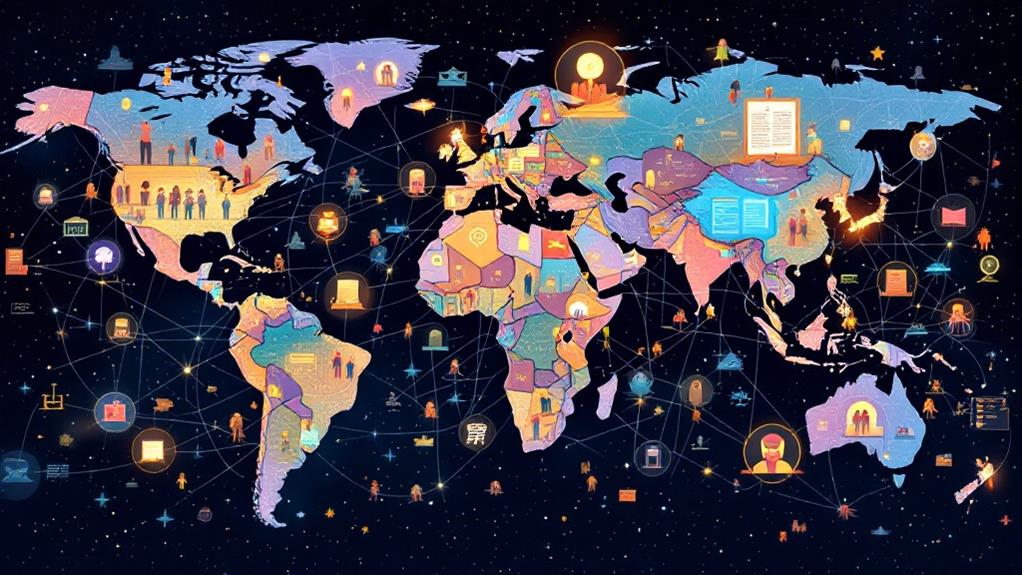
Global efforts in digital archives preservation have a profound impact on guaranteeing data longevity and accessibility. By participating in international partnerships, you play an essential role in safeguarding cultural heritage for future generations. These collaborations foster innovation, sharing best practices and resources. When you join forces with organizations around the world, you're not just preserving information; you're building bridges between cultures and histories.
Consider the benefits of these global initiatives:
- Resource Sharing: Joining an international partnership means you gain access to cutting-edge technologies and expertise that might be unavailable locally. This allows for more efficient and effective preservation strategies.
- Standardization: By collaborating globally, you help establish universal standards and protocols, guaranteeing that digital archives are accessible and understandable across different countries and cultures.
- Cultural Exchange: Engaging with diverse partners enriches your understanding of cultural heritage. You're not only preserving data but also learning about different perspectives and historical contexts.
These initiatives highlight the importance of working together to protect the world's cultural heritage. By actively participating in global collaborations, you guarantee that digital archives remain an essential resource for generations to come, promoting a shared understanding of our collective past.
Case Studies of Successful Projects
Successful global initiatives have paved the way for remarkable efforts in digital archives preservation, and several projects stand out as exemplary models. One significant project is the British Library's "Save Our Sounds," which focuses on digitizing the UK's most fragile sound recordings. You can see how they've prioritized community engagement by involving local groups to identify and preserve culturally significant audio gems. This project not only safeguards history but also improves user experience by making these sounds accessible to the public.
Another standout initiative is the Europeana Collections, which brings together digital resources from thousands of European archives, libraries, and museums. Here, you can investigate a vast array of cultural heritage, thanks to a user-friendly interface that upgrades your browsing experience. The project's success lies in its collaborative approach, involving users to guarantee the accessibility and relevance of the content.
Lastly, the Digital Public Library of America (DPLA) serves as a model for connecting diverse collections from across the U.S. By prioritizing community engagement, DPLA has created a rich, interconnected virtual environment that improves user experience, making it easier for you to investigate and uncover American history and culture.
Future of Digital Accessibility

As we look ahead, digital accessibility is set to transform the way you interact with information online. Embracing inclusive design, the future promises a more seamless user experience, where assistive technologies enable everyone to access digital archives effortlessly. You'll find that digital literacy becomes essential, as you'll need to navigate vast troves of information with ease. Here are some ways this transformation might unfold:
- Policy Frameworks: Governments and organizations will develop extensive policies to guarantee digital content is accessible to all, breaking down barriers and promoting equal access.
- Content Discoverability: Improvements in search algorithms and metadata tagging will make it easier for you to find relevant archival materials, enhancing your research and learning experiences.
- Community Engagement: Digital platforms will foster collaboration and dialogue among users, encouraging you to contribute to and shape these archives, making certain they reflect diverse perspectives and needs.
Archival ethics will play a vital role, guiding the preservation of digital content in ways that respect privacy and cultural sensitivities. As these changes unfold, you'll see a world where access to digital archives is no longer a privilege but a standard, enriching lives through knowledge and understanding.
How to Access Digital Archives
The evolving landscape of digital accessibility not only transforms how you engage with online information but also shapes the methods through which you can access digital archives. To start, hone your digital literacy skills. Familiarize yourself with the platforms and tools that host these archives. This might involve understanding search functions, metadata, and the distinct formats in which documents are available.
Once you've got the basics, immerse yourself in archive navigation. Each digital archive has its own unique interface, so take the time to investigate its layout. Use search filters effectively to narrow down your results, and don't hesitate to utilize advanced search options. Many archives offer tutorials or guides that can improve your navigation skills, so be certain to take advantage of these resources.
Additionally, verify you have the right software to open different file types, as digital archives often contain PDFs, images, and other formats. Pay attention to access requirements; some archives may require registration or a subscription.
Related posts