Technological Innovations in Ancient Manuscript Preservation
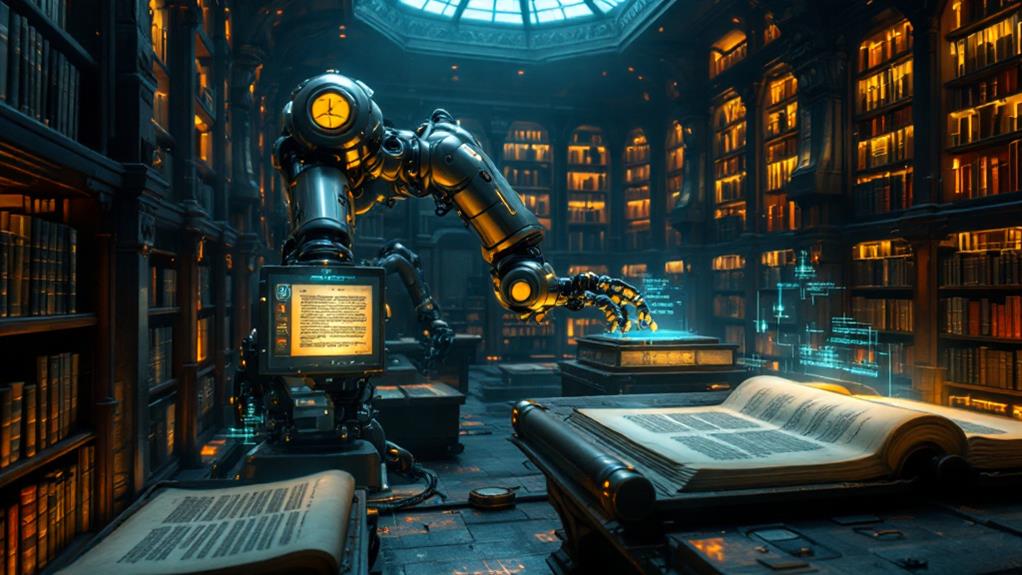
You're probably amazed by how technological innovations have transformed the preservation of ancient manuscripts. Advanced imaging like spectral and multispectral techniques reveal hidden texts and damages, often unseen by the naked eye. Digital archiving platforms make these historical riches accessible globally, reducing the need for physical handling. 3D scanning allows in-depth exploration without risking damage, while machine learning improves restoration accuracy and efficiency. Even virtual reality offers engaging experiences, connecting you with history in ways once unimaginable. Curious to see more groundbreaking advancements in manuscript preservation? There's a world of innovation waiting to unfold.
Advanced Imaging Techniques
In recent years, advanced imaging techniques have transformed how we preserve and study historical manuscripts. If you're interested in revealing hidden details in these priceless documents, spectral imaging might be your new best friend. This technique uses different wavelengths of light to uncover text and images that are invisible to the naked eye. Imagine peeling back layers of history with just a camera and a computer.
Multispectral analysis takes this a step further by capturing images at multiple wavelengths. You're not just looking at a document; you're diving into it. This technique allows you to distinguish between different inks, identify erased or overwritten text, and even detect damage that isn't visible on the surface. It's like giving you a superpower to read between the lines—literally.
These methods aren't just about exploration; they also play a vital role in preservation. By identifying areas of concern, you can develop targeted conservation strategies. You don't have to guess; you can make informed decisions based on data. So, when you use spectral imaging and multispectral analysis, you're not just preserving history; you're bringing it back to life in ways that were previously unimaginable.
Digital Archiving Platforms
Taking manuscript preservation to the next level, digital archiving platforms revolutionize how you store and access historical documents. These platforms guarantee that valuable texts are not only preserved but are also made accessible to a wider audience. By adhering to metadata standards, you maintain a structured and consistent approach to organizing these documents. This makes searching and retrieving information much easier and more efficient.
Digital archiving platforms elevate user engagement by providing interactive interfaces and tools for exploring manuscripts. You can annotate, share, and even collaborate on these texts, fostering a community of scholars and enthusiasts alike. This digital approach democratizes access, allowing anyone with an internet connection to explore the richness of ancient manuscripts.
Here's how digital archiving platforms improve your experience:
- Improved Accessibility: Access manuscripts from anywhere in the world, breaking geographical barriers.
- Augmented Preservation: Protect original documents by reducing the need for physical handling.
- Interactive Features: Engage with content through customizable views, annotations, and social sharing.
3D Scanning and Modeling
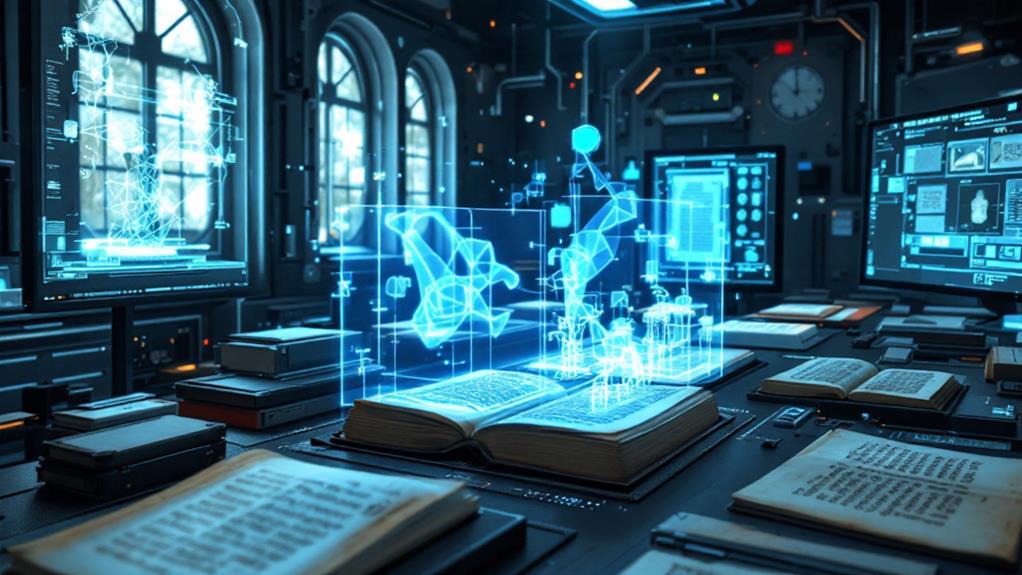
D scanning and modeling transform the way you preserve and study manuscripts. By creating 3D reconstructions, you can investigate the intricate details of ancient texts without physically handling them, thereby reducing wear and tear. Leveraging archival photography, you capture high-resolution images that feed into 3D models, bringing manuscripts to life in digital form. This method allows you to examine every fold and texture, offering insights into the material composition through advanced material analysis.
Holographic displays take these digital replicas a step further, letting you interact with manuscripts in a captivating, three-dimensional space. Imagine seeing a manuscript float before you, turning it with a gesture to study its pages from all angles. Annotation tools integrated into these systems enable you to document observations directly on the digital model, guaranteeing that your insights are preserved alongside the artifact.
While these technologies offer exciting possibilities, you must consider preservation ethics. Handling sensitive data and respecting the cultural significance of manuscripts are essential. Employing these modern techniques responsibly guarantees that the historical essence is maintained, allowing future generations to access these artifacts with ease and respect.
Machine Learning for Restoration
By harnessing the power of machine learning, you revolutionize the restoration of ancient manuscripts. This cutting-edge technology allows you to analyze and restore texts with unprecedented accuracy and efficiency. Automated analysis processes vast amounts of data, identifying patterns and anomalies that human eyes might miss. It guarantees that you can detect even the slightest degradation in your manuscript collection.
Predictive modeling further improves your restoration efforts. By creating models based on historical data, you can predict potential areas of decay and address them before they become problematic. This proactive approach not only preserves the integrity of the manuscripts but also extends their longevity, allowing future generations to enjoy these cultural gems.
With machine learning, you benefit from:
- Increased Accuracy: Automated analysis minimizes human error, assuring precise restoration.
- Time Efficiency: Algorithms process information quickly, saving you valuable time.
- Proactive Preservation: Predictive modeling allows you to anticipate problems and prevent damage.
Virtual Reality Experiences
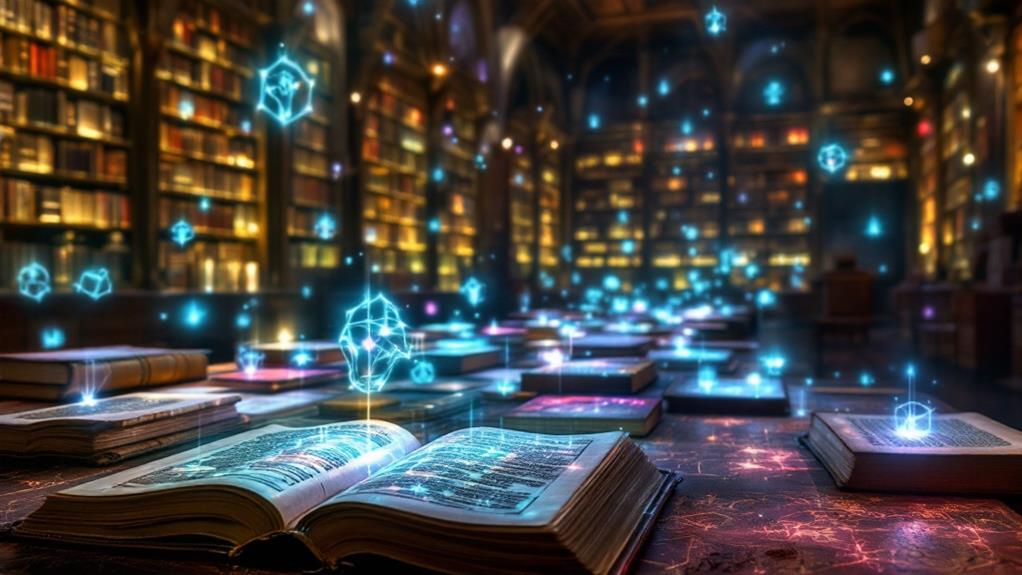
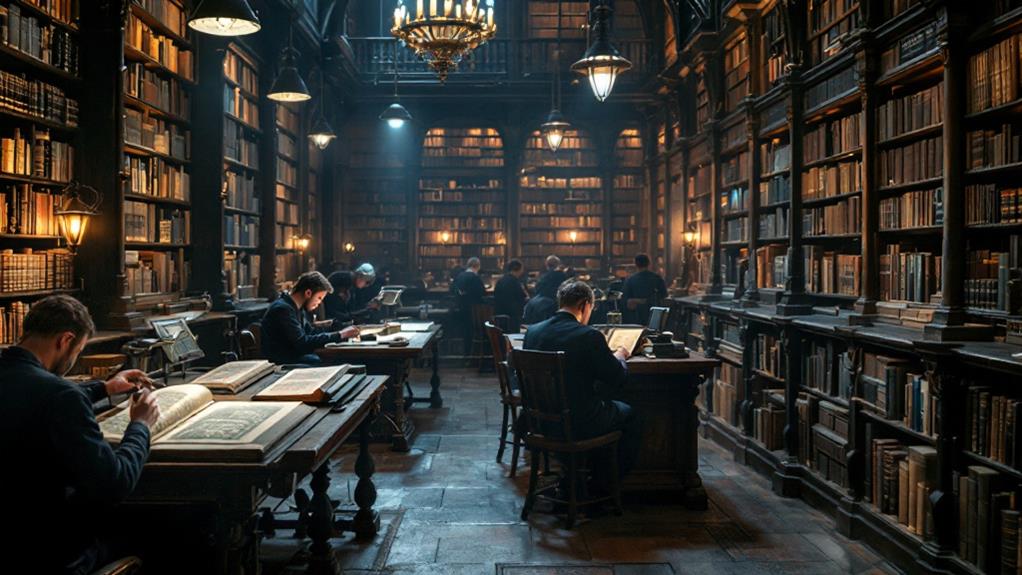
Virtual reality transports you into the world of ancient manuscripts like never before. With VR technology, you can investigate detailed recreations of historical texts without ever leaving your home. Imagine standing in a virtual library, surrounded by shelves filled with ancient tomes, each one waiting to tell its story. This isn't just about seeing these manuscripts; it's about experiencing them through engaging storytelling that brings history to life. You get to witness the artistry of scribes and the evolution of language firsthand, making each manuscript more than just an artifact—it's a living piece of history.
The potential for educational outreach is immense. Schools and museums can use VR to provide students and visitors with a deeper understanding of historical contexts and cultural significance. Instead of reading about a manuscript in a textbook, you can virtually interact with it, turning pages and examining intricate details up close. This hands-on approach makes learning more engaging and accessible. Additionally, VR experiences can be tailored to highlight specific themes or periods, offering curated adventures through the past. As a result, virtual reality not only preserves these precious artifacts but also makes their stories more accessible to everyone.
Collaborative Online Access
Through collaborative online access, you can join a global community of scholars and enthusiasts dedicated to the preservation and study of manuscripts. This collective effort makes ancient texts accessible to anyone with an internet connection. By participating in crowdsourced transcriptions, you help transform handwritten texts into digital formats, ensuring their longevity and accessibility. These transcriptions often reveal insights hidden in the original scripts, enhancing our understanding of historical contexts.
Collaborative platforms harness global partnerships, uniting institutions and experts worldwide. This collaboration allows for the sharing of resources and expertise, which accelerates the preservation process and improves the quality of digital archives. You can contribute by:
- Participating in online transcription projects: Assist in digitizing manuscripts, making them searchable and more accessible.
- Joining forums and discussion groups: Share your insights or learn from others about manuscript preservation techniques.
- Attending virtual workshops and webinars: Expand your knowledge and skills in the field of manuscript conservation.
These efforts not only safeguard precious historical documents but also democratize access to knowledge, allowing you to investigate and engage with cultural heritage in ways that were previously unimaginable. Welcome this digital revolution and contribute to the preservation of history.
Related posts